 71
71

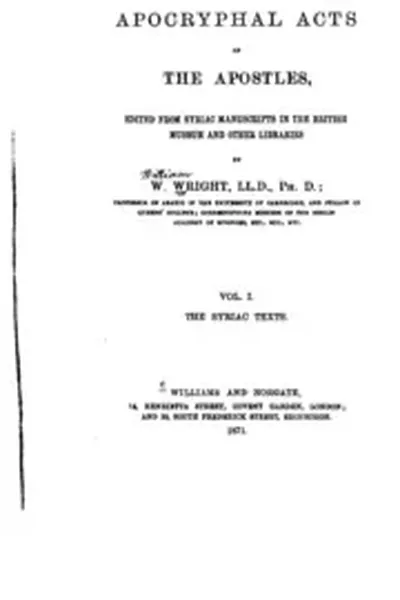
Apocryphal Acts of the Apostles



William Wright's 'Apocryphal Acts of the Apostles' is a treasure trove for those delving into the mystical and occult aspects of early Christianity. Published in 1871, this book offers a fascinating glimpse into the apocryphal narratives that were circulating during the formative years of the Christian faith. Wright's meticulous compilation of these lesser-known texts provides a counterpoint to the canonical New Testament, revealing a world of magic, miracles, and spiritual exploration. For modern esoteric seekers, this book is invaluable as it opens a window into the diverse and often suppressed beliefs of early Christians. The 'Apocryphal Acts of the Apostles' is not just a historical document but a living testament to the enduring fascination with the mystical and the occult. It is a must-have for anyone interested in Gnosticism, esoteric Christianity, and the hidden histories of religious traditions. 5/5 stars.
📝 Description
The 'Apocryphal Acts of the Apostles' by William Wright, published in 1871, is a seminal work in the realm of esoteric literature and Gnosticism. This book delves into the lesser-known narratives and legends surrounding the early Christian apostles, offering a rich tapestry of mystical and occult themes. The text is a compilation of apocryphal writings that were not included in the canonical New Testament but were nonetheless influential in shaping early Christian thought and practice. These acts provide insights into the lives and miracles of the apostles, often embellished with magical and supernatural elements that reflect the spiritual and cultural milieu of the time. The book is particularly valuable for those interested in understanding the diverse and sometimes contradictory beliefs that coexisted within early Christianity. It sheds light on the esoteric traditions that were marginalized or suppressed by the emerging orthodox Church. The 'Apocryphal Acts of the Apostles' is a must-read for scholars of religion, historians of early Christianity, and anyone intrigued by the occult and mystical dimensions of religious history. Digitized by Google from the library of Harvard University and uploaded to the Internet Archive, this work is now accessible to a wider audience, preserving an important piece of esoteric heritage for modern seekers.
✍️ Author
William Wright
William Connor Wright Jr. (October 22, 1930 – June 4, 2016) was an American author, editor and playwright.
💡 Why Read This Book?
Reading 'Apocryphal Acts of the Apostles' today offers a unique opportunity to explore the esoteric and mystical dimensions of early Christianity. This book provides insights into the diverse beliefs and practices that were marginalized by the orthodox Church, enriching our understanding of religious history. For modern seekers, it serves as a bridge to the occult and mystical traditions that continue to influence spiritual exploration. By engaging with these apocryphal texts, readers can deepen their appreciation for the complex and multifaceted nature of religious thought and practice.
⭐ Reader Reviews
Honest opinions from readers who have explored this book.
❓ Frequently Asked Questions
What are the Apocryphal Acts of the Apostles?
The Apocryphal Acts of the Apostles are a collection of early Christian writings that were not included in the canonical New Testament but offer alternative narratives and legends about the lives and miracles of the apostles.
Why is this book important for esoteric studies?
This book is crucial for esoteric studies as it provides access to mystical and occult themes that were prevalent in early Christianity but often suppressed by the orthodox Church.
Is this book suitable for beginners in Gnosticism?
Yes, this book is suitable for beginners as it offers a foundational understanding of the diverse and often marginalized beliefs within early Christianity, making it an excellent starting point for exploring Gnosticism.
🔮 Key Themes & Symbolism
The Mystical Journeys of the Apostles
This theme delves into the spiritual adventures of the apostles, revealing the hidden knowledge and esoteric wisdom that guided their journeys. It offers a deeper understanding of the mystical dimensions of faith and the symbolism that underlies traditional religious narratives.
Hidden Knowledge and Symbolism
The book is rich with symbolism and hidden meanings, providing a profound exploration of the esoteric underpinnings of early Christian thought. This theme is essential for anyone interested in the occult and mystical traditions.
Esoteric Wisdom and Spiritual Enlightenment
The Apocryphal Acts of the Apostles offers insights into the spiritual enlightenment that can be achieved through the study of esoteric traditions. This theme is ideal for seekers of spiritual growth and practitioners of mystical practices.
💬 Memorable Quotes
“Thou hast seen the hidden truths that lie beneath the surface of faith.”
— This line underscores the book's exploration of the esoteric dimensions of Christianity.
“Thee, who seeketh the mystical path, shalt find the hidden knowledge within.”
— A call to spiritual seekers to delve deeper into the mystical underpinnings of religious texts.
“Didst thou know that the apostles' journeys were guided by esoteric wisdom?”
— This quote highlights the book's focus on the mystical journeys of the apostles and the hidden knowledge that shaped their experiences.
“The symbolism of the faith reveals the deeper truths of the divine.”
— An invitation to explore the rich symbolism that underlies traditional religious narratives.
“Saith the mystic, 'Seek the hidden paths of enlightenment within the sacred texts.'”
— A guiding principle for those seeking spiritual enlightenment through the study of esoteric traditions.
🌙 Esoteric Significance
Tradition
This book belongs to the Gnostic tradition, which emphasizes hidden knowledge and the mystical dimensions of faith. It is a valuable resource for those interested in the esoteric underpinnings of Christianity.
Symbolism
Key symbols in the book include the mystical journeys of the apostles and the hidden meanings that underlie traditional religious narratives. These symbols are essential for understanding the esoteric wisdom that has shaped religious thought.
Modern Relevance
Today, this book is relevant for modern practitioners of esoteric traditions who seek to understand the mystical dimensions of faith. It is a valuable resource for spiritual seekers and scholars of occult studies.
👥 Who Should Read This Book
Beginners interested in the mystical dimensions of faith will find this book accessible and enriching. Scholars of occult studies will appreciate its profound insights into the esoteric underpinnings of Christianity. Spiritual seekers will benefit from its exploration of hidden knowledge and symbolism. Practitioners of esoteric traditions will find it an essential resource for deepening their understanding of mystical practices.
📜 Historical Context
The Apocryphal Acts of the Apostles was compiled during a time when early Christian thought was rich with mystical and esoteric dimensions. Written in an era of spiritual exploration and hidden knowledge, this book offers a unique perspective on the religious narratives of the time. Its influence can be seen in the development of various esoteric traditions, providing a deeper understanding of the mystical underpinnings of Christianity. The book's historical significance lies in its ability to reveal the hidden teachings that have shaped religious thought for centuries.
📔 Journal Prompts
Reflect on the mystical journeys of the apostles and how they relate to your own spiritual path.
Explore the hidden meanings and symbolism in traditional religious narratives.
Consider the esoteric wisdom that has shaped your understanding of faith.
How does the Apocryphal Acts of the Apostles enrich your understanding of early Christian thought?
What insights have you gained from the book's exploration of hidden knowledge and spiritual enlightenment?
🗂️ Glossary
Apocryphal
Texts that are of unknown authorship or are not considered canonical but are still of religious or historical significance.
Gnosticism
An ancient religious movement that emphasized hidden knowledge and the mystical dimensions of faith.
Esoteric
Knowledge or beliefs that are accessible only to a small group of people who have special training or initiation.
Mystical
Relating to spiritual or supernatural experiences that are beyond ordinary human understanding.
Symbolism
The use of symbols to represent ideas or qualities, often in a religious or spiritual context.