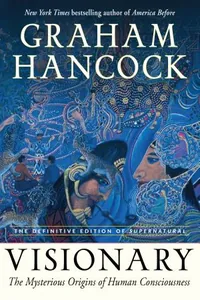
Zerkalo nebes, ili, Poisk propavsheĭ t͡sivilizat͡sii

 81
81

Zerkalo nebes, ili, Poisk propavsheĭ t͡sivilizat͡sii
Graham Hancock's "Zerkalo nebes, ili, Poisk propavsheĭ t͡sivilizat͡sii" (Mirror of the Heavens, or, The Search for a Lost Civilization) is less a dry academic thesis and more a compelling narrative urging readers to reconsider established historical timelines. Hancock marshals a formidable array of evidence, from megalithic sites like Göbekli Tepe to ancient myths and astronomical alignments, to support his contention of a sophisticated global civilization that vanished. The book's strength lies in its relentless questioning of dogma and its ability to synthesize disparate fields—archaeology, astronomy, geology—into a cohesive, albeit controversial, argument. A notable limitation is the occasional overreliance on speculative interpretation, where compelling correlation is sometimes presented as definitive causation. For instance, his examination of the cyclical nature of cataclysms and their potential to erase advanced cultures, while intriguing, requires a leap of faith for those adhering strictly to established archaeological stratigraphy. Still, Hancock compels a re-evaluation of what we think we know about our past. It's a challenging read for any serious student of ancient history.
📝 Description
81
### What It Is
This work, originally published in 2000, presents Graham Hancock's exploration into the possibility of a lost, advanced civilization predating known history. It scrutinizes archaeological evidence and ancient texts, suggesting that a sophisticated society may have existed and influenced later cultures before being wiped out by cataclysmic events at the end of the last Ice Age. The book posits that much of human history has been misunderstood due to a bias towards established timelines.
### Who It's For
Readers interested in alternative historical narratives and prehistory will find this book engaging. It appeals to those who question mainstream archaeological and historical consensus, particularly concerning the origins of civilization and the capabilities of ancient peoples. It is suited for individuals curious about what might lie hidden beneath conventional understandings of human development and global history.
### Historical Context
The early 2000s marked a period of significant public interest in alternative histories and ancient mysteries. Hancock's work emerged within a landscape populated by other authors and researchers challenging orthodoxies, such as those exploring extraterrestrial influences or lost continents. This book contributed to a broader discourse questioning the accepted timeline of human civilization and the potential for forgotten eras of advanced knowledge.
### Key Concepts
Hancock’s central thesis revolves around the concept of a sophisticated prehistoric civilization, often referred to as a "civilization that was lost." He examines evidence for advanced astronomical knowledge, sophisticated engineering, and widespread cultural diffusion dating back thousands of years before recorded history. The book also frequently references the Younger Dryas period, a dramatic climate shift around 12,900 to 11,700 years ago, as a potential cataclysm that ended this advanced society.
💡 Why Read This Book?
• Understand the hypothesis of a sophisticated prehistoric global civilization, examining evidence for its advanced knowledge and potential demise during the Younger Dryas, a period around 12,900 years ago. • Explore Hancock's synthesis of archaeological findings and astronomical data, particularly concerning megalithic sites and their potential connection to forgotten celestial observations. • Re-evaluate conventional historical timelines by engaging with arguments that suggest a hidden epoch of human development preceding recorded history, challenging established archaeological consensus.
⭐ Reader Reviews
Honest opinions from readers who have explored this book.
❓ Frequently Asked Questions
What evidence does Graham Hancock present for a lost civilization?
Hancock cites evidence such as advanced astronomical alignments in ancient structures, sophisticated megalithic construction predating accepted timelines, and recurring myths of a great flood or cataclysm across diverse cultures.
What is the significance of the Younger Dryas in Hancock's theory?
The Younger Dryas, a period of rapid cooling around 12,900 to 11,700 years ago, is presented as the likely cataclysmic event that ended the advanced civilization Hancock hypothesizes, wiping out its knowledge and physical remnants.
How does Hancock's work differ from mainstream archaeology?
Mainstream archaeology generally adheres to established timelines and evolutionary models of civilization. Hancock challenges this by proposing a highly advanced civilization existed much earlier and was destroyed, suggesting a 'gap' in our historical understanding.
Are there specific sites Hancock uses as key evidence?
Yes, Hancock frequently references sites like Göbekli Tepe, the pyramids of Egypt and Mesoamerica, and ancient astronomical observatories, arguing their construction and alignment point to a knowledge base beyond what is typically attributed to their respective eras.
What is the 'Mirror of the Heavens' concept?
The title 'Mirror of the Heavens' refers to the idea that ancient peoples, particularly those of a lost advanced civilization, possessed profound astronomical knowledge and built structures aligned with celestial events, reflecting a deep connection to the cosmos.
When was 'Zerkalo nebes, ili, Poisk propavsheĭ t͡sivilizat͡sii' first published?
This particular title and edition were first published in 2000, aligning with the broader release of Graham Hancock's research into ancient civilizations.
🔮 Key Themes & Symbolism
Prehistoric Advanced Civilization
The core of Hancock's argument is the existence of a global, technologically and culturally advanced civilization that predates known history, possibly emerging during the last Ice Age. This society, he suggests, possessed sophisticated knowledge of astronomy, engineering, and possibly other sciences. Evidence for this is drawn from similarities in megalithic architecture, astronomical alignments found at ancient sites, and a shared mythology of destruction and rebirth across disparate cultures, pointing to a common origin that has been largely erased from conventional historical records.
Cataclysmic Eras and History
Hancock posits that major cataclysms, particularly the end of the last Ice Age and the subsequent Younger Dryas event (circa 12,900-11,700 years ago), were responsible for the destruction of this advanced civilization. He argues that conventional history has overlooked or downplayed the impact of such events, leading to a fragmented and incomplete understanding of human development. The book explores how these cataclysms could have wiped out physical evidence and oral traditions, leaving only enigmatic ruins and fragmented myths as clues to a forgotten epoch.
Revisionist Archaeology
This work is a significant contribution to revisionist archaeology, challenging the established timeline that places the emergence of complex civilization around 5,000 to 6,000 years ago in Mesopotamia and Egypt. Hancock presents evidence that suggests sophisticated societies and advanced knowledge existed far earlier. He critiques the prevailing academic dogma, suggesting a bias against accepting evidence that doesn't fit the current evolutionary model of human progress, and advocates for a more open-minded approach to interpreting ancient mysteries and artifacts.
The Mirror of the Heavens
The title, 'Mirror of the Heavens,' encapsulates a central theme: the profound astronomical knowledge attributed to this lost civilization. Hancock argues that many ancient megalithic structures are not merely ceremonial or defensive but are sophisticated observatories designed to track celestial movements with remarkable precision. This suggests a deep, perhaps spiritual, connection to the cosmos, where the sky served as a blueprint or a calendar, reflecting a worldview profoundly different from our own and hinting at a lost science of the stars.
💬 Memorable Quotes
“Our ancestors knew things we have forgotten.”
— This encapsulates Hancock's core belief that ancient peoples possessed a depth of knowledge, particularly concerning cosmology and natural cycles, that has been lost to modern humanity. It implies a cyclical view of progress, where advanced understanding can be achieved and subsequently lost.
“The evidence for a lost civilization is not buried; it is all around us.”
— Hancock suggests that the remnants of a sophisticated prehistoric society are not hidden underground but are visible in plain sight through megalithic ruins, ancient myths, and astronomical alignments that are often misinterpreted or ignored by mainstream scholarship.
“Cataclysms have reshaped our planet and our history more than we realize.”
— This highlights the role of natural disasters, such as those occurring at the end of the last Ice Age, in Hancock's narrative. He argues these events were not just geological phenomena but powerful forces that dramatically altered human civilization, leading to the loss of knowledge and the resetting of historical timelines.
“We are not the first to reach for the stars.”
— This phrase points to the sophisticated astronomical understanding Hancock attributes to ancient peoples. It suggests that humanity's fascination with and study of the cosmos is not a modern invention but a recurring theme throughout our history, possibly originating with a precursor civilization.
“The accepted narrative of human history is incomplete.”
— This is a direct challenge to the mainstream historical and archaeological consensus. Hancock asserts that the current understanding of human development, particularly concerning the rise of civilization, omits crucial chapters and potentially entire epochs of advanced human achievement.
🌙 Esoteric Significance
Tradition
While not strictly adhering to a single esoteric lineage, Hancock's work draws heavily from the perennial philosophy and Gnostic undertones of a hidden, lost wisdom. It echoes themes found in Theosophy and Anthroposophy regarding ancient, advanced root races and cyclical epochs of human spiritual and intellectual development. His search for a forgotten global civilization aligns with the esoteric quest for primordial knowledge, suggesting that true understanding of humanity's origins and potential lies beyond the materialist interpretations of conventional science.
Symbolism
The book frequently engages with the symbolism of cataclysm and renewal, often drawing parallels between ancient flood myths and geological evidence of dramatic climate shifts like the Younger Dryas. Celestial bodies, particularly stars and constellations, are presented as symbolic keys, with astronomical alignments in megalithic structures serving as a 'mirror of the heavens,' reflecting the lost civilization's cosmic understanding and potentially acting as a symbolic map of their lost knowledge.
Modern Relevance
Hancock's ideas continue to influence contemporary researchers and esoteric thinkers exploring ancient history, consciousness studies, and earth mysteries. His work resonates with modern movements that question scientific materialism and seek to integrate spiritual or metaphysical perspectives with scientific inquiry. Thinkers in fields like archaeoastronomy, ancient advanced civilizations theories, and even certain branches of eco-spiritualism often cite Hancock's research as a foundational element in their own explorations of humanity's hidden past and its connection to cosmic cycles.
👥 Who Should Read This Book
• Amateur historians and archaeology enthusiasts who are curious about alternative interpretations of ancient sites and myths, and who wish to explore evidence challenging the standard timeline of human civilization. • Students of esotericism and comparative mythology seeking to understand theories about lost ancient wisdom traditions and the potential for forgotten epochs of advanced human development. • Skeptics of mainstream narratives who are interested in engaging with a comprehensive argument for a sophisticated prehistoric global society, and who appreciate a narrative that synthesizes diverse fields of evidence.
📜 Historical Context
Published in 2000, Graham Hancock's "Zerkalo nebes, ili, Poisk propavsheĭ t͡sivilizat͡sii" entered a cultural milieu already fertile with interest in ancient mysteries and alternative histories. The late 20th century saw a resurgence of popular fascination with topics like Atlantis, ancient aliens, and pre-Diluvian civilizations, fueled by authors such as Erich von Däniken and Zecharia Sitchin. Hancock's work built upon this, focusing specifically on archaeological and geological evidence for a sophisticated Ice Age civilization. He engaged directly with the scientific establishment, often facing sharp criticism from archaeologists and geologists who defended the established timelines of human development, particularly the consensus view that complex societies emerged only after the end of the last Ice Age, around 10,000 BCE. The book's reception was marked by both widespread public enthusiasm and significant academic skepticism, positioning it as a key text in the ongoing debate between orthodox and revisionist historical perspectives.
📔 Journal Prompts
The evidence for a lost civilization: what specific artifacts or sites mentioned most intrigue you?
Reflect on the symbolism of cataclysms in ancient myths and their potential connection to the Younger Dryas.
Consider the 'Mirror of the Heavens' concept; how might ancient astronomical knowledge have shaped worldview?
Analyze Hancock's critique of academic dogma; where might bias obscure historical truth?
Contemplate the idea of forgotten knowledge; what might a lost civilization's wisdom offer today?
🗂️ Glossary
Younger Dryas
A period of significant and rapid cooling that occurred approximately 12,900 to 11,700 years ago, marking a temporary reversal of the warming trend at the end of the last Ice Age. Hancock posits this event as a potential cataclysm that destroyed a sophisticated prehistoric civilization.
Megalithic Sites
Ancient structures built from large, undressed stones. Examples include Stonehenge, Göbekli Tepe, and various pyramids. Hancock argues their construction and alignment suggest advanced knowledge and labor capabilities far beyond what is conventionally attributed to early human societies.
Göbekli Tepe
An archaeological site in southeastern Turkey, featuring large carved stone pillars arranged in circles. Dated to approximately 9600-8200 BCE, it predates settled agriculture and is considered by many to be the world's oldest known temple complex, challenging established notions of early civilization.
Perennial Philosophy
The idea, championed by thinkers like Aldous Huxley, that all major religious and spiritual traditions share a common, underlying truth or wisdom. Hancock's work can be seen as applying a similar concept to history, suggesting a shared, lost origin for human civilization.
Archaeological Dogma
The established body of theories, methods, and interpretations within archaeology. Hancock uses this term to describe the prevailing academic consensus that he believes resists or dismisses evidence that contradicts the accepted timeline of human development and the rise of civilization.
Cataclysm
A violent natural event, such as an earthquake, flood, or asteroid impact, that causes great destruction and change. Hancock proposes that such events were instrumental in the destruction of a hypothesized advanced prehistoric civilization.
Civilization that was lost
Hancock's term for a hypothetical advanced global civilization that existed prior to recorded history, potentially during or before the end of the last Ice Age, and which was wiped out by a major cataclysm.