Yi tu ming bian

 74
74

Yi tu ming bian
Wei Hu's *Yi tu ming bian* offers a dense, visually driven approach to understanding Chinese metaphysical frameworks. Its strength lies in its systematic cataloging of symbolic diagrams, presenting them not as mere illustrations but as keys to cosmic order. The work’s primary challenge for a modern reader, particularly one accustomed to more narrative or experiential texts, is its sheer density and reliance on a pre-existing symbolic vocabulary. For instance, the detailed explanations surrounding the arrangements of hexagrams and their purported correlations with natural phenomena demand significant prior knowledge or dedicated study. The book functions more as a reference manual for initiates than an accessible primer. Despite this, for scholars or dedicated practitioners seeking to decode the visual language of ancient Chinese cosmology, *Yi tu ming bian* provides invaluable, albeit demanding, material. It succeeds in its aim to map symbolic connections with academic precision.
📝 Description
74
Wei Hu's Yi tu ming bian, published in 1888, details diagrams and their meanings within Chinese esoteric traditions.
Yi tu ming bian, authored by Wei Hu and first released in 1888, is a structured treatise on symbolic systems and their interrelations within Chinese esoteric philosophy. It is not a narrative but a systematic examination of various diagrams, explaining their specific meanings and correspondences. The book serves as a guide to understanding complex metaphysical ideas through visual representation. Its core concern is the inherent order of the cosmos, as revealed through precise symbolic arrangements.
This work is directed toward serious students of Chinese metaphysics, comparative symbolism, and traditional cosmology. It will benefit readers who wish to go beyond surface-level interpretations and engage with the underlying logic of ancient symbolic systems. Those who prefer rigorous structure and detailed visual analysis in their study of esoteric lore will find it particularly useful. Scholars of East Asian religions and philosophy may also consider it a valuable, though demanding, resource.
Published during the late Qing Dynasty, Yi tu ming bian draws upon centuries of Chinese philosophical and cosmological thought, including Daoist traditions and the I Ching. Wei Hu’s work reflects a period of intellectual activity where scholars preserved and reinterpreted ancient knowledge. The book’s focus on diagrams as keys to understanding universal patterns aligns with a long tradition in China of seeking hidden order through visual and symbolic means. Its survival suggests a sustained interest in systematic treatises on cosmic principles.
✍️ Author
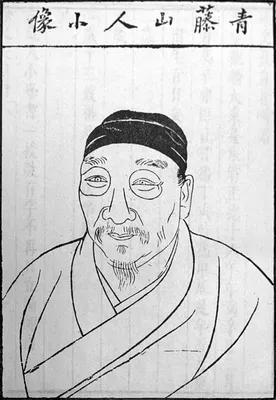
Wei Hu
Xu Wei (Chinese: 徐渭; pinyin: Xú Wèi; Wade–Giles: Hsü Wei, 1521–1593), also known as Qingteng Shanren (Chinese: 青藤山人; pinyin: Qīngténg Shānrén), was a Chinese painter, playwright, poet, and tea master during the Ming dynasty.
💡 Why Read This Book?
• Gain insight into the visual logic of Chinese cosmology, learning how specific diagrams like the Fuxi Bagua are interpreted to represent universal principles, a method distinct from purely textual analysis. • Understand the interconnectedness of symbols within Chinese esoteric thought, as the book details how concepts like Yin and Yang correspond to specific graphical arrangements, offering a tangible link to abstract philosophy. • Appreciate the scholarly rigor of late 19th-century Chinese metaphysical studies by examining Wei Hu's systematic approach to cataloging and explaining complex diagrams, providing context for the 1888 publication.
⭐ Reader Reviews
Honest opinions from readers who have explored this book.
❓ Frequently Asked Questions
What is the primary focus of Yi tu ming bian?
Yi tu ming bian focuses on the detailed explanation and interpretation of symbolic diagrams (tu) used in Chinese metaphysics and cosmology, aiming to illustrate the underlying order of the universe.
Who was Wei Hu and when did he publish this work?
Wei Hu was the author of Yi tu ming bian, which was first published in 1888 during the late Qing Dynasty in China.
Does Yi tu ming bian require prior knowledge of Chinese philosophy?
While not strictly mandatory, prior knowledge of concepts like Yin and Yang, the Five Elements, and the I Ching significantly enhances comprehension, as the book uses these as foundational elements for its symbolic interpretations.
What kind of diagrams are discussed in the book?
The book discusses various cosmological diagrams, including arrangements of the Eight Trigrams (Bagua) and their related symbolic meanings, often connecting them to natural phenomena and philosophical principles.
Is Yi tu ming bian a narrative or a reference work?
Yi tu ming bian is primarily a reference work, structured to systematically present and explain symbolic diagrams and their metaphysical significance, rather than telling a story.
How does Yi tu ming bian relate to the I Ching?
The book draws heavily on I Ching symbolism, particularly the trigrams and hexagrams, interpreting their structure and relationships as representations of cosmic forces and principles.
🔮 Key Themes & Symbolism
Cosmic Diagrammatic Logic
The central theme revolves around the principle that the universe's structure can be understood and depicted through specific symbolic diagrams. Yi tu ming bian meticulously details these 'tu', demonstrating how their arrangements encode metaphysical truths. This approach posits that visual configurations are not mere representations but active keys to unlocking cosmic order, bridging the abstract realm of philosophy with concrete visual forms. The book emphasizes the inherent patterns within existence, accessible via careful study of these symbolic maps.
Symbolic Correspondence Systems
Central to the work is the exploration of correspondence systems, particularly how elements like Yin and Yang, the Five Elements (Wu Xing), and the I Ching's trigrams and hexagrams relate to one another and to broader cosmological principles. Yi tu ming bian maps these relationships, illustrating how changes in one element or symbol can be understood in relation to others. This intricate web of connections serves to illuminate the dynamic interplay of forces governing the manifest world, offering a framework for interpreting phenomena.
Metaphysical Interpretation of Visual Forms
The book champions the idea that visual forms possess inherent metaphysical significance. Rather than treating diagrams as abstract art or simple notation, Yi tu ming bian assigns deep meaning to their structure, lines, and spatial relationships. It provides a methodology for interpreting these visual elements, showing how they can serve as conduits for understanding spiritual and philosophical concepts. This focus elevates the diagram from a mere tool to a profound expression of cosmic law and order.
The Bagua and its Applications
A significant portion of the book is dedicated to the Eight Trigrams (Bagua), a foundational symbol in Chinese cosmology. Yi tu ming bian details various arrangements and interpretations of the Bagua, linking them to cardinal directions, elements, family members, and various natural phenomena. This exploration highlights the Bagua's role as a versatile symbolic tool capable of mapping diverse aspects of existence, from the mundane to the celestial, and understanding their interrelationships.
💬 Memorable Quotes
“The arrangement of lines reveals the flow of Qi.”
— This concept suggests that the visual structure of diagrams, like the hexagrams of the I Ching, is not arbitrary but directly reflects the fundamental energetic currents (Qi) that animate the cosmos and all within it.
“Each tu is a map of cosmic principle.”
— This highlights the book's core thesis: that specific symbolic diagrams serve as precise cartographies of universal laws and structures, providing a visual language to comprehend reality's underlying order.
“Understanding the correspondences between elements illuminates the whole.”
— This emphasizes the interconnectedness of all things within the Chinese metaphysical system, suggesting that grasping the relationships between seemingly disparate elements (like the Five Elements) is key to a comprehensive understanding of existence.
“The hexagram's form dictates its meaning.”
— This points to the belief that the visual composition and structure of a hexagram are intrinsically linked to its interpretation and the specific cosmic or worldly phenomena it represents.
“From the diagram, the Way is perceived.”
— This expresses the idea that through the dedicated study and contemplation of symbolic diagrams, one can gain direct insight into the fundamental principles (the Way or Dao) that govern the universe.
🌙 Esoteric Significance
Tradition
The work is firmly situated within the Chinese esoteric and philosophical tradition, particularly drawing from Daoism and the I Ching lineage. It aligns with a broader cosmological worldview that sees the universe as an interconnected, ordered system governed by discernible principles, often visualized through symbolic diagrams. It departs from purely philosophical treatises by offering a highly structured, visual exegesis of these principles, functioning as a practical manual for understanding symbolic correspondences.
Symbolism
Key symbols include the Bagua (Eight Trigrams) and the hexagrams of the I Ching. The Bagua, discussed in various arrangements, represents fundamental cosmic forces, directions, and elements. The hexagrams, composed of Yin and Yang lines, are seen as dynamic representations of situations and transformations within the cosmos. Their specific structures and sequences are interpreted to reveal underlying patterns of change and causality.
Modern Relevance
Contemporary practitioners of Chinese metaphysics, Feng Shui, and I Ching divination often reference classical texts like *Yi tu ming bian* for foundational understanding. Its systematic approach to symbolism continues to inform modern interpretations of traditional Chinese cosmology and offers a valuable resource for comparative studies in esoteric traditions globally.
👥 Who Should Read This Book
• Students of Chinese Metaphysics: Those seeking to understand the foundational symbolic systems like the Bagua and their cosmological significance will find a structured, detailed reference. • Comparative Symbolism Scholars: Researchers interested in how different cultures represent cosmic order through visual means will benefit from its analysis of Chinese diagrammatic logic. • Dedicated I Ching Diviners: Practitioners who wish to deepen their understanding of the trigrams and their interrelationships beyond simple divination will find valuable exegetical material.
📜 Historical Context
Published in 1888, *Yi tu ming bian* emerged during the late Qing Dynasty, a period marked by internal scholarly traditions and increasing engagement with Western thought. Wei Hu's work is deeply rooted in classical Chinese cosmology, drawing heavily from the I Ching and Daoist philosophies. It represents a continuation of a long tradition of exegetical scholarship focused on understanding the universe through symbolic systems. While not a period of outright censorship regarding traditional philosophical texts, it was a time when intellectual currents were shifting. Competing schools of thought existed, and scholars often engaged in rigorous debates about the interpretation of ancient classics. The precise reception of *Yi tu ming bian* upon its initial publication is not widely detailed, but its focus on systematic diagrammatic interpretation aligns with scholarly trends that sought to preserve and systematize classical knowledge, even as new intellectual paradigms began to form.
📔 Journal Prompts
The symbolic arrangement of the Bagua: how does its structure reflect cosmic order?
Reflect on the concept of Qi as conveyed through diagrammatic form.
Consider the relationship between a specific tu and its attributed philosophical meaning.
Analyze the correspondences presented between elements (e.g., Five Elements and trigrams).
How does the book's visual approach to metaphysics differ from purely textual explanations?
🗂️ Glossary
Tu (圖)
A diagram, chart, or illustration. In the context of Yi tu ming bian, 'tu' refers to specific symbolic arrangements used to represent cosmological principles and their relationships.
Bagua (八卦)
The Eight Trigrams, fundamental symbols in Chinese cosmology derived from the I Ching. Each trigram is composed of three lines, either solid (Yang) or broken (Yin), and represents various natural forces and concepts.
Yin and Yang (陰陽)
The fundamental dualistic principle in Chinese philosophy representing complementary opposites (e.g., dark/light, passive/active). They are seen as interdependent forces that shape the cosmos.
Wu Xing (五行)
The Five Phases or Five Elements (Wood, Fire, Earth, Metal, Water). They represent a dynamic cycle of interactions and transformations believed to underlie all natural phenomena and processes.
Qi (氣)
Vital energy or life force that permeates the universe. In the context of the book, Qi's flow and transformations are often understood through the symbolic arrangements presented in diagrams.
Hexagram (卦)
A figure composed of two trigrams, resulting in six lines. There are 64 hexagrams in the I Ching, each representing a specific situation, process, or state of being.
Exegeisis
Critical explanation or interpretation of a text or religious scripture. In this context, it refers to the detailed explanation and symbolic interpretation of the diagrams presented in the book.