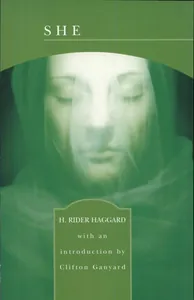
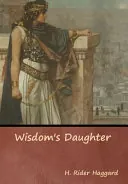
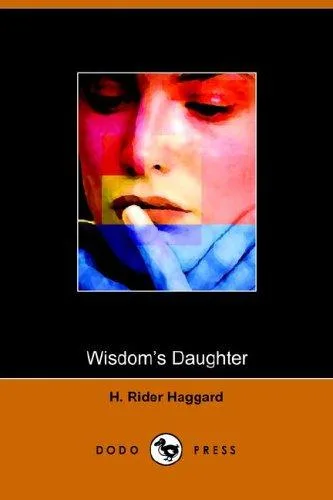
Wisdom's Daughter
 79
79

Wisdom's Daughter
The enduring power of "Wisdom's Daughter" lies in its creation of Ayesha, a female character who commands absolute spiritual and temporal authority, a rarity in the adventure fiction of its likely conception period. Haggard presents a compelling vision of a woman who has achieved a form of divine apotheosis through sheer force of will and esoteric knowledge. However, the narrative occasionally falters under the weight of its own romanticism, with Leo Vincey serving more as a passive conduit for Ayesha's grand design than an active participant. The depiction of ancient African societies, while fantastical, also reflects the colonial perspectives of its author's era, a point of friction for modern readers. Despite these limitations, the novel's exploration of cyclical existence and a woman's ultimate control over her destiny remains a potent occult archetype. It is a significant, if flawed, exploration of divine feminine power.
📝 Description
79
### A Queen's Ascent
H. Rider Haggard's "Wisdom's Daughter" chronicles the epic life of Ayesha, the potent sorceress who believes herself to be the reincarnation of the Egyptian goddess Isis. The narrative traces her millennia-long existence, her pursuit of immortality, and her eventual reunion with her destined lover, Leo Vincey. The story unfolds across ancient Egypt and a lost African kingdom, presenting a powerful female figure who wields immense authority and spiritual knowledge.
### For the Seeker of Ancient Power
This novel is intended for readers intrigued by archetypal feminine deities, ancient Egyptian lore, and narratives of spiritual rebirth. It will appeal to those who appreciate explorations of immortality, predestination, and the enduring power of love across vast spans of time. If you are drawn to stories where a central character embodies divine feminine energy and possesses profound mystical capabilities, "Wisdom's Daughter" offers a rich exploration.
### Echoes of Victorian Occultism
First published in 1985, though its themes and style are rooted in earlier speculative fiction, "Wisdom's Daughter" emerges from a period of renewed interest in spiritualism and esoteric philosophies. Haggard, a contemporary of Arthur Conan Doyle, often incorporated elements of adventure and the supernatural into his works, reflecting a broader cultural fascination with lost civilizations and hidden knowledge prevalent in the late 19th and early 20th centuries.
### The She-Who-Must-Be-Obeyed
The central concept revolves around Ayesha, a figure of immense psychic power and self-awareness who claims divine lineage. Her journey is one of self-discovery and the assertion of her own potent will, challenging conventional notions of identity and authority. The novel examines the nature of reincarnation, the cyclical return of souls, and the profound influence of past lives on present actions and destinies.
💡 Why Read This Book?
• Gain insight into the concept of the 'Divine Feminine' as embodied by Ayesha, a figure who actively pursues and asserts her deific status, a departure from passive portrayals. • Explore the theme of reincarnation and soul-memory, particularly how past lives, as experienced by Ayesha, directly shape her present actions and destiny. • Understand the late Victorian fascination with ancient Egypt and lost civilizations, as evidenced by Haggard's detailed (though fictionalized) portrayal of a hidden African kingdom and Egyptian deities.
⭐ Reader Reviews
Honest opinions from readers who have explored this book.
❓ Frequently Asked Questions
What is the primary esoteric concept explored in "Wisdom's Daughter"?
The primary esoteric concept is the reincarnation and divine apotheosis of a singular soul, embodied by Ayesha. She presents herself as the reincarnation of Isis, asserting her divine nature and immortality through millennia of existence.
Who is Ayesha in "Wisdom's Daughter"?
Ayesha, also known as "She-Who-Must-Be-Obeyed," is the central character. She is depicted as an immortal sorceress who believes herself to be the reincarnation of the Egyptian goddess Isis and possesses immense psychic and spiritual power.
What historical period or movement does "Wisdom's Daughter" relate to?
The novel's themes align with the late Victorian fascination with spiritualism, occultism, and exotic, lost civilizations, a cultural milieu that also produced figures like Madame Blavatsky and the Theosophical Society.
Is "Wisdom's Daughter" based on any real myths or legends?
While not directly based on a single myth, it draws heavily on ancient Egyptian mythology, particularly the goddess Isis, and incorporates themes of reincarnation and immortal rulers found in various ancient traditions.
What role does Leo Vincey play in the story?
Leo Vincey is the reincarnation of Kallikrates, Ayesha's ancient lover. He serves as the catalyst for Ayesha's reappearance and the fulfillment of her millennia-long quest for reunion.
What is the significance of the "Pillar of Life" in the book?
The "Pillar of Life" is a mystical artifact within the lost city of Kor that grants immortality. It is central to Ayesha's power and her ability to transcend death and time.
🔮 Key Themes & Symbolism
Divine Feminine Archetype
Ayesha embodies a potent, self-actualized Divine Feminine, claiming direct lineage from Isis. Unlike passive goddesses, she actively pursues her destiny, wielding immense power over life, death, and time. Her self-awareness and assertion of godhood challenge traditional patriarchal narratives, presenting a figure of ultimate authority and spiritual mastery. The narrative explores her millennia-long existence and her eventual reunion with her destined soulmate, Leo Vincey, as the culmination of divine will.
Reincarnation and Soul Memory
The concept of reincarnation is central, with Ayesha being the eternal return of a soul deeply connected to ancient Egypt. The novel posits that past lives imprint upon the soul, influencing present desires and actions. Leo Vincey's own reincarnation as Kallikrates drives the plot, highlighting how souls are drawn together across epochs. This cyclical view of existence suggests that destiny is not merely fate, but the inevitable convergence of karmically bound souls.
Immortality and Spiritual Power
Ayesha's immortality, sustained by the "Pillar of Life," is a key element. This is not mere longevity but a state of transcendence achieved through esoteric knowledge and will. Her power extends beyond the physical, encompassing psychic abilities and a profound understanding of cosmic cycles. The novel examines the burdens and responsibilities of such existence, as well as the ultimate desire for connection and love, even for a being who has achieved god-like status.
Lost Civilizations and Ancient Wisdom
Haggard places Ayesha's story within the context of a hidden African civilization, Kor, imbued with ancient Egyptian mysteries. This taps into a popular late Victorian trope of discovering lost worlds holding forgotten wisdom. The narrative uses these exotic settings to explore themes of ancient magic, forgotten deities, and the enduring power of primal spiritual forces, reflecting a contemporary fascination with archaeological discoveries and esoteric traditions.
💬 Memorable Quotes
“I am She who must be obeyed.”
— This iconic declaration encapsulates Ayesha's absolute authority and self-realization. It signifies her status not merely as a ruler, but as a divine being who commands ultimate obedience through her inherent power and spiritual attainment.
“I have lived a thousand lives, and I have loved but one man.”
— This statement highlights the novel's central theme of reincarnation and eternal love. It emphasizes that despite millennia of existence and countless experiences, Ayesha's soul remains bound to Leo Vincey across time.
“The world is to me as a drop of water in the ocean, and I myself am the ocean.”
— This metaphor illustrates Ayesha's cosmic perspective and her profound sense of self, transcending individual existence. She perceives herself as part of a vast, interconnected whole, embodying the totality of existence.
“For though I am a woman, I am also a goddess.”
— Ayesha explicitly claims divine status, differentiating her from ordinary humanity. This assertion underscores her unique position as a figure who has achieved apotheosis and wields god-like power and knowledge.
“It is the fate of all souls to return.”
— This interpretation of the cyclical nature of existence points to the core belief in reincarnation. It suggests that souls are destined to traverse multiple lifetimes, drawn by unseen forces until their ultimate purpose is fulfilled.
🌙 Esoteric Significance
Tradition
The work draws heavily from ancient Egyptian mythology, particularly the figure of Isis, a primordial goddess associated with magic, motherhood, and resurrection. It aligns with Gnostic concepts of divine feminine principles and the soul's journey towards self-realization. The emphasis on reincarnation and the eternal soul echoes Theosophical teachings prevalent during Haggard's time, presenting a narrative where a singular consciousness transcends physical death to achieve a form of divine existence.
Symbolism
The primary symbol is Ayesha herself, representing the Divine Feminine, eternal wisdom, and the power of self-deification. The 'Pillar of Life' symbolizes the source of immortality and cosmic energy, the very essence of life that Ayesha guards and embodies. The lost city of Kor represents a hidden spiritual sanctuary, a repository of ancient knowledge and primal power, separate from the mundane world.
Modern Relevance
Contemporary practitioners of goddess spirituality and those exploring archetypal feminine power often reference Ayesha as a potent, albeit fictional, example of female agency and divine self-assertion. Her narrative resonates with modern interest in past lives, soul connections, and the potential for spiritual transcendence. Thinkers in comparative mythology and esoteric studies continue to analyze Haggard's portrayal of ancient Egyptian motifs and universal spiritual concepts.
👥 Who Should Read This Book
• Students of ancient Egyptian mythology and its influence on later esoteric thought, seeking a narrative that personifies deities like Isis in a unique, immortal form. • Readers interested in archetypal explorations of the Divine Feminine and female spiritual authority, who appreciate strong, self-determined characters wielding profound power. • Enthusiasts of late Victorian adventure fiction and occultism, curious about how contemporary spiritual and mystical ideas were woven into popular literature.
📜 Historical Context
H. Rider Haggard's "Wisdom's Daughter" emerged from a rich period of occult and spiritualist inquiry in the late Victorian era. Contemporaries like Arthur Conan Doyle were exploring spiritualism, while figures such as Madame Blavatsky and the Theosophical Society were popularizing concepts of ancient wisdom and reincarnation. The late 19th century saw a surge of interest in Egyptology following significant archaeological discoveries, fueling narratives about lost Egyptian secrets and divine figures. Haggard himself was influenced by his experiences in colonial Africa, blending adventure with a fascination for ancient legends and mystical powers. While not a direct engagement, Haggard's work shared thematic ground with Rudyard Kipling's "The Man Who Would Be King" (1888) in its exploration of grand, often hubristic, quests in exotic locales. The novel's focus on a powerful, immortal female deity also spoke to evolving, though often contested, ideas about feminine spirituality.
📔 Journal Prompts
Ayesha's assertion of being both woman and goddess—explore the duality.
The concept of soul memory as experienced by Leo Vincey and Ayesha.
Reflect on the nature of immortality as depicted through the 'Pillar of Life'.
The significance of ancient Egyptian motifs within the lost city of Kor.
Ayesha's claim to be 'She who must be obeyed'—analyze its implications.
🗂️ Glossary
Ayesha
The central character, an immortal sorceress who believes herself to be the reincarnation of the Egyptian goddess Isis. She is depicted as possessing immense spiritual and psychic power.
Isis
A major goddess in ancient Egyptian religion, revered as a mother, wife, and magician. She is associated with healing, royalty, and the afterlife, and is often depicted with a throne hieroglyph on her head.
Leo Vincey
A young Englishman who is the reincarnation of Kallikrates, Ayesha's ancient lover. He is drawn to Africa by a mystical force to reunite with Ayesha.
Kallikrates
A priest of Isis who lived thousands of years before the main narrative and was Ayesha's lover. His soul reincarnates as Leo Vincey.
Pillar of Life
A mystical artifact located in the lost city of Kor that grants immortality and sustains Ayesha's existence. It is a source of immense cosmic energy.
Kor
A hidden, ancient city in Africa where Ayesha resides. It is depicted as a place of forgotten wisdom, immense power, and a preserved remnant of ancient Egyptian mysticism.
She-Who-Must-Be-Obeyed
A title of absolute authority adopted by Ayesha, emphasizing her divine status and the unquestioning obedience she commands from her followers.