Winter
 80
80

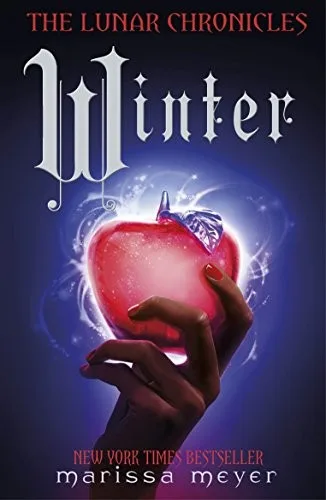
Winter
Marissa Meyer’s *Winter* is a sprawling conclusion that attempts to bring together disparate plot threads with a certain kinetic energy. The novel’s strength lies in its ambitious scope and the sheer determination of its protagonist, Cinder, to forge her own path against overwhelming odds. Meyer excels at depicting moments of high tension, particularly during the climactic confrontations that define the novel’s latter half. However, the narrative occasionally buckles under its own weight, with pacing that can feel uneven. A particular point of contention for this critic is the resolution of the Lunar Queen Levana's arc, which, while thematically coherent, feels somewhat compressed given the preceding build-up. The thematic exploration of sacrifice, particularly Cinder’s willingness to endure personal hardship for the greater good, is a consistent throughline. Ultimately, *Winter* delivers a serviceable conclusion to its series, prioritizing grand gestures over nuanced character work in its final act.
📝 Description
80
Marissa Meyer's *Winter*, published in 2016, examines destiny and sacrifice through a science fiction narrative.
This 2016 novel centers on a conflict between technologically advanced factions and individuals with unique abilities. While framed as young adult science fiction, *Winter* contains thematic elements that can be read through an esoteric lens. The story follows characters grappling with destiny, sacrifice, and their resistance against oppressive systems.
Readers will find detailed world-building and character development. The narrative engages with archetypal journeys, particularly the heroine's journey, adapted for a modern setting. It appeals to those who enjoy stories where characters confront personal limitations and societal pressures, ultimately redefining their own roles within their world.
The narrative engages with the 'chosen one' archetype, a common motif in esoteric traditions that often signifies an individual destined for a specific purpose or transformation. However, Meyer shifts focus to the protagonist's internal development and her evolving understanding of her capabilities. This aligns with esoteric thought that emphasizes inner alchemy and self-realization over external destiny. The conflict between technology and innate ability also mirrors discussions in some esoteric circles about the balance between material and spiritual forces.
💡 Why Read This Book?
• Gain insight into the subversion of the 'chosen one' trope through Cinder's evolving self-perception, a crucial element for understanding modern archetypal narratives. • Experience the symbolic conflict between technological advancement and innate lunar abilities, offering a fresh perspective on the nature of power as presented in the book's 2016 context. • Explore the theme of societal rebellion against oppressive control, particularly as Cinder’s actions in the latter half of the book challenge established hierarchies.
⭐ Reader Reviews
Honest opinions from readers who have explored this book.
❓ Frequently Asked Questions
What is the primary conflict in Marissa Meyer's Winter?
The primary conflict in *Winter* revolves around the rebellion against the tyrannical Lunar Queen Levana and her oppressive regime, with Cinder and her allies fighting for the freedom of Earth and Luna.
Who is the main protagonist in the book Winter by Marissa Meyer?
The main protagonist is Linh Cinder, a cyborg mechanic who discovers she is a Lunar with the ability to overthrow Queen Levana. Her journey of self-discovery and leadership is central to the narrative.
What are some of the key themes explored in Winter?
Key themes include identity, sacrifice, the corrupting nature of power, the struggle for freedom, and the blurred lines between humanity and technology, particularly evident in Cinder's cyborg nature.
When was Marissa Meyer's book Winter first published?
Marissa Meyer's book *Winter* was first published in 2016, serving as the fourth and final installment of The Lunar Chronicles series.
Does Winter conclude the story arc from previous books?
Yes, *Winter* is the concluding novel of The Lunar Chronicles, aiming to resolve the overarching plotlines and character arcs established in the preceding books: Cinder, Scarlet, and Cress.
What role do the Lunars play in Winter?
The Lunars, inhabitants of the moon with unique mental abilities, are central to *Winter*. Their society is depicted as hierarchical and often oppressive under Queen Levana, driving the main conflict.
🔮 Key Themes & Symbolism
Identity and Transformation
The narrative deeply examines the concept of identity, particularly through the protagonist Cinder, a cyborg grappling with her human and Lunar heritage. Her journey involves accepting and integrating these disparate parts of herself, moving beyond societal labels and expectations. This internal transformation is mirrored in other characters who also confront their true selves and redefine their roles within the unfolding conflict. The work suggests that identity is not fixed but a fluid state shaped by choice and experience.
The Nature of Power
Meyer explores the corrupting influence of absolute power, primarily embodied by Queen Levana and the Lunar elite. Their control is maintained through manipulation, fear, and the suppression of individual will. Conversely, the novel also investigates the power of resistance, empathy, and collective action. The protagonists' abilities, both technological and innate, are presented as tools that can be used for liberation or oppression, highlighting the ethical responsibilities that accompany power.
Destiny vs. Free Will
A central tension in *Winter* is the conflict between predetermined fate and the exercise of free will. Characters often feel bound by prophecies or societal roles, particularly those with Lunar gifts. However, the story emphasizes the agency of individuals to defy expectations and forge their own paths. Cinder's arc is a prime example of challenging a perceived destiny, demonstrating that choices made in the present can reshape the future, even against seemingly insurmountable odds.
Sacrifice and Redemption
The theme of sacrifice permeates the narrative, as characters are repeatedly forced to make difficult choices that involve personal loss for the greater good. This is not limited to grand gestures but includes the quiet, ongoing sacrifices of daily life under oppressive conditions. The concept of redemption is also explored, with characters seeking to atone for past actions or to find forgiveness, suggesting that even those who have erred can find a path toward healing and positive change.
💬 Memorable Quotes
Direct passages from the work, attributed to the author.
“She was a prisoner in her own mind.”
— This phrase speaks to internal struggles and psychological confinement. It reflects characters who feel trapped by their thoughts, fears, or societal conditioning, unable to act freely despite physical liberty.
“Kindness isn't a weakness, it's a strength.”
— This interpretation highlights the value of empathy and compassion as sources of power. It challenges the notion that aggression or ruthlessness is necessary for survival or success, advocating for a more humane approach.
“The future was a blank page, and she would write her own story.”
— This concept emphasizes agency and self-determination. It signifies a character's rejection of predetermined paths and their commitment to actively shaping their own destiny through their actions and decisions.
“There was no going back to the person she used to be.”
— This signifies a point of irreversible change and growth. It acknowledges that significant experiences fundamentally alter an individual, making a return to a previous state impossible and highlighting the permanence of personal evolution.
💡 Key Ideas
Editorial paraphrase of the work's core concepts — not direct quotes.
Even the darkest night will end and the sun will rise.
This quote expresses the theme of hope and perseverance. It suggests that no matter how dire the circumstances or how prolonged the suffering, there is always the potential for a new beginning and the eventual triumph of light over darkness.
🌙 Esoteric Significance
Tradition
While *Winter* is primarily a young adult science fiction novel, its thematic underpinnings can be viewed through an esoteric lens, particularly concerning archetypal journeys and the nature of hidden power. It departs from traditional Western esoteric lineages by not explicitly referencing specific magical systems or metaphysical doctrines. Instead, it explores concepts such as destiny, inner transformation, and the struggle against oppressive forces in a secular, technologically advanced setting, making its esoteric resonance more allegorical than doctrinal.
Symbolism
The cyborg nature of the protagonist, Cinder, symbolizes the integration of the mechanical (artificial, perhaps rational) with the organic (human, emotional), representing a complex, evolving self. Lunar abilities, such as mind control and illusion, can be interpreted as symbolic representations of psychic powers or the manipulative forces of the ego and societal conditioning. The recurring theme of winter itself can symbolize periods of dormancy, harsh trials, or the apparent death preceding a rebirth, a common motif in cyclical spiritual narratives.
Modern Relevance
Contemporary discussions around identity politics, the ethics of artificial intelligence, and the nature of power in digital societies find echoes in *Winter*. Thinkers exploring the 'heroine's journey' in modern narratives often cite characters like Cinder. Furthermore, the novel's exploration of overcoming systemic oppression and finding individual agency appeals to activists and communities seeking social change, demonstrating the enduring appeal of stories that champion resilience and self-determination.
👥 Who Should Read This Book
• Young Adult readers who enjoy character-driven science fiction with themes of rebellion and self-discovery, offering a compelling narrative arc that concludes in 2016. • Aspiring writers and fans of speculative fiction interested in analyzing how authors build complex worlds and resolve multi-book plotlines, particularly within the popular YA genre. • Individuals interested in exploring archetypal narratives and the 'heroine's journey' in a modern context, as Cinder’s evolution provides a rich case study.
📜 Historical Context
Published in 2016, Marissa Meyer's *Winter* arrived during a peak period for young adult speculative fiction, particularly the dystopian subgenre. This era saw authors like Veronica Roth (whose *Divergent* series concluded in 2014) and Suzanne Collins (whose *Hunger Games* concluded in 2010) establishing a strong market for narratives of young protagonists challenging authoritarian regimes. Meyer's series, The Lunar Chronicles, distinguished itself by blending fairy tale retellings with science fiction elements and a diverse cast. While not directly engaging with philosophical movements like Gnosticism, the series' exploration of hidden truths and the struggle against a manipulative, controlling elite (the Lunars) can be seen as echoing Gnostic themes of liberation from ignorance. The reception of *Winter* was largely positive among its established fanbase, concluding a story arc that began in 2012 with *Cinder*, solidifying Meyer's place within the contemporary YA landscape.
📔 Journal Prompts
Cinder's acceptance of her cyborg and Lunar identities.
The symbolic meaning of 'winter' in relation to the characters' trials.
Queen Levana's manipulation tactics and their psychological impact.
The balance between destiny and the choices made by the protagonists.
The redemptive potential of sacrifice as depicted in the narrative.
🗂️ Glossary
Cyborg
A being with both organic and biomechatronic body parts. In *Winter*, protagonist Linh Cinder is a cyborg, dealing with the integration of her mechanical limbs and systems with her biological self.
Lunar
An inhabitant of Earth's moon, possessing unique mental abilities such as mind-reading and persuasion. The Lunars are depicted as technologically advanced but often socially and morally complex.
The Gift
Refers to the innate psychic abilities possessed by Lunars. These powers vary among individuals and are central to their societal structure and control mechanisms.
Shells
A term used in the book to describe Lunars who use their abilities to create illusions or manipulate perceptions, often serving as agents of Queen Levana.
Scar Tissue
Metaphorically used to describe emotional or psychological damage that persists after trauma. Characters in *Winter* grapple with their 'scar tissue' from past events.
The Fairest
A derogatory term used by Lunars for humans, implying superiority. It reflects the Lunar belief system and their disdain for Earthlings.
Ego
In the context of the book, this can refer to an individual's sense of self, but also to the manipulative self-serving aspects of a character's personality, particularly Queen Levana's.
🔮 Readers Also Liked
Browse all →








More by Marissa Meyer
All books →





More Free Occult Philosophy Books
View all →