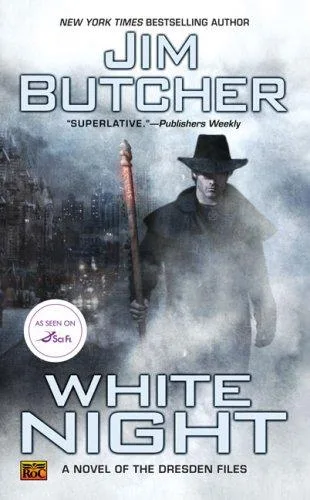
White Night
 76
76

White Night
White Night plunges Harry Dresden into a clandestine magical conflict with stakes that feel immediate and personal. Butcher excels at portraying the sheer exhaustion and moral compromise inherent in such a struggle. The introduction of the White Necromancy threat is genuinely chilling, offering a potent antagonist force that tests Dresden’s resolve. However, the sheer number of factions and subplots can occasionally make the narrative feel slightly overstuffed, diverting attention from the core emotional arcs. A particularly striking sequence involves Dresden’s forced alliance with characters he fundamentally distrusts, highlighting the grim pragmatism required for survival. While the pacing occasionally falters under the weight of exposition, the novel ultimately delivers a visceral and satisfying chapter in Dresden’s ongoing saga, reinforcing his role as a reluctant hero in a world rife with darkness. It’s a solid entry that leans into the grittier aspects of its magical world.
📝 Description
76
### What It Is White Night, published in 2008 by Jim Butcher, is the ninth novel in the Dresden Files series. It chronicles the magical and detective exploits of Harry Dresden, Chicago's only professional wizard. The narrative thrust involves Harry being drawn into a brutal underground magical war, forcing him to confront formidable adversaries and make difficult alliances. The book delves into the shadowy underbelly of the supernatural world, revealing hidden factions and ancient power struggles.
### Who It's For This novel is best suited for readers already invested in the Dresden Files saga, particularly those who enjoy urban fantasy with a strong noir influence. It appeals to fans of magic systems that feel gritty and consequential, and who appreciate a protagonist operating on the fringes of society. Those interested in the moral ambiguities of power and the consequences of violence within a magical context will find White Night particularly engaging.
### Historical Context Released in 2008, White Night emerged during a period of significant growth and popularization for the urban fantasy genre. Authors like Charlaine Harris (The Southern Vampire Mysteries) and Laurell K. Hamilton (Anita Blake: Vampire Hunter) had already established strong reader bases, paving the way for complex supernatural world-building. Jim Butcher's work, however, distinguished itself with its male protagonist and a more overt integration of detective noir elements, a combination that solidified its unique niche. The year 2008 also saw continued interest in the burgeoning paranormal romance subgenre, making Butcher's more action-oriented approach a notable counterpoint.
### Key Concepts The novel explores the concept of 'White Necromancy,' a forbidden and dangerous form of magic associated with life-draining abilities and the manipulation of death energies. It also examines the precarious balance of power among the various supernatural factions operating within Chicago, particularly the White Council and the various Courts of the Fae. The theme of sacrifice, both personal and communal, is central, as characters are forced to weigh the costs of their actions and allegiances in the face of overwhelming odds. The book further touches upon the psychological toll of violence and the struggle to maintain one's humanity amidst brutal conflict.
💡 Why Read This Book?
• Learn about the devastating implications of White Necromancy, a forbidden magic that challenges the established order of the supernatural world, offering unique insights into the nature of life and death. • Experience the intense pressure of Harry Dresden’s forced alliances within the magical underworld of Chicago, demonstrating how survival often demands compromising with enemies as seen in his interactions with certain Fae. • Grasp the personal cost of war within a magical society, understanding the sacrifices required by individuals like Harry Dresden when confronting threats that endanger both the magical and mortal realms.
⭐ Reader Reviews
Honest opinions from readers who have explored this book.
❓ Frequently Asked Questions
What is White Necromancy in Jim Butcher's 'White Night'?
White Necromancy is a dangerous and forbidden school of magic featured in 'White Night.' It involves the manipulation of life and death energies, often associated with draining vitality and raising the dead, posing a significant threat to the established magical order.
Who are the main antagonists Harry Dresden faces in 'White Night'?
The primary antagonists are practitioners of White Necromancy, specifically a group known as the Soulhags. Dresden also contends with the internal politics and machinations of various supernatural factions vying for control during the magical war.
What is the significance of the White Council in 'White Night'?
The White Council is the governing body of wizards in the Dresden Files universe. In 'White Night,' their authority and methods are challenged by the emergence of White Necromancy, forcing them to take drastic measures and confront their own limitations.
Does 'White Night' introduce new supernatural species?
While 'White Night' builds upon the established supernatural ecosystem of the Dresden Files, it prominently features and explores the lore surrounding the Soulhags and the specific threat they represent through White Necromancy.
What year was Jim Butcher's 'White Night' first published?
Jim Butcher's novel 'White Night' was first published in 2008, making it the ninth installment in the popular Dresden Files series.
How does 'White Night' explore themes of morality?
'White Night' delves into moral ambiguity by forcing Harry Dresden into uncomfortable alliances and difficult choices. He must work with individuals he distrusts to combat a greater evil, questioning the lines between right, wrong, and necessary action.
🔮 Key Themes & Symbolism
The Perils of Forbidden Magic
White Night heavily scrutinizes the allure and destructive potential of forbidden magical practices, epitomized by White Necromancy. This dark art, focused on manipulating life and death energies, represents a profound transgression against natural laws. The novel illustrates how such power corrupts its users and destabilizes the entire supernatural world. Harry Dresden's confrontation with these practitioners underscores the theme that some knowledge and power are too dangerous to wield, regardless of intent, and that their pursuit carries dire consequences for all involved.
Moral Compromise and Necessary Evils
The narrative thrust of White Night places Harry Dresden in situations demanding difficult ethical compromises. Facing an existential threat, he is compelled to forge alliances with creatures and individuals he fundamentally distrusts, including certain Fae entities and even darker beings. This theme explores the grey areas of morality within a high-stakes conflict, questioning whether the ends can justify the means. Dresden’s struggle highlights the psychological toll of such decisions and the fine line between pragmatic survival and succumbing to the darkness he fights against.
The Underbelly of the Supernatural World
This installment offers a stark depiction of the clandestine societies and power struggles operating beneath the surface of ordinary reality. The book exposes the brutal, often violent, nature of these hidden communities, where ancient laws and pragmatic alliances dictate survival. It reveals factions like the White Council and various Courts of the Fae engaged in constant negotiation and conflict. White Night emphasizes that the supernatural world is not merely wondrous but also dangerous, territorial, and driven by primal forces and self-interest.
Sacrifice and Resilience
A recurring motif is the concept of sacrifice, both personal and communal, demanded by the ongoing magical wars. Characters are frequently forced to put themselves in harm's way, endure immense suffering, or make profound personal sacrifices for the greater good or simply to survive. Harry Dresden himself embodies this theme, constantly enduring physical and emotional pain in his role as the wizard for the little guy. The novel celebrates the resilience of those who continue to fight and protect others despite overwhelming odds and personal cost.
💬 Memorable Quotes
“There are things in the world that are not meant to be known, and that's for good reason.”
— This quote encapsulates the theme of forbidden knowledge and the dangers inherent in seeking power beyond one's understanding or control. It suggests a natural order that, when disrupted, leads to chaos and destruction.
“Sometimes the only way to fight the darkness is to get your hands dirty.”
— This reflects Harry Dresden's pragmatic approach to his profession. It highlights the moral compromises he must make, suggesting that upholding justice or protecting the innocent sometimes requires engaging in morally ambiguous actions.
“The Fae don't understand death. They don't understand endings. They don't understand that sometimes, something has to die for something else to live.”
— This statement contrasts the immortal perspective of the Fae with the mortal understanding of life cycles. It underscores a fundamental difference in worldview and highlights the necessity of destruction for creation or renewal.
“We all have our monsters. Mine just happen to be literal.”
— This is a darkly humorous observation by Harry Dresden about his unique profession. It acknowledges the internal and external struggles he faces, framing his 'monsters' as both psychological burdens and tangible supernatural threats.
“Power isn't about how much you can take, but how much you can give.”
— This quote, potentially from a mentor figure or internal reflection, redefines the nature of true power. It suggests that genuine strength lies not in acquisition or dominance, but in selflessness, sacrifice, and the capacity for positive influence.
🌙 Esoteric Significance
Tradition
White Night engages with Western esoteric traditions, particularly those concerning demonology, spirit summoning, and the classification of magical forces. While not strictly adhering to a single lineage like Golden Dawn or Theosophy, it draws upon a general understanding of magical hierarchies and forbidden arts often discussed in grimoires and occult philosophies. The concept of 'White Necromancy' functions as a transgression against perceived natural and divine orders, a common theme in many esoteric systems that caution against the hubris of manipulating fundamental forces like life and death.
Symbolism
The novel prominently features the symbolism of light and darkness, not just as moral descriptors but as fundamental magical forces. 'White Necromancy' itself is a symbolic inversion, using the color associated with purity or divinity to denote a destructive, death-oriented magic. Furthermore, the Courts of the Fae, with their ancient pacts and capricious nature, symbolize the wild, untamed, and often dangerous aspects of the magical world, representing powers that operate outside human ethical frameworks and possess their own inscrutable logic.
Modern Relevance
Contemporary practitioners of urban fantasy and paranormal fiction continue to draw inspiration from Jim Butcher's meticulous world-building and character development demonstrated in 'White Night.' The novel's exploration of moral ambiguity in the face of supernatural threats resonates with modern audiences interested in nuanced portrayals of heroism. Furthermore, its depiction of magical societies operating in parallel to the mundane world, complete with their own laws and conflicts, influences writers exploring similar themes in occult detective fiction and dark fantasy today.
👥 Who Should Read This Book
• Fans of Jim Butcher's Dresden Files series seeking the next installment in Harry Dresden's adventures, eager to see his continued growth and struggles with dark magic. • Readers of urban fantasy who appreciate a blend of magic, detective noir, and high-stakes action, particularly those interested in the consequences of power and moral compromise. • Enthusiasts of intricate magical systems and world-building who enjoy exploring the hidden societies and power dynamics within a supernatural underworld.
📜 Historical Context
Published in 2008, Jim Butcher's 'White Night' arrived during a flourishing period for urban fantasy, a genre that had gained significant traction throughout the early 2000s. Authors like Charlaine Harris with her 'Southern Vampire Mysteries' and Laurell K. Hamilton, whose 'Anita Blake' series was well-established, had cultivated a large readership for supernatural narratives set in contemporary times. The year 2008 itself saw continued genre expansion, with paranormal romance and darker urban fantasy subgenres gaining prominence. 'White Night' distinguished itself by blending the supernatural elements with a strong noir detective sensibility, a combination that was less common than vampire or werewolf-centric tales. While other authors explored the complexities of supernatural societies, Butcher's focus on a male wizard protagonist, coupled with his gritty, action-oriented prose and intricate world-building, carved out a distinct and influential niche. The novel’s reception was largely positive among its established fanbase, reinforcing the Dresden Files' position as a leading voice in modern fantasy.
📔 Journal Prompts
Harry Dresden’s forced alliances with morally ambiguous figures during the Soulhag conflict.
The symbolic meaning of 'White Necromancy' and its opposition to natural order.
The personal cost of wielding power, as experienced by Harry Dresden in 'White Night'.
The representation of the Fae courts and their distinct perspective on life and death.
The ethical dilemmas presented by the need for sacrifice in supernatural conflicts.
🗂️ Glossary
White Necromancy
A forbidden and dangerous school of magic focused on manipulating life and death energies. It is associated with draining vitality and is considered a profound transgression against natural laws.
Soulhags
The primary antagonists in 'White Night,' these practitioners wield White Necromancy. They are depicted as formidable and malevolent beings who threaten the stability of the magical world.
White Council
The governing body of wizards in the Dresden Files universe. They enforce magical law and maintain order among supernatural beings, often through strict and sometimes harsh measures.
Fae Courts
Refers to the various factions and societies of the Fae (Fair Folk) who exist alongside the human world. They possess distinct powers, motivations, and often operate under ancient laws and pacts.
The Veil
A mystical barrier or separation between the mortal world and the supernatural realms. Maintaining the integrity of The Veil is a constant concern for wizards like Harry Dresden.
Wizard
An individual with the innate ability and learned skill to manipulate magical energies. Harry Dresden is Chicago's only professional wizard, operating as a private investigator.
Grave-Malk
A specific type of magical being or entity encountered in 'White Night,' often associated with death and decay, posing a threat to Harry and his allies.