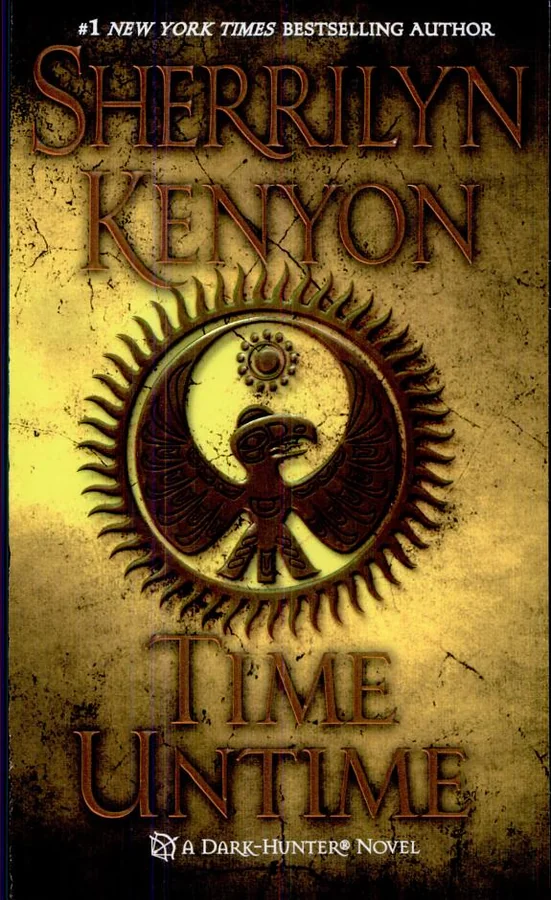
Time untime
 81
81

Time untime
Sherrilyn Kenyon’s "Time untime" attempts to grapple with grand cosmic concepts, and in doing so, it presents a unique narrative structure. The author’s strength lies in her ability to imbue a fictional story with significant metaphysical weight, particularly in how she conceptualizes the "untimes" as a space where temporal linearity dissolves. However, the book occasionally falters under the weight of its own ambition. The narrative can become dense, with plot points sometimes feeling secondary to the philosophical exposition. A passage detailing the cyclical nature of certain events, for instance, while conceptually interesting, could have benefited from more narrative integration. Despite these moments, the work offers a compelling, if sometimes challenging, perspective on existence beyond the confines of linear time. It is a speculative journey worth undertaking for those intrigued by the fabric of reality.
📝 Description
81
Sherrilyn Kenyon's 2012 novel "Time untime" questions our linear perception of reality.
Published in 2012, Sherrilyn Kenyon's "Time untime" is a fictional inquiry into temporal existence and the nature of reality. The narrative uses its characters and plot to examine cyclical time, destiny, and the interconnectedness of all moments. It is not a history but a philosophical exploration that uses speculative fiction to illustrate metaphysical ideas.
This work invites contemplation of alternative dimensions of time and consciousness. It is for readers interested in speculative fiction with a strong philosophical bent. Those who enjoy examining fate versus free will, the nature of existence, and realities beyond linear perception will find much to consider. The book also appeals to individuals seeking narratives that challenge conventional thinking about time and causality, and those interested in how ancient concepts of time inform modern spiritual thought.
Emerging in 2012, "Time untime" arrived during a period of heightened interest in esoteric philosophy and speculative fiction that merged genre elements with metaphysical questions. This era saw many works challenging scientific paradigms and exploring consciousness, often drawing from ancient wisdom traditions. Kenyon's novel engages with this intellectual current, which was shaped by earlier explorations of synchronicity and the collective unconscious, as well as by modern interpretations of temporal paradoxes.
💡 Why Read This Book?
• You will learn how the concept of "untimes" can serve as a narrative device to explore paradoxes of causality, offering a fresh lens on free will versus destiny, as depicted in the book's events. • You will feel the impact of experiencing a story where characters navigate realities unbound by chronological progression, challenging your own perception of past, present, and future. • You will gain insight into how mythological archetypes of eternal return and cosmic cycles, as alluded to in the book's structure, can inform contemporary understanding of spiritual existence.
⭐ Reader Reviews
Honest opinions from readers who have explored this book.
❓ Frequently Asked Questions
What is the primary philosophical concept explored in Sherrilyn Kenyon's "Time untime"?
The primary concept is the exploration of "untimes," states or dimensions existing outside linear chronological progression, allowing for a fluid interaction between past, present, and future.
When was "Time untime" first published?
"Time untime" was first published in 2012.
Does the book offer practical advice for manipulating time?
No, "Time untime" is a fictional, philosophical exploration. It uses narrative to examine metaphysical ideas about time and existence, rather than providing practical guidance.
What kind of reader would enjoy "Time untime"?
Readers who enjoy speculative fiction with deep philosophical themes, particularly those interested in metaphysics, temporal paradoxes, and the nature of reality, would find this book engaging.
Are there specific characters who embody the temporal concepts?
The book's narrative features characters who are affected by or interact with the "untimes," serving as focal points for understanding these non-linear temporal states.
How does "Time untime" relate to other esoteric literature?
It engages with themes common in esoteric literature, such as cyclical time and alternate realities, but presents them through a modern fictional lens, distinct from purely philosophical or religious texts.
🔮 Key Themes & Symbolism
The Nature of Untimes
The central idea of "untimes" in Kenyon's work refers to moments or states where conventional temporal rules do not apply. These are not merely delays or interruptions but fundamental shifts in the fabric of existence, allowing for non-linear causality and simultaneous presence across epochs. The narrative explores how characters might perceive, interact with, or even become trapped within these temporal anomalies, challenging the reader's reliance on a fixed, sequential understanding of reality. It’s a conceptual space for exploring what lies beyond the perceived boundaries of our experienced timeline.
Causality and Destiny
Within the framework of "untimes," the relationship between cause and effect becomes profoundly complex. The book examines whether events are strictly predetermined or if agency can still exist when past, present, and future are not rigidly separated. Characters might witness the consequences of their actions before they occur or find their present dictated by futures yet to unfold. This theme questions the illusion of free will against the backdrop of a potentially cyclical or interconnected temporal existence, prompting reflection on responsibility and choice.
Existential Fluidity
The concept of "untimes" also allows for explorations of existential fluidity, suggesting that beings might not be confined to a single iteration of their existence. The narrative hints at souls or consciousnesses that persist or re-emerge across different temporal streams or within the "untimes" themselves. This raises questions about identity, memory, and the continuity of self when the anchor of linear time is removed. It presents an esoteric perspective on reincarnation or a more complex form of spiritual persistence beyond death.
Perception and Reality
The book implicitly argues that our perception is deeply shaped by our temporal framework. By introducing "untimes," Kenyon challenges the reader to consider how a shift in temporal awareness could fundamentally alter one's understanding of reality. The narrative suggests that what we consider the "real" world is merely one facet of existence, and that other modes of being, governed by different temporal laws, are also valid. This encourages a more expansive view of consciousness and its potential to transcend physical limitations.
💬 Memorable Quotes
“Moments bled into one another, the future echoing the past before it even arrived.”
— This paraphrased concept captures the essence of temporal fluidity explored in the book, where the strict separation of past, present, and future dissolves, allowing for premonitions and echoes of events across time.
“The untime was not a void, but a nexus where all possibilities coiled.”
— This interpretation highlights the book's depiction of "untimes" not as an absence of time, but as a vibrant, active space where potential realities converge, suggesting a fertile ground for creation or destiny.
“To exist outside the clock was to understand the true shape of consequence.”
— This concept emphasizes how stepping outside linear time forces a deeper comprehension of how actions ripple through existence, revealing the interconnectedness of all events beyond immediate cause and effect.
“Her memories were not hers alone, but threads woven from countless iterations of self.”
— This paraphrased idea speaks to the theme of existential fluidity, suggesting that individual consciousness might be a composite of experiences from multiple lives or temporal occurrences within the "untimes."
“We are all but echoes in a hall of mirrors, reflecting versions of ourselves unseen.”
— This concept illustrates the book's exploration of identity and reality, positing that our sense of self might be fragmented or multiplied across various temporal or dimensional planes, only partially perceived.
🌙 Esoteric Significance
Tradition
While "Time untime" doesn't explicitly align with a single esoteric lineage, it draws heavily from Gnostic and Hermetic concepts of cyclical time, illusionary reality, and the potential for spiritual liberation beyond material constraints. The idea of an "untime" as a space outside the Demiurge's created order (a Gnostic concept) or as a higher, less constrained dimension aligns with Hermetic principles of "as above, so below" applied to temporal existence. It departs by framing these ideas within a modern, character-driven narrative rather than a treatise.
Symbolism
The primary symbol is the "untime" itself, representing a state of temporal liberation or a higher dimension where linear causality is suspended. This functions similarly to the concept of the "Planes" in Theosophy or the "Akashic Records" in Hermeticism, offering access to a broader spectrum of existence. Another motif is the idea of "echoes" or "threads" of self, symbolizing the soul's potential persistence or multiplicity across different temporal realities, akin to concepts of reincarnation or soul fragmentation found in various occult traditions.
Modern Relevance
Contemporary thinkers and practitioners exploring consciousness studies, quantum mysticism, and speculative philosophy often engage with similar themes of temporal relativity and subjective reality. "Time untime" resonates with modern spiritual movements that emphasize transcending perceived limitations, including the rigid framework of linear time. Its exploration of interconnectedness across timelines also finds parallels in discussions surrounding collective consciousness and the potential for shared, non-local experiences, making its concepts relevant to current dialogues in both esoteric and popular science circles.
👥 Who Should Read This Book
• Readers interested in speculative fiction that probes metaphysical questions: Those who enjoy narratives that challenge conventional notions of time, causality, and reality will find this book offers a unique fictional framework for exploring such concepts. • Students of esoteric philosophy and comparative mythology: Individuals seeking to understand how ancient ideas about cyclical time, destiny, and alternate realities are reinterpreted in contemporary fiction will appreciate the book's thematic depth. • Fans of Sherrilyn Kenyon seeking a different genre: Readers familiar with Kenyon's other works who are open to exploring her engagement with more philosophical and esoteric themes will discover a thought-provoking departure.
📜 Historical Context
Sherrilyn Kenyon's "Time untime," released in 2012, entered a literary landscape where speculative fiction increasingly engaged with complex philosophical and metaphysical ideas. The early 21st century saw a resurgence of interest in concepts like temporal paradoxes, quantum entanglement's philosophical implications, and ancient cosmologies, often filtered through genre narratives. This period was marked by authors like Blake Crouch exploring similar temporal mechanics in thrillers, and a general cultural fascination fueled by popular science discussions and New Age philosophies. "Time untime" can be seen as part of this broader trend, offering a fictional exploration of existence beyond linear chronology. It stands apart from more purely academic or strictly religious esoteric texts by embedding its ideas within a narrative structure, aiming for a broader audience interested in the mysteries of time and consciousness.
📔 Journal Prompts
The concept of "untimes" and its implications for personal agency.
Reflecting on the narrative's portrayal of causality beyond linear progression.
The significance of "echoes" or fragmented selves across temporal streams.
How does the book challenge the reader's perception of a fixed reality?
Exploring the potential for existence outside chronological constraints.
🗂️ Glossary
Untimes
Periods or states of existence that lie outside the conventional, linear flow of chronological time. Within these "untimes," cause and effect may operate differently, and past, present, and future can coexist or interact non-sequentially.
Temporal Fluidity
The characteristic of time not being fixed or linear, but rather malleable and interconnected. In this state, moments or epochs can blend, allowing for experiences that defy chronological order.
Causality
The relationship between cause and effect. The book explores how causality might function or be perceived differently when temporal linearity is disrupted, questioning deterministic or free-will perspectives.
Nexus
In the context of "untimes," a nexus refers to a point or state where multiple temporal streams, possibilities, or realities converge and interact, acting as a central hub for temporal phenomena.
Echoes of Self
Refers to the idea that an individual's consciousness or existence might not be singular but rather a collection of reflections or iterations across different points in time or parallel temporal streams.
Chronological Progression
The standard, sequential movement of time from past, through the present, and into the future. The book posits states where this progression is not the governing principle of existence.
Existential Iterations
Different versions or instances of a being's existence that may occur across various timelines or within the "untimes," suggesting a complex and potentially non-singular nature of the self.