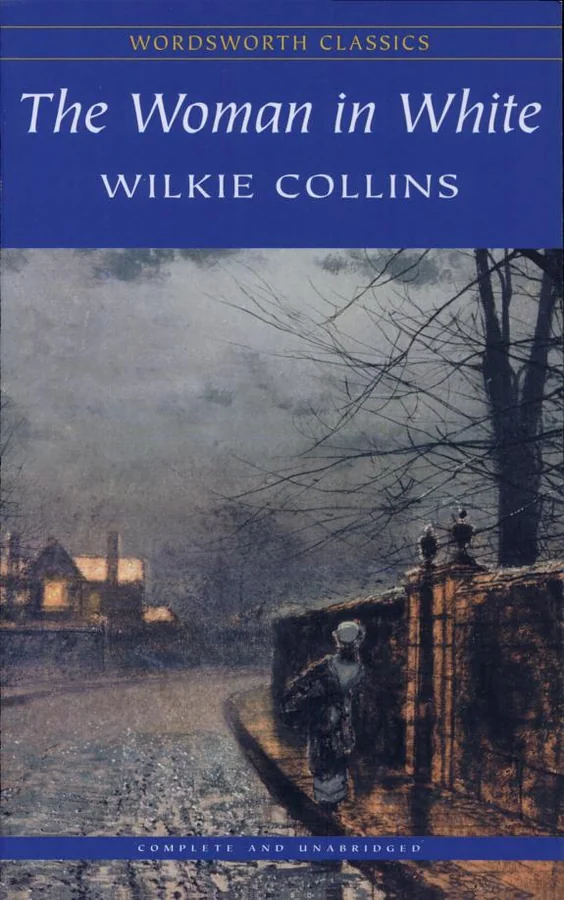
The Woman in White
 81
81

The Woman in White
Wilkie Collins’s The Woman in White operates with a clockwork precision that, while masterful, can feel almost too controlled for its own good. The novel’s strength lies in its masterful construction of suspense, meticulously layering testimonies to create a disorienting yet compelling puzzle. The introduction of Anne Catherick, the spectral figure who lends the novel its title, is an unforgettable moment, immediately imbuing the narrative with an unnerving aura. However, the sheer intricacy of the plot, while impressive, sometimes risks overshadowing genuine emotional depth, leaving certain character motivations feeling more like plot devices than organic developments. The prolonged confinement and manipulation of Laura Fairlie, while central to the sensation genre, can also be difficult to endure without a stronger sense of her internal resistance being fully explored. Despite this, the novel remains a significant exploration of deception and the fragility of identity. It is a meticulously crafted mystery that continues to engage readers with its psychological depth.
📝 Description
81
Wilkie Collins published The Woman in White in 1859, a novel that blends mystery with unsettling psychological elements.
The Woman in White follows Walter Hartright as he becomes involved with the mysterious Anne Catherick and a plot involving mistaken identity and mental duress. Narrated through multiple accounts, the story details the plight of Laura Fairlie, who is unjustly confined. Collins builds suspense through vivid descriptions of settings, like the oppressive Limmeridge House, and the characters' internal states. The novel's intricate structure and focus on perception create an atmosphere of unease that extends beyond a simple mystery.
Published during a time of literary innovation, the novel helped define the sensation fiction genre. Its exploration of societal constraints, particularly for women, and its portrayal of mental illness resonated with Victorian audiences. The story's serialization in *All the Year Round* reached a wide readership, influencing popular culture and literary styles. It examines how identity can be manipulated and how external forces can control an individual's life and perception.
Beyond its surface as a mystery, The Woman in White engages with themes relevant to esoteric traditions. The novel questions the nature of identity, particularly when one person can be made to seem like another, touching on ideas of doppelgängers and soul transference. Laura Fairlie's confinement and mental distress can be read as an allegory for the soul trapped within restrictive physical or societal circumstances. The story's atmosphere of dread and the pervasive sense of unseen forces at work also align with occult literature that probes the hidden dimensions of consciousness and the potential for external entities or influences to shape human experience.
💡 Why Read This Book?
• Gain insight into the psychological manipulation and identity theft central to Laura Fairlie's plight, understanding its resonance with 19th-century anxieties about women's legal and social vulnerability. • Analyze the narrative structure of sensation fiction through the novel's use of multiple, often unreliable, first-person accounts, particularly Walter Hartright's and Mr. Gilmore's. • Explore the symbolic weight of the 'Woman in White' herself, Anne Catherick, as a figure embodying repressed truths and societal secrets within the Victorian era.
⭐ Reader Reviews
Honest opinions from readers who have explored this book.
❓ Frequently Asked Questions
When was Wilkie Collins's The Woman in White first published?
The Woman in White by Wilkie Collins was first published in 1859. It gained immense popularity through its serialization in Charles Dickens's periodical, *All the Year Round*.
What is the genre of The Woman in White?
The Woman in White is primarily classified as sensation fiction, a genre that emerged in Victorian England and is known for its thrilling plots, domestic settings, and often dramatic or scandalous themes.
Who are the main characters in The Woman in White?
Key characters include Walter Hartright, the narrator who becomes involved with the mystery; Laura Fairlie, the vulnerable heiress; Anne Catherick, the titular 'Woman in White'; and the villainous Percival Glyde.
What are some of the major themes explored in The Woman in White?
Major themes include mistaken identity, deception, psychological manipulation, the confinement of women (both literal and metaphorical), the legal status of women, and the nature of sanity and madness.
Is The Woman in White based on a true story?
While not based on a single true story, The Woman in White draws inspiration from real-life cases and contemporary societal concerns, particularly regarding asylum practices and the legal rights of women in the Victorian era.
What makes The Woman in White significant in literary history?
It is considered a foundational text of sensation fiction and detective fiction, influencing subsequent mystery and thriller novels with its complex plot, unreliable narration, and focus on psychological suspense.
🔮 Key Themes & Symbolism
Mistaken Identity and Disrupted Self
The narrative hinges on the striking resemblance between Laura Fairlie and Anne Catherick, the 'Woman in White.' This physical similarity is exploited to erase Laura's identity and usurp her inheritance, plunging her into a state of profound existential crisis. The theme explores the fragility of selfhood when external validation and legal recognition are manipulated. It questions how much of our identity is tied to social constructs and whether a true self can persist when stripped of all its markers, a concept that resonates with later explorations of consciousness and persona in psychological literature.
Confinement and Female Agency
Laura Fairlie's tragic arc involves her wrongful confinement in a lunatic asylum, orchestrated by her husband, Percival Glyde. This literal imprisonment reflects broader societal constraints placed upon Victorian women, limiting their autonomy and legal rights. The novel critiques the ease with which women could be declared insane and institutionalized, effectively silencing them and stripping them of agency. Anne Catherick, the 'Woman in White,' also exists in a state of perpetual societal confinement, her past secrets rendering her an outcast, highlighting the complex interplay of societal judgment and personal freedom.
Deception and the Unreliable Narrative
The structure of The Woman in White, employing multiple narrators (Walter Hartright, Mr. Gilmore, Marian Halcombe, and Count Fosco), deliberately creates an unreliable and fragmented perspective. Each account offers a piece of the puzzle, but also reveals the narrator's biases, limitations, and potential omissions. This technique mirrors the theme of deception that pervades the novel, where truth is obscured by elaborate lies and manipulations. The reader is forced to piece together the events, constantly questioning motives and the veracity of the information presented, mirroring the characters' own struggles to discern reality from artifice.
The Gothic Atmosphere and Psychological Terror
Collins masterfully employs Gothic tropes—gloomy estates (Limmeridge House, Blackwater Park), mysterious figures, and an pervasive sense of dread—to create a palpable atmosphere of psychological terror. The 'Woman in White' herself, with her spectral appearance and elusive nature, is a potent symbol of the uncanny and the repressed. The novel shifts the focus of terror from external threats to internal psychological states, exploring the fear of losing one's mind, the anxiety of being trapped, and the horror of betrayal by those closest to you. This focus on internal dread prefigures modern psychological thrillers.
💬 Memorable Quotes
“I looked at her, and I saw that she was my wife. I looked at the Woman in White, and I saw that she was Anne Catherick.”
— This stark realization by Walter Hartright highlights the central mystery and the terrifying substitution that forms the novel's core. It underscores the theme of mistaken identity and the profound disruption of perceived reality.
“The Woman in White has... been the means of my discovery. She has been the means of my rescue.”
— This statement, likely from Laura Fairlie or a sympathetic narrator, emphasizes Anne Catherick's paradoxical role. Though a figure of mystery and fear, she becomes an unwitting catalyst for truth and liberation, embodying the idea that hidden figures can bring buried secrets to light.
“My story is the story of a terrible mistake.”
— Attributable to a character like Laura Fairlie or Anne Catherick, this sentiment encapsulates the novel's exploration of identity and fate. It suggests that actions, misunderstandings, or external manipulations can lead individuals down paths of profound personal error and suffering.
“There are sorrows which have the virtue of making us acquainted with ourselves.”
— This reflective observation, perhaps by Walter or Marian, speaks to the transformative power of adversity. The extreme trials faced by the characters force them into a deeper understanding of their own strengths, weaknesses, and inner resilience.
“The truth is known to me. I have my secret, and I mean to keep it.”
— This declaration embodies the character of Count Fosco, a figure of cunning and hidden knowledge. It represents the theme of deliberate obfuscation and the power derived from possessing secrets, often used to manipulate others.
🌙 Esoteric Significance
Tradition
While not explicitly part of an established esoteric lineage, *The Woman in White* exhibits Gnostic undertones. The theme of a corrupted or usurped identity (Laura's) and the presence of a seemingly spectral, misunderstood figure (Anne Catherick) who holds keys to truth can be seen as echoes of Gnostic narratives where the material world obscures divine reality and a hidden redeemer figure emerges. The emphasis on hidden knowledge and the struggle against forces that seek to control and misinform aligns with Gnostic concerns about ignorance and illusion.
Symbolism
The 'Woman in White' herself, Anne Catherick, symbolizes the repressed, the spectral, and the inconvenient truth. Her pallor and elusive nature suggest a connection to the ethereal or the soul-like, a figure haunting the edges of societal normalcy. Laura Fairlie's prolonged confinement and the attempt to erase her identity can symbolize the soul trapped within the material world or under the dominion of illusionary forces. Count Fosco, with his ostentatious displays and hidden machinations, represents the materialist deceiver, a figure who manipulates the physical and social world to maintain control and ignorance.
Modern Relevance
Contemporary psychological thrillers and literary fiction exploring themes of gaslighting, identity manipulation, and the unreliability of perception owe a debt to Collins's pioneering work. Thinkers and practitioners in fields concerned with narrative psychology, the nature of consciousness, and the construction of identity find fertile ground in the novel's intricate plotting and character deconstruction. The novel's exploration of how external narratives can be imposed upon individuals to control them remains relevant in discussions of media influence and psychological coercion.
👥 Who Should Read This Book
• Students of 19th-century literature and sensation fiction seeking to understand the genre's foundational texts and its engagement with Victorian social issues. • Readers interested in psychological suspense and mystery novels that focus on intricate plotting, unreliable narration, and atmospheric tension. • Individuals exploring themes of identity, deception, psychological manipulation, and the legal and social constraints placed upon women in historical contexts.
📜 Historical Context
Wilkie Collins's *The Woman in White*, serialized from 1859 to 1860, was a pivotal work in the burgeoning genre of sensation fiction, profoundly influencing contemporary writers like Mary Elizabeth Braddon and Ellen Wood. Published during the Victorian era, a time of rapid industrialization, social upheaval, and evolving scientific and psychological understanding, the novel tapped into public fascination with mystery, crime, and the darker aspects of domestic life. Its intricate plot, focus on psychological suspense, and exploration of themes like mistaken identity and wrongful confinement in asylums resonated with a wide audience, partly due to its publication in Charles Dickens's *All the Year Round*. The novel engaged with contemporary debates surrounding the treatment of mental illness and the legal vulnerabilities of women, making it both a thrilling read and a commentary on social issues. Its reception was overwhelmingly positive, solidifying Collins's reputation and setting a benchmark for the sensation novel.
📔 Journal Prompts
The chilling encounter with the 'Woman in White' on the road to London: what initial impressions and fears did this figure evoke in Walter Hartright?
Marian Halcombe's unwavering loyalty and investigative zeal: how does her perspective contrast with the more passive experiences of Laura Fairlie?
Count Fosco's complex character: analyze the blend of charm, intellect, and villainy that makes him such a memorable antagonist.
The use of Laura Fairlie's portrait and letters: how do these artifacts function as symbols of her identity and the attempts to control it?
The asylum confinement: reflect on the psychological impact of being declared insane and institutionalized against one's will.
🗂️ Glossary
Sensation Fiction
A genre popular in Victorian England, characterized by thrilling, often melodramatic plots set in domestic environments, featuring elements of mystery, crime, and scandal, designed to evoke strong emotional responses in the reader.
Gothic Literature
A literary genre that combines elements of horror and romance, often featuring dark, decaying settings, supernatural or mysterious events, and a pervasive atmosphere of dread and suspense.
Mistaken Identity
A plot device where one character is wrongly identified as another, leading to confusion, complications, and often driving the central conflict of the narrative, as seen with Laura Fairlie and Anne Catherick.
The titular 'Woman in White,' a mysterious and spectral figure whose resemblance to Laura Fairlie is central to the plot's deceptions and manipulations. She represents a disruptive element of truth and memory.
Asylum
In the context of the novel, a place for the confinement and supposed treatment of individuals deemed mentally ill. The novel critiques the often dubious practices and potential for abuse within such institutions during the Victorian era.
Count Fosco
A charismatic but sinister Italian nobleman who acts as the primary antagonist and mastermind behind the plot. He embodies cunning, deception, and a manipulative control over others.
Limneridge House
The ancestral home of the Fairlie family and a primary setting. It represents a seemingly idyllic but ultimately compromised domestic space, harboring secrets and under threat from external forces.