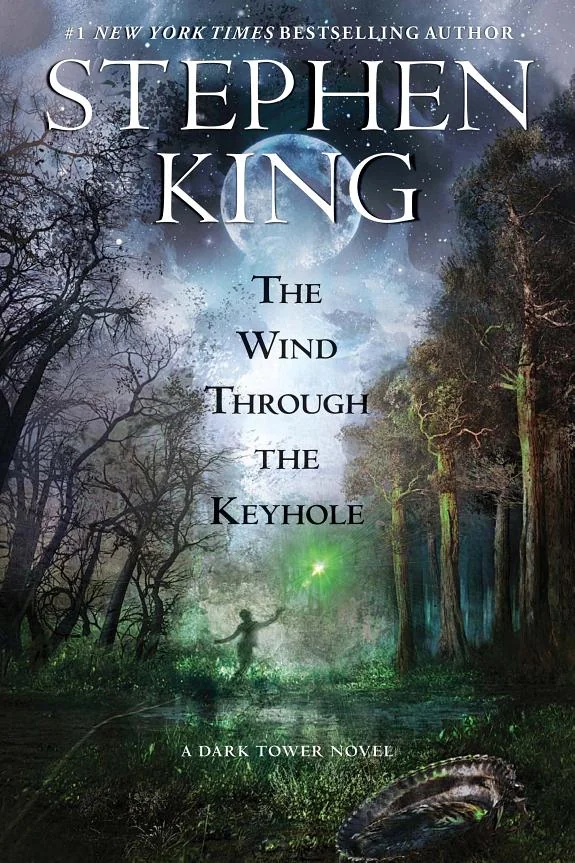
The Wind Through the Keyhole
 82
82

The Wind Through the Keyhole
Stephen King’s *The Wind Through the Keyhole* is a curious beast, a narrative interloper in the established Dark Tower canon that feels both essential and somewhat tangential. Its primary strength lies in its framing device: Roland Deschain, in the midst of his desperate quest, sharing a harrowing tale from his youth with his companions during a blizzard. This structure allows King to explore Roland’s formative experiences with a creature called the "Wind Through the Keyhole" and a young boy named Tim, adding significant depth to the gunslinger's character. The prose, as always, is evocative, particularly when King describes the desolate beauty of Mid-World and the creeping dread of the supernatural. However, the novel occasionally suffers from pacing issues, with the interpolated story sometimes feeling like a lengthy detour rather than an integral part of the main narrative’s momentum. The climax of Roland's youthful ordeal, while impactful, doesn't quite possess the same narrative urgency as the framing story’s immediate threats. Still, for those invested in Roland’s journey, the insights into his past and the exploration of storytelling as a shield against darkness make it a valuable, if not entirely seamless, addition.
📝 Description
82
### What It Is The Wind Through the Keyhole, published in 2016, is a novel by Stephen King that functions as both a standalone story and a significant addition to his sprawling Dark Tower series. It is framed as a story told by Roland Deschain, the last gunslinger, to his ka-tet during a perilous journey. The narrative interweaves Roland's account of his first encounter with a "man-eating" creature in his youth with the present-day plight of the group, trapped by a ferocious storm.
### Who It Is For This book will appeal to dedicated fans of Stephen King’s Dark Tower saga, as it expands upon Roland's backstory and the lore of Mid-World. Readers who appreciate King's distinctive storytelling, blending horror, fantasy, and Western elements, will find familiar ground. It also serves those interested in tales that explore moral quandaries, the nature of storytelling, and the internal struggles of protagonists facing overwhelming odds.
### Historical Context Published in 2016, The Wind Through the Keyhole arrived long after the initial Dark Tower series concluded in 2004. Its release sparked renewed interest and debate among fans regarding the continuity and expansion of King's epic. This period saw a surge in multimedia franchises and expanded universes, a trend King’s work both anticipated and participated in. The novel’s structure, a story within a story, echoes older oral traditions and literary forms, a technique employed by authors like Chaucer in *The Canterbury Tales*.
### Key Concepts The novel delves into themes of courage, duty, and the burden of leadership, particularly through Roland's early experiences. It explores the concept of "stories" themselves as vital tools for survival and understanding, both for individuals and for societies. The narrative also touches upon the cyclical nature of good and evil, and the personal sacrifices required to confront monstrous forces, both external and internal.
💡 Why Read This Book?
• Gain a deeper understanding of Roland Deschain’s formative years and the moral complexities he faced as a young man, exemplified by his encounter with the boy Tim and the creature. • Experience King's meta-narrative exploration of storytelling as a vital force against despair and the unknown, a concept central to the novel's structure. • Witness the expansion of the Dark Tower universe with specific lore regarding Mid-World’s dangers and Roland's personal history, particularly his first kill.
⭐ Reader Reviews
Honest opinions from readers who have explored this book.
❓ Frequently Asked Questions
Is The Wind Through the Keyhole a good starting point for the Dark Tower series?
No, it is not recommended as a starting point. The book was published in 2016, after the main series concluded, and relies heavily on existing knowledge of Roland Deschain and Mid-World. Readers should begin with *The Gunslinger*.
What is the 'Wind Through the Keyhole' creature?
The 'Wind Through the Keyhole' is a mythical, shapeshifting creature described by Roland in his youth. It preys on those who have committed terrible acts, feeding on their fear and guilt, and is associated with a specific, chilling sound.
What year was The Wind Through the Keyhole published?
The book was first published in 2016, making it one of the later additions to Stephen King's Dark Tower saga.
Does this book connect to the main Dark Tower story?
Yes, it is considered a part of the Dark Tower canon. It is framed as a story told by Roland Deschain to his ka-tet during the events of *The Dark Tower VII: The Dark Tower*.
What are the main themes explored in The Wind Through the Keyhole?
The novel explores themes of courage, facing one's past, the nature of storytelling, and the struggle between good and evil, particularly through Roland's personal history and the tale he recounts.
Who is Tim in the story?
Tim is a young boy Roland encounters during his first solo mission as a gunslinger. Tim is accused of murder, and Roland must uncover the truth while battling a monstrous entity.
🔮 Key Themes & Symbolism
Storytelling as Survival
The narrative of The Wind Through the Keyhole emphasizes that stories are not mere entertainment but essential tools for navigating the harsh realities of existence. Roland recounts a childhood tale to his ka-tet to distract them from the immediate peril of a blizzard and a monstrous threat. This act of storytelling serves as a shield, providing comfort, distraction, and a means of processing fear and trauma. The very structure of the book, a story within a story, highlights this theme, suggesting that narratives can both preserve us and reveal hidden truths about ourselves and the world, even in the desolate landscape of Mid-World.
Moral Ambiguity and Choice
Roland's own recounted past, particularly his first solo mission to save the village of Crossroad, is fraught with moral complexity. He must confront a creature that preys on guilt and fear, and in doing so, he grapples with the nature of justice and retribution. The story of Tim, the boy accused of murder, forces Roland to look beyond simple accusations and seek the deeper truth. This exploration of gray areas, where right and wrong are not always clear-cut, mirrors the broader ethical dilemmas faced by characters throughout the Dark Tower series, underscoring the difficult choices inherent in maintaining order in a chaotic world.
Coming of Age and First Encounters
This novel offers a crucial look at Roland Deschain's adolescence, detailing his first experience as a gunslinger and his initial confrontation with true evil. The story he tells focuses on a period shortly after he has killed his first man, a pivotal moment that set him on his path. His encounter with the "man-eating" creature and his protection of Tim represent a significant step in his development, forcing him to confront adult responsibilities and the brutal realities of his destiny. It marks a critical stage in his transition from youth to the hardened gunslinger of legend.
The Nature of Fear
The book directly addresses how fear manifests and how it can be exploited or overcome. The creature known as the 'Wind Through the Keyhole' specifically targets individuals burdened by guilt and fear, becoming stronger the more terrified its victims are. Roland's challenge in his youth is not just to defeat this entity physically but to understand its psychological dominion. The act of telling the story itself becomes a method of confronting and diminishing this fear, both for the listeners and for Roland himself, demonstrating a powerful esoteric principle about facing inner demons.
💬 Memorable Quotes
“The world has moved on, and if you stay still you’ll be left behind.”
— This paraphrased concept speaks to the relentless progression of time and circumstance. It suggests that stagnation is a form of decay, and that characters, like Roland, must adapt and evolve with their changing world to survive and fulfill their destinies.
“When you make your first kill, you’re going to feel it. It will be like the wind through the keyhole.”
— This interpretation highlights a core experience for Roland. The 'wind through the keyhole' symbolizes the chilling, irreversible moment of taking a life for the first time. It signifies the profound psychological and spiritual impact of this act, marking a point of no return in his journey.
“Stories are what keep us alive.”
— This is a central tenet of the book. It suggests that narrative and imagination are not luxuries but necessities for human survival, especially in desolate or dangerous circumstances. Stories provide meaning, connection, and a way to process trauma and fear.
“There are other worlds than these.”
— This iconic phrase from the Dark Tower series is implicitly reinforced by the novel's exploration of Mid-World and its unique dangers. It speaks to the vastness of existence beyond immediate perception, a concept central to many metaphysical and esoteric traditions.
“Courage is the magic that makes impossible things happen.”
— This sentiment captures the spirit of Roland's youthful quest. It posits courage not merely as bravery, but as an active, almost supernatural force that allows individuals to confront and overcome seemingly insurmountable obstacles.
🌙 Esoteric Significance
Tradition
While not explicitly tied to a single lineage like Hermeticism or Gnosticism, *The Wind Through the Keyhole* draws heavily on archetypal mythologies and the concept of the 'hero's journey,' a framework explored in comparative mythology and Jungian psychology. The idea of a last gunslinger preserving a dying world echoes Gnostic themes of a fractured cosmos and the struggle for spiritual survival. The focus on the power of stories and inner journeys also aligns with traditions that emphasize self-discovery and the symbolic nature of reality.
Symbolism
The 'Wind Through the Keyhole' itself functions as a potent symbol, representing the intrusion of guilt, fear, and the consequences of past actions into one's present reality. The keyhole suggests a confined perspective, a limited view of the world, through which this chilling force can still penetrate. Roland's first kill symbolizes the loss of innocence and the heavy burden of his destiny, while the recurring motif of the blizzard represents overwhelming external and internal chaos that characters must endure and overcome.
Modern Relevance
Contemporary authors and storytellers interested in exploring the psychological depths of heroism and the efficacy of narrative as a tool for resilience often reference King's Dark Tower series. The novel's meta-narrative approach and its examination of how stories shape our understanding of ourselves and the world remain relevant in fields ranging from literary criticism to therapeutic storytelling practices. Thinkers exploring the power of myth in modern life find fertile ground in King's work.
👥 Who Should Read This Book
• Dedicated fans of Stephen King's Dark Tower saga seeking to deepen their understanding of Roland Deschain's past and the lore of Mid-World. • Readers interested in the meta-narrative power of storytelling and how narratives function as tools for survival and meaning-making. • Those who appreciate dark fantasy and horror that blends Western elements with epic quests and moral quandaries.
📜 Historical Context
Published in 2016, *The Wind Through the Keyhole* emerged into a literary landscape where expanded universes and franchise extensions were commonplace. Stephen King's own Dark Tower series, which originally concluded in 2004, had already cemented its place in popular culture. This novel's insertion into the timeline—framed as a story told during the events of the final book—sparked considerable fan discussion about canonicity and narrative cohesion. The era was characterized by a deep engagement with serialized storytelling across media, from television to video games. King's work, while always unique, participated in this trend. The novel’s structure, a tale within a tale, harkens back to older narrative traditions, reminiscent of works like *The Arabian Nights*, and stands in contrast to more linear contemporary fantasy. Its reception was largely positive from dedicated fans eager for more Roland Deschain lore, though some critics noted its supplementary nature.
📔 Journal Prompts
Roland's first kill and the "wind through the keyhole" experience.
The function of Tim's story within the larger narrative.
The symbolism of the blizzard and the "man-eating" creature.
The concept of courage as a transformative magic.
The role of storytelling in confronting fear and guilt.
🗂️ Glossary
Mid-World
The primary setting for the Dark Tower series, a desolate, post-apocalyptic landscape where Roland Deschain is the last gunslinger. It is a realm where various realities and timelines seem to converge.
Gunslinger
A warrior sworn to protect the balance between worlds in the Dark Tower saga. Roland Deschain is the last of his order, a skilled marksman armed with revolvers.
Ka-tet
A group of individuals whose fates are bound together by destiny (ka) in the Dark Tower series. Roland's ka-tet includes Eddie Dean, Susannah Dean, Jake Chambers, and Oy.
Ka
The concept of destiny or fate in the Dark Tower universe. It is a force that shapes the lives and actions of individuals and the unfolding of events across worlds.
The Man-Eating Creature
A monstrous entity Roland encounters in his youth, described as a creature that feeds on fear and guilt. It is a manifestation of inner darkness and psychological torment.
Tim
A young boy Roland encounters and protects during his first solo mission as a gunslinger. Tim is falsely accused of murder, and his story becomes a central part of Roland's recounted tale.
The Dark Tower
The nexus of all realities, the linchpin that holds existence together. Roland's ultimate goal is to reach the Tower and prevent its destruction.