The Temporal Void

 83
83

The Temporal Void
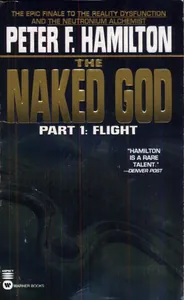
Peter F. Hamilton’s The Temporal Void, arriving in 2020, presents a challenging intellectual puzzle wrapped in speculative fiction. Unlike many authors who might offer a simple space opera, Hamilton here constructs a narrative that feels more akin to a philosophical treatise disguised as a novel. The strength lies in its ambitious conceptual framework, particularly how it portrays the subjective experience of temporal distortion. For instance, the way a character’s memories become unreliable signposts in a shifting reality is handled with a meticulousness that borders on the scientific. However, the narrative occasionally falters under the weight of its own complexity; the sheer density of interconnected ideas can sometimes obscure the emotional core of the story, leaving characters feeling like pawns in a grand cosmic game. A particular passage exploring the implications of fragmented consciousness within a temporal anomaly, while intellectually stimulating, does require significant reader investment to fully grasp. Ultimately, The Temporal Void is a demanding but rewarding read for those who prefer their science fiction to ask difficult questions.
📝 Description
83
Peter F. Hamilton's 2020 novel, The Temporal Void, examines consciousness and causality within a speculative fiction framework.
The Temporal Void is a 2020 novel by Peter F. Hamilton that delves into philosophical aspects of speculative fiction. It presents a narrative focused on consciousness, causality, and the nature of existence, using a science fiction setting to make abstract ideas concrete. The story challenges standard views of time and reality, encouraging readers to think about how altered perceptions and broken timelines affect our understanding. Hamilton's work is suited for those who prefer science fiction that goes beyond typical adventure plots. It will particularly interest readers concerned with metaphysical questions, the structure of reality, and the philosophical ideas behind time manipulation. Those who enjoy complex plots and characters who develop through intellectual engagement, instead of just action, will find this book rewarding. It is for readers seeking mental stimulation in their speculative reading.
The book emerged in 2020, a time when quantum physics, consciousness studies, and multiverse theories were common topics in both science and popular culture. Hamilton's novel can be compared to the work of writers like Philip K. Dick, whose explorations of altered realities and subjective experiences laid groundwork for intricate narratives. The Temporal Void also appeared as scientific ideas were increasingly adapted into accessible stories, reflecting a wider interest in fundamental questions about existence.
The Temporal Void engages with speculative fiction's capacity to explore metaphysical concepts. It touches on ideas akin to Gnostic thought regarding fractured realities and the nature of perception. The narrative's focus on consciousness and the manipulation of time echoes traditions that question the solidity of our perceived world and explore potential states of being beyond the ordinary. Like certain esoteric traditions that posit hidden structures or dimensions influencing our reality, Hamilton's work imagines how these might manifest in a narrative context.
💡 Why Read This Book?
• You will gain a deeper understanding of how narrative can model abstract concepts like temporal paradoxes, as seen in the depiction of characters navigating fractured timelines. • You will experience a unique exploration of consciousness as a force capable of interacting with spacetime, a concept distinct from typical character development in speculative fiction. • You will encounter a sophisticated engagement with the philosophical implications of causality, specifically how events might be perceived and altered within the 'void' concept presented in the book.
⭐ Reader Reviews
Honest opinions from readers who have explored this book.
❓ Frequently Asked Questions
What is the primary genre of Peter F. Hamilton's The Temporal Void?
The Temporal Void is primarily a speculative fiction novel with strong elements of science fiction and philosophical inquiry, first published in 2020.
Does The Temporal Void explore themes of artificial intelligence?
While not its central focus, the novel's exploration of consciousness and altered realities may touch upon or imply advanced artificial consciousness as a part of its complex universe.
What makes The Temporal Void different from other science fiction books?
Its distinctiveness lies in its deep dive into metaphysical questions about time and reality, using a complex narrative structure to challenge the reader's perception of causality and existence.
When was The Temporal Void first published?
The Temporal Void was first published in 2020, placing it within contemporary discussions of theoretical physics and philosophical concepts in fiction.
Are there specific scientific theories referenced in The Temporal Void?
The book engages with concepts inspired by theoretical physics, such as temporal displacement and the nature of reality, rather than directly detailing specific scientific papers.
What kind of reader would enjoy The Temporal Void?
Readers who appreciate intellectually dense narratives, philosophical science fiction, and explorations of consciousness and time will find The Temporal Void particularly engaging.
🔮 Key Themes & Symbolism
Fractured Causality
The narrative frequently challenges linear cause-and-effect, presenting scenarios where effects precede causes or where multiple divergent timelines coexist. This theme is explored through characters who witness or experience events out of their expected sequence, leading to profound disorientation and a re-evaluation of their understanding of reality. The book posits that causality itself might be a construct that can be bent or broken under certain extreme conditions within its narrative universe.
Consciousness as a Fabricator
A central tenet is the idea that consciousness is not merely a passive observer but an active participant in shaping perceived reality, and perhaps even temporal flow. Characters' internal states, beliefs, and perceptions are shown to have tangible impacts on the external world and the progression of events. This concept suggests that subjective experience holds a fundamental power within the novel's cosmology, capable of influencing the very structure of existence.
The Nature of the Void
The 'void' in the title is not presented as simple emptiness but as a dynamic, potent force within the narrative's framework. It represents a state or place where conventional laws of physics and time may not apply, acting as a crucible for altered states of being and reality. The book explores the void as a source of both dissolution and potential creation, a liminal space where existence is fundamentally redefined.
💬 Memorable Quotes
“Time is not a river, but a shattered mirror.”
— This interpretation suggests that time does not flow in a single, continuous stream but exists in fragmented, discontinuous pieces, reflecting a distorted or incomplete reality.
“Where memory ends, the void begins its song.”
— This concept implies that the limits of personal recollection or understanding mark the boundary where more chaotic or unformed aspects of existence, the 'void,' start to influence reality.
“We are echoes in a causality we cannot grasp.”
— This paraphrase suggests that human existence and actions are merely reverberations within a larger, incomprehensible system of cause and effect, highlighting a sense of cosmic insignificance.
“The void does not erase; it reweaves.”
— This interpretation posits that the 'void' is not an annihilating force but one that actively reconstructs reality, possibly creating new patterns or existences from what was.
“Perception is the only anchor in the temporal storm.”
— This concept emphasizes the primacy of individual consciousness and perception as the sole means of maintaining a sense of self and reality amidst chaotic temporal shifts.
🌙 Esoteric Significance
Tradition
The Temporal Void does not align strictly with any single historical esoteric tradition but draws eclectically from Gnostic themes of fragmented reality and the power of consciousness to perceive truth beyond illusion. Its exploration of a 'void' that is not empty but potent echoes certain Neoplatonic concepts of the One and its emanations, albeit translated into a science fiction idiom. The work departs from traditional systems by grounding its metaphysical inquiries in speculative physics rather than occult ritual or doctrine.
Symbolism
The concept of the 'shattered mirror' serves as a potent symbol for fractured timelines and a fragmented perception of reality, suggesting that truth is not whole but broken into many pieces. The 'void' itself functions symbolically as a liminal space, a representation of the potential for both dissolution and radical transformation, a place where the established order of existence breaks down. Furthermore, the recurring motif of 'echoes' symbolizes the residual impact of past events or alternate possibilities within the present.
Modern Relevance
Contemporary thinkers in consciousness studies and simulation theory, as well as practitioners of esoteric paths that focus on mind-over-matter or reality-bending techniques, might find resonance in The Temporal Void. Its depiction of consciousness actively shaping reality aligns with certain strands of modern esoteric thought that emphasize subjective experience and intentionality as fundamental forces. The novel provides a narrative framework for exploring complex ideas that are being debated in fields ranging from quantum physics to artificial intelligence and virtual reality.
👥 Who Should Read This Book
• Readers interested in the philosophical implications of theoretical physics, particularly those fascinated by concepts of time dilation and alternate realities. • Enthusiasts of intricate speculative fiction that prioritizes conceptual depth and complex world-building over straightforward action sequences. • Individuals seeking narratives that explore the nature of consciousness and perception as fundamental forces within the universe.
📜 Historical Context
Peter F. Hamilton's The Temporal Void, published in 2020, emerged within a literary landscape increasingly fascinated by the implications of quantum mechanics and theoretical physics. The early 21st century saw a surge in popular science books and documentaries that brought concepts like multiverses, temporal paradoxes, and the nature of consciousness to a wider audience. Hamilton's work can be situated alongside contemporary science fiction authors such as Ted Chiang and Blake Crouch, who similarly explore profound philosophical questions through tightly plotted narratives. While not directly engaging in philosophical debate in the vein of, say, the Logical Positivists of the mid-20th century, Hamilton's novel reflects a broader cultural engagement with existential and metaphysical queries. The book's reception was part of a larger trend where speculative fiction served as a fertile ground for contemplating humanity's place in an ever-expanding and increasingly complex universe, pushing boundaries of narrative structure to mirror the complexities of modern scientific thought.
📔 Journal Prompts
The fragmented nature of memory as depicted in the temporal storm.
The 'void' as a force of reweaving rather than erasure.
The function of perception as an anchor in shifting realities.
Causality's song and our place as echoes within it.
The nature of consciousness as a potential fabricator of existence.
🗂️ Glossary
Temporal Void
A narrative concept representing a state or dimension where conventional laws of time and causality do not apply, serving as a catalyst for altered realities and consciousness.
Fractured Causality
A narrative device where the expected linear sequence of cause and effect is disrupted, leading to paradoxical situations and non-linear progression of events.
Consciousness Fabricator
The concept that subjective awareness and perception possess the active power to shape or influence external reality, including temporal phenomena.
Shattered Mirror
A metaphorical representation of time, suggesting it is not a continuous flow but a collection of discontinuous, distorted fragments.
Echoes
In the context of the book, these represent residual influences or manifestations of past events, alternate timelines, or potential futures within the present reality.
Temporal Storm
A chaotic period or state characterized by extreme instability and disruption of temporal flow, where reality becomes unpredictable.
Reweaving
The process by which the 'void' or other transformative forces actively reconstruct or alter reality, creating new patterns from existing elements.


![[Catalogue of Walter Moseley's Book Sale]](/img/thumb/catalogue-of-walter-moseley-s-book-sale-george-redway.webp)