The Stand
 80
80

The Stand
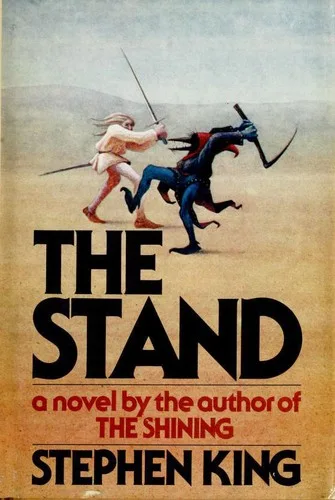
Stephen King’s sprawling 1978 novel, "The Stand," is less a horror story and more an apocalyptic morality play. Its sheer scope, following hundreds of survivors as they coalesce into two opposing factions, is its greatest strength. The initial descent into chaos, particularly the chilling depiction of the superflu's swift devastation, remains a potent narrative force. However, the lengthy exploration of individual survivor journeys, while character-building, occasionally dilutes the central conflict. The stark dichotomy between Mother Abagail's spiritual guidance and Randall Flagg's authoritarian charisma, while effective, can feel overly simplistic at times. King’s exploration of free will in the face of overwhelming odds, particularly as characters choose sides in the Nebraska encampment, offers a compelling, albeit lengthy, examination of human nature. The novel ultimately succeeds as an expansive, character-driven saga about rebuilding society and confronting one's own darkness.
📝 Description
80
Stephen King's 1978 novel, 'The Stand,' depicts civilization's collapse after a plague.
The novel follows the survivors of a superflu that decimates the global population. These individuals are drawn into a struggle between good and evil. Mother Abagail represents benevolence, while Randall Flagg embodies malevolence. The story tracks the survivors as they rebuild society and confront their own natures.
This work appeals to readers who enjoy expansive narratives with a large cast. It examines human behavior during extreme hardship and the formation of new social structures. Readers interested in the psychological and societal aftermath of disaster will find the book engaging. It questions the emergence of order and belief systems in a world reshaped by catastrophe.
Published in 1978, 'The Stand' reflects anxieties about societal breakdown and nuclear annihilation prevalent in late 20th-century speculative fiction. King taps into archetypal conflicts between light and darkness, personified by Mother Abagail and Randall Flagg. The novel explores the formation of new belief systems and the re-establishment of order in a post-apocalyptic setting, touching on themes of collective consciousness and the human response to existential threats.
💡 Why Read This Book?
• Understand the foundational principles of post-apocalyptic societal reconstruction as depicted through the "Boulder Free Zone"'s attempts at democratic governance. • Analyze the archetypal struggle between good and evil through the characters of Mother Abagail and Randall Flagg, examining their symbolic roles. • Explore the psychological impact of extreme societal collapse, as seen in the varied reactions and adaptations of survivors like Stu Redman and Larry Underwood.
⭐ Reader Reviews
Honest opinions from readers who have explored this book.
❓ Frequently Asked Questions
What is the central conflict in Stephen King's 'The Stand'?
The central conflict pits survivors of a devastating superflu against each other, drawn into a cosmic battle between the benevolent Mother Abagail and the malevolent Randall Flagg, representing good and evil respectively.
When was 'The Stand' first published and what was its initial reception?
'The Stand' was first published in 1978. Its reception was strong, establishing King further as a major voice in contemporary fiction, though its length was notable for the time.
Who are the main opposing forces of good and evil in the novel?
The main forces are Mother Abagail, an elderly woman who represents divine guidance and goodness, and Randall Flagg, a supernatural entity embodying chaos and malevolence.
What is the significance of the superflu in 'The Stand'?
The superflu, named 'Captain Trips,' is the catalyst for the apocalypse, wiping out over 99% of humanity and forcing the survivors to confront their new reality and the forces shaping it.
Does 'The Stand' have a definitive ending or is it more open-ended?
The novel has a definitive, though complex, ending that resolves the immediate conflict between the two factions while leaving certain aspects of the supernatural and future open to interpretation.
Are there any real-world events that influenced Stephen King's writing of 'The Stand'?
While not directly based on a single event, the novel reflects anxieties prevalent in the late 1970s regarding societal collapse, nuclear threats, and the potential for widespread disaster.
🔮 Key Themes & Symbolism
The Nature of Good and Evil
The novel presents a stark dichotomy between the forces of good, personified by Mother Abagail and her followers in Boulder, and the forces of evil, led by Randall Flagg and his adherents in Las Vegas. This isn't merely a human conflict but a cosmic battle manifesting through human agents. King explores how individuals, stripped of societal structures, either embrace altruism and community or succumb to primal desires for power and control, thereby aligning themselves with one of these fundamental forces.
Societal Collapse and Rebirth
"The Stand" meticulously details the disintegration of civilization following the superflu pandemic. It then shifts focus to the arduous process of rebuilding. The formation of the Boulder Free Zone represents an attempt to establish a new, albeit fragile, democratic society from the ashes. This theme examines the inherent challenges in creating order, the struggle for leadership, and the constant threat of regression into barbarism or tyranny.
Free Will and Destiny
Central to the narrative is the question of whether individuals are merely pawns in a larger cosmic game or possess genuine agency. Mother Abagail offers guidance, and Randall Flagg manipulates, but the characters ultimately make choices that define their allegiances and fates. The novel suggests that while external forces may influence events, the most critical battles are fought within the human heart, where free will determines one's path towards salvation or damnation.
Faith and Leadership
In the absence of established authority, new forms of leadership and belief emerge. Mother Abagail's prophetic pronouncements inspire faith and unity among the survivors in Boulder, while Randall Flagg consolidates power through fear and charisma in Las Vegas. The novel probes the nature of true leadership, the reliance on faith during times of crisis, and the dangers of blind devotion to charismatic but morally corrupt figures.
💬 Memorable Quotes
““Sometimes, sir, there’s just a day. And then there’s another day. And after that, another.””
— This quote captures the simple, almost primal focus of survival in the immediate aftermath of disaster. It strips away grand plans and future anxieties, reducing existence to the relentless progression of days, a stark reality for those facing utter societal collapse.
““We are all of us in the middle of the road, and that’s where the devil has paved the way.””
— This interpretation suggests that moral compromise and complacency are fertile ground for evil. It implies that neutrality or a lack of decisive action towards good can inadvertently lead one down a path dictated by malevolent forces, a crucial theme in character allegiances.
““The trash heap of history is a big place, and it is a great comfort to think that there is always room for one more.””
— This sentiment reflects a dark cynicism about human actions and their consequences. It suggests a fatalistic view where ultimately, all efforts and failures are destined for oblivion, a perspective some characters grapple with amidst the apocalypse.
““It is the last time the world is going to be in your hands.””
— This line emphasizes the profound, world-altering stakes of the survivors' actions. It highlights the responsibility and finality associated with the choices made in the new world order, where every decision carries immense weight for the future of humanity.
““When you can’t have what you want, ask yourself why you want it.””
— This is a call for introspection and self-awareness, particularly relevant when desires are unmet. It prompts an examination of the root causes of wants and needs, suggesting that understanding the 'why' is key to navigating dissatisfaction and making better choices.
🌙 Esoteric Significance
Tradition
While not explicitly tied to a single esoteric lineage, "The Stand" draws heavily from Gnostic and Manichaean dualistic frameworks, presenting a clear cosmic battle between light and darkness. Mother Abagail can be seen as an archetypal Sophia figure or benevolent divine messenger, while Randall Flagg embodies the adversarial principle or demiurge, actively hindering humanity's spiritual evolution. The novel's structure, focusing on chosen survivors tasked with rebuilding a world, echoes themes found in apocalyptic literature across various spiritual traditions.
Symbolism
Randall Flagg is a potent symbol of chaotic, destructive, and authoritarian power, often associated with the 'Prince of Darkness' archetype. His recurrent appearances across King's works suggest a universal force of malevolence. Mother Abagail, conversely, symbolizes divine wisdom, hope, and the enduring spirit of good. The superflu itself, 'Captain Trips,' can be interpreted as a catalyst for spiritual awakening or purification, forcing humanity to confront its mortality and societal failings to rebuild on a more conscious foundation.
Modern Relevance
Contemporary thinkers in chaos magick and esoteric psychology find resonance in King's exploration of archetypal forces and the manipulation of belief systems. Randall Flagg's manipulation of fear and desire mirrors modern analyses of propaganda and cult dynamics. The novel's examination of leadership, collective consciousness, and the formation of new belief structures continues to inform discussions on societal resilience, post-disaster recovery, and the psychological impact of existential threats in an increasingly interconnected world.
👥 Who Should Read This Book
• Students of apocalyptic and post-apocalyptic literature seeking foundational narratives that define the genre's modern iteration. • Readers interested in exploring the psychological and sociological impacts of widespread societal collapse and the formation of new communities. • Individuals drawn to epic narratives that examine fundamental moral choices and the archetypal conflict between good and evil through compelling character arcs.
📜 Historical Context
Stephen King's "The Stand," released in 1978, emerged from a cultural landscape shaped by the Cold War anxieties and the lingering counter-cultural spirit of the 1960s. The novel’s depiction of societal collapse mirrored widespread fears of nuclear war and the fragility of civilization. It arrived at a time when speculative fiction was exploring grand narratives of survival and the redefinition of society, with authors like Philip K. Dick publishing influential works. While King was already a known quantity in horror circles, "The Stand" marked a significant expansion of his thematic and narrative ambition. Its initial reception acknowledged its epic scale, though some critics, like those in publications such as *The New York Times Book Review*, noted its length and the overt good-versus-evil framework, which some saw as less nuanced than contemporary literary fiction. Despite any reservations, the book solidified King's status as a dominant force in popular fiction, tapping into a collective consciousness grappling with disaster and the human condition.
📔 Journal Prompts
Mother Abagail's visions and Randall Flagg's manipulations—how do external forces shape individual belief?
The Boulder Free Zone's governance versus Flagg's totalitarianism—what constitutes a just society?
Stu Redman's pragmatic approach to survival versus Larry Underwood's initial self-absorption—explore themes of responsibility.
The superflu's impact on faith and existential outlook—how does crisis redefine belief systems?
Randall Flagg's enduring presence—reflect on the nature of archetypal evil in human society.
🗂️ Glossary
Captain Trips
The nickname given to the superflu virus that decimates 99.4% of the world's population. It represents a catastrophic, world-ending event that forces survivors into a new reality.
Mother Abagail
An ancient, benevolent woman who becomes a spiritual leader for many survivors. She represents divine guidance, hope, and the forces of good battling against malevolence.
Randall Flagg
A powerful, supernatural entity embodying evil, chaos, and tyranny. He gathers followers and seeks to establish a dark dominion over the remnants of civilization.
Boulder Free Zone
The community established by survivors in Boulder, Colorado. It represents an attempt to create a stable, democratic society dedicated to rebuilding and opposing Flagg's influence.
Las Vegas
The stronghold established by Randall Flagg and his followers. It symbolizes a dark, authoritarian society built on fear, power, and malevolence.
The Stand
Refers to the ultimate confrontation between the forces of good and evil, as well as the collective decision-making process survivors undertake to shape the future of humanity.
Trash Heap of History
A metaphorical concept suggesting that all human endeavors and failures ultimately fade into insignificance or oblivion over time, reflecting a cynical view of legacy.