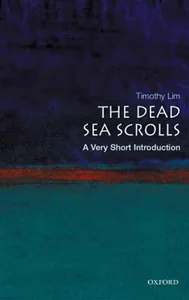
The Oxford handbook of the Dead Sea Scrolls

 74
74

The Oxford handbook of the Dead Sea Scrolls
Timothy H. Lim's compilation is an indispensable, if dense, reference for anyone serious about the Dead Sea Scrolls. It excels in its breadth, touching upon everything from the Qumran settlement's archaeology to intricate textual variations in the biblical manuscripts. A particular strength lies in the detailed discussions of sectarian literature, such as the Temple Scroll, offering precise linguistic analysis that moves beyond generalized interpretations. However, its sheer academic rigor can sometimes present a barrier; the introductory essays, while informative, assume a considerable prior knowledge. One passage that stands out is the exploration of the pesharim, the unique commentary-style biblical interpretations found among the scrolls, which Lim's contributors dissect with remarkable clarity. The verdict? A foundational resource that demands dedication but rewards it handsomely with unparalleled scholarly depth.
📝 Description
74
### What It Is
The Oxford Handbook of the Dead Sea Scrolls, edited by Timothy H. Lim and first published in 2010, functions as a comprehensive scholarly survey of the archaeological and textual discoveries made near the Dead Sea. It compiles contributions from numerous experts, offering a broad overview of the scrolls' content, origins, and significance. The work is not a narrative but a collection of essays designed to inform readers about the current state of research on these ancient manuscripts.
### Who It's For
This volume is primarily intended for academics, advanced students, and serious researchers of ancient Judaism, early Christianity, and biblical studies. Its depth and scholarly apparatus make it most suitable for those already possessing a foundational understanding of the historical and religious contexts surrounding the scrolls. Casual readers seeking a simple introduction may find its technical detail overwhelming.
### Historical Context
The discovery of the Dead Sea Scrolls, beginning in 1947, revolutionized the study of Second Temple Judaism and the origins of Christianity. This collection, published over six decades after the initial finds, represents a mid-point consolidation of decades of intense scholarly debate and analysis. It engages with critical questions surrounding the scrolls' dating, authorship, and relationship to various Jewish sects, particularly the Essenes, and early Christian communities.
### Key Concepts
The handbook addresses a wide array of critical concepts, including textual criticism applied to ancient Hebrew and Aramaic manuscripts, paleography for dating purposes, and the socio-religious landscape of Judea during the Second Temple period. It explores the theological ideas present in the scrolls, such as messianism, angelology, and apocalyptic thought, and their connections to broader Jewish and nascent Christian traditions.
💡 Why Read This Book?
• Gain an understanding of the Essenes and their community structure, as detailed in essays examining sectarian texts discovered at Qumran. • Explore the textual criticism of the Hebrew Bible, learning how scholars date and analyze manuscripts like the Great Isaiah Scroll from 1947. • Grasp the concept of pesharim, the specific interpretive method used for biblical exegesis in the scrolls, as examined in dedicated chapters.
⭐ Reader Reviews
Honest opinions from readers who have explored this book.
❓ Frequently Asked Questions
When were the Dead Sea Scrolls discovered?
The initial discovery of the Dead Sea Scrolls occurred in 1947 by a Bedouin shepherd in caves near the ancient settlement of Qumran, marking the beginning of decades of extensive archaeological exploration and scholarly analysis.
What is the significance of the Qumran settlement in relation to the scrolls?
The Qumran settlement is widely believed to be the community that produced or preserved many of the Dead Sea Scrolls. Archaeological evidence suggests it was inhabited during the Second Temple period, providing context for the sectarian texts found nearby.
Who were the Essenes and what is their connection to the scrolls?
The Essenes were a Jewish ascetic sect active during the Second Temple period. Many scholars associate them with the Qumran community and believe a significant portion of the Dead Sea Scrolls represent their theological and legal writings.
What are 'pesharim' in the context of the Dead Sea Scrolls?
Pesharim are a unique genre of biblical commentary found among the Dead Sea Scrolls. They typically interpret specific prophetic or historical texts by applying them to the author's contemporary community and events.
What languages are the Dead Sea Scrolls written in?
The majority of the Dead Sea Scrolls are written in Hebrew, with a substantial number in Aramaic, and a few in Greek. This linguistic diversity reflects the multilingual environment of ancient Judea.
How do scholars date the Dead Sea Scrolls?
Scholars employ several methods to date the scrolls, including paleography (the study of ancient handwriting), radiocarbon dating of the parchment or papyrus, and paleographical analysis of the script's evolution.
🔮 Key Themes & Symbolism
Sectarian Judaism
The handbook meticulously examines the diverse sectarian landscape of Second Temple Judaism, moving beyond monolithic interpretations. It focuses on groups like the Essenes, detailing their unique practices, theological doctrines, and community rules as evidenced in texts like the Community Rule. This exploration highlights how various Jewish factions, distinct from mainstream Pharisaic or Sadducean Judaism, developed specialized understandings of scripture and eschatology, offering critical context for the origins of later religious movements.
Biblical Interpretation
A central theme is the innovative methods of biblical interpretation employed by the scroll-writers. The work delves into the genre of 'pesharim,' which apply prophetic texts to contemporary events, revealing a dynamic and often polemical engagement with scripture. This contrasts sharply with later rabbinic or Christian interpretive traditions, showcasing a unique hermeneutical approach that sought direct relevance and divine revelation in ancient texts, particularly evident in commentaries on books like Habakkuk and Isaiah.
Apocalyptic and Messianic Thought
The manuscripts are rich with apocalyptic visions and messianic expectations, themes extensively analyzed within the handbook. It explores the varied portrayals of future redemption, the roles of angelic and demonic forces, and the anticipation of multiple messianic figures, including priestly and royal claimants. This exploration provides crucial insights into the eschatological fervor of the period and its significant influence on the development of both early Christian and later Jewish thought.
Textual Transmission
The handbook addresses the complex processes of textual transmission and preservation. It discusses the paleographical dating of manuscripts, the scribal practices involved in copying texts, and the remarkable textual variants found when comparing scroll fragments to the Masoretic Text. This focus on the physical and intellectual journey of these documents, from their creation to their discovery in 1947, underscores their value as primary sources for understanding ancient Hebrew and Aramaic literature.
💬 Memorable Quotes
“The scrolls represent a crucial bridge between ancient Israelite religion and the subsequent development of Rabbinic Judaism and early Christianity.”
— This interpretation highlights the Dead Sea Scrolls' pivotal position in religious history. They are not merely ancient artifacts but essential witnesses that illuminate the transitional period, showing how diverse Jewish ideas evolved into foundational elements of major world religions.
“Paleography and radiocarbon dating provide independent yet complementary methods for establishing the chronological framework of the scrolls.”
— This statement emphasizes the scientific rigor applied to dating the manuscripts. It points out that by using both the study of ancient handwriting (paleography) and carbon-14 analysis, scholars can establish a more reliable timeline for the scrolls' origins.
“The pesher method of biblical interpretation sought to reveal the divine author's intent for the community's present circumstances.”
— This captures the essence of the pesher genre. It suggests these commentaries weren't just academic exercises but were understood as direct messages from God, revealing how ancient prophecies specifically applied to the lives and challenges faced by the Qumran sect.
“The discovery of the Great Isaiah Scroll offers unparalleled insight into the textual state of the Hebrew Bible prior to the common era.”
— This interpretation focuses on the significance of specific finds, like the Great Isaiah Scroll. It underscores its value for textual critics, providing an ancient version of a key biblical book that predates many other known manuscripts and aids in understanding the Bible's textual history.
“The Qumran community's strict adherence to purity laws and communal living sets it apart within the broader spectrum of Second Temple Judaism.”
— This highlights the distinctiveness of the Qumran sect. It suggests their rigorous approach to ritual purity and their communal lifestyle differentiated them significantly from other Jewish groups of the era, such as the Pharisees or Sadducees.
🌙 Esoteric Significance
Tradition
While the Dead Sea Scrolls themselves predate most formalized esoteric traditions, their exploration offers foundational material for later Hermetic, Gnostic, and Kabbalistic studies. The emphasis on hidden knowledge, angelic hierarchies, dualistic cosmology, and messianic expectations found in texts like the Book of Enoch and various Qumran sectarian documents provides conceptual parallels and potential source material for esoteric lineages seeking ancient roots and esoteric interpretations of scripture.
Symbolism
Key symbolic motifs include the dualistic struggle between light and darkness, representing the cosmic battle between good and evil forces prevalent in many esoteric systems. Angelic beings, particularly figures like Michael and Belial, feature prominently, hinting at complex celestial hierarchies. The concept of the 'New Covenant' and ritual purity also carries symbolic weight, suggesting a path toward spiritual transformation and separation from the profane, echoing themes of initiation found in esoteric practices.
Modern Relevance
Contemporary esoteric thinkers and practitioners frequently reference the Dead Sea Scrolls, particularly their apocalyptic and messianic elements, as evidence of ancient esoteric currents. Movements focusing on early Christian mysticism, Gnostic revivals, and even certain branches of modern Kabbalah draw upon the scrolls' interpretations of divine law, angelic mediation, and eschatological timelines to enrich their own traditions and esoteric cosmologies.
👥 Who Should Read This Book
• Comparative Religion Scholars: Those analyzing the evolution of Jewish and early Christian thought will find detailed textual evidence and scholarly debate on sectarianism and messianism. • Textual Critics of Ancient Scripture: Individuals focused on the history and variations of biblical texts will benefit from the paleographical analysis and discussions on manuscript transmission. • Students of Ancient Jewish History: Anyone seeking a deep dive into the socio-religious environment of Judea during the Second Temple period will gain comprehensive context.
📜 Historical Context
The discovery of the Dead Sea Scrolls commencing in 1947 occurred during a period of intense geopolitical and intellectual flux following World War II. The mid-20th century saw burgeoning academic interest in the historical Jesus and the roots of Christianity within Second Temple Judaism. The scrolls immediately ignited debate, challenging previous understandings of Jewish diversity. Scholars like Yigael Yadin and Frank Moore Cross Jr. were pivotal figures in the early analysis, often engaging with competing theories about the scrolls' provenance and authorship. The initial secrecy surrounding the finds and the protracted publication process, overseen by Roland de Vaux, also fueled controversy and speculation, with some fringe theories suggesting esoteric connections even then. The work represents a consolidation of decades of this intense scholarly engagement, grappling with the implications for biblical studies and the origins of major Western religions.
📔 Journal Prompts
The Qumran community's understanding of purity rituals and their implications for spiritual separation.
The function of pesharim as a unique method of biblical exegesis.
The variety of messianic expectations present in the Dead Sea Scrolls.
The role of angelic and demonic figures in the scrolls' cosmology.
Comparing the Essenes' communal structure to other ancient philosophical or religious groups.
🗂️ Glossary
Pesher
A specific genre of biblical commentary found among the Dead Sea Scrolls, characterized by its literal interpretation and application of ancient prophecies to the author's contemporary community and events.
Paleography
The study of ancient handwriting. In the context of the Dead Sea Scrolls, paleography is crucial for dating manuscripts based on the evolution of Hebrew and Aramaic scripts.
Second Temple Period
The historical era in Judaism spanning from the rebuilding of the Jerusalem Temple around 516 BCE to its destruction by the Romans in 70 CE. The Dead Sea Scrolls originate from this period.
Essenes
A Jewish ascetic sect that flourished during the Second Temple period. Many scholars associate them with the Qumran community and the authors or custodians of the Dead Sea Scrolls.
Apocalyptic Literature
A genre of literature that claims to reveal divine mysteries, often concerning the end times, cosmic battles between good and evil, and future salvation. Many Dead Sea Scrolls fall into this category.
Masoretic Text
The authoritative medieval Hebrew text of the Jewish Bible. The Dead Sea Scrolls provide earlier textual witnesses that are compared to the Masoretic Text to understand textual development.
Community Rule (Serekh ha-Yahad)
A key sectarian document found among the Dead Sea Scrolls, detailing the laws, organization, and ritual practices of the Qumran community, often interpreted as the Essenes.