The object stares back
 73
73

The object stares back
James Elkins’ The object stares back offers a refreshing departure from purely academic analyses of material culture. Its strength lies in its relentless questioning of how we perceive, and more importantly, how objects seem to perceive us back. The chapter discussing the uncanny nature of certain household items, for instance, is particularly effective, illustrating how mundane objects can suddenly become charged with an unsettling significance. However, the book sometimes leans into a dense theoretical vocabulary that can obscure its core arguments, requiring a dedicated reader to unpack its dense prose. A passage exploring the perceived 'life' within inanimate artifacts, a concept Elkins terms 'object-subject reciprocity,' is a standout, forcing a re-evaluation of our most basic assumptions about agency. While occasionally opaque, the work's central thesis regarding the active role of objects in our perceptual field is compelling and persistently relevant.
📝 Description
73
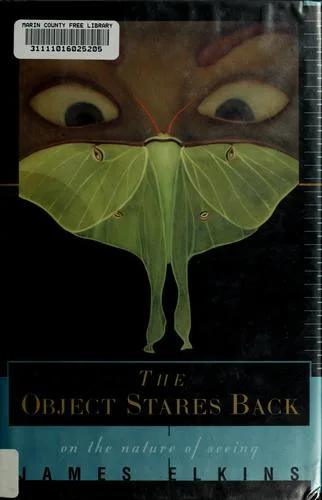
James Elkins' 1996 book asks how objects shape our perception and consciousness.
The object stares back examines how we perceive objects and the meaning we assign them. Elkins moves beyond simple aesthetics or material analysis, considering the psychological and spiritual dimensions of our connection to the material world. He challenges the idea that objects are passive, proposing instead that they actively influence human experience and our understanding of reality.
This work is not a mere inventory of items but a deep dive into the act of looking. It considers both the human gaze and, implicitly, the perspective of the object itself. The book is suited for those interested in the philosophy of perception, art theory, and the way everyday items communicate meaning. Students of cultural studies, anthropology, and psychoanalysis will find it valuable, as will anyone curious about the subtle power of artifacts or the hidden lives of things. It will appeal to readers who question the divisions between subject and object, the living and the non-living, and who seek a richer grasp of the unseen forces guiding our interactions.
Published in 1996, The object stares back aligns with late 20th-century critical theory and post-structuralist thought. It engages with ideas about the social construction of reality and the power of representation, common in academic circles examining Western thought. Elkins' focus on the active presence of material objects connects with thinkers like Jean Baudrillard and earlier phenomenologists such as Martin Heidegger. The book grounds philosophical inquiry in tangible experience, offering a counterpoint to purely abstract discourse.
💡 Why Read This Book?
• Gain a new framework for understanding your relationship with objects, moving beyond mere utility to explore their active presence, informed by Elkins’ concept of 'object-subject reciprocity.' • Learn to identify and analyze the 'occult presence' in everyday items, recognizing how certain artifacts can exert influence and shape perception beyond their material form. • Explore the 'aesthetics of the uncanny' as discussed in relation to specific examples within the text, enhancing your appreciation for how the familiar can become strangely potent.
⭐ Reader Reviews
Honest opinions from readers who have explored this book.
❓ Frequently Asked Questions
When was James Elkins' The object stares back first published?
The object stares back by James Elkins was first published in 1996, positioning it within the late 20th-century intellectual landscape of critical theory and object studies.
What is the central argument of The object stares back?
The book's central argument is that objects are not passive entities but actively influence human perception and consciousness, challenging the traditional subject-object dichotomy.
What is 'object-subject reciprocity' as discussed by Elkins?
'Object-subject reciprocity' refers to the idea that perception is a two-way street, where objects themselves can be seen as having a form of agency or presence that affects the observer.
Does the book offer practical advice for dealing with objects?
While not a self-help guide, the book offers a conceptual framework for understanding one's interaction with objects, fostering a more aware and less anthropocentric approach to material culture.
Who else was writing about objects and perception around the time of this book's publication?
Around 1996, thinkers like Jean Baudrillard were influential in discussions of simulation and the object's role in postmodern society, while earlier figures like Martin Heidegger had explored the 'thingness' of objects.
Is The object stares back considered an esoteric text?
Yes, it is categorized as esoteric due to its exploration of hidden meanings, unseen influences, and the psychological/spiritual dimensions of objects, bordering on what the author terms their 'occult presence'.
🔮 Key Themes & Symbolism
Object Agency and Perception
This theme investigates the radical notion that objects are not inert but possess a form of agency that actively shapes human perception and consciousness. Elkins moves beyond viewing objects as mere props in human dramas, suggesting a dynamic interplay where the 'gaze' is mutual. The work explores how certain objects can exert an influence, evoke specific feelings, or even appear to 'stare back,' thereby challenging our anthropocentric understanding of the world and our place within it. This reciprocity is key to understanding how material culture affects us on a profound level.
The Occult Presence of Things
Elkins delves into the idea that many objects carry a latent, almost 'occult' presence, a significance that transcends their utilitarian purpose or material composition. This is not necessarily about magic in a conventional sense, but about the hidden dimensions of meaning and affect that objects can hold. The book examines how certain artifacts, through their history, form, or cultural context, seem to possess a life or power of their own, influencing our psychological states and our understanding of reality. It suggests a deeper, often overlooked, spiritual or psychological charge within the material world.
Aesthetics of the Uncanny
A core concept explored is how the familiar can become unsettling, evoking a sense of the uncanny. The object stares back examines how ordinary items, when viewed through a particular lens or under specific circumstances, can transform into sources of unease or fascination. This theme touches upon the psychological phenomenon where the known becomes strange, blurring the lines between comfort and apprehension. It highlights how our perception of objects is not always rational and can tap into deeper, often subconscious, anxieties and desires.
Critique of Anthropocentrism
Underpinning the entire work is a critique of human-centered views of reality. By attributing agency and influence to objects, Elkins challenges the traditional philosophical hierarchy that places humans at the apex of perception and meaning-making. The book encourages readers to consider a more distributed ontology, where consciousness and influence are not solely confined to biological beings. This perspective opens up new avenues for understanding our relationship with the environment and the myriad non-human entities with which we share existence.
💬 Memorable Quotes
“Objects have a way of looking back at us.”
— This is a central thesis, suggesting that our interaction with material things is not one-sided. It implies that objects possess a presence or agency that influences the observer, challenging the passive role often assigned to them in human experience.
“The uncanny is often found in the most ordinary things.”
— This highlights the book's exploration of how familiar items can suddenly evoke feelings of strangeness or unease. It points to the hidden psychological dimensions that can be unlocked in everyday objects.
“Perception is a reciprocal act between subject and object.”
— This paraphrases the concept of 'object-subject reciprocity,' arguing that the act of seeing or experiencing an object involves a mutual influence, rather than just the subject imposing meaning onto a passive object.
“We imbue objects with meaning, but they also imbue us.”
— This interpretation captures the essence of the book's argument that the relationship is not solely defined by human projection. Objects, through their form, history, and presence, contribute to shaping our understanding and feelings.
“The life of an object is often perceived, not inherent.”
— This reflects the book's nuanced stance: while objects may not possess consciousness in a human sense, the *perception* of their 'life' or agency is a powerful phenomenon that significantly impacts human experience.
🌙 Esoteric Significance
Tradition
The object stares back can be situated within contemporary esoteric thought by examining its engagement with animism and the idea of immanent consciousness in the material world. While not strictly aligned with a single historical tradition like Hermeticism or Gnosticism, it echoes animistic beliefs found in various indigenous spiritualities and certain branches of occultism that posit a vital force or spirit within all things. Elkins' work departs from traditional esoteric texts by employing a critical, almost anthropological, lens rather than a purely devotional or ritualistic one, focusing on the *perception* of agency rather than its direct manipulation.
Symbolism
The book frequently engages with the symbolism inherent in everyday objects, particularly those that evoke the uncanny. For instance, a mundane household item might become symbolic of repressed anxieties or forgotten memories, its 'staring back' a manifestation of the subconscious surfacing. Mirrors, often discussed in occult traditions as portals or tools of divination, are implicitly examined here as objects that reflect not just the viewer but perhaps something deeper – the object's own perceived presence. The very act of the 'gaze' becomes symbolic of the exchange of influence between the human and the non-human.
Modern Relevance
Contemporary thinkers exploring object-oriented ontology (OOO) and new materialism find significant resonance in Elkins' work. Philosophers like Graham Harman and Timothy Morton, who assert the existence and agency of objects independent of human perception, build upon similar conceptual foundations. The book's exploration of the uncanny and the psychological impact of objects also informs contemporary art criticism, design theory, and even therapeutic approaches that consider the environment's influence on mental well-being. Its ideas continue to be relevant for anyone seeking to decenter the human in understanding our complex relationship with the material universe.
👥 Who Should Read This Book
• Students of critical theory and cultural studies: Gain a nuanced understanding of object agency and perception that complements post-structuralist thought. • Art historians and curators: Develop a deeper analytical framework for interpreting the psychological and symbolic power embedded within artworks and artifacts. • Individuals interested in phenomenology and the philosophy of mind: Explore alternative perspectives on consciousness and the nature of reality beyond purely human-centric models.
📜 Historical Context
Published in 1996, James Elkins' The object stares back emerged in a vibrant intellectual climate dominated by post-structuralist critiques and a burgeoning interest in materiality. The era saw scholars across humanities and social sciences grappling with theories of representation, semiotics, and the social construction of reality. Elkins' work contributed by foregrounding the active role of inanimate objects, a perspective that resonated with, yet diverged from, thinkers like Jean Baudrillard, whose work focused more on simulation and hyperreality in media and consumer culture. While figures like Martin Heidegger had previously pondered the 'thingness' of objects, Elkins’ 1996 publication offered a more direct, psychologically inflected examination of object agency. The book's focus on the uncanny and the 'occult presence' of items also positioned it within discourses exploring the boundaries of perception and the less rational aspects of human engagement with the material world, a counterpoint to purely rationalist approaches.
📔 Journal Prompts
The object's perceived gaze: what mundane item in your environment feels most alive?
Reflect on an instance where an object evoked a strong, unexpected emotion.
How does the concept of 'object-subject reciprocity' alter your view of your possessions?
Analyze the 'occult presence' you might ascribe to a particular artifact.
Consider the 'aesthetics of the uncanny' in relation to a familiar, yet unsettling, object.
🗂️ Glossary
Object-Subject Reciprocity
The concept that perception is a dynamic, two-way interaction where both the observer (subject) and the observed (object) influence each other. It challenges the idea of a passive object being merely acted upon by a conscious subject.
Occult Presence
The idea that objects can possess a hidden, latent significance or power that transcends their material form or utility. This refers to an unseen influence or meaning that can be perceived by the observer.
Aesthetics of the Uncanny
The study of how familiar objects or situations can evoke feelings of strangeness, unease, or fear. It explores the psychological phenomenon where the known becomes unsettling.
Anthropocentrism
The belief or practice of viewing the world and making decisions from a human-centered perspective, often to the exclusion or detriment of non-human entities and concerns.
Object Agency
The capacity attributed to inanimate objects to exert influence, act, or have an effect on their environment or on human consciousness, independent of direct human manipulation.
Semiotics
The study of signs and symbols and their interpretation. In this context, it refers to how objects function as signs and convey meaning within culture and perception.
Phenomenology
A philosophical approach that focuses on the study of consciousness and the objects of direct experience, emphasizing the subjective experience of phenomena.