The Nostradamus code

 78
78

The Nostradamus code
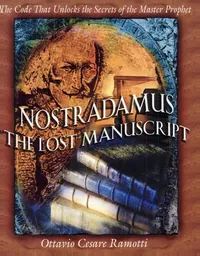
Ottavio Cesare Ramotti's "The Nostradamus Code" offers a scholarly examination of the prophetic writings attributed to Michel de Nostredame. Rather than succumbing to sensationalism, Ramotti attempts a systematic breakdown of the quatrains, focusing on the underlying structure and potential influences. A notable strength is the author's persistent effort to contextualize the prophecies within potential astrological and alchemical frameworks prevalent in the 16th century. However, the work occasionally becomes bogged down in its own analytical framework, sometimes making the path to understanding the core prophetic message more convoluted than necessary. The exploration of specific quatrains, particularly those concerning political shifts, demonstrates a keen eye for textual detail. Ultimately, "The Nostradamus Code" serves as a valuable, if dense, resource for those committed to a deeper, analytical engagement with Nostradamus's legacy.
📝 Description
78
Ottavio Cesare Ramotti's 1998 book dissects Michel de Nostredame's prophecies through an analytical lens.
Ottavio Cesare Ramotti's "The Nostradamus Code," published in 1998, offers a methodical examination of Michel de Nostredame's prophecies. Instead of simply cataloging predictions, Ramotti seeks to uncover the underlying methods and meanings within Nostradamus's quatrains. The book investigates the historical and esoteric frameworks that may have shaped these cryptic verses, aiming to understand prophetic structure as embodied by a singular, influential figure.
The work is suited for readers who approach Nostradamus's writings with a desire for historical context and an interest beyond surface interpretations. It will appeal to those studying esoteric traditions, Western esotericism, and the history of divination. Individuals looking for a structured analysis of prophetic texts, rather than straightforward predictions, will find value in Ramotti's approach. A degree of familiarity with historical texts and symbolic interpretation is beneficial for engaging with the material.
"The Nostradamus Code" emerged during a time of renewed interest in esoteric subjects and historical mysteries, partly fueled by popular culture's engagement with Nostradamus. Ramotti's work enters the long-standing scholarly discussion regarding the authenticity and interpretation of Nostradamus's prophecies, a debate active since the 16th century. It follows earlier attempts to contextualize the quatrains within Nostradamus's own era.
Ramotti's book engages with the tradition of analyzing prophetic figures and their texts within specific historical and intellectual contexts. It moves beyond simple cataloging of prophecies to investigate the symbolic language and potential influences, such as astrology and alchemy, that may have informed Nostradamus's work. This analytical approach positions the book within a lineage of scholarship that seeks to understand the mechanisms and meaning behind divinatory practices, viewing them not merely as superstition but as systems of thought with their own internal logic and historical roots.
💡 Why Read This Book?
• Gain insight into the structured analysis of prophetic texts by examining Ramotti's method for decoding Nostradamus's quatrains, understanding how astrological symbolism might function within such predictions. • Learn about the historical and esoteric milieu of the 16th century, specifically how alchemical and astrological knowledge could have informed the prophetic language used by Michel de Nostredame. • Understand the concept of layered meaning in prophecy, as Ramotti proposes that Nostradamus's verses operate on multiple symbolic levels, requiring specific interpretive keys to unlock their full significance.
⭐ Reader Reviews
Honest opinions from readers who have explored this book.
❓ Frequently Asked Questions
What is the primary focus of 'The Nostradamus Code' by Ottavio Cesare Ramotti?
The book focuses on a systematic, analytical approach to Nostradamus's prophecies, aiming to deconstruct the method and meaning behind his quatrains, rather than just presenting predictions.
When was 'The Nostradamus Code' first published?
Ottavio Cesare Ramotti's 'The Nostradamus Code' was first published in 1998, a period of significant public interest in esoteric subjects.
What historical or esoteric frameworks does the book explore in relation to Nostradamus?
The work delves into potential astrological and alchemical influences that may have shaped Nostradamus's prophetic language and symbolic system.
Who would benefit most from reading 'The Nostradamus Code'?
Readers interested in the historical context of prophecy, esoteric traditions, Western esotericism, and those seeking a structured analysis of prophetic texts, rather than simple fortune-telling, will find it valuable.
Does the book offer new predictions or interpretations of Nostradamus's prophecies?
While it offers interpretations, its primary aim is to analyze the *method* and *structure* of prophecy as employed by Nostradamus, exploring the framework of his predictions.
What is the significance of the 'coded prophecy' concept in Ramotti's work?
Ramotti suggests that Nostradamus's verses possess multiple layers of meaning, accessible through specific interpretive keys, viewing them as a sophisticated symbolic system.
🔮 Key Themes & Symbolism
Prophetic Method Analysis
Ramotti's work scrutinizes the very architecture of prophecy as exemplified by Nostradamus. It moves beyond cataloging predictions to dissecting the linguistic and symbolic tools employed. The focus is on understanding *how* Nostradamus constructed his verses, suggesting a deliberate system rather than random pronouncements. This analytical lens examines the relationship between observation, intuition, and symbolic representation in forecasting future events, treating prophecy as a form of coded communication.
Astrological and Alchemical Frameworks
The book posits that understanding Nostradamus requires an appreciation of the astrological and alchemical knowledge prevalent in the 16th century. Ramotti explores how celestial movements and alchemical processes, understood as symbolic transformations, might have provided the lexicon and conceptual scaffolding for the prophecies. This perspective frames the quatrains not merely as predictions but as expressions filtered through the esoteric sciences of the era.
Symbolic Layering in Verse
A central tenet of Ramotti's analysis is the idea that Nostradamus's quatrains are intentionally multi-layered. The text suggests that each verse can be interpreted on literal, symbolic, and esoteric levels, requiring specific keys or knowledge to fully comprehend. This approach views the ambiguity in Nostradamus's writing not as a flaw but as a feature designed to engage the discerning reader and preserve the prophetic message across time.
Historical Context of Prophecy
The work situates Nostradamus within the broader tradition of prophetic literature and its reception throughout history. It considers the social, political, and intellectual climate of the 16th century, arguing that these factors were crucial in shaping both the content and the public perception of the prophecies. Ramotti highlights how the practice and interpretation of prophecy were deeply intertwined with the historical moment.
💬 Memorable Quotes
“The quatrains are not simple predictions but a coded language.”
— This highlights Ramotti's central thesis: that Nostradamus employed a sophisticated system of symbolism and allegory, suggesting that direct, literal interpretation is insufficient. The verses require a decoder ring of sorts, rooted in esoteric knowledge.
“Astrology and alchemy were the grammar of his visions.”
— This statement emphasizes the author's view that the esoteric sciences of the 16th century were not mere background noise but fundamental to how Nostradamus perceived and articulated future events.
“Understanding the seer requires understanding his era's worldview.”
— Ramotti stresses the importance of historical contextualization, arguing that Nostradamus's prophecies must be viewed through the lens of 16th-century beliefs, including cosmology, philosophy, and occult sciences.
“Prophecy operates on multiple symbolic registers.”
— This encapsulates the idea that a single prophetic verse can hold diverse meanings, intended for different levels of understanding or for different times, necessitating an interpretive matrix.
“The text itself is the primary key to unlocking its secrets.”
— This suggests that while external esoteric knowledge is important, Ramotti also implies that careful analysis of Nostradamus's own word choices, patterns, and internal references can reveal the intended structure and meaning.
🌙 Esoteric Significance
Tradition
The work aligns with the Western Esoteric tradition, particularly its Hermetic and Renaissance magical currents. It positions Nostradamus not as a simple diviner but as an inheritor of ancient wisdom, channeling knowledge through symbolic language influenced by astrology and alchemy. Ramotti's analysis seeks to place Nostradamus within a lineage of seers and philosophers who understood the cosmos as a symbolic text, accessible through specialized knowledge and discipline.
Symbolism
Key symbols explored include celestial bodies (planets, stars) as indicators of temporal cycles and influences, and alchemical motifs representing transformation and hidden processes. Ramotti likely interprets the 'Great Conjunction' not just as an astronomical event but as a symbolic representation of epochal shifts, and the recurring imagery of fire and water as representing purification or catastrophic change within the prophetic narrative.
Modern Relevance
Contemporary interest in predictive systems, pattern recognition in data, and the psychological underpinnings of belief systems can draw parallels to Ramotti's analysis. Thinkers exploring the history of consciousness, the nature of symbolic language, and the enduring human fascination with prophecy might find his work a valuable case study. It resonates with modern approaches to semiotics and the interpretation of complex symbolic systems, even if the specific esoteric content is rooted in the past.
👥 Who Should Read This Book
• Students of Western Esotericism: Those interested in the historical development and theoretical underpinnings of traditions like Hermeticism and Renaissance magic will find Ramotti's contextualization of Nostradamus valuable. • Comparative Religion Researchers: Scholars examining the role of prophecy and divination across different cultures and historical periods can use this book to understand a specific European tradition. • Analytical Divination Practitioners: Individuals who approach divination not as passive reception but as an active, analytical process of interpreting symbolic language will appreciate the methodology presented.
📜 Historical Context
Published in 1998, "The Nostradamus Code" emerged during a late 20th-century resurgence of interest in esoteric subjects, fueled by popular culture and a desire to understand historical mysteries. Ramotti's work engages with a centuries-long discourse surrounding Michel de Nostredame, a figure whose prophecies have been debated since their initial publication in 1555. The book follows analytical traditions that sought to contextualize Nostradamus, differing from purely credulous or dismissive approaches. It existed alongside contemporary works that explored conspiracy theories and alternative histories, yet Ramotti's approach aimed for a more structured, academic dissection. While not directly engaging with a specific contemporary rival text in its public reception, it participated in the broader academic and popular debate about prophetic accuracy and historical interpretation, a conversation that included figures like James Randi, who famously debunked many alleged prophetic fulfillments.
📔 Journal Prompts
Nostradamus's coded language: How might astrological symbols function as a predictive grammar?
The symbolic registers of prophecy: Reflect on a personal experience where meaning shifted based on context.
The seer and his era: Consider how 16th-century worldview shaped Nostradamus's prophetic output.
Analyzing symbolic systems: What parallels exist between Ramotti's approach and modern data interpretation?
The layered meaning of verse: Explore how ambiguity can enhance or obscure a message.
🗂️ Glossary
Quatrain
A stanza or poem of four lines, particularly associated with the prophetic verses of Nostradamus.
Esotericism
Systems of thought and practice concerned with hidden knowledge, spiritual liberation, and the development of consciousness, often distinct from mainstream religious or philosophical doctrines.
Alchemy
An ancient proto-scientific and philosophical tradition concerned with the transmutation of substances, the elixir of life, and spiritual transformation, often employing rich symbolism.
Astrology
The study of the movements and relative positions of celestial bodies interpreted as having an influence on human affairs and the natural world.
Symbolic Register
A level or mode of symbolic meaning, implying that a single expression can be understood in multiple, distinct ways.
Hermeticism
A philosophical and religious tradition based on writings attributed to Hermes Trismegistus, emphasizing divine knowledge, cosmic unity, and the interconnectedness of all things.
Renaissance Magic
The magical theories and practices prevalent in Europe during the Renaissance, often blending Neoplatonic philosophy, Hermeticism, Kabbalah, and astrology.