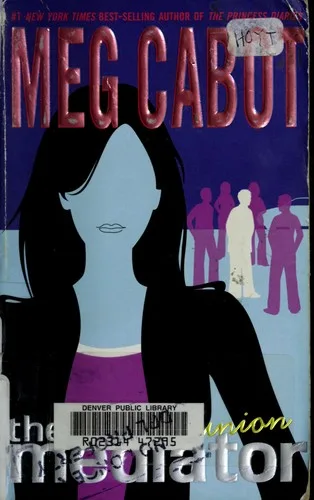
The Mediator
 76
76

The Mediator
Meg Cabot's The Mediator, from its 2001 debut, presents a ghost story filtered through the anxieties of a teenage girl. Suze Simon, the protagonist, is a refreshingly grounded specter, less concerned with spectral lore and more with the mundane inconveniences of being dead. The strength of the novel lies in its sharp, often humorous, voice, which makes Suze's predicament relatable despite its supernatural nature. Her initial complaint, that her newly deceased status interferes with her desire to be a rock star, is indicative of Cabot's playful approach. A notable limitation, however, is the somewhat predictable romantic subplot that, while appealing to the target demographic, feels less original than Suze's core ghostly dilemma. The scene where Suze, as a ghost, must contend with a particularly persistent and malevolent spirit in a familiar setting like a school hallway, highlights the novel's success in grounding the paranormal in the everyday. Ultimately, The Mediator offers a charming, if not groundbreaking, exploration of the afterlife through an adolescent lens.
📝 Description
76
### What It Is
The Mediator is the inaugural novel in Meg Cabot's series of the same name, first published in 2001. It introduces readers to Suze Simon, a pragmatic teenager who, after a freak accident involving a falling picture frame, finds herself a ghost. Her spectral existence is complicated by the fact that she can see and interact with the living, including the ghosts of others. The narrative primarily follows Suze as she navigates her unusual afterlife, attempting to maintain some semblance of normalcy while dealing with her own ghostly condition and the spectral inhabitants of the world.
### Who It's For
This work will appeal to young adult readers who enjoy supernatural fiction with a strong, relatable protagonist. It is particularly suited for those who appreciate stories blending everyday teenage concerns—school, friendships, romance—with fantastical elements. Readers interested in exploring themes of mortality, the afterlife, and the nature of consciousness through a contemporary, accessible lens will find the narrative engaging. The book offers a lighter entry into paranormal narratives, focusing on character interaction and plot development.
### Historical Context
Published in 2001, The Mediator emerged during a period of burgeoning popularity for young adult paranormal romance. Following the success of authors like Anne Rice in adult paranormal fiction, the early 2000s saw a rise in YA literature exploring ghosts, vampires, and other supernatural beings in contemporary settings. Cabot's work entered a landscape already being shaped by stories that humanized supernatural entities and placed them within recognizable adolescent life. This period also saw continued interest in the spiritual and afterlife, influenced by New Age movements and a general cultural fascination with the unseen.
### Key Concepts
The central concept is the 'Mediator' itself – a ghost who can interact with both the living and other spirits. Suze Simon, the protagonist, embodies this role, finding herself caught between worlds. The book explores the mechanics of her ghostly existence, including her ability to affect the physical world to a limited extent and her interactions with other spectral beings, some of whom are trapped by unfinished business. The narrative also touches upon the idea of death as an abrupt transition, often leaving individuals with unresolved emotional or practical matters that tether them to their former lives, a theme explored through the various ghosts Suze encounters.
💡 Why Read This Book?
• Gain insight into the unique challenges faced by Suze Simon, a ghost who must learn to mediate between the living and the spectral, a concept central to the book's premise. • Understand the early 2000s YA literary landscape through the novel's publication in 2001, a period marked by rising interest in paranormal themes. • Experience a narrative voice that blends adolescent concerns with supernatural events, showcasing Cabot's distinct style of character-driven storytelling.
⭐ Reader Reviews
Honest opinions from readers who have explored this book.
❓ Frequently Asked Questions
When was The Mediator first published and by whom?
The Mediator was first published in 2001 by Meg Cabot, marking the beginning of a popular young adult paranormal series.
What is the central premise of The Mediator?
The central premise involves Suze Simon, a teenage girl who dies and becomes a ghost, finding herself tasked with mediating between the living and the spectral realm.
Who is the protagonist of The Mediator?
The protagonist is Suze Simon, a pragmatic and somewhat cynical teenager who must adapt to her new existence as a ghost after a bizarre accident.
What genre does The Mediator belong to?
The Mediator belongs to the young adult paranormal fiction genre, blending supernatural elements with themes of adolescence and romance.
Are there other books in The Mediator series?
Yes, The Mediator is the first book in a series by Meg Cabot, with subsequent installments continuing Suze Simon's story.
What kind of supernatural elements are present in The Mediator?
The novel features ghosts, the afterlife, and the concept of spirits being tied to the living world due to unfinished business.
🔮 Key Themes & Symbolism
The Teenage Ghost
The novel centers on Suze Simon's transformation into a ghost following an accident in 2001. This theme explores the disruption of normal adolescent life by the ultimate disruption: death. Suze’s pragmatic, often exasperated, reaction to her spectral state grounds the supernatural in relatable teenage concerns. Her primary struggle is not with the mechanics of being dead, but with how this new reality impacts her desires for a normal life, friendships, and future aspirations, creating a unique blend of the mundane and the otherworldly.
Mediating Between Worlds
The core concept of the 'Mediator' is explored through Suze's unique position. She can see and interact with both the living and other spirits, making her an unwilling intermediary. This role is fraught with peril, as she encounters various ghosts, some benevolent and others malevolent, each tethered to the earthly plane by unresolved issues. The narrative examines the emotional and practical complexities of bridging these distinct realities, highlighting the lingering ties of the departed and the challenges of finding peace or resolution.
Unfinished Business
A recurring motif is the idea that death is not always an endpoint but can be a transitional phase, particularly when individuals have unfinished business. The ghosts Suze encounters are often trapped by earthly attachments, regrets, or unresolved conflicts. The novel uses these spectral figures to explore themes of mortality, regret, and the human desire for closure. Suze’s journey involves confronting these lingering issues, both in others and implicitly in herself, as she grapples with her own sudden demise.
The Persistence of Life
Despite Suze's death, the novel emphasizes the enduring nature of life and its associated concerns. Suze’s spectral existence doesn't negate her teenage personality or her desires, which are often frustrated by her condition. The narrative contrasts the stillness of death with the ongoing flow of life, which continues around her, largely unaware of her spectral presence. This juxtaposition allows for commentary on how life goes on, the importance of living fully, and the impact individuals have even after they are gone.
💬 Memorable Quotes
“My new life was going to be all about helping people. Not because I was a saint or anything. Because I was dead.”
— This quote encapsulates Suze's reluctant acceptance of her ghost status. It highlights her pragmatic, unenthusiastic approach to her spectral role, emphasizing that her newfound 'purpose' is less about altruism and more about the unavoidable consequences of her untimely death.
“Being dead wasn't like in the movies. Nobody floated around in white sheets. I was still me, just... not alive.”
— This interpretation of a common ghostly trope contrasts fictional portrayals with Suze's reality. It underscores the novel's grounded approach to the supernatural, emphasizing that even in death, the core identity and personality of the individual remain, albeit in a different state of being.
“Some ghosts were just stuck. Stuck in a place, stuck in a time, stuck with unfinished business.”
— This concept directly addresses the theme of 'unfinished business.' It explains the state of many spirits Suze encounters, suggesting that their inability to move on is tied to unresolved emotional or practical matters from their lives, a common trope in ghost lore that Cabot explores.
“I had to learn to be a mediator. Someone who could bridge the gap between the living and the dead.”
— This paraphrased concept defines Suze's central role and the book's titular function. It highlights her unique ability and the narrative's focus on her developing capacity to navigate and influence both the spectral and physical realms.
“Death had a funny way of changing your perspective on everything.”
— This observation reflects Suze's post-mortem realization. It suggests that the transition to being dead offers a profound shift in understanding, forcing a reevaluation of life's priorities and the nature of existence itself.
🌙 Esoteric Significance
Tradition
While not strictly adhering to a formal esoteric tradition like Hermeticism or Kabbalah, The Mediator engages with themes common in spiritualist and parapsychological discourse prevalent in the late 20th and early 21st centuries. It draws upon folk beliefs about ghosts and the afterlife, particularly the concept of spirits being tethered by earthly concerns. The work can be seen as a contemporary, secularized exploration of liminal states and the persistence of consciousness, resonating with broader New Age interests in mediumship and the nature of existence beyond physical death.
Symbolism
The central symbol is the 'Mediator' itself, representing a bridge between opposing states of being—life and death, the physical and the spectral. Suze's spectral form, while lacking physical substance, retains agency and the ability to interact with the world, symbolizing the enduring influence of consciousness. The various ghosts she encounters, often trapped by specific objects or locations, symbolize unresolved attachments and the lingering power of memory and emotion that can bind individuals to existence.
Modern Relevance
The Mediator's exploration of a young person grappling with mortality and the supernatural continues to be relevant. Contemporary YA paranormal fiction, including series like 'Shadow and Bone' or 'The Cruel Prince,' often features protagonists who must navigate dangerous, hidden worlds and discover unique abilities. The book's approachable take on ghosts and the afterlife can also inform discussions in comparative religion or philosophy of mind, offering a popular culture lens through which to examine concepts of consciousness, identity, and what it means to exist beyond the physical body.
👥 Who Should Read This Book
• Young adult readers interested in contemporary paranormal fiction who appreciate a strong, witty protagonist navigating unusual circumstances. • Those curious about accessible explorations of ghost lore and the afterlife, particularly as it intersects with teenage life and relationships. • Fans of character-driven stories that blend supernatural elements with relatable adolescent concerns, offering a blend of humor and spectral intrigue.
📜 Historical Context
The Mediator, published in 2001, arrived during a fertile period for young adult paranormal fiction, a genre gaining significant traction. Following the success of authors like Anne Rice in adult fiction, the early 2000s saw a surge of YA novels featuring supernatural beings, with ghosts becoming a particularly popular subject. Cabot’s work entered a market that was increasingly receptive to stories that humanized otherworldly entities and placed them within contemporary, adolescent settings. This era also saw a continued cultural fascination with the afterlife and spiritualism, influenced by New Age philosophies and a broader interest in unseen forces. Contemporary authors like L.J. Smith had already paved the way for supernatural teen dramas, and Cabot’s novel tapped into this established audience interest. The book's reception was largely positive within its target demographic, contributing to the growing trend of paranormal romance and fantasy for young readers.
📔 Journal Prompts
Suze Simon's initial reaction to becoming a ghost.
The concept of 'unfinished business' as a tether to the living world.
The challenges of mediating between spectral and corporeal realms.
The impact of death on Suze's perspective of her former life.
The contrasting personalities of the various ghosts Suze encounters.
🗂️ Glossary
Mediator
In this context, a ghost who can interact with both the living and other spirits, acting as an intermediary between the two realms. The protagonist, Suze Simon, embodies this role.
Spectral Realm
The plane of existence occupied by ghosts and spirits. It is distinct from the physical world but can be interacted with by those who possess the ability, such as Suze.
Unfinished Business
The unresolved matters, desires, or regrets from a person's life that can keep their spirit tethered to the earthly plane after death.
Tethered
Describes a spirit that is unable to move on from its earthly existence, often due to unfinished business or strong emotional ties to a place or person.
Corporeal
Relating to the physical body or matter; the opposite of spectral or ethereal. Suze often struggles to interact with the corporeal world as a ghost.
Picture Frame Accident
The specific, albeit unusual, event that leads to Suze Simon's death and subsequent transition into a ghost. This mundane cause contrasts with the extraordinary outcome.
Ghostly Agency
The capacity of a ghost to act or exert influence in the world. Suze, as a mediator, possesses a degree of ghostly agency, allowing her to affect the living and spectral planes.