The magic toyshop
 72
72

The magic toyshop
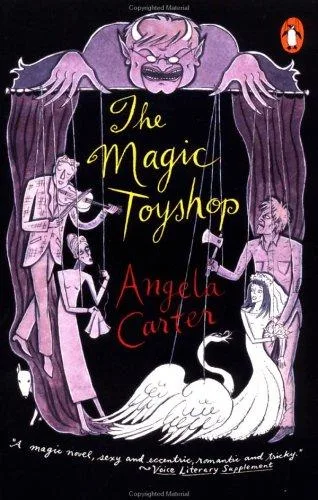
Angela Carter's "The Magic Toyshop" conjures a potent, claustrophobic atmosphere from its opening pages. The novel excels in its depiction of Uncle Philip, a chillingly realized antagonist whose control over the household and its inhabitants, particularly Melanie, feels both monstrous and disturbingly plausible within the story's warped logic. The prose is characteristically rich, painting vivid, often nightmarish, images of the shop and its strange denizens. A particular strength lies in the way Carter imbues mundane objects, like the titular toys, with a palpable sense of menace, transforming them into symbols of captivity. However, the narrative's relentless descent into darkness can, at times, feel overwhelmingly bleak, with few moments of respite for the reader. The abruptness of certain plot resolutions, while in keeping with the surreal tone, might leave some desiring a more fleshed-out conclusion to Melanie's ordeal. Despite this, the novel remains a powerful exploration of awakening consciousness under duress. Carter's "The Magic Toyshop" offers a disquieting, artful examination of burgeoning sexuality and psychological coercion.
📝 Description
72
Angela Carter published "The Magic Toyshop" in 1967, a novel about a girl trapped in a sinister toy shop.
Melanie, an orphan, arrives in 1967 to live with her Aunt Margaret and Uncle Philip. She soon finds the house, dominated by a strange toy shop, is a place of confinement. Uncle Philip, a doll maker, exerts a disturbing control over the household. Melanie becomes aware of the shop's dark secrets and the oppressive atmosphere it generates. She finds herself caught between the desires of her aunt and the manipulative nature of her uncle.
The narrative unfolds with surreal and often nightmarish imagery. Carter blurs the lines between reality and Melanie's perception, creating a sense of growing dread. The novel examines themes of sexual awakening and the corruption of innocence within a gothic framework. It is a story of psychological entrapment, where the physical space of the toyshop reflects Melanie's internal state.
Published in 1967, "The Magic Toyshop" emerged during a period of cultural experimentation. Carter's gothic sensibility and exploration of the uncanny connect to traditions that question societal norms and explore darker psychological states. The novel engages with fairy tale structures, subverting them to examine themes of control and awakening. Its focus on the unsettling and the psychological places it within a lineage of writers who use the supernatural to dissect human experience.
💡 Why Read This Book?
• Gain insight into the symbolic transformation of innocence corrupted, as seen in the disturbing re-purposing of toys within Uncle Philip's oppressive workshop, offering a unique perspective on control. • Experience Carter's distinctive prose and surreal atmosphere, which creates a palpable sense of dread and psychological unease, particularly evident in the oppressive setting of the 1967-published toyshop. • Understand the emergence of female agency within restrictive environments, exemplified by Melanie's journey from passive victim to a character capable of defiance, a core theme explored throughout the narrative.
⭐ Reader Reviews
Honest opinions from readers who have explored this book.
❓ Frequently Asked Questions
What is the central theme of Angela Carter's "The Magic Toyshop"?
The central theme revolves around the corruption of innocence and the oppressive nature of control, particularly within patriarchal structures. It explores psychological entrapment and the unsettling awakening of sexuality in a nightmarish environment.
Who are the main characters in "The Magic Toyshop"?
The primary characters are Melanie, a young orphan who is sent to live in the sinister toyshop, and her Uncle Philip, the manipulative and controlling proprietor. Other significant figures include Aunt Margaret and the enigmatic Finn.
When was "The Magic Toyshop" originally published?
Angela Carter's novel "The Magic Toyshop" was first published in 1967, a period marked by significant cultural and artistic shifts in Britain.
What kind of atmosphere does "The Magic Toyshop" create?
The novel creates a dark, surreal, and claustrophobic atmosphere. It blends elements of gothic horror, fairy tale, and psychological suspense, making the ordinary setting of a toyshop feel profoundly menacing.
Does "The Magic Toyshop" have any autobiographical elements?
While not directly autobiographical, Carter often drew on personal experiences and obsessions, including her fascination with dolls and mannequins, which find potent expression in the novel's unsettling imagery.
What makes the toys in the novel significant?
The toys in the novel are central symbols. Initially representing childhood joy, they become instruments of control and perversion under Uncle Philip's influence, reflecting the corruption of innocence and the oppressive forces at play.
🔮 Key Themes & Symbolism
Corruption of Innocence
The novel masterfully depicts the erosion of youthful innocence under oppressive forces. Melanie, the protagonist, arrives at the toyshop as an untainted orphan, but her experiences with Uncle Philip and the shop's bizarre inhabitants gradually strip away her naivete. The toys themselves, once symbols of childhood delight, are perverted into objects of control and unsettling artistry, mirroring Melanie's own subjugation and eventual transformation. This theme is central to understanding Carter's critique of societal forces that warp and exploit vulnerability.
Psychological Entrapment
The Magic Toyshop serves as a potent metaphor for psychological imprisonment. Melanie finds herself physically confined within its walls, but the true prison is the web of manipulation and fear spun by Uncle Philip. The strange, doll-like figures and the eerie atmosphere contribute to a sense of inescapable dread. Carter uses the physical space to externalize Melanie's internal state, illustrating how environments can foster and reinforce mental captivity, even as the possibility of escape flickers.
Emergence of Agency
Despite the overwhelming atmosphere of control, "The Magic Toyshop" charts the nascent development of female agency. Melanie's journey is one from passivity to a dawning awareness and eventual defiance. Her interactions, particularly with Finn and the other 'living dolls,' push her towards self-discovery and resistance. The novel suggests that even within the most suffocating systems of patriarchal power, the seeds of rebellion and self-determination can take root and eventually blossom.
The Uncanny and Surrealism
Carter employs uncanny imagery and surrealist techniques to destabilize the reader's perception of reality. The toyshop itself, with its automatons and unsettling creations, exists in a liminal space between the familiar and the bizarre. This pervasive sense of the uncanny heightens the psychological tension and reflects a world where societal norms are distorted. The novel's dreamlike, often nightmarish, quality is a hallmark of Carter's style, inviting readers to confront the unsettling aspects of the subconscious.
💬 Memorable Quotes
Direct passages from the work, attributed to the author.
“The toyshop was a place of perpetual, mechanical, childish bliss.”
— This statement, uttered early in the novel, is steeped in irony. It establishes the facade of the toyshop as a place of innocent joy, which the reader quickly understands is a deceptive front for something far more sinister and controlling.
“Melanie had been brought up to believe that her senses, in themselves, were bad.”
— This highlights the theme of psychological manipulation and repression. Melanie's upbringing has conditioned her to distrust her own perceptions and desires, making her more susceptible to Uncle Philip's control and her eventual awakening more profound.
“She was a child of the world, and the world was a toyshop.”
— This interpretation suggests that the oppressive, controlled environment of the toyshop is not an anomaly but a microcosm of the larger world. It implies that societal structures often function like this manipulative shop, dictating experiences and desires.
“The dolls were dressed in the clothes of the dead.”
— This vivid, unsettling image speaks to the perversion of childhood innocence and the theme of death or stasis within the toyshop. The dolls, meant to represent life and play, are instead adorned with remnants of mortality, amplifying the gothic and surreal atmosphere.
“All the toys were like them: all men were dolls, and all women were dolls too.”
— This interpretation suggests a critique of societal roles and dehumanization. It implies that individuals are often reduced to automaton-like figures, performing pre-determined functions within a controlled system, blurring the lines between agency and puppetry.
🌙 Esoteric Significance
Tradition
While not explicitly aligned with a single esoteric tradition, "The Magic Toyshop" draws heavily on archetypal patterns found in Gnostic and Hermetic thought, particularly concerning the theme of entrapment within a flawed, material world controlled by a malevolent demiurge (Uncle Philip). The novel's exploration of awakening consciousness and the search for liberation from oppressive systems echoes Gnostic narratives of gnosis as a path to salvation. Carter subverts traditional fairy tale structures, infusing them with a darker, more psychological edge.
Symbolism
The toys themselves are potent symbols, representing manufactured innocence and the potential for corruption. The doll-like figures and automatons embody the loss of genuine selfhood under oppressive control, serving as physical manifestations of psychological subjugation. The toyshop, as a confined space, symbolizes the mundane world or a specific oppressive social structure from which liberation is sought. The act of creation within the shop, twisted by Uncle Philip, signifies a perverse imitation of divine or natural generative forces.
Modern Relevance
Contemporary thinkers and artists continue to engage with Carter's exploration of power, gender, and the uncanny. Her deconstruction of fairy tales and gothic tropes finds echoes in modern horror literature and film, particularly in works that examine female agency and psychological manipulation. Scholars of feminist theory and post-structuralism frequently cite Carter for her complex portrayal of gender roles and her challenging of patriarchal narratives. The novel's enduring power lies in its ability to speak to anxieties about control and identity in rapidly changing social landscapes.
👥 Who Should Read This Book
• Students of 20th-century British literature seeking to understand the evolution of gothic and surrealist elements in post-war fiction. • Readers interested in feminist literary criticism, particularly those exploring the subversion of traditional fairy tales and the analysis of patriarchal power structures. • Enthusiasts of psychological horror and dark fantasy who appreciate richly drawn atmospheres and complex character dynamics, particularly the exploration of awakening sexuality.
📜 Historical Context
Angela Carter's "The Magic Toyshop," published in 1967, arrived amidst the Swinging London era, a time of burgeoning youth culture, artistic experimentation, and a questioning of traditional values. The novel's surrealism and dark psychological undertones align with a broader literary trend that explored the subconscious and challenged realism, echoing, in spirit, the Oulipo movement's structuralist experiments and the Beat Generation's anti-establishment sentiment, though Carter's approach was distinctly her own. While not directly engaging with specific philosophical schools, its exploration of power dynamics and female awakening resonated with emerging feminist critiques of patriarchal society. The book's reception highlighted Carter's unique voice, with critics noting its potent atmosphere and unsettling narrative, positioning her as a distinct literary force separate from more conventional post-war novelists like William Golding.
📔 Journal Prompts
The oppressive atmosphere of the toyshop and its impact on Melanie's perception.
Uncle Philip's methods of control and their symbolic representation.
The transformation of the toys from innocent objects to instruments of manipulation.
Melanie's internal struggle between fear and burgeoning defiance.
The significance of the "living dolls" and their relationship to the human characters.
🗂️ Glossary
Automatons
Mechanical figures or robots designed to imitate the actions of humans. In "The Magic Toyshop," they represent a loss of agency and are used as tools of control and unsettling artistry by Uncle Philip.
Gothic atmosphere
A literary style characterized by mystery, horror, and the supernatural, often set in old, decaying buildings. Carter uses gothic elements to create a sense of dread and psychological unease within the seemingly ordinary toyshop.
Surrealism
An artistic and literary movement emphasizing the irrational, dreamlike, and subconscious. Carter employs surreal imagery to destabilize reality and explore psychological states, particularly Melanie's.
Archetype
A recurring symbol, character type, or motif found in myths and literature across cultures. Carter often draws on and subverts archetypal figures, such as the wicked uncle or the innocent maiden.
Patriarchal control
A system of society or government in which men hold the power. The novel critiques this through Uncle Philip's dominance over Melanie and the other women in the household.
Psychological manipulation
The exercise of undue influence over someone's basic assumptions, way of thinking, or behavior, through tactics like coercion, deception, and intimidation. This is central to Uncle Philip's relationship with Melanie.
Feminist critique
An approach to literary analysis that examines how literature portrays, reinforces, or challenges gender roles and power imbalances, particularly those affecting women. Carter's work is often analyzed through this lens.
🔮 Readers Also Liked
Browse all →








More by Angela Carter
All books →
More Free Occult Philosophy Books
View all →