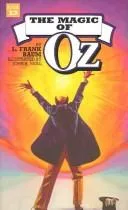
The Magic of Oz
 79
79

The Magic of Oz
L. Frank Baum’s The Magic of Oz presents a curious case for the esoteric reader. Its strength lies in the detailed mapping of Oz’s socio-magical geography, particularly the introduction of the Rugged Mountains and the character of the Nome King, whose subterranean domain offers a stark contrast to the glittering surface world. The depiction of Princess Ozma’s journey to reclaim her throne, involving the loss and eventual regaining of her magical abilities, is a compelling narrative arc. However, the book's primary limitation for the esoteric critic is its overt simplicity in language and pacing, often catering more directly to a younger audience than to those seeking complex philosophical discourse. A passage detailing the Nome King’s obsession with jewels and his subterranean kingdom hints at deeper themes of materialism and inner darkness, but these are not fully developed. Ultimately, The Magic of Oz offers a charming, albeit light, exploration of magical themes within a well-established fantastical framework.
📝 Description
79
L. Frank Baum published The Magic of Oz in 1900, his sixth Oz book.
The Magic of Oz, the sixth installment in L. Frank Baum's Oz series, appeared in 1900. Beyond its surface as a children's story, the novel engages with deeper themes through its detailed world and symbolic characters. The narrative follows Dot and the Button-Bright boy on an adventure to the Emerald City. Along the way, they encounter new magical elements and challenges that test their understanding of Oz.
Baum crafts a world with specific magical rules and distinct geographical areas. The Emerald City itself functions as a focal point of illusion and power, prompting questions about perception and reality. The story also examines the outcomes of unchecked ambition and how genuine strength can emerge from unexpected places. Readers interested in comparative mythology and the philosophical aspects of fantasy will find layers of meaning.
Published in 1900, The Magic of Oz emerged during a period of Western fascination with spiritualism and esoteric thought. The rise of Theosophy, for instance, indicates a broader cultural interest in alternative realities and the exploration of consciousness. Baum's construction of Oz, with its unique magical systems and geography, can be viewed as a product of this era's engagement with creating symbolic worlds that reflect deeper psychological or metaphysical ideas.
💡 Why Read This Book?
• Understand the archetypal symbolism of the Nome King's subterranean kingdom, which can be interpreted as representing the shadow self or the suppressed subconscious, offering a unique perspective on inner exploration beyond typical psychological texts. • Analyze the concept of inherent magical talent versus learned abilities through Princess Ozma's journey, providing a concrete example for discussions on innate potential versus cultivated skill, distinct from philosophical treatises. • Examine the symbolic representation of the Emerald City, a place of both wonder and potential deception, offering a specific case study for exploring themes of illusion versus reality as presented in Baum's 1900 publication.
⭐ Reader Reviews
Honest opinions from readers who have explored this book.
❓ Frequently Asked Questions
What is the significance of the Nome King in The Magic of Oz?
The Nome King, ruler of the underground world, represents themes of greed, materialism, and the darker, hidden aspects of existence. His obsession with jewels and his subterranean realm offer symbolic interpretations relevant to esoteric studies of the shadow self.
How does The Magic of Oz relate to other Oz books?
Published in 1900, it is the sixth installment in L. Frank Baum's series. It expands the lore of Oz, introducing new characters and regions like the Nome Country, and continues the adventures of familiar characters such as Dorothy and Princess Ozma.
What are the primary themes explored in The Magic of Oz?
The book explores themes of identity, the nature of magic, the consequences of ambition, and the contrast between outward appearance and inner reality. The journey to reclaim Ozma's throne highlights these elements.
Is The Magic of Oz considered a children's book or for adults?
While originally intended for a broad audience including children, its intricate world-building, allegorical characters, and symbolic landscapes offer substantial depth for adult readers interested in mythology and esoteric interpretations.
Where does the Emerald City feature in the narrative?
The Emerald City, the capital of Oz, is a recurring and significant location. In The Magic of Oz, it serves as a symbol of the kingdom's power and is a point of focus for the characters' efforts to protect and understand their realm.
What esoteric interpretations can be drawn from The Magic of Oz?
Esoteric readings often focus on the symbolism of Oz as a perfected realm, the characters as archetypes, and the magical elements as representations of hidden spiritual laws. The Nome King's underground kingdom, for instance, can symbolize the subconscious or the material plane.
🔮 Key Themes & Symbolism
Archetypes of the Inner and Outer Worlds
The novel masterfully contrasts the vibrant, magical surface of Oz, epitomized by the Emerald City, with the subterranean, mineral-rich domain of the Nome King. This duality can be interpreted esoterically as the interplay between the conscious and subconscious, the spiritual and the material planes. The Nome King's obsession with tangible riches, like jewels, mirrors a materialistic focus that can obscure deeper, more ethereal forms of wealth or knowledge, a concept explored in various Gnostic traditions.
The Nature of Identity and Power
Princess Ozma's journey in The Magic of Oz, particularly her temporary loss of magical abilities and her true royal lineage, looks at the essence of identity beyond external markers. Esoterically, this speaks to the idea that true power and selfhood are not solely dependent on acquired skills or recognized titles, but on an inner knowing or inherent spiritual essence. The book suggests that power can be both a birthright and a responsibility, requiring understanding and ethical application.
Symbolism of Transformation and Illusion
The magical transformations and the often-deceptive appearances within Oz offer fertile ground for symbolic interpretation. The Emerald City itself, famously green due to magical enchantment, questions the perception of reality. This theme aligns with Hermetic principles concerning the veil of Maya or the illusory nature of the material world. Readers can explore how Baum uses fantastical elements to comment on the human tendency to be swayed by appearances rather than seeking underlying truths.
The Quest for Knowledge and Belonging
Dorothy's repeated returns to Oz, and the various characters' quests for belonging or understanding, can be viewed through the lens of the soul's journey. The search for the Emerald City or the navigation of its complexities mirrors the spiritual aspirant's quest for enlightenment or union. The book's enduring appeal suggests a collective human desire to find a place of magic, order, and meaning in a complex world.
💬 Memorable Quotes
Direct passages from the work, attributed to the author.
“The Nome King was a gruff, disagreeable sort of person.”
— This characterization of the Nome King, a ruler of the subterranean world, serves as a symbolic representation of the shadow aspect of the psyche or the material realm's inherent limitations and potential negativity.
“It is not a disgrace to be a Nome, for all Nomes are miners.”
— This statement highlights a sense of collective identity tied to occupation and origin. Esoterically, it touches upon the concept of elemental beings or specialized roles within a larger cosmic order, suggesting inherent qualities associated with specific domains.
“The Emerald City was a place of great wonder.”
— This simple description of the capital of Oz functions as a potent symbol. Esoterically, the Emerald City can represent a state of spiritual attainment, a place of illusion, or a goal that requires purification and understanding to truly appreciate.
“Ozma was a fairy princess.”
— Identifying Ozma as a fairy princess situates her within a field of magical hierarchy and inherent spiritual authority, aligning with folklore and esoteric traditions that recognize non-human intelligences and royalty.
“The Cowardly Lion wished for courage.”
— This desire reflects a common human longing for a specific virtue. Esoterically, it can be interpreted as the soul's quest to integrate and overcome perceived deficiencies, seeking wholeness and mastery over one's own nature.
🌙 Esoteric Significance
Tradition
The Magic of Oz, while not overtly adhering to a single esoteric tradition, draws heavily from archetypal psychology and comparative mythology, themes prevalent in Theosophical and Jungian thought. Its creation of a distinct magical system and its symbolic characters align with the broader Hermetic and Gnostic interest in constructing and understanding hidden orders of reality and the nature of the soul's journey.
Symbolism
The Emerald City serves as a potent symbol, often interpreted as representing a state of illusion or a perfected, yet potentially deceptive, material realm. The Nome King and his subterranean kingdom symbolize the shadow self, the unconscious, or the allure of materialism. Characters like the Cowardly Lion seeking courage represent the integration of archetypal qualities and the overcoming of perceived limitations within the individual psyche.
Modern Relevance
Contemporary thinkers in archetypal psychology and mythopoetic studies continue to analyze Baum's Oz series for its enduring symbolic language. Practices involving creative visualization and the exploration of inner landscapes can find resonance in the vivid imagery and character archetypes presented. The series remains a touchstone for understanding how fantasy literature can serve as a vehicle for exploring profound psychological and spiritual themes.
👥 Who Should Read This Book
• Students of comparative mythology and folklore seeking to understand the development of modern fantasy archetypes and their symbolic resonance. • Practitioners of Jungian psychology or those interested in archetypal symbolism, looking for concrete examples of character archetypes and mythic structures in popular literature. • Readers of L. Frank Baum's Oz series who wish to explore deeper allegorical and esoteric interpretations beyond the surface narrative of children's fantasy.
📜 Historical Context
The Magic of Oz, published in 1900, arrived during a fertile period for American fantasy and a burgeoning interest in the esoteric. The late Victorian and Edwardian eras saw a rise in spiritualism, Theosophy, and a general fascination with creating alternative realities and mythologies. Helena Blavatsky’s Theosophical Society, founded in 1875, had already introduced concepts of hidden wisdom and spiritual evolution to a wide audience, influencing writers and thinkers. While Baum’s work is often seen as pure children's literature, its elaborate world-building and allegorical potential positioned it within a broader cultural milieu that was exploring the boundaries of the known world and the human psyche. Contemporaries like L. Frank Baum himself were exploring fantastical realms, and the reception of Oz, while overwhelmingly positive, also occurred within a landscape where writers like William Butler Yeats were deeply involved in esoteric societies and promoting mystical poetry.
📔 Journal Prompts
The Nome King's subterranean kingdom and its symbolic meaning.
Princess Ozma's journey to reclaim her throne and its relation to inner sovereignty.
The contrasting symbolism of the Emerald City and the Nome King's domain.
The archetypal roles of the main characters in their quest for identity.
The nature of magic as depicted in Oz and its relationship to inherent qualities.
🗂️ Glossary
Nome King
The ruler of the Nomes, a race of subterranean beings dwelling underground. He represents themes of materialism, greed, and the darker aspects of the earth element.
Emerald City
The capital city of Oz, famed for its dazzling green architecture. It symbolizes a central hub of power, magic, and potentially illusion within the Land of Oz.
Nomes
A race of underground dwellers known for mining precious stones and metals. They are often depicted as industrious but sometimes gruff and materialistic.
Fairy Princess
Refers to Princess Ozma, indicating her royal lineage and connection to the magical, non-human inhabitants or inherent magical nature of the Land of Oz.
Rugged Mountains
A geographical feature separating parts of Oz, notable for being difficult to traverse and serving as a boundary, often associated with the Nome King's territory.
Magic Belt
An enchanted item within the Oz narrative that grants the wearer the ability to perform magical feats or summon creatures, symbolizing externalized magical power.
Oz
The fantastical Land created by L. Frank Baum, characterized by its unique geography, magical inhabitants, and distinct political structure, serving as a symbolic realm.
🔮 Readers Also Liked
Browse all →









More by L. Frank Baum
All books →





More Free Occult Philosophy Books
View all →