The Magic of Believing
 72
72

The Magic of Believing
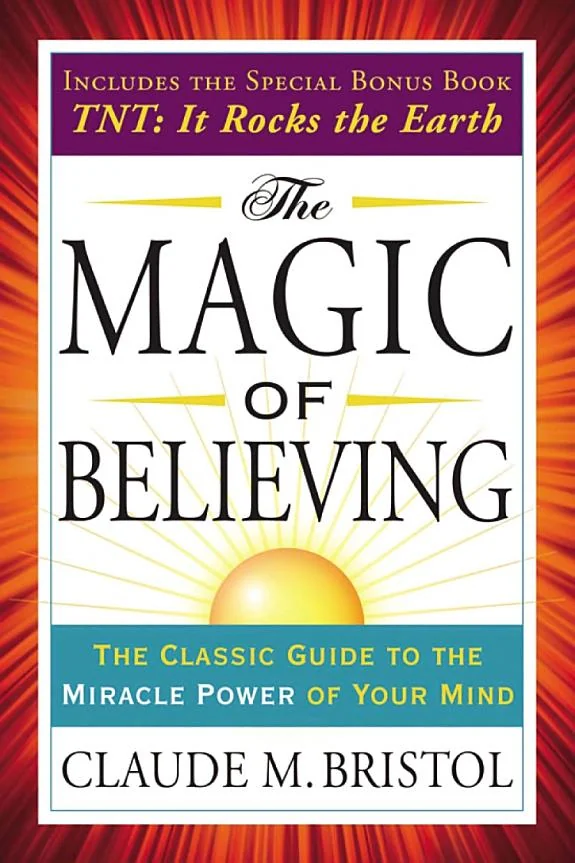
Claude Bristol’s *The Magic of Believing* offers a direct, almost blunt, exposition on the mechanics of manifesting one's will. Bristol eschews ornate philosophical language for the straightforward prose of a man who has clearly tested his theories in the crucible of business and personal endeavor. His insistence that belief is an active, tangible force is compelling, particularly when he recounts instances where sheer conviction, coupled with clear visualization, seemed to bend circumstance. A notable strength lies in the inclusion of TNT, *It Rocks the Earth*, which provides a more granular look at mental conditioning. However, the anecdotal nature of many of his examples, while persuasive to some, might leave skeptics wanting more empirical validation. The chapter detailing his own early struggles and eventual triumphs serves as a powerful, albeit self-focused, illustration of his core tenets. Ultimately, Bristol’s work provides a robust, if occasionally oversimplified, framework for harnessing the mind’s latent capabilities.
📝 Description
72
### What It Is
The Magic of Believing, first published in 1948, is Claude M. Bristol's seminal work on the power of focused thought and conviction. Bristol, a journalist and businessman, presents a pragmatic approach to manifesting desires, drawing from personal experience and observations of successful individuals. This volume argues that the internal state of belief is not merely a passive feeling but an active force capable of shaping external reality. It emphasizes the crucial role of visualization and autosuggestion in harnessing this inner power.
### Who It's For
This book is for individuals seeking to understand and apply the principles of mental science to achieve their goals. It appeals to those interested in self-help, personal development, and the practical application of psychological and metaphysical concepts. Readers who appreciate a direct, no-nonsense style, backed by anecdotal evidence and a focus on actionable strategies, will find value here. It is particularly suited for those who feel their current circumstances are limited by internal blocks or a lack of confident conviction.
### Historical Context
Published in the post-World War II era, a period ripe for self-improvement literature and interest in mind-over-matter philosophies, Bristol's work emerged alongside other New Thought and mind-power movements. The era saw a burgeoning interest in applied psychology and its potential for personal and professional success. Bristol's journalistic background allowed him to present these often abstract ideas in a relatable, accessible manner, distinguishing his work from more academic or purely spiritual treatises of the time.
### Key Concepts
The core of Bristol's philosophy rests on the idea that belief acts as a powerful magnet, attracting circumstances aligned with one's deepest convictions. He explores the concept of the subconscious mind as a fertile ground for planting these beliefs, which then influence conscious actions and perceptions. Visualization, or the act of vividly imagining desired outcomes as already achieved, is presented as a primary tool for impressing these beliefs onto the subconscious. Autosuggestion, the repetition of affirmative statements, serves to reinforce these mental imprints, thereby altering one's internal landscape and, consequently, their external reality.
💡 Why Read This Book?
• Learn the specific technique of "mental magnification" as described by Bristol, a method for intensifying belief beyond mere wishful thinking, detailed in his discussions on autosuggestion. • Understand the practical application of autosuggestion, a core concept from the 1948 publication, to overcome mental inertia and actively shape your perception of reality. • Discover the relationship between focused visualization and tangible outcomes, a principle Bristol illustrates through numerous personal anecdotes from his business career.
⭐ Reader Reviews
Honest opinions from readers who have explored this book.
❓ Frequently Asked Questions
When was Claude M. Bristol's 'The Magic of Believing' first published?
Claude M. Bristol's influential work, 'The Magic of Believing,' was first published in 1948, placing it within the burgeoning field of mind-power literature of the mid-20th century.
What is the relationship between 'The Magic of Believing' and 'TNT: It Rocks the Earth'?
'TNT: It Rocks the Earth' is included as a special bonus within many editions of 'The Magic of Believing,' offering further instruction on unlocking the mind's prosperous powers.
What is the central philosophy behind Claude Bristol's 'The Magic of Believing'?
The central philosophy is that unwavering belief, coupled with clear visualization and autosuggestion, is the primary key to achieving success and manifesting desires in life.
Does 'The Magic of Believing' offer practical exercises?
Yes, the book provides practical guidance through explanations of autosuggestion and mental magnification, encouraging readers to actively practice these techniques to impress their desires upon their subconscious mind.
Who was Claude M. Bristol?
Claude M. Bristol was an American journalist and businessman who became a prominent proponent of New Thought and mind-power principles, documenting his theories and personal successes.
Is 'The Magic of Believing' considered an esoteric text?
While rooted in practical psychology and self-help, its focus on mental causation, subconscious influence, and manifestation places it within the broader spectrum of esoteric and metaphysical literature for its exploration of hidden mental laws.
🔮 Key Themes & Symbolism
Belief as Active Force
Bristol posits that belief is not passive but an energetic force that actively shapes our reality. This concept moves beyond mere optimism, framing conviction as a tangible tool for creation. He argues that the intensity and clarity of our belief directly correlate with our ability to manifest desired outcomes, drawing parallels to magnetic forces attracting similar energies. This theme challenges readers to examine the foundational beliefs that underpin their actions and perceptions, suggesting that a shift in inner conviction can precipitate external change.
Autosuggestion and Visualization
Central to Bristol's method are the techniques of autosuggestion and visualization. Autosuggestion involves the deliberate repetition of positive affirmations and desired states to impress the subconscious mind, bypassing conscious doubt. Visualization is the art of vividly imagining the goal as already achieved, engaging all senses to create a compelling mental blueprint. Together, these practices form the engine for reprogramming the subconscious, which Bristol believed directs our actions and attracts corresponding circumstances, as detailed in his approach to mental magnification.
The Subconscious Mind's Role
Bristol emphasizes the subconscious mind as the primary arena where belief is cultivated and where its power is unleashed. He describes it as a fertile ground, receptive to the seeds of thought and conviction planted through conscious effort. The work explains that by consistently feeding the subconscious with positive, focused visualizations and affirmations, individuals can influence their habits, perceptions, and ultimately, the events that unfold in their lives. This perspective aligns with many esoteric traditions that view the subconscious as a gateway to greater potential.
Success Through Mental Law
The book operates on the premise that universal mental laws govern success, akin to physical laws. Bristol asserts that understanding and applying these laws, particularly the law of belief and attraction, allows anyone to achieve extraordinary results. His journalistic approach involves presenting these 'laws' through a series of personal accounts and observations, demonstrating how individuals, including himself, have leveraged these principles to overcome obstacles and attain their aspirations. This theme encourages a systematic, almost scientific, approach to personal achievement.
💬 Memorable Quotes
“Belief is the engine of all achievement.”
— This concise statement encapsulates Bristol's core thesis: that unwavering conviction, rather than talent or circumstance alone, is the primary driver behind any significant accomplishment.
“You must see yourself as already possessing what you desire.”
— This highlights the importance of visualization. Bristol argues that vividly imagining the desired outcome as a present reality is crucial for impressing the subconscious and making the manifestation tangible.
“Doubt is the enemy of progress; faith is its fuel.”
— This aphorism underscores the battle between negative and positive mental states. Bristol suggests that overcoming doubt through consistent affirmation and belief is essential for forward momentum towards one's goals.
“The subconscious mind is the powerhouse of your being.”
— Bristol identifies the subconscious as the ultimate source of power and influence, capable of being directed through conscious thought and belief to achieve external results.
“Impress your mind with the idea of success, and success will come.”
— This paraphrased concept emphasizes the power of mental imprinting. Bristol believed that consistently feeding the mind with the concept of success would inevitably attract corresponding circumstances and opportunities.
🌙 Esoteric Significance
Tradition
Bristol’s work aligns with the broader New Thought movement, which itself draws from Hermetic principles and Eastern philosophies concerning the power of mind over matter. While not explicitly referencing Kabbalah or Gnosticism, his emphasis on mental causation and the creative power of belief echoes the Hermetic axiom 'As Above, So Below,' suggesting a correspondence between the inner mental world and outer material reality. His pragmatic, success-oriented application of these principles distinguishes him from more mystical or theoretical esoteric lineages.
Symbolism
While *The Magic of Believing* is less overtly symbolic than some esoteric texts, the concept of 'belief' itself functions as a potent symbol for directed consciousness. The 'subconscious mind' acts as a symbolic representation of the inner, creative wellspring, often depicted in esoteric traditions as a fertile field or a hidden chamber. The act of 'visualization' can be seen as a form of symbolic creation, where the imagined object or state serves as a potent symbol of the desired future, which the mind then works to actualize.
Modern Relevance
Bristol's ideas continue to inform modern self-help and manifestation practices, particularly within communities focused on the Law of Attraction, positive psychology, and entrepreneurial mindset development. Thinkers and speakers in fields ranging from business coaching to spiritual wellness frequently echo his core tenets about the power of focused thought and belief. His work provides a foundational, accessible entry point for understanding the psychological underpinnings of manifestation that are still explored and expanded upon today.
👥 Who Should Read This Book
• Individuals seeking practical, actionable strategies for goal achievement who are open to psychological and metaphysical principles of mind-power. • Aspiring entrepreneurs and professionals looking to cultivate a stronger mindset for success and overcome self-imposed limitations through belief and visualization. • Students of New Thought and similar mind-power movements interested in foundational texts that offer a direct, experience-based perspective on mental causation.
📜 Historical Context
Claude M. Bristol's *The Magic of Believing*, first published in 1948, emerged during a fertile period for self-help and applied psychology. The post-war era in the United States saw a widespread interest in harnessing the mind's potential for personal success, fueled by movements like New Thought and the enduring appeal of figures such as Napoleon Hill, whose *Think and Grow Rich* (1937) predated Bristol's work and explored similar themes of mental power. Bristol's approach, however, was distinct in its direct, almost journalistic, presentation, drawing heavily on personal anecdotes and business acumen rather than purely spiritual or philosophical discourse. While not explicitly engaging with academic psychology, his work resonated with a public eager for practical methods to improve their lives, positioning it as a bridge between esoteric mind-power concepts and mainstream self-improvement aspirations. The book's reception was largely positive among its target audience, reinforcing the popularity of such mental-cultivation strategies.
📔 Journal Prompts
Your most persistent limiting belief and how to counteract it using autosuggestion.
The vividness of your current visualization practice for a specific goal.
Instances where your belief directly influenced an outcome, positive or negative.
Identifying the core message of TNT: It Rocks the Earth within your own life.
The 'engine of achievement' as applied to a current aspiration.
🗂️ Glossary
Autosuggestion
The process of influencing one's own mind, particularly the subconscious, through self-directed suggestions, affirmations, and mental repetition to achieve a desired mental state or outcome.
Visualization
The mental practice of creating vivid, sensory-rich images of desired outcomes or goals as if they have already been achieved, intended to impress the subconscious mind.
Subconscious Mind
The part of the mind operating below the level of conscious awareness, believed to store beliefs, habits, and memories, and to exert a powerful influence on behavior and experience.
Mental Magnification
A technique described by Bristol to intensify and strengthen the power of one's belief and visualization, making the mental impression more potent and effective.
Belief
In Bristol's context, not mere opinion but a deeply held conviction that acts as a creative force, attracting circumstances and opportunities aligned with its nature.
TNT: It Rocks the Earth
A companion work by Claude M. Bristol focusing on the practical methods and powers of the mind for achieving prosperity and success, often included as a bonus with 'The Magic of Believing'.
Mental Causation
The principle that thoughts, beliefs, and mental states are primary causes that shape and determine external reality and personal experiences.