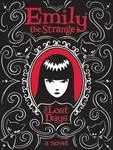
The Lost Days (Emily the Strange #1)
 75
75

The Lost Days (Emily the Strange #1)
Rob Reger’s creation, Emily the Strange, first graced pages as a narrative figure in 2009 with *The Lost Days*. This debut is less a traditional story and more a collection of vignettes showcasing Emily's peculiar existence. Her signature monochrome palette and solitary nature are immediately apparent. A notable strength is the stark, effective visual style that perfectly complements Emily's outsider persona. The limitation, however, lies in the episodic nature; the narrative threads feel disconnected, leaving the reader wanting a more cohesive plot. The passage where Emily converses with a wilting plant, finding more understanding there than from her peers, encapsulates the book's core appeal and its primary weakness – a profound sense of isolation that, while central to the character, can feel emotionally distant. Ultimately, *The Lost Days* establishes a unique character but sacrifices narrative momentum in its pursuit of mood.
📝 Description
75
### What Emily Is
The Lost Days introduces Emily the Strange, a character born from creator Rob Reger's imagination in the early 2000s. Initially appearing on merchandise, Emily evolved into a narrative figure by 2009, the year of this first comic book installment. She is not your typical protagonist; Emily is an outsider, a darkly inclined pre-teen with a penchant for the macabre, her stark black-and-white aesthetic a deliberate contrast to the colorful world she navigates. Her constant companion, a cat named Strange, underscores her solitary nature and her unique perspective on existence.
### Emily's Audience
This work is crafted for individuals who find solace in the unconventional, particularly younger readers who identify with feeling out of step with societal norms. It appeals to those drawn to gothic aesthetics, dark humor, and narratives that explore themes of alienation and individuality. Fans of alternative comics, graphic novels with a strong visual identity, and stories that don't shy away from the peculiar will find Emily's world engaging. It’s for anyone who believes that being different is not a flaw but a defining characteristic.
### Historical Context of Emily
The early 2000s saw a rise in alternative and independent comic book characters who challenged mainstream archetypes. Emily the Strange emerged within this cultural milieu, a period where 'emo' and gothic subcultures were gaining visibility, particularly among adolescents. While not directly affiliated with any specific occult movement, Emily's visual style and thematic explorations of loneliness and the misunderstood echo certain aesthetics found in Gothic literature and early 20th-century Expressionism. Her initial appearance on skateboards and t-shirts predates the 2009 comic, marking her as a brand before a narrative entity.
### Core Concepts Explored
At its heart, The Lost Days explores the concept of non-conformity through Emily's experiences. The narrative doesn't offer grand pronouncements but rather illustrates Emily's unique way of interacting with her environment, often finding companionship in inanimate objects or the natural world in ways others overlook. The recurring motif of her cat, Strange, acts as a silent observer and confidant, representing the quiet solidarity found in shared solitude. The book also touches upon the idea of perception, how Emily sees the world differently and how that internal vision shapes her external reality.
💡 Why Read This Book?
• Understand the appeal of the outsider archetype through Emily's deliberate detachment from mainstream social circles, as depicted in her interactions in the 2009 comic. • Experience a visual narrative style that employs stark black and white imagery to convey a mood of isolation and introspection, a hallmark of the early 2000s independent art scene. • Explore themes of solitary companionship by observing Emily's relationship with her cat, Strange, a recurring symbol of quiet understanding in a noisy world.
⭐ Reader Reviews
Honest opinions from readers who have explored this book.
❓ Frequently Asked Questions
When was Emily the Strange first published?
The comic book *The Lost Days* (Emily the Strange #1) was first published in 2009, though the character of Emily the Strange originated earlier on merchandise.
Who is the author of Emily the Strange comics?
The creator and author of the Emily the Strange series, including *The Lost Days*, is Rob Reger.
What is Emily the Strange's signature look?
Emily is characterized by her stark black-and-white aesthetic, typically featuring a black dress, black hair, and pale skin, reflecting her gothic and unconventional persona.
Does Emily have any companions?
Yes, Emily's most consistent companion is her black cat named Strange, who often accompanies her and serves as a silent confidant.
What are the main themes in The Lost Days?
The primary themes explored in *The Lost Days* include non-conformity, isolation, individuality, and finding connection in unconventional ways.
What category does Emily the Strange fall under?
Emily the Strange is categorized under Esoteric literature, often appealing to audiences interested in gothic themes, alternative culture, and introspective narratives.
🔮 Key Themes & Symbolism
The Aesthetic of Alienation
Emily's visual presentation—her stark black clothing, pale complexion, and often somber expression—is central to her character. This deliberate aesthetic, first established by Rob Reger around the early 2000s, functions as an outward manifestation of her internal state of being an outsider. It visually communicates her detachment from the vibrant, often superficial, world around her. The consistent use of monochrome in *The Lost Days* reinforces this theme, creating a visual language of isolation that resonates with readers who feel similarly disconnected or misunderstood. This visual language is not mere decoration; it is fundamental to how Emily perceives and interacts with her environment.
Solitude as Companionship
The narrative consistently portrays Emily finding solace and even companionship in her own company and in non-human entities. Her cat, Strange, is more than a pet; it is a silent witness and a reflection of her own solitary existence. The book presents instances where Emily seems to derive more understanding from inanimate objects or the natural world than from human interaction. This theme challenges conventional notions of social interaction, suggesting that profound connections can exist outside typical social frameworks. The year 2009 marked the publication of this particular exploration of her solitary life.
Perception and Reality
Emily the Strange operates on a different wavelength than those around her. *The Lost Days* highlights how her unique perception shapes her reality. What might appear mundane or bleak to others is often imbued with a peculiar significance by Emily. This theme invites readers to question their own perceptions and consider alternative ways of viewing the world. Rob Reger utilizes Emily's perspective to suggest that reality is subjective and that embracing one's unique viewpoint can be a source of strength, even if it leads to isolation.
Embracing the Unconventional
Emily is the embodiment of embracing the unconventional. She does not conform to societal expectations of behavior or appearance. Her narrative arc, particularly in this 2009 installment, is about existing authentically, even if that authenticity means being different. The book implicitly argues against the pressure to assimilate, celebrating the power found in individuality. This resonates with a counter-cultural spirit that often finds expression in esoteric circles, where personal truth and unique paths are valued over conformity.
💬 Memorable Quotes
“Emily's world is black and white.”
— This simple statement, attributed to the character's creator Rob Reger, encapsulates the core visual and thematic identity of Emily the Strange. It speaks to both her aesthetic and her often solitary, unvarnished perspective on life.
“Strange is always there.”
— This highlights the constant presence of Emily's cat, Strange. It underscores the theme of solitary companionship and the idea that even in isolation, a form of steady presence can be found.
“She preferred the company of shadows.”
— An interpretation of Emily's character, this suggests her comfort with solitude and darker aesthetics, aligning with gothic and esoteric sensibilities that find meaning in the less illuminated aspects of existence.
“The world saw her as odd.”
— This paraphrased concept reflects the central conflict of Emily's character: her fundamental difference from societal norms and the perception she faces because of it, a common trope in outsider narratives.
“Emily found fascination where others saw nothing.”
— This captures Emily's unique way of perceiving the world, finding depth and interest in overlooked details, a trait often associated with contemplative or esoteric minds.
🌙 Esoteric Significance
Tradition
While not explicitly tied to a singular esoteric tradition like Hermeticism or Gnosticism, Emily the Strange taps into a broader stream of Western esotericism that values the individual's subjective experience and embraces the unconventional. Her affinity for the liminal spaces, the overlooked, and the melancholic aligns with certain interpretations of shadow work and the acceptance of the 'darker' aspects of the psyche, often explored in occult philosophy. The year 2009 saw this character gain narrative traction, offering a modern, youth-oriented lens on these enduring themes.
Symbolism
The most prominent symbol is Emily's cat, Strange, representing the familiar familiar—a guiding or companion spirit that is intrinsically linked to the individual's essence. The stark black-and-white aesthetic itself functions symbolically, representing duality, the absence of superficiality, and a focus on fundamental truths. Emily's solitary nature can also be seen as symbolizing the alchemical process of separation and purification, where the individual must withdraw to achieve transformation.
Modern Relevance
Contemporary artists and writers exploring themes of alienation, mental health, and the search for authenticity in a hyper-connected world often find resonance with Emily's character. Her non-conformist attitude and embrace of individuality continue to appeal to subcultures and individuals who feel marginalized by mainstream society. Thinkers and practitioners in areas like Jungian psychology (particularly concepts of the shadow) or those interested in gothic and dark romantic aesthetics often cite Emily as an icon of embracing one's true, albeit unconventional, self.
👥 Who Should Read This Book
• Individuals drawn to gothic and dark aesthetics who seek narratives that validate feelings of being an outsider, particularly those who identified with alternative youth cultures around 2009. • Aspiring artists and writers interested in character development and visual storytelling, examining how Rob Reger established Emily's iconic look and persona. • Readers exploring themes of non-conformity and subjective reality, looking for fictional representations of embracing one's unique perspective rather than conforming to societal pressures.
📜 Historical Context
The emergence of *The Lost Days* in 2009 places it within the late post-millennial independent comics scene, characterized by a growing audience for characters that eschewed traditional heroic archetypes. While not a direct product of the early 20th-century occult revival, Emily's stark, gothic aesthetic and themes of alienation echo the sensibilities explored by artists and writers in movements like German Expressionism, which itself drew from earlier Symbolist and Romantic traditions. Contemporary figures like Charles Burns, known for his unsettling black-and-white work, shared a visual language of unease. Unlike overtly philosophical or religious texts, Emily's narrative offered a more personal, atmospheric exploration of feeling out of sync with the world, resonating with a subculture that embraced darker aesthetics and introspective themes.
📔 Journal Prompts
Emily's relationship with her cat, Strange.
The stark contrast of Emily's black-and-white world.
Moments where Emily finds solace in solitude.
Perceptions of Emily versus her internal experience.
The appeal of non-conformity in the year 2009.
🗂️ Glossary
Strange
Emily's black cat and constant companion, often serving as a silent confidant and a symbol of her solitary existence and unique connection to the world.
Monochrome Aesthetic
The signature visual style of Emily the Strange, characterized by the heavy use of black and white, which visually reinforces themes of isolation, introspection, and a departure from superficiality.
Outsider Persona
Emily's fundamental characteristic of being fundamentally different from societal norms and expectations, finding comfort in her individuality rather than attempting to assimilate.
Vignettes
Short, self-contained scenes or episodes that collectively build a character or atmosphere, characteristic of *The Lost Days* narrative structure.
Non-Conformity
The act of not following established customs or beliefs, a central theme embodied by Emily's character and her approach to life.
Rob Reger
The creator of the Emily the Strange character and author of *The Lost Days*, who first conceived Emily in the early 2000s, initially for merchandise.
The Lost Days
The title of the first comic book installment featuring Emily the Strange, published in 2009, which introduced the character's narrative world.











![Essential Tales and Poems of Edgar Allan Poe [34 stories, 17 poems]](/img/thumb/essential-tales-and-poems-of-edgar-allan-poe-34-stories-17-poems-edgar-allan-poe-080648.webp)