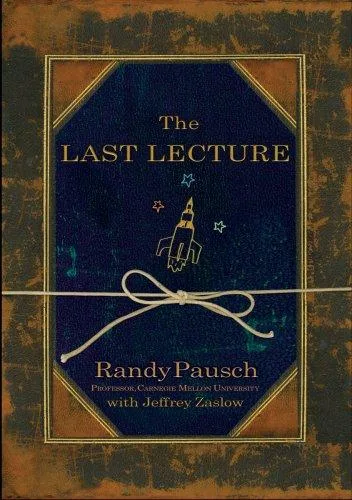
The Last Lecture
 76
76

The Last Lecture
Randy Pausch's "The Last Lecture" functions less as a grand metaphysical treatise and more as a profoundly human testament to intentional living. Its strength lies in Pausch's unvarnished honesty, particularly when discussing his terminal diagnosis. He avoids platitudes, opting instead for concrete examples from his life, from childhood aspirations to his work at Carnegie Mellon. The book’s most impactful sections detail his strategies for overcoming obstacles, framing them not as impediments but as tests of resolve. However, the narrative occasionally leans into the conventional inspirational memoir, which might feel less novel to seasoned readers of existential literature. The recurring motif of "brick walls" as learning opportunities is particularly memorable. Ultimately, "The Last Lecture" offers a powerful, grounded perspective on life's finite nature.
📝 Description
76
### What It Is
The Last Lecture, originally published in 2008, is a posthumous compilation of lectures given by Randy Pausch, a computer science professor at Carnegie Mellon University. These talks were delivered under the premise that they were his final opportunity to impart wisdom. The book captures Pausch's reflections on achieving childhood dreams, overcoming obstacles, and living life with purpose, particularly in the face of a terminal pancreatic cancer diagnosis.
### Who It's For
This work is for individuals grappling with life's significant challenges, seeking perspective on mortality, or simply desiring a more intentional existence. It appeals to students of life, individuals interested in personal development, and those who appreciate narratives of resilience and the human spirit. Readers looking for practical advice on achieving goals alongside poignant reflections on legacy will find value here.
### Historical Context
Published in 2008, The Last Lecture emerged during a period of increased public interest in inspirational memoirs and life lessons from individuals facing adversity. Randy Pausch's story gained widespread attention following the viral dissemination of his actual "last lecture" talk delivered at Carnegie Mellon in September 2007. This was not a period marked by significant esoteric movements directly influencing the book's creation, but rather a cultural moment receptive to personal narratives of courage and meaning.
### Key Concepts
The book centers on the concept of "achieving childhood dreams," such as experiencing zero gravity or playing in the NFL, and how life's circumstances can lead to alternative fulfillments. It emphasizes "enabling the dreams of others," a core tenet of Pausch's teaching philosophy, and the importance of "brick walls" as opportunities to demonstrate passion. The narrative also explores "living with urgency" and making every moment count, especially when confronted with a limited future.
💡 Why Read This Book?
• Learn practical strategies for overcoming "brick walls" in your life, as detailed in Randy Pausch's personal accounts from his time at Carnegie Mellon University, enabling you to reframe challenges. • Gain a framework for identifying and pursuing life goals, inspired by Pausch's method of "achieving childhood dreams" and adapting them to evolving circumstances. • Cultivate a deeper appreciation for the present moment and the impact of personal legacy, through Pausch's reflections on his final months and his desire to "enable the dreams of others."
⭐ Reader Reviews
Honest opinions from readers who have explored this book.
❓ Frequently Asked Questions
What was the original context of "The Last Lecture"?
The book is based on a lecture Randy Pausch, a Carnegie Mellon professor, gave in September 2007, assuming it would be his final opportunity to share life lessons before his death from pancreatic cancer.
What are Randy Pausch's childhood dreams mentioned in the book?
Pausch lists several, including experiencing zero gravity, playing in the NFL, being Captain Kirk, winning a carnival game, and being a Disney Imagineer.
How does the book address overcoming obstacles?
Pausch famously frames obstacles as "brick walls" – not there to stop us, but to give us a chance to show how badly we want something, encouraging perseverance.
What is the concept of "enabling the dreams of others"?
This theme highlights Pausch's belief in the importance of helping students and others achieve their aspirations, viewing it as a fundamental aspect of a fulfilling life.
When was "The Last Lecture" published?
The book was published in 2008, following the widespread popularity of the recorded lecture itself.
Does the book offer specific advice on dealing with illness?
While Pausch was terminally ill, the book focuses more broadly on living intentionally and facing any significant life challenge, rather than solely on medical advice.
🔮 Key Themes & Symbolism
Achieving Childhood Dreams
Pausch meticulously chronicles his pursuit of various childhood aspirations, from the seemingly impossible like experiencing zero gravity to more attainable goals. The book explores how life's trajectory often deviates from initial plans, yet offers opportunities for alternative fulfillments. It suggests that the spirit of pursuing dreams, even if they transform, remains crucial for a vibrant existence. His narrative encourages readers to identify their own long-held desires and consider how they might still be realized or reinterpreted, regardless of age or circumstance, echoing a desire for personal actualization.
Overcoming Obstacles as Opportunities
The central metaphor of "brick walls" serves as a powerful lens through which Pausch views adversity. These are presented not as deterrents, but as essential tests of commitment and passion. The work details specific instances where Pausch encountered resistance, whether in academic pursuits or personal challenges, and how he navigated them. This theme offers a practical, albeit tough-minded, approach to problem-solving, urging readers to see impediments as chances to prove their dedication and learn valuable lessons, fostering resilience and determination.
Enabling the Dreams of Others
Beyond personal ambition, Pausch emphasizes the profound satisfaction derived from fostering the success and happiness of others. His role as an educator at Carnegie Mellon University provided a fertile ground for this principle. The book illustrates how investing in the potential of students and colleagues can create a ripple effect of positive achievement. This theme speaks to a legacy built not just on individual accomplishments, but on the collective growth and fulfillment facilitated through mentorship and support, a form of spiritual giving.
Living with Urgency and Intentionality
Confronted with a terminal diagnosis, Pausch's reflections gain a sharp focus on the value of time. The book advocates for a life lived with purpose and conscious awareness, urging readers to avoid complacency and actively shape their days. It's a call to appreciate the present and to make choices that align with one's core values. This theme underscores the ephemeral nature of existence and the importance of leaving a meaningful imprint, encouraging deliberate action over passive acceptance.
💬 Memorable Quotes
“Brick walls are there for a reason. The brick walls are not there to keep us out. The brick walls are there to give us a chance to show how badly we want something.”
— This is perhaps the most famous concept from Pausch’s lecture. It reframes obstacles not as insurmountable barriers, but as essential tests designed to gauge the depth of one's desire and commitment to a goal.
“It's not about how to stay alive, it's about how to retain your humanity as you live.”
— Pausch suggests that true success isn't merely about physical survival, but about maintaining one's integrity, empathy, and core values, especially when facing extreme adversity.
“When you're 20, you care about what everybody thinks of you. When you're 40, you stop caring what everybody thinks of you. When you're 60, you realize nobody was thinking about you at all.”
— This observation humorously illustrates the shift in perspective that often accompanies aging, highlighting the often-overestimated importance of external validation throughout life.
“The moment you stop learning is the moment you start dying.”
— This quote emphasizes the vital importance of continuous learning and intellectual curiosity throughout life, suggesting that stagnation is antithetical to a truly living existence.
“I told my students, 'If you are going to be thinking, think big.'”
— Pausch encourages ambition and expansive thinking, particularly within an academic or professional context, urging individuals not to limit their vision or potential.
🌙 Esoteric Significance
Tradition
While "The Last Lecture" does not align with a formal esoteric tradition like Hermeticism or Gnosticism, it resonates with the universal spiritual principle of living with intention and purpose, akin to concepts found in Stoicism or certain Eastern philosophies emphasizing mindfulness and the present moment. Pausch's emphasis on legacy and impact echoes themes of spiritual contribution and the pursuit of virtue, common across many wisdom traditions.
Symbolism
The "brick walls" serve as a potent symbol of adversity, representing challenges that test one's resolve and passion. Pausch reinterprets them not as barriers, but as opportunities for growth. "Childhood dreams" symbolize the uncorrupted aspirations and pure motivation that individuals should strive to retain or reawaken throughout life, representing an inner idealism.
Modern Relevance
Pausch's work continues to influence contemporary discussions on life planning, resilience, and finding meaning. His "brick wall" philosophy is often cited in motivational contexts and leadership training. The emphasis on enabling others' dreams finds echoes in modern mentorship programs and the philosophy of social entrepreneurship, highlighting a pragmatic, actionable approach to self-improvement and collective well-being.
👥 Who Should Read This Book
• Individuals seeking practical frameworks for overcoming life's challenges, particularly those facing significant personal or professional obstacles. • Students and educators interested in philosophies of mentorship, goal achievement, and fostering potential in others, inspired by Pausch's work at Carnegie Mellon. • Anyone contemplating mortality or seeking to live a more intentional and purpose-driven life, appreciating direct, heartfelt accounts of making the most of limited time.
📜 Historical Context
Published in 2008, "The Last Lecture" emerged from a cultural moment ripe for inspirational narratives. Randy Pausch's story gained extraordinary traction following the viral spread of his actual lecture, delivered at Carnegie Mellon University in September 2007. This was a period where online video platforms were increasingly influential in disseminating personal stories. While not directly tied to a specific esoteric movement, the book tapped into a broader societal yearning for meaning and resilience in the face of mortality. Its reception was overwhelmingly positive, with widespread media coverage and bestseller status. In contrast to the philosophical explorations of stoicism or existentialism, Pausch's approach was grounded in personal anecdote and pragmatic optimism, offering a more accessible, less abstract form of life guidance.
📔 Journal Prompts
The concept of "brick walls" as tests of desire.
Reflecting on your own "childhood dreams" and their current relevance.
The practice of "enabling the dreams of others" in your daily interactions.
How the urgency of limited time might reshape your priorities.
Assessing the "legacy" you are actively building through your actions.
🗂️ Glossary
Brick Walls
A metaphor used by Randy Pausch to describe obstacles and challenges in life, suggesting they exist to test one's determination and passion rather than to permanently block progress.
Childhood Dreams
Aspirations and desires held during youth, which Pausch encourages readers to pursue, adapt, or reinterpret throughout their lives as a source of motivation and fulfillment.
Enabling the Dreams of Others
Pausch's philosophy of actively supporting and facilitating the goals and aspirations of those around you, particularly students and colleagues, as a key aspect of a meaningful life.
Zero Gravity
An experience Pausch listed among his childhood dreams, referring to the sensation of weightlessness, which he eventually achieved through a parabolic flight offered by NASA.
Carnegie Mellon University
The academic institution where Randy Pausch was a professor of computer science and human-computer interaction, and where his famous "Last Lecture" was delivered.
Pancreatic Cancer
The terminal illness diagnosed in Randy Pausch, which served as the backdrop for his "Last Lecture" and subsequent book, prompting reflections on life's finitude.
Captain Kirk
A childhood dream of Pausch's, referencing the iconic Star Trek character, symbolizing a desire for leadership and adventure.