The High King

 75
75

The High King
Lloyd Alexander’s The High King brings the sprawling Chronicles of Prydain to a fittingly mythic conclusion. The novel excels in its portrayal of Taran’s hard-won maturity, moving beyond simple heroism to a more nuanced understanding of duty and the cost of leadership. Alexander’s prose, while accessible, carries a weight that befits the epic scale of the final confrontation with Arawn Death-Lord. A particular strength lies in the way established characters, like Gurgi and Fflewddur Fflam, face their own forms of resolution, providing emotional resonance beyond Taran's central arc.
However, the sheer density of plot threads, while necessary for tying up the series, can occasionally feel overwhelming. Some resolutions, particularly concerning secondary characters, might seem slightly compressed to fit the grand finale. Despite this minor imbalance, the book’s exploration of Taran’s final acceptance of responsibility, a concept far removed from his initial farm-boy aspirations, remains powerful. It’s a solid capstone that honors the journey, even if the pacing falters slightly in its final act.
📝 Description
75
The High King, published in 1985, concludes Lloyd Alexander's Prydain series.
This novel is the fifth and last installment in The Chronicles of Prydain, a series that deeply draws from Welsh mythology and legend. It is primarily for readers who have followed Taran Wanderer's story through the previous books, especially those interested in the resolution of his personal growth and his path toward responsibility. The book appeals to fans of epic fantasy that grounds itself in folklore and mythology, emphasizing character development.
Alexander's work emerged in 1985, a time when fantasy literature was developing its established forms. While other authors had also used mythic themes, Alexander's style combined high fantasy adventure with relatable characters and narratives tied to specific cultural sources. This distinction set his work apart from fantasy that was more abstract or solely influenced by European traditions.
The High King engages with Welsh mythology, particularly the concept of 'annwn,' which refers to the underworld or spirit realm. This connects the narrative to ancient Celtic beliefs about the afterlife and the spiritual forces that shape the mortal world. The story's exploration of kingship and destiny also touches upon themes common in mythology and folklore across cultures, where heroes confront supernatural challenges and their own inner nature to fulfill a greater purpose.
💡 Why Read This Book?
• You will experience the culmination of Taran Wanderer's heroic journey and his acceptance of the mantle of High King, understanding the personal cost of leadership beyond mere victory. • You will engage with the symbolic representation of the Cauldron of Rebirth, exploring themes of transformation and the cyclical nature of power as depicted in the final chapters. • You will witness the resolution of long-standing conflicts within the world of Prydain, gaining insight into how disparate elements of myth and magic coalesce to forge a new era.
⭐ Reader Reviews
Honest opinions from readers who have explored this book.
❓ Frequently Asked Questions
What is the significance of the Cauldron of Rebirth in The High King?
The Cauldron of Rebirth, a powerful artifact from Welsh mythology, plays a pivotal role in The High King. It represents a force of creation and renewal, contrasting with the destructive power of Arawn. Its presence signifies the potential for the world of Prydain to be remade and for its inhabitants to find new beginnings.
Who is Taran Wanderer and what is his journey in The High King?
Taran Wanderer is the central protagonist of The Chronicles of Prydain. In The High King, his journey culminates as he transitions from Assistant Pig-Keeper to the High King of Prydain, accepting his destiny and responsibilities after a series of trials and battles against dark forces.
What are the main themes explored in The High King?
The novel explores themes of courage, sacrifice, the nature of kingship and leadership, the balance between good and evil, and the transition from youth to maturity. It also delves into the concept of duty and the acceptance of one's fate.
Is The High King suitable for young adult readers?
Yes, The High King, like the rest of The Chronicles of Prydain, is generally considered suitable for young adult readers. It presents mature themes within an engaging fantasy narrative, though the epic scope and final confrontations might be more impactful for older teens.
What is the connection between The High King and Welsh mythology?
The High King is deeply rooted in Welsh mythology, particularly the Mabinogion. Many characters, places, and concepts, such as Arawn Death-Lord, the Cauldron of Rebirth, and the land of Prydain itself, are drawn directly from these ancient Welsh tales.
When was The High King first published?
The High King was first published in 1985, marking the conclusion of The Chronicles of Prydain, a series that began with The Book of Three in 1964.
🔮 Key Themes & Symbolism
The Burden of Kingship
The novel intensely focuses on Taran's inevitable ascension to the throne of Prydain. It moves beyond the romantic notion of heroism to explore the genuine weight of responsibility, the difficult decisions leaders must make, and the personal sacrifices required. Taran's journey illustrates that true leadership is not about power, but about service and the willingness to bear the consequences of one's actions for the greater good of the realm.
Confronting Mortality and Annwn
The concept of 'annwn,' the Welsh underworld or spirit realm, is central to the climactic struggles. Alexander uses this mythical space to explore themes of death, the afterlife, and the ultimate confrontation with oblivion, personified by Arawn Death-Lord. The narrative suggests that facing mortality and the void is a necessary step in achieving true wisdom and understanding one's place in the cosmic order.
Destiny and Free Will
While characters grapple with prophesied roles and perceived destinies, The High King emphasizes the power of individual choice. Taran, despite being 'foretold' to be king, must actively choose his path and prove himself worthy. The book suggests that destiny is not a fixed point but a potential that is realized through courage, action, and the moral choices one makes throughout life.
The Power of Transformation
Symbolized by the Cauldron of Rebirth, the theme of transformation is critical to the resolution. Characters undergo significant personal changes, and the land of Prydain itself is poised for a new era. This transformation is not always easy or painless, often requiring surrender and acceptance of loss, but it ultimately leads to renewal and the possibility of a more balanced existence.
💬 Memorable Quotes
Direct passages from the work, attributed to the author.
“The making of a king is not the giving of a crown, but the sacrifice of self.”
— This statement expresses Taran's ultimate realization about leadership. It moves beyond the outward symbols of power to the internal commitment and personal cost involved in truly serving a people and a land.
“How can you be High King, when you are only Taran?”
— This internal question reflects Taran's deep-seated insecurity and the immense gap he perceives between his humble origins as an Assistant Pig-Keeper and the weighty title of High King.
“The world is not a place of reward, but of responsibility.”
— This interpretation highlights a central lesson learned throughout the Prydain chronicles. True value and meaning are found not in personal gain, but in fulfilling one's duties and obligations to others and the community.
“Even the greatest of heroes must face the shadows.”
— This concept underscores the universal nature of conflict and the necessity of confronting one's own fears and the darkness within and without, regardless of one's stature or accomplishments.
💡 Key Ideas
Editorial paraphrase of the work's core concepts — not direct quotes.
The land remembers its true king.
This paraphrased idea suggests a deep connection between the ruler and the realm, implying that legitimacy comes not just from lineage or conquest, but from a spiritual and natural harmony with the land itself.
🌙 Esoteric Significance
Tradition
While not overtly occult, The High King draws deeply from Celtic mythology, which contains Gnostic and animistic undertones. The concept of 'annwn' as a spirit realm and the cyclical nature of creation and destruction echo Gnostic ideas of a primal void and a demiurgic creator. The emphasis on inner transformation and finding one's true self aligns with Hermetic principles of 'As Above, So Below,' suggesting the external world reflects internal states and vice-versa.
Symbolism
The Cauldron of Rebirth is a potent symbol of transformation, renewal, and the potential for creation arising from chaos, reminiscent of alchemical symbolism. Arawn Death-Lord represents primal death and oblivion, the shadow aspect of existence that must be understood and confronted. The Horned King embodies a primal, untamed natural force, often associated with death and rebirth cycles in ancient pagan traditions.
Modern Relevance
Contemporary authors exploring Celtic folklore in fantasy continue to be influenced by Alexander’s work. Modern practitioners of Neopaganism and Celtic Reconstructionism may find resonance in the book's respectful engagement with ancient myths. The series' exploration of archetypal journeys and the integration of the shadow self also appeals to those interested in Jungian psychology and modern myth-making.
👥 Who Should Read This Book
• Readers of Arthurian legend and Celtic mythology seeking a narrative that brings ancient Welsh tales to life in an accessible, character-focused manner. • Young adults and adults interested in coming-of-age stories that explore themes of responsibility, sacrifice, and the true meaning of leadership. • Aspiring writers and lore enthusiasts looking for examples of how to integrate deep mythological sources into compelling fantasy narratives.
📜 Historical Context
Published in 1985, The High King concluded Lloyd Alexander's acclaimed Chronicles of Prydain. This period saw fantasy literature firmly established, with authors like Stephen R. Donaldson and Robin Hobb gaining prominence. Alexander’s work, however, distinguished itself by drawing directly from the Mabinogion, a collection of medieval Welsh prose tales, rather than the more common Germanic or Arthurian influences. This deep dive into a specific Celtic mythology offered a unique flavor in a genre often dominated by Tolkien-esque traditions. While not facing significant censorship, the series' consistent popularity and critical acclaim, including a Newbery Honor for The High King, cemented its place as a significant contribution to children's and young adult fantasy, standing apart from the burgeoning grimdark or high-concept science fiction trends of the era.
📔 Journal Prompts
Taran's final acceptance of his role as High King and the sacrifices it entailed.
The symbolic meaning of the Cauldron of Rebirth in relation to personal transformation.
Fflewddur Fflam's journey from self-deception to honest self-assessment.
The portrayal of Arawn Death-Lord as the embodiment of oblivion and its confrontation.
The resolution of the conflict between the Sons of Don and the forces of darkness.
🗂️ Glossary
Annwn
In Welsh mythology, the Otherworld or spirit realm, often associated with the underworld, the afterlife, or a land of eternal youth. In the context of the book, it represents the field of death and oblivion ruled by Arawn.
Arawn Death-Lord
The primary antagonist of The Chronicles of Prydain, ruler of Annwn. He represents death, oblivion, and the forces that seek to unmake the world, serving as the ultimate adversary Taran must confront.
Cauldron of Rebirth
A mythical artifact from Welsh legend, depicted in the book as a powerful force capable of restoring life and offering new beginnings. It stands in opposition to destructive forces and symbolizes creation and renewal.
The Horned King
A formidable servant of Arawn, representing primal, untamed forces. His defeat early in the series marks Taran's first significant step towards confronting greater evils.
Sons of Don
Mythological figures from Welsh lore, often associated with divine or semi-divine ancestry. In the Prydain books, they represent ancient powers and lineages tied to the land's well-being.
Assistant Pig-Keeper
Taran's initial, humble role at the beginning of the series. This title underscores his modest origins and the significant personal growth he undergoes throughout his adventures.
Prydain
The fictional land in which the Chronicles of Prydain are set. It is heavily inspired by and draws its name from the Welsh kingdom of Prydain, serving as a microcosm for larger mythological and thematic conflicts.
🔮 Readers Also Liked
Browse all →








More by Lloyd Alexander
All books →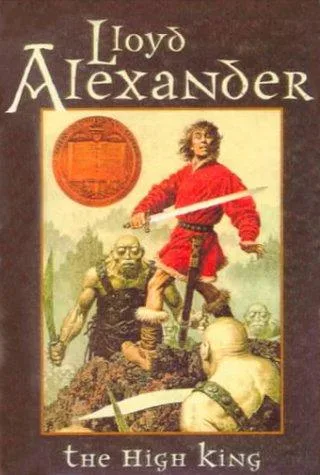




More Free Occult Philosophy Books
View all →