The heart's code
 71
71

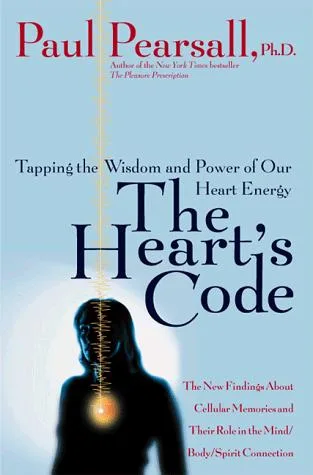
The heart's code
Paul Pearsall’s "The Heart's Code" attempts to synthesize neuropsychology with a more expansive view of human consciousness, specifically focusing on the heart's role. The book’s strength lies in its accessible presentation of complex ideas, translating neuroscientific concepts into a language that speaks to the intuitive understanding of interconnectedness. Pearsall is particularly adept at drawing parallels between the heart's electrical field and its potential influence on our perception and reality. However, the work occasionally leans into assertions that, while intuitively appealing, lack the rigorous empirical backing one might expect from a neuropsychologist. The exploration of "heart intelligence" as a form of knowing beyond the brain is compelling, but the leap to its direct impact on external reality sometimes feels more philosophical than scientifically substantiated. The book's ambition to unite empirical science with a more mystical understanding of the heart is its most notable feature, though the execution can be uneven. It serves as a fascinating bridge between conventional science and esoteric thought.
📝 Description
71
### What It Is "The Heart's Code" is a 1998 exploration into the intricate connections between the human heart, consciousness, and the deeper currents of life. Paul Pearsall, a neuropsychologist, examines how emotional states and belief systems influence physical well-being, extending beyond conventional medical paradigms. The book bridges scientific inquiry with a spiritual or metaphysical understanding of health, suggesting that the heart acts as a central processor for our experiences and intentions.
### Who It's For This work is suited for individuals curious about the intersection of mind, body, and spirit, particularly those who feel conventional explanations for health and illness are incomplete. It will appeal to readers interested in the psychosomatic aspects of well-being, the power of intention, and the subtle energies that may influence our lives. Those seeking a more holistic approach to personal growth and understanding will find much to consider.
### Historical Context Published in 1998, "The Heart's Code" emerged during a period of increasing public and academic interest in mind-body medicine. It followed the widespread influence of works like Candace Pert's "Molecules of Emotion" (1997), which similarly explored the biochemical basis of emotions and their impact on health. Pearsall's work contributed to the growing discourse that challenged purely mechanistic views of the body, aligning with a broader movement towards integrative and holistic health approaches.
### Key Concepts The book posits that the heart is more than a physical pump, acting as an organ of perception and intelligence. It introduces the idea of "heart intelligence" as a distinct form of knowing, capable of processing information and influencing bodily functions. Pearsall discusses how our emotional states, beliefs, and even our perceived "code" – the patterns of thought and feeling we carry – directly affect our physiological reality. The work also touches upon the concept of interconnectedness, suggesting a subtle energetic field linking individuals and influencing collective well-being.
💡 Why Read This Book?
• Understand the concept of "heart intelligence" as described by Pearsall, moving beyond the brain's sole domain to explore a different mode of knowing. • Grasp the 1998 context of mind-body discourse, seeing how "The Heart's Code" contributed to challenging purely mechanistic views of health. • Explore Pearsall's idea of the "heart's code" and how personal belief systems and emotional states are presented as directly influencing one's physical reality.
⭐ Reader Reviews
Honest opinions from readers who have explored this book.
❓ Frequently Asked Questions
What is the central thesis of "The Heart's Code"?
The central thesis is that the heart possesses its own form of intelligence, capable of processing information, influencing perception, and directly impacting our physical health and reality beyond the brain's functions.
Who is Paul Pearsall and what is his background?
Paul Pearsall was a neuropsychologist and author known for his work bridging neuroscience, psychology, and spirituality. He focused on the mind-body connection and the role of emotions in health.
When was "The Heart's Code" originally published?
The book was first published in 1998, a period when interest in mind-body medicine and holistic health was gaining significant momentum.
Does "The Heart's Code" discuss scientific evidence for its claims?
Yes, Pearsall, as a neuropsychologist, references scientific studies and concepts, though he integrates them with more speculative or philosophical interpretations of the heart's role.
What is meant by the "heart's code" in the book?
The "heart's code" refers to the unique patterns of beliefs, emotions, and intentions that individuals carry, which Pearsall suggests are processed by the heart and influence their physical and experiential reality.
How does this book relate to esoteric traditions?
It relates by exploring concepts of subtle energies, intuitive knowing, and interconnectedness that echo themes found in various esoteric philosophies, albeit framed through a modern psychological lens.
🔮 Key Themes & Symbolism
Heart Intelligence
Pearsall posits the heart as an organ of sentience and intelligence, distinct from the brain. This "heart intelligence" is presented as a sophisticated system for processing information, making decisions, and perceiving the world. It suggests a form of knowing that is intuitive, emotional, and perhaps even telepathic. The book explores how this intelligence operates through the heart's extensive neural network and its electromagnetic field, influencing not just personal well-being but potentially the subtle energetic connections between individuals.
The Heart's Code
The core concept of the "heart's code" refers to the deeply ingrained patterns of belief, emotional responses, and intentions that shape an individual's experience of reality. Pearsall argues that these codes are not merely psychological but are actively processed and broadcast by the heart, influencing physiological health and the manifestation of life events. Understanding and potentially reprogramming this code is presented as a pathway to healing and conscious creation, moving beyond mere intellectual understanding to a felt, embodied wisdom.
Consciousness and Reality
The work examines how consciousness, particularly as influenced by the heart, plays a role in shaping our perceived reality. It suggests that our internal states—our "code"—project outward, creating the circumstances and experiences we encounter. This perspective aligns with certain esoteric philosophies that emphasize the mind's power to manifest, but Pearsall grounds it in the physiological and energetic functions of the heart. The book encourages a re-evaluation of the relationship between internal subjective experience and external objective reality.
Mind-Body Integration
"The Heart's Code" is a significant contribution to the discourse on mind-body integration. Pearsall, drawing on his background in neuropsychology, seeks to provide a scientific framework for phenomena often relegated to the mystical. He details how emotions, beliefs, and stress (processed through the heart) have tangible effects on the body's chemistry and structure. The book advocates for a holistic approach to health that acknowledges the interconnectedness of mental, emotional, and physical states, moving beyond a purely mechanical view of the human organism.
💬 Memorable Quotes
“The heart is a brain in its own right.”
— This statement encapsulates Pearsall's central argument that the heart possesses a complex neural network and cognitive capabilities comparable to the brain, functioning as a second center of intelligence.
“Our beliefs are written in our hearts.”
— This highlights the idea that deeply held convictions and emotional patterns are not just abstract thoughts but are encoded and processed by the heart, influencing our physiology and perception of reality.
“The heart's energetic field influences our interactions.”
— This suggests that the electromagnetic field generated by the heart extends beyond the body, playing a role in subtle communication and connection with others, a concept found in various esoteric traditions.
“We are creating our reality with our heart's code.”
— This interpretation emphasizes the active role individuals play in manifesting their experiences through the specific patterns of thought, emotion, and intention processed by their heart.
“True healing involves understanding the heart's message.”
— This points to the belief that physical and emotional ailments are signals from the heart, and genuine recovery requires deciphering these messages rather than just treating symptoms.
🌙 Esoteric Significance
Tradition
While Pearsall's work is rooted in neuropsychology, its exploration of the heart as a seat of intelligence and consciousness aligns with themes found in various esoteric traditions. It echoes Neoplatonic ideas of the heart as a spiritual center and Gnostic concepts of inner knowing. The emphasis on an energetic field and the influence of intention on reality also resonates with Hermetic principles and various forms of energy healing, though Pearsall attempts to ground these in scientific observation rather than purely mystical revelation.
Symbolism
The central symbol is the 'heart' itself, re-envisioned not merely as a biological pump but as an organ of perception, intelligence, and energetic projection. The concept of the 'heart's code' functions metaphorically, representing the unique energetic and informational signature an individual carries. The book implicitly uses the symbolism of light and energy fields, suggesting that the heart emits and receives subtle influences, connecting individuals in ways not yet fully understood by conventional science.
Modern Relevance
Pearsall's ideas about heart intelligence and the influence of belief systems on health remain relevant in contemporary wellness and consciousness studies. His work can be seen as a precursor to modern research into the heart's electromagnetic field and its role in empathy and intuition, as explored by organizations like the HeartMath Institute. The concept of the 'heart's code' also finds echoes in discussions around manifestation, the law of attraction, and the growing interest in biofield therapies and integrated approaches to mental and physical well-being.
👥 Who Should Read This Book
• Individuals interested in the psychosomatic aspects of health who wish to explore the heart's role beyond its physical function. • Readers seeking to understand how consciousness and belief systems might influence personal well-being and life experiences. • Those curious about the intersection of modern science (neuropsychology) and more expansive, potentially esoteric, views on the human mind and body.
📜 Historical Context
Published in 1998, "The Heart's Code" emerged from a fertile ground of burgeoning mind-body research and a growing public appetite for holistic perspectives on health. This era saw the increasing acceptance of concepts previously considered fringe, partly due to works like Candace Pert's "Molecules of Emotion" (1997), which explored the biochemical underpinnings of feelings. Pearsall's contribution was to frame these ideas through the lens of neuropsychology, focusing specifically on the heart as a central organ of intelligence and perception. He was part of a wave of thinkers who challenged the Cartesian dualism that had dominated Western thought, seeking to reintegrate the physical and the psychological. While not directly engaging in public debates with specific contemporaries like Deepak Chopra or Andrew Weil, his work contributed to the same intellectual current that sought to bridge scientific understanding with spiritual or intuitive wisdom, popularizing concepts of energetic fields and consciousness beyond the brain.
📔 Journal Prompts
The heart's code: How might your deeply held beliefs be influencing your physical health, as suggested by Pearsall?
Reflect on the concept of "heart intelligence" and instances where you've experienced intuitive knowing that bypassed logical thought.
Consider the energetic field of the heart. How might your emotional state influence the subtle energies you project?
Explore the connection between your emotional state and physiological responses, referencing Pearsall's ideas on the heart's influence.
What does "true healing" mean to you, considering the heart's potential messages as discussed in the book?
🗂️ Glossary
Heart Intelligence
A concept posited by Pearsall suggesting the heart possesses its own sophisticated cognitive and perceptive abilities, distinct from the brain, influencing health and reality.
The Heart's Code
The unique pattern of beliefs, emotions, and intentions that an individual holds, which Pearsall suggests is processed by the heart and impacts their life experience and well-being.
Neuropsychology
A branch of psychology that studies the relationships between the brain, nervous system, and behavior, which forms the scientific basis for Pearsall's exploration.
Psychosomatic
Relating to physical illness or other bodily distress that has a mental or emotional origin, a key focus of Pearsall's work.
Energetic Field (Heart)
The electromagnetic field generated by the heart, which Pearsall suggests extends beyond the body and may influence interactions and perceptions.
Consciousness
In the context of the book, consciousness is explored as being influenced by and emanating from the heart, shaping an individual's reality.
Belief Systems
The collection of principles or accepted truths that guide an individual's understanding and actions, which Pearsall argues are deeply integrated with the heart's function.