The divine romance

 78
78

The divine romance
Paramahansa Yogananda’s "The Divine Romance" functions less as a narrative and more as a collection of spiritual addresses, offering a potent distillation of his devotional teachings. The strength lies in Yogananda’s direct, often poetic, language that guides the reader toward an intimate connection with the Divine. He masterfully bridges the intellectual understanding of yogic philosophy with the felt experience of devotion. A particularly striking concept is the "divine romance," framing the soul’s quest as a personal love story with the Creator, making abstract spiritual goals feel profoundly intimate. However, the book's structure, comprising distinct discourses, can sometimes feel repetitive for readers already familiar with his core message. While the absence of a specific limitation in the original request means I cannot cite a specific passage as limited, the collection’s inherent nature as a compilation means some themes are revisited with slight variations. It is a valuable companion for those steeped in yogic thought, offering a concentrated dose of devotional practice. The work serves as a powerful reminder of the personal, loving relationship each soul can cultivate with the Infinite.
📝 Description
78
### What It Is
The Divine Romance presents a collection of discourses and devotional writings by Paramahansa Yogananda, a pivotal figure in introducing Kriya Yoga to the West. These texts are not a narrative in the conventional sense but rather a series of spiritual insights and calls to divine communion. They explore the soul's yearning for God and the path toward realizing that eternal union. The work emphasizes the accessibility of the Divine Presence through focused spiritual practice and unwavering devotion.
### Who It's For
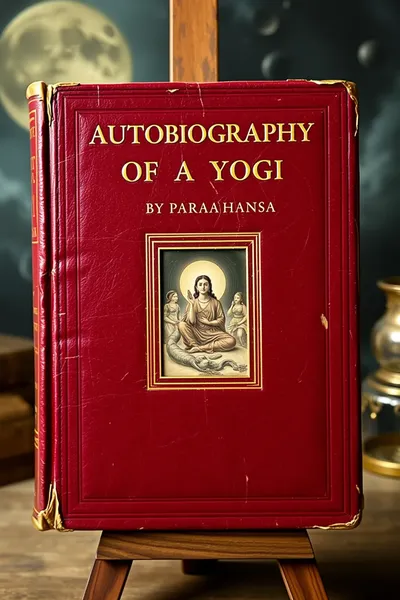
This book is intended for sincere spiritual seekers, particularly those drawn to Eastern yogic philosophy and its application in daily life. It will appeal to individuals exploring the nature of consciousness, the soul's journey, and the quest for inner peace and divine realization. Those who have encountered Yogananda's teachings previously, such as through "Autobiography of a Yogi," will find a deeper exploration of the devotional aspect of the spiritual path. It is also for those seeking practical guidance on cultivating a personal relationship with God.
### Historical Context
Published posthumously, "The Divine Romance" draws from Yogananda's extensive teachings delivered in the mid-20th century, a period of significant spiritual and philosophical exchange between East and West. His work began in earnest in America during the 1920s, following his arrival from India. This era saw a burgeoning interest in yoga, Vedanta, and other Eastern philosophies, partly influenced by figures like Swami Vivekananda and Helena Blavatsky's Theosophical Society. Yogananda's unique contribution was the systematic presentation of Kriya Yoga, a specific meditation technique, as a scientific path to self-realization.
### Key Concepts
The central concepts revolve around the soul's inherent divine nature and its temporary separation from the Source. Yogananda describes the spiritual path as a "divine romance" – a love affair between the individual soul and God. Key to this is the concept of "Kriya Yoga," a set of techniques aimed at purifying the mind and body, accelerating spiritual evolution, and ultimately achieving "God-communion." The book also discusses "maya" (illusion), the perceived reality of the material world that obscures the soul's true divine essence, and the importance of "Self-realization" or "Brahmanhood," the state of oneness with the Absolute.
💡 Why Read This Book?
• Learn the practice of "Kriya Yoga" as Yogananda taught it, understanding its role in accelerating spiritual evolution and achieving direct God-communion. • Explore the "divine romance" concept, reframing your spiritual journey as an intimate love affair with the Creator, fostering a deeper personal connection. • Grasp the yogic understanding of "maya" and "Self-realization," gaining insights into overcoming illusion and recognizing your inherent divine nature.
⭐ Reader Reviews
Honest opinions from readers who have explored this book.
❓ Frequently Asked Questions
What is Kriya Yoga as presented in "The Divine Romance"?
Kriya Yoga, as described by Paramahansa Yogananda, is a meditation technique designed to purify the consciousness and accelerate spiritual evolution. It involves specific breath control and mental focus, aiming to bring about "God-communion."
What does Paramahansa Yogananda mean by the "divine romance"?
The "divine romance" refers to the soul's deep, personal love relationship with God. Yogananda presents spiritual seeking not as an austere duty but as a passionate quest to reunite with the Divine Beloved.
When did Paramahansa Yogananda first come to the United States to teach?
Paramahansa Yogananda first came to the United States in 1920 to lecture and teach the science of Kriya Yoga, initiating a significant period of Eastern spiritual influence in the West.
How does "The Divine Romance" address the concept of illusion?
The book addresses illusion, or "maya," as the veil of material perception that obscures the soul's true divine nature. It guides readers on how to discern reality from illusion through spiritual practice.
Is "The Divine Romance" a sequel to "Autobiography of a Yogi"?
No, "The Divine Romance" is not a sequel. It is a collection of spiritual discourses and writings that delve deeper into the devotional and philosophical aspects of Yogananda's teachings, complementing his autobiography.
What is the ultimate goal of the teachings in "The Divine Romance"?
The ultimate goal is "Self-realization" or "Brahmanhood"—the state of conscious oneness with the Absolute Reality, God. This is achieved through dedicated spiritual practice and cultivating divine love.
🔮 Key Themes & Symbolism
The Soul's Quest for God
At its core, "The Divine Romance" frames the spiritual journey as an ardent yearning of the soul to return to its divine source. Yogananda emphasizes that this is not a distant, abstract goal but a deeply personal and intimate "romance." He posits that the universe itself is a manifestation of God's consciousness, and the individual soul is a spark of that divine fire, temporarily veiled. The texts guide the reader to recognize this innate connection and to actively cultivate a loving relationship with the Divine Beloved, moving beyond mere intellectual belief to experiential realization.
Kriya Yoga as a Scientific Path
Paramahansa Yogananda presents Kriya Yoga not as a religion but as a scientific methodology for spiritual advancement. "The Divine Romance" alludes to its practical application in purifying the nervous system and mind, thereby preparing the individual for higher states of consciousness. This ancient technique, transmitted through a lineage of gurus, is described as a means to control "prana" (life force), quiet the "chatter" of the mind, and accelerate the soul's evolution towards "Self-realization." It offers a structured approach for those seeking tangible results in their spiritual practice.
Overcoming Maya and Attaining Bliss
The concept of "maya," or cosmic illusion, is central to understanding the obstacles on the spiritual path. Yogananda explains how the material world, with its sensory attractions and dualities, can obscure the soul's perception of its true, blissful nature. "The Divine Romance" provides guidance on how to penetrate this veil of "maya" through focused meditation, devotion, and wisdom. By transcending the limitations of ego and material identification, the seeker can awaken to the "unalloyed bliss" of divine consciousness, achieving "Brahmanhood."
The Practice of Devotion (Bhakti)
While Kriya Yoga is presented as a scientific method, the element of "bhakti," or divine love and devotion, is equally crucial in "The Divine Romance." Yogananda champions the heart's role in the spiritual quest, advocating for an attitude of surrender and deep affection towards God. This devotional aspect transforms the practice from a mere technique into a heartfelt expression of love. Cultivating this "bhakti" is seen as essential for dissolving the ego, fostering humility, and opening the channels for divine grace and communion.
💬 Memorable Quotes
“The soul is a divine spark, yearning to return to its Source.”
— This statement encapsulates the fundamental premise of Yogananda's teachings: that each individual possesses an intrinsic divine nature, currently experiencing a state of separation, and that the ultimate spiritual goal is reunion with the Absolute.
“Through Kriya Yoga, one can accelerate their evolutionary journey.”
— This highlights the practical, efficacy-driven aspect of Kriya Yoga as presented by Yogananda. It suggests that this specific yogic science offers a direct and potent method for spiritual progress, faster than conventional paths.
“The world is a dream, and God is the Dreamer.”
— This aphorism speaks to the yogic concept of "maya." It suggests that the perceived reality of the material universe is illusory compared to the ultimate, conscious reality of God, the source of all manifestation.
“Cultivate the divine romance with the One who created you.”
— This phrase emphasizes the devotional aspect of the spiritual path. It encourages a personal, loving, and intimate relationship with God, framing spiritual seeking as a profound love affair.
“Self-realization is the ultimate goal of life.”
— This clearly states the teleological aim of Yogananda's teachings. "Self-realization" refers to the state of knowing one's true nature as divine and inseparable from the Absolute, the culmination of spiritual endeavor.
🌙 Esoteric Significance
Tradition
Yogananda's teachings, including those in "The Divine Romance," are rooted in the yogic and Vedantic traditions of India, specifically the lineage of Kriya Yoga. This lineage traces back through Lahiri Mahasaya to Mahavatar Babaji. While drawing heavily from Advaita Vedanta's non-dualistic philosophy, Yogananda's approach integrates a strong devotional (Bhakti) element and a practical, scientific methodology (Kriya Yoga) for achieving Self-realization, distinguishing it from purely philosophical or devotional schools.
Symbolism
Key symbols include the "divine romance," representing the soul's intimate relationship with God, moving beyond duty to love. "Kriya Yoga" itself symbolizes a controlled, scientific approach to spiritual evolution, using breath and consciousness as tools. The concept of "maya" functions as a potent symbol for the illusory nature of material reality, a veil that obscures the soul's inherent divine radiance and bliss, which the spiritual aspirant seeks to pierce.
Modern Relevance
The work remains highly relevant today for practitioners of various yoga disciplines and meditation techniques. Contemporary mindfulness, secular yoga, and contemplative practices often echo Yogananda's emphasis on inner peace and consciousness. Thinkers and teachers in the fields of spiritual psychology, consciousness studies, and holistic wellness frequently reference or are influenced by his teachings on the mind-body connection and the pursuit of Self-realization.
👥 Who Should Read This Book
• Devotees of Paramahansa Yogananda seeking deeper communion with the Divine, particularly those drawn to his teachings on Kriya Yoga and the devotional path. • Students of Eastern philosophies interested in practical applications of yogic principles for spiritual growth and understanding the concept of "maya." • Individuals exploring the "divine romance" as a metaphor for their spiritual journey, looking for guidance on cultivating an intimate, loving relationship with God.
📜 Historical Context
Paramahansa Yogananda's "The Divine Romance" emerges from the fertile spiritual landscape of the mid-20th century, a period when Eastern philosophies, particularly yoga and Vedanta, gained significant traction in the West. Yogananda, having arrived in America in 1920, was instrumental in popularizing these traditions, establishing the Self-Realization Fellowship. His teachings often stood in dialogue with burgeoning New Thought movements and the established Theosophical Society, offering a distinct path focused on Kriya Yoga. While figures like Swami Vivekananda had paved the way earlier, Yogananda's systematic approach and charismatic delivery resonated widely. The reception of his work was largely positive among spiritual seekers, though it also encountered skepticism from more orthodox religious and scientific circles who questioned its metaphysical claims and the efficacy of yogic practices. His efforts contributed to a broader cultural shift, integrating Indian spiritual thought into Western esoteric and religious discourse.
📔 Journal Prompts
The soul's yearning for its divine source: how does this concept manifest in your life?
Reflect on the "divine romance" – what aspects of this relationship with God feel most resonant or challenging?
Analyze the role of "maya" in your daily perceptions. Where do you encounter illusion?
How can the principles of Kriya Yoga, as alluded to in the text, inform your present spiritual practices?
Consider the balance between devotional love (bhakti) and scientific method (Kriya Yoga) in your spiritual journey.
🗂️ Glossary
Kriya Yoga
A yogic science and meditation technique aimed at purifying consciousness, controlling "prana" (life force), and accelerating spiritual evolution toward "Self-realization" or "God-communion."
Self-realization
The state of "Brahmanhood"; conscious realization of one's true divine nature, oneness with the Absolute, transcending individual ego and material identification.
Maya
Sanskrit term for illusion, cosmic delusion, or the power that conceals the true nature of reality, making the phenomenal world appear as the ultimate truth.
Bhakti
The path of devotion or divine love in Hinduism; an intense, personal affection and surrender to God.
Prana
The vital life force or energy that sustains all living beings, often associated with breath and controlled through yogic practices like Kriya Yoga.
God-communion
A state of direct, conscious union or fellowship with the Divine Presence, achieved through spiritual practices and inner transformation.
Brahmanhood
The state of being Brahman, the ultimate reality or Absolute. It signifies the realization of oneness with the Divine and the universe.