The Dead Sea scrolls
 76
76

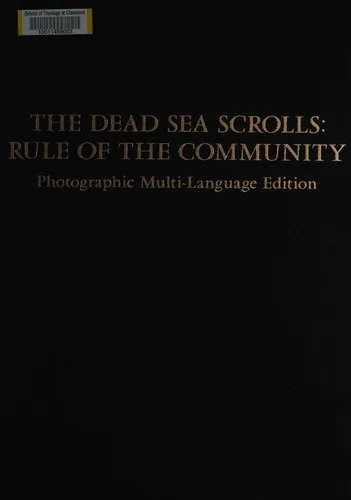
The Dead Sea scrolls
Charlesworth and Cross's compilation on the Dead Sea Scrolls is an indispensable resource, though its sheer academic density can be daunting. The strength lies in its meticulous presentation of textual evidence and scholarly consensus, particularly in the sections detailing the paleography and linguistic analysis of the Qumran fragments. A notable passage involves the detailed comparison of the Great Isaiah Scroll (1QIsaª) with the Masoretic Text, highlighting both textual stability and minor variations that illuminate scribal practices. However, the work occasionally suffers from an overabundance of technical jargon, which may alienate readers less familiar with advanced Semitic philology and textual criticism. Despite this, the editors provide a foundational understanding of the scrolls' significance. It serves as a rigorously academic, if somewhat austere, gateway to one of archaeology's greatest finds.
📝 Description
76
### What It Is ### The Dead Sea Scrolls: A Scholarly Examination This volume presents a comprehensive academic exploration of the Dead Sea Scrolls, a collection of ancient Jewish manuscripts discovered between 1947 and 1956 in caves near the Dead Sea. It focuses on the textual criticism, historical background, and theological implications of these pivotal documents, which offer unparalleled insight into Judaism and early Christianity during the Second Temple period.
### Who It's For This work is intended for serious students of ancient history, religious studies, and textual analysis. Scholars, researchers, and advanced undergraduates seeking a rigorous, evidence-based understanding of the scrolls will find its detailed exegesis and scholarly apparatus invaluable. It is not a casual introduction but a deep dive for those committed to academic inquiry.
### Historical Context The scrolls were composed roughly between the 3rd century BCE and the 1st century CE, a period of intense religious and political ferment in Judea. Their discovery revolutionized biblical scholarship, providing primary source material contemporary with the rise of Rabbinic Judaism and the nascent Christian movement. The careful excavation and subsequent scholarly efforts to decipher and publish the fragments, beginning in earnest after 1950, represent a monumental undertaking in manuscript preservation and interpretation.
### Key Concepts The book examines crucial concepts such as the textual variants between biblical manuscripts, the development of eschatological beliefs, and the distinct theological positions of various Jewish sects of the era, most notably the Essenes. It scrutinizes the relationship between the scrolls and canonical texts, exploring issues of authorship, provenance, and the transmission of religious thought in antiquity.
💡 Why Read This Book?
• Learn about the textual variations in ancient biblical manuscripts, specifically by examining the comparison between the Great Isaiah Scroll (1QIsaª) and later canonical texts, revealing scribal transmission. • Understand the theological landscape of Second Temple Judaism, particularly the eschatological beliefs prevalent among groups like the Essenes, as detailed in the Qumran community's writings. • Grasp the challenges and methodologies of ancient manuscript decipherment and publication, exemplified by the decades-long effort to publish the Dead Sea Scrolls after their discovery near Qumran.
⭐ Reader Reviews
Honest opinions from readers who have explored this book.
❓ Frequently Asked Questions
When were the Dead Sea Scrolls discovered and by whom?
The Dead Sea Scrolls were discovered in caves near Qumran between 1947 and 1956. The initial discovery was made by Bedouin shepherds, leading to extensive archaeological excavations and the retrieval of thousands of manuscript fragments.
What is the approximate date range for the Dead Sea Scrolls?
The scrolls were composed over several centuries, generally dated from the 3rd century BCE to the 1st century CE. This period encompasses significant developments in Jewish thought before and during the time of Jesus.
Which ancient Jewish group is most closely associated with the Dead Sea Scrolls?
The Essenes, a Jewish ascetic sect, are most commonly associated with the Qumran community that likely produced or collected many of the Dead Sea Scrolls. Their distinct practices and beliefs are reflected in the texts.
How do the Dead Sea Scrolls impact our understanding of the Hebrew Bible?
They provide the oldest known manuscripts of biblical books, allowing scholars to compare them with later versions like the Masoretic Text. This comparison illuminates textual transmission, scribal habits, and the evolution of the biblical canon.
What are some key theological themes found in the Dead Sea Scrolls?
Prominent themes include intense eschatological expectation, dualistic concepts of light and darkness, strict adherence to purity laws, and messianic hopes. These themes offer insight into Jewish religious life during the Second Temple period.
Who are the primary editors or scholars associated with the study of these scrolls?
Pioneering scholars include Frank Moore Cross and James H. Charlesworth, who have contributed extensively to the authentication, translation, and interpretation of the scrolls, with Cross being instrumental in early paleographic dating.
🔮 Key Themes & Symbolism
Textual Criticism and Transmission
The work meticulously examines the state of biblical texts as preserved in the Dead Sea Scrolls. It highlights significant textual variants found in manuscripts like the Great Isaiah Scroll (1QIsaª) when compared to later standard versions. This focus reveals the dynamic process of scribal copying and textual evolution, demonstrating how religious traditions were maintained and subtly altered over centuries, offering a critical lens on the fidelity of scripture.
Eschatological Beliefs
A central theme is the pervasive eschatological outlook evident in many Qumran texts. The scrolls often depict a world awaiting divine intervention, characterized by a sharp dualism between forces of good (light) and evil (darkness). This exploration details the community's anticipation of end-times events, the coming of a Messiah or Messiahs, and a final judgment, providing crucial context for understanding similar themes in early Christianity.
Sectarian Judaism of the Second Temple Period
The volume delves into the distinct practices and beliefs of the Qumran community, widely identified with the Essenes. It contrasts their rigorous interpretation of Jewish law, emphasis on ritual purity, and communal living with other contemporary Jewish groups like the Pharisees and Sadducees. Understanding this sectarian diversity is key to appreciating the multifaceted religious landscape of Judea before 70 CE.
Paleography and Dating
The book addresses the scientific methodologies used to date and authenticate the scrolls, particularly paleography – the study of ancient handwriting. Scholars like Frank Moore Cross applied their expertise to analyze the script forms, establishing a chronological framework for the manuscripts. This scientific approach underpins the historical reliability of the texts and their interpretation.
💬 Memorable Quotes
“The scrolls provide a unique window into the textual history of the Hebrew Bible.”
— This statement underscores the primary value of the Dead Sea Scrolls: they are the earliest extant manuscripts of many biblical books, offering direct evidence of the texts circulating in ancient Judaism.
“The Qumran community exhibited a pronounced dualism in its worldview.”
— This highlights a significant characteristic found in many scrolls, where a cosmic struggle between forces of light and darkness, often associated with divine and satanic powers, shapes the community's understanding of existence and salvation.
“Scribal practices reveal both conservatism and innovation in textual transmission.”
— This points to the complex nature of how ancient texts were copied. While scribes aimed for accuracy, variations emerged due to errors, intentional changes, or harmonization, offering insights into the development of scripture.
“The scrolls illuminate the diversity of Jewish thought in the Second Temple era.”
— This emphasizes that the period was not monolithic religiously. The texts showcase a spectrum of beliefs and practices, including those of the Essenes, distinct from other Jewish groups of the time.
“Paleographic analysis is crucial for dating these ancient documents.”
— This refers to the scientific method of studying ancient scripts to determine their age. It is fundamental to establishing the historical context and reliability of the Dead Sea Scrolls.
🌙 Esoteric Significance
Tradition
While not originating from a single esoteric lineage like Hermeticism or Kabbalah, the Dead Sea Scrolls hold immense significance for esoteric traditions due to their exploration of Gnostic-like dualism, messianic prophecies, and apocalyptic visions. They represent a crucial bridge between ancient Israelite religion and later mystical developments, offering source material for interpretations that seek hidden meanings and divine revelations within scripture and apocalyptic narratives.
Symbolism
Key symbols include the dualism of Light versus Darkness, representing the cosmic struggle between good and evil, God and Belial, and the righteous community versus the wicked world. Another significant motif is the concept of the 'Sons of Light,' referring to the elect community at Qumran who were seen as chosen for salvation and participation in the final victory over evil. The 'New Covenant' also symbolizes a purified and renewed relationship with God, central to the community's identity.
Modern Relevance
Contemporary esoteric thinkers and groups, particularly those focused on Jewish mysticism (Kabbalah), Gnosticism, and apocalyptic studies, frequently engage with the Dead Sea Scrolls. Their emphasis on hidden knowledge, spiritual warfare, and the imminent arrival of a transformed age resonates with modern seekers. Scholars exploring the roots of Western esotericism find valuable parallels and influences in the scrolls' complex theological and cosmological systems.
👥 Who Should Read This Book
• Students of comparative religion and ancient Near Eastern studies will gain direct access to primary source material that illuminates the religious diversity of the Second Temple period, crucial for understanding Judaism and early Christianity. • Scholars specializing in biblical textual criticism will benefit from the detailed analysis of manuscript variants and the history of the Hebrew Bible's transmission, particularly concerning texts like the Great Isaiah Scroll. • Those interested in the origins of apocalyptic thought and dualistic cosmologies will find extensive material detailing end-times beliefs and the conceptual frameworks of groups like the Essenes.
📜 Historical Context
The Dead Sea Scrolls emerged from the fertile, yet turbulent, intellectual and religious environment of Judea during the Second Temple period, primarily between the 3rd century BCE and the 1st century CE. This era witnessed intense ideological currents, including Hellenistic influence, the rise of Pharisaic and Sadducean interpretations of the Law, and the emergence of more radical ascetic movements like the Essenes, who are strongly linked to the Qumran caves. The discovery of these scrolls, beginning in 1947, occurred in a post-World War II world, profoundly impacting biblical scholarship and the study of early Christianity. Prior to their unearthing, knowledge of this period relied heavily on later rabbinic texts and the New Testament, making the scrolls a revolutionary primary source. Their meticulous cataloging and publication, a process that spanned decades and involved international collaboration, faced challenges and debates, particularly concerning the pace and access afforded to scholars, with figures like Eleazar Sukenik and later Frank Moore Cross playing pivotal roles in their early study.
📔 Journal Prompts
The dualism of Light and Darkness as depicted in the scrolls.
Reflections on the community's interpretation of the 'New Covenant'.
The role of eschatological expectation in the Qumran texts.
Scribal practices and their impact on biblical text preservation.
Comparing the Essenes' beliefs with those of other Second Temple Jewish groups.
🗂️ Glossary
Second Temple Period
The era of Jewish history from the rebuilding of the Jerusalem Temple around 516 BCE to its destruction by the Romans in 70 CE. This was a time of significant religious development and sectarian diversity.
Qumran
The archaeological site near the Dead Sea where the majority of the Dead Sea Scrolls were discovered. It is believed to have been inhabited by a Jewish sect, likely the Essenes.
Essenes
An ascetic Jewish sect that flourished during the Second Temple period. They are strongly associated with the Qumran community and are known for their communal living, strict adherence to purity laws, and messianic expectations.
Paleography
The study of ancient handwriting. In the context of the Dead Sea Scrolls, it is a key method used to date manuscripts based on the evolution of script forms.
Masoretic Text (MT)
The authoritative medieval Hebrew text of the Jewish Bible. The Dead Sea Scrolls provide much older manuscript evidence that can be compared to the MT.
Dualism
A philosophical or theological concept involving a division into two opposing or contrasting parts. In the scrolls, this often refers to the cosmic struggle between forces of good (Light) and evil (Darkness).
Eschatology
The study of final events or the end times. Many Dead Sea Scrolls are characterized by intense focus on divine judgment, messianic figures, and the ultimate triumph of God's kingdom.