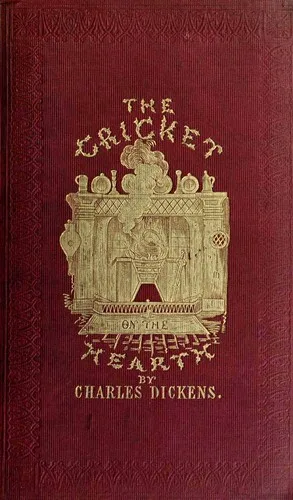
The Cricket on the Hearth
 76
76

The Cricket on the Hearth
Dickens's *The Cricket on the Hearth* is a curious piece, ostensibly a Christmas story but harboring a subtle undercurrent of the uncanny. The strength lies in its masterful characterizations and the palpable atmosphere of domesticity that Dickens so expertly conjures. The limitation, however, is the rather heavy-handed moralizing that, at times, overshadows the more intriguing symbolic elements. The central conceit of the cricket as a domestic guardian, chirping warnings and encouragements, is particularly potent. While the plot resolves with a predictable sentimentality, the initial setup offers a compelling glimpse into the anxieties and superstitions of Victorian domestic life. It is a narrative that rewards close reading for its symbolic resonance, even if its overt message is less complex.
📝 Description
76
Charles Dickens's 1845 novella, The Cricket on the Hearth, weaves folklore into a domestic tale.
The Cricket on the Hearth, published in 1845, tells the story of the Peerybingle family through the eyes of their hearth cricket. This cricket, a symbol of good fortune, observes the family's interactions and the subtle deceits that threaten their happiness. Dickens uses this seemingly simple domestic setting to explore deeper allegorical meanings.
The narrative contrasts outward appearances with hidden realities, highlighting the importance of domestic harmony. The cricket acts as a watchful, almost spiritual guardian, influencing events through its presence. The story touches on jealousy and reconciliation, all delivered with Dickens's signature social observation.
Published in 1845, the novella appeared during a period of growing interest in spiritualism and folklore within Victorian England. This era saw a revival of Gothic literature and a keen focus on the domestic sphere, often framed against the backdrop of industrial change. Dickens's story taps into these currents by presenting an idyllic home threatened by external deceptions, with the cricket embodying a protective, almost supernatural presence.
💡 Why Read This Book?
• Understand the symbolic role of the hearth and home as protective entities, drawing parallels to household spirits in folklore and pre-Christian traditions. • Analyze the narrative function of the cricket, a symbol of domestic prosperity and good fortune, as it attempts to guide the Peerybingle family through deception. • Explore Dickens's engagement with Victorian anxieties about industrialization and social mobility, observing how the novella contrasts idealized domesticity with external threats.
⭐ Reader Reviews
Honest opinions from readers who have explored this book.
❓ Frequently Asked Questions
When was Charles Dickens's 'The Cricket on the Hearth' first published?
Charles Dickens's novella 'The Cricket on the Hearth' was first published in 1845, as part of his series of Christmas Books.
What is the significance of the cricket in 'The Cricket on the Hearth'?
The cricket in the story is a symbol of domestic good fortune and a watchful spirit. Its chirping is traditionally seen as a sign of prosperity and protection for the household.
What are the main themes explored in 'The Cricket on the Hearth'?
The novella explores themes of domestic harmony, perception versus reality, jealousy, reconciliation, and the influence of unseen forces on human lives.
Is 'The Cricket on the Hearth' considered a ghost story or supernatural tale?
While not a traditional ghost story, it incorporates supernatural elements through the sentient cricket, which acts as a guardian spirit, and through elements of superstition and perceived omens.
How does 'The Cricket on the Hearth' reflect Victorian society?
The book reflects Victorian values concerning family, domesticity, and social order, while also touching upon contemporary anxieties regarding social mobility and the potential for deception within seemingly stable environments.
Who are the main characters in 'The Cricket on the Hearth'?
The central characters are John and Dot Peerybingle, their adopted daughter May Fielding, the gruff but kind-hearted Gruffydown, and the mysterious Mr. Tackleton. The cricket itself is a prominent, albeit non-human, character.
🔮 Key Themes & Symbolism
Domestic Guardianship
The novella posits the hearth not merely as a physical space but as a locus of spiritual protection. The cricket, a creature of the home, embodies this protective essence. Its chirping serves as an omen and a guide, highlighting a belief in unseen forces that maintain or threaten household harmony. This reflects a broader Victorian fascination with domesticity as a sanctuary from the external world's harsh realities, with the cricket acting as a domestic familiar.
Perception and Deception
A core theme is the disparity between outward appearances and inner realities. John Peerybingle's misplaced jealousy, fueled by misunderstanding and external manipulation, threatens his family's peace. The narrative contrasts genuine affection with calculated deceit, suggesting that true understanding requires looking beyond surface impressions. The cricket's presence underscores the idea that vital truths can be perceived through subtle signs and intuition.
The Voice of Home
The cricket's song is presented as the 'voice of home,' a sound intrinsically linked to happiness and security. This elevates the mundane sound of a household insect to a symbol of collective well-being. Dickens uses this to emphasize the wide impact of domestic atmosphere on individual lives, suggesting that the subtle vibrations of a contented home are essential for its inhabitants' spiritual and emotional health.
Victorian Social Fabric
Beneath the fairy-tale surface, the story subtly critiques aspects of Victorian society. The character of Mr. Tackleton represents the ruthless industrialist, contrasting with the idealized artisanal world of the Peerybingles. The novella touches upon themes of social class, economic disparity, and the anxieties surrounding marriage and family in an era of rapid change, using the domestic drama to reflect broader societal tensions.
💬 Memorable Quotes
Direct passages from the work, attributed to the author.
“What a cheerful sound it is! How like a thing of life it seems!”
— This interpretation highlights the anthropomorphism of the cricket. It is perceived not just as an insect, but as a living presence, imbued with personality and purpose, acting as a vital, almost sentient, member of the household.
“The more the Cricket chirped, the more the Chirping made a sound that was the same to the ear as the humming of the hearth is to the heart.”
— This reinforces the idea that the cricket's sound is a direct conduit to emotional well-being. It suggests an intrinsic connection between the sounds of domestic life and the internal state of its inhabitants, a sort of auditory balm.
“Never was there such a Christmas Eve.”
— This statement, often associated with the story's climax, signifies a moment of profound emotional resolution. It expresses the feeling of overwhelming joy and relief after a period of trial, marking the restoration of domestic peace.
💡 Key Ideas
Editorial paraphrase of the work's core concepts — not direct quotes.
The Cricket chirped, and chirped, and chirped. And the chirping made a sound that was the same to the ear as the humming of the hearth is to the heart.
This passage emphasizes the cricket's role as a sonic symbol of domestic contentment. Its sound is equated with the comforting warmth of the hearth, suggesting that external sounds can directly impact one's emotional state and sense of security.
He had been quite sure of it, and had as little doubt of it as he had of his own existence.
This quote captures John Peerybingle's certainty born from jealousy and misunderstanding. It illustrates how conviction, even when based on false premises, can become as real and powerful to an individual as objective fact.
🌙 Esoteric Significance
Tradition
While not explicitly aligned with a formal esoteric tradition like Hermeticism or Kabbalah, *The Cricket on the Hearth* taps into ancient folk beliefs and animistic concepts. It carries the idea of household spirits or genii loci, entities believed to protect and influence domestic spaces. This aligns with a broader stream of Western esotericism that acknowledges the spiritual significance of the home and the subtle energies that permeate it, treating the familiar as a potential conduit for unseen forces.
Symbolism
The central symbol is the cricket itself, representing domestic good fortune, protection, and the unseen continuity of family well-being. Its chirping acts as an auditory manifestation of the hearth's spiritual health. The hearth, in turn, symbolizes the heart of the home, a place of warmth, safety, and ancestral continuity. These symbols resonate with pre-Christian notions of household deities and the sacredness of domestic spaces.
Modern Relevance
Contemporary practitioners of hearth-centered witchcraft or domestic spirituality may find resonance in the novella's depiction of the home as a sacred space imbued with protective energies. The story's emphasis on the subtle signs of domestic harmony and discord can inform modern understandings of energetic hygiene within living spaces, drawing parallels to concepts of household blessings and protective talismans.
👥 Who Should Read This Book
• Students of Victorian literature seeking allegorical interpretations of classic texts, moving beyond surface-level plot analysis. • Readers interested in folklore and domestic mythology, particularly those who explore the concept of household spirits and hearth symbolism. • Individuals drawn to narratives that explore the interplay between the mundane and the subtly supernatural within ordinary life.
📜 Historical Context
Published in December 1845, *The Cricket on the Hearth* was Dickens's fourth Christmas Book, appearing at a time when the genre was gaining popularity. Victorian England was experiencing rapid industrialization, leading to both social progress and increased anxieties about family stability and domesticity. The mid-19th century also saw a surge in interest in spiritualism and folklore, with authors like Mrs. Crowe publishing works on supernatural experiences. Dickens's novella taps into this cultural milieu by presenting a seemingly ordinary home watched over by a benevolent, almost supernatural, cricket. While Dickens was not directly engaging with the formal occult movements of his day, his work reflected a broader societal fascination with the unseen and the symbolic power of the domestic sphere. Contemporaries like William Makepeace Thackeray, though often more satirical, also explored Victorian social manners and domestic life in their works.
📔 Journal Prompts
The cricket's chirping as a symbol of domestic peace: how does its sound reflect the emotional state of the Peerybingle household?
John Peerybingle's jealousy: analyze the narrative function of his misplaced suspicion in disrupting the home's perceived harmony.
The hearth as a central motif: reflect on its symbolic meaning beyond a simple fireplace in the context of the novella.
Compare the character of Mr. Tackleton with the idealized vision of domesticity presented by the Peerybingles.
Consider the cricket as a domestic familiar: what parallels can be drawn to other cultural representations of protective household spirits?
🗂️ Glossary
Hearth
The floor of a fireplace, often considered the symbolic center of a home, representing warmth, family, and domestic unity. In the novella, it is closely associated with the cricket's presence and well-being.
Christmas Books
A series of five novellas by Charles Dickens, published annually from 1843 to 1848. They aimed to convey social and moral messages, with 'The Cricket on the Hearth' being the fourth in the series.
Domesticity
The state of being domestic; the focus on home and family life. In the Victorian era, domesticity was idealized as a sphere of moral purity and refuge from the industrial world.
Superstition
An irrational belief or practice resulting from ignorance, credulity, or fear of the supernatural. The novella incorporates elements of superstition, particularly concerning the cricket's chirping.
Familiar
In folklore and witchcraft, a supernatural entity, often in animal form, believed to serve a witch or wizard. The cricket functions analogously as a benevolent household familiar.
Allegory
A story, poem, or picture that can be interpreted to reveal a hidden meaning, typically a moral or political one. 'The Cricket on the Hearth' can be read allegorically.
Novella
A short novel or long short story. Dickens's 'The Cricket on the Hearth' falls into this category.
🔮 Readers Also Liked
Browse all →







More by Charles Dickens
All books →




More Free Occult Philosophy Books
View all →