The Circle
 78
78

The Circle
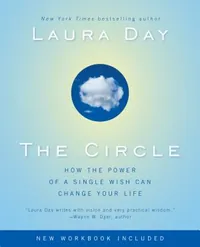
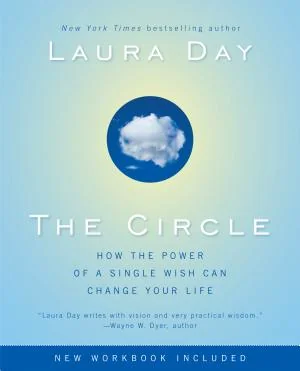
Laura Day’s *The Circle* attempts to chart a course through the often-murky waters of intuition, presenting it as a trainable skill. Its strength lies in its systematic approach, offering practical exercises that aim to demystify psychic perception. Day moves away from the ethereal and toward the actionable, a welcome shift for readers who find traditional New Age discourse too abstract. For instance, her breakdown of how to identify and interpret 'the feeling of knowing' provides a concrete anchor for a typically elusive experience. However, the book’s ambition to systematize intuition occasionally leads to a somewhat rigid framework. While the exercises are clear, they can sometimes feel overly prescriptive, potentially stifling the organic emergence of intuition for some readers. The 2008 publication date also means some of the technological references feel a bit dated, though the core concepts remain relevant. Ultimately, *The Circle* offers a valuable, if sometimes mechanical, manual for those eager to cultivate their inner compass.
📝 Description
78
### What It Is
Laura Day's *The Circle*, first published in 2008, is an exploration into the mechanics of intuitive guidance and psychic ability. It moves beyond anecdotal accounts to offer a structured approach for developing and applying these capacities. The book presents a framework for understanding how to access and interpret inner knowing, framing it not as an innate, unearned gift, but as a skill that can be cultivated through conscious practice and attention. Day's work is designed to demystify psychic phenomena, making them accessible to a broader audience interested in personal growth and expanded awareness.
### Who It's For
This text is aimed at individuals who are curious about their own intuitive faculties and psychic potential. It will appeal to those who feel they have had unacknowledged intuitive experiences and wish to understand them better. Readers seeking practical methods to enhance their decision-making, creative processes, or interpersonal relationships through inner guidance will find value here. It is also for skeptics who approach such topics with a desire for logical, actionable frameworks rather than purely faith-based systems.
### Historical Context
Published in 2008, *The Circle* emerged during a period of renewed interest in consciousness studies and alternative healing modalities. While figures like Carl Jung had long explored archetypes and the collective unconscious, Day's work offered a more direct, self-help-oriented approach to psychic development. It arrived in a cultural landscape influenced by New Age thought but also increasingly seeking empirical validation for esoteric concepts. The book’s structured methodology distinguished it from more purely spiritual or metaphysical texts that were prevalent at the time.
### Key Concepts
At its core, *The Circle* introduces the concept of 'The Circle' as a mental construct for focusing intention and receiving intuitive impressions. Day elaborates on the 'feeling of knowing' and distinguishes it from mere thought or logical deduction. The book also discusses the importance of 'energetic awareness' and how to discern subtle signals from the environment and one's own inner landscape. A significant element is the emphasis on 'trusting the process' of intuition, even when it seems to contradict rational thought, thereby building confidence in one's inner guidance system.
💡 Why Read This Book?
• Gain a structured method for developing intuitive discernment, learning to differentiate true inner guidance from mere thought processes, as outlined in Day's framework for 'the feeling of knowing.' • Cultivate practical skills in energetic awareness, enabling you to better interpret subtle signals from your environment and internal state, a core tenet of Day's approach. • Build confidence in your intuitive abilities through a series of exercises designed to demystify psychic perception, moving beyond anecdotal evidence to tangible practice.
⭐ Reader Reviews
Honest opinions from readers who have explored this book.
❓ Frequently Asked Questions
What is the core concept of 'The Circle' as presented by Laura Day?
'The Circle' in Laura Day's work is a mental construct designed to focus intention and facilitate the reception of intuitive impressions. It serves as a tool for quieting the analytical mind to better access inner knowing, a central theme in her 2008 book.
How does Laura Day differentiate intuition from regular thought?
Day distinguishes intuition by describing it as 'the feeling of knowing,' a distinct internal signal that differs from logical deduction or imaginative thought. She emphasizes recognizing this specific sensation as a key to developing psychic ability.
What is 'energetic awareness' according to The Circle?
Energetic awareness, as explored in *The Circle*, refers to the capacity to perceive and interpret subtle energetic signals. This includes both external environmental cues and internal bodily sensations, which Day posits are crucial for intuitive reception.
Is 'The Circle' suitable for beginners in psychic development?
Yes, *The Circle* is well-suited for beginners. Published in 2008, it offers a structured, step-by-step approach to developing intuitive skills that aims to demystify psychic phenomena for those new to the subject.
When was Laura Day's book 'The Circle' first published?
Laura Day's book *The Circle* was first published in 2008, positioning it within a period of growing interest in consciousness studies and practical applications of psychic ability.
What is the main benefit of practicing the methods in 'The Circle'?
The primary benefit is the development of a reliable inner guidance system, enhancing decision-making and personal awareness. By cultivating 'the feeling of knowing,' readers can learn to trust their intuition more effectively.
🔮 Key Themes & Symbolism
The Feeling of Knowing
Central to Day's work is the concept of 'the feeling of knowing,' presented as a distinct internal signal that can be reliably accessed and interpreted. This is not a thought process but a somatic or energetic sensation. The book guides readers to identify this specific feeling, differentiating it from wishful thinking, intellectual deduction, or imagination. By focusing on this core sensation, Day aims to provide a tangible anchor for intuitive information, moving it from the realm of the abstract to that of the observable and cultivable within oneself.
Structured Intuitive Development
Unlike many esoteric texts that rely on anecdotal evidence or spiritual decree, *The Circle* offers a methodological framework. Day posits that intuitive abilities, like psychic perception, are skills that can be honed through consistent practice and specific techniques. The book emphasizes exercises designed to build confidence in one's inner guidance, suggesting a systematic progression. This approach aims to demystify psychic phenomena, making them accessible and applicable to everyday life rather than confined to extraordinary individuals or events.
Energetic Awareness and Interpretation
Day highlights the importance of 'energetic awareness' as a prerequisite for effective intuition. This involves attuning oneself to subtle energies, both internal and external. The book provides guidance on how to perceive these energies and, crucially, how to interpret the information they convey. It suggests that a lack of awareness or misinterpretation of these subtle signals often leads to confusion or doubt regarding one's intuition. Cultivating this sensitivity is presented as key to unlocking clearer psychic perception.
Trusting the Inner Compass
A recurring theme is the necessity of trusting one's own inner guidance, even when it appears to contradict external logic or societal consensus. Day addresses the common human tendency to override intuitive signals due to doubt or fear. The book encourages readers to develop faith in their 'feeling of knowing' through consistent practice and validation. This fosters a stronger connection to one's authentic self and supports more aligned decision-making, empowering individuals to rely on their internal compass.
💬 Memorable Quotes
“Intuition is not a mystical gift, but a trainable skill.”
— This statement encapsulates Day's core thesis: demystifying psychic ability by framing it as an accessible capacity rather than an innate, rare talent. It suggests that through practice and understanding, anyone can develop their intuitive faculties.
“The feeling of knowing is a distinct internal signal.”
— This highlights the book's focus on identifying the specific sensation of true intuition. Day differentiates this 'feeling' from mere thought or imagination, providing a concrete marker for readers to recognize when they are receiving genuine guidance.
“Learn to distinguish energetic impressions from mental noise.”
— This points to the practical application of energetic awareness discussed in the book. It's a call to discern subtle, meaningful psychic information from the constant stream of everyday thoughts and external stimuli.
“Your inner guidance system is always communicating; you must learn to listen.”
— This emphasizes the continuous nature of intuitive communication and the reader's role in actively developing the capacity to receive it. It suggests that the blockage lies not in the source of guidance, but in the receiver's ability to tune in.
“The Circle acts as a focal point for intention and reception.”
— This refers to a specific technique within the book, where 'The Circle' serves as a mental tool. It's designed to enhance focus and create a receptive state for intuitive information, illustrating the book's practical, structured approach.
🌙 Esoteric Significance
Tradition
While not strictly adhering to a single lineage like Hermeticism or Kabbalah, *The Circle* draws implicitly from Western Esotericism's focus on inner planes and subtle energies. It echoes Theosophical ideas about developing higher faculties but presents them in a secularized, self-help-oriented manner. Day's approach can be seen as a modern interpretation of psychic cultivation, emphasizing practical application over specific metaphysical doctrines. It fits within the broader trend of making esoteric knowledge accessible and applicable to contemporary life, democratizing concepts previously confined to specialized groups.
Symbolism
The central symbol, 'The Circle,' represents a focused state of consciousness, a container for intention and reception. It functions as a cognitive tool for quieting mental chatter and creating a receptive space, akin to mandalas in Eastern traditions used for meditation. The 'feeling of knowing' itself acts as a symbolic language, a non-verbal signal from the deeper self or intuitive faculty, which readers are taught to interpret as meaningful communication.
Modern Relevance
Day's work remains relevant in contemporary discussions surrounding intuition, mindfulness, and personal development. Modern thinkers and practitioners in fields like coaching, leadership development, and even some branches of psychology explore similar concepts of inner knowing and heightened awareness. The emphasis on practical techniques for accessing intuition resonates with current trends seeking actionable strategies for well-being and decision-making, making *The Circle* a foundational text for those exploring the practical application of psychic abilities.
👥 Who Should Read This Book
• Individuals curious about developing their intuitive abilities, seeking a structured approach to understanding and honing 'the feeling of knowing.' • Skeptics interested in practical, actionable methods for psychic development, who prefer a framework that demystifies esoteric concepts. • Professionals and creatives looking to enhance decision-making, problem-solving, and interpersonal insights through enhanced inner guidance.
📜 Historical Context
Laura Day's *The Circle*, published in 2008, arrived at a moment when interest in consciousness, mindfulness, and intuitive development was gaining mainstream traction, yet often remained siloed within New Age circles. While figures like Carl Jung had explored the subconscious and archetypes decades earlier, Day’s work distinguished itself by offering a practical, almost procedural, guide to psychic development. It emerged in a climate influenced by the self-help movement and the burgeoning internet, which facilitated the dissemination of such ideas. Unlike purely spiritual or philosophical texts, *The Circle* sought to provide actionable techniques for cultivating what it terms 'the feeling of knowing.' Its publication predates the widespread integration of mindfulness apps and the more scientifically framed discussions of intuition seen in fields like behavioral economics, positioning it as an earlier, more direct exploration of harnessing inner guidance for personal decision-making and awareness.
📔 Journal Prompts
The Circle as a focal point for intention.
Interpreting the subtle signals of energetic awareness.
Cultivating trust in 'the feeling of knowing'.
Recognizing mental noise versus intuitive impressions.
Applying intuitive discernment in daily choices.
🗂️ Glossary
The Circle
A mental construct or visualization used by the author to focus intention and create a receptive state for receiving intuitive information. It serves as a tool for quieting the analytical mind.
The Feeling of Knowing
A distinct internal sensation or energetic signal that indicates intuitive insight, differentiated from logical thought, imagination, or emotional response. It is presented as the primary indicator of psychic information.
Energetic Awareness
The capacity to perceive and interpret subtle energetic signals emanating from oneself, others, and the environment. Cultivating this awareness is key to understanding intuitive impressions.
Mental Noise
The constant stream of thoughts, worries, and distractions generated by the analytical mind, which can obscure or be mistaken for genuine intuitive guidance.
Intuitive Guidance
Information or direction received through the intuitive faculty, characterized by 'the feeling of knowing,' which can assist in decision-making and understanding situations.
Psychic Perception
The ability to perceive information beyond the scope of the five physical senses, often facilitated through heightened intuitive awareness and energetic sensitivity.
Structured Development
The author's approach to psychic ability, emphasizing that it can be cultivated through specific exercises, consistent practice, and a systematic understanding of intuitive processes.