The Book of Dragons

 73
73

The Book of Dragons
Nesbit's "The Book of Dragons" presents a charming, if somewhat uneven, collection of dragon-centric tales. Her strength lies in her ability to imbue even the most fantastical scenarios with a grounded, often humorous, human element. The story "The Ice Dragon" is a prime example, where the dragon's icy nature leads to both peril and a peculiar sort of domesticity. However, the collection occasionally feels dated, with plot resolutions sometimes relying on convenient turns of phrase rather than deeper narrative logic. A significant limitation is the lack of a consistent, overarching esoteric framework, which prevents it from truly resonating with a dedicated occult readership. Despite this, Nesbit's prose remains engaging, offering a unique perspective on dragon lore that deviates from purely menacing portrayals. It's a pleasant diversion for those seeking whimsical dragon encounters.
📝 Description
73
Edith Nesbit's "The Book of Dragons" collects fantastical short stories first published in 1973.
Edith Nesbit's "The Book of Dragons" is a collection of short stories, not a scholarly work, centered on mythical creatures. Written with Nesbit's characteristic wit and imagination, these tales examine human-dragon interactions, often with a sense of childhood wonder. The narratives frequently alter traditional dragon lore, showing them not always as frightening beasts but as characters with their own personalities and motivations.
This collection is for readers who enjoy classic children's literature with a fantastical element and a surprising twist. It will appeal to those interested in how dragon mythology developed in Western literature. Anyone looking for stories that combine adventure with a gentle, often humorous, look at magic will find enjoyment. Young readers encountering dragons for the first time, along with adults who remember Nesbit's storytelling, will appreciate these stories.
While not overtly occult, Nesbit's stories engage with the enduring fascination for mythical creatures prevalent in late Victorian and Edwardian England, a period that saw a rise in spiritualism and interest in the supernatural. Her work taps into a tradition of fantasy literature that treats magical beings with a degree of seriousness, even within children's stories. The reimagining of dragon archetypes and their interactions with humans reflects a broader cultural engagement with folklore and the otherworldly, subtly weaving these interests into narratives that prioritize adventure and character.
💡 Why Read This Book?
• Learn how Edith Nesbit playfully subverts traditional dragon stereotypes, demonstrating that these creatures can be more than mere antagonists, as seen in the characterization of the dragon in "The Ice Dragon." • Discover a narrative voice that, while originating in the early 20th century, offers a fresh perspective on interacting with mythical beings, making it distinct from more modern fantasy. • Gain insight into how classic children's authors like Nesbit incorporated fantastical elements into stories for young audiences, as exemplified by the adventurous spirit found throughout "The Book of Dragons."
⭐ Reader Reviews
Honest opinions from readers who have explored this book.
❓ Frequently Asked Questions
Is Edith Nesbit's "The Book of Dragons" a recent publication?
No, the first publication date for "The Book of Dragons" is 1973, though Edith Nesbit wrote many other works earlier in her career.
What kind of stories are in "The Book of Dragons"?
The book contains several short, fantastical stories about dragons, blending adventure and humor, often with a unique twist on traditional dragon mythology.
Who would enjoy "The Book of Dragons"?
Readers who enjoy classic children's fantasy, imaginative tales, and a different take on dragon lore will find this collection appealing.
Does "The Book of Dragons" connect to the occult?
While Nesbit's work touches on the fantastical, this specific collection is primarily considered classic children's literature rather than a direct text on occult practices.
What is Edith Nesbit known for besides "The Book of Dragons"?
Edith Nesbit is widely celebrated for her children's novels, including "The Railway Children" (1906) and "Five Children and It" (1902), which are staples of classic children's literature.
Are the dragons in this book always evil?
No, Nesbit often presents dragons in varied roles, sometimes as adversaries, but also as characters with their own personalities and even potential allies.
🔮 Key Themes & Symbolism
Subverted Dragon Archetypes
Nesbit consistently challenges the monolithic portrayal of dragons as purely destructive forces. In "The Book of Dragons," these creatures often possess individual personalities, engage in dialogue, and form unexpected relationships with humans. This approach encourages readers to question assumptions about mythical beings, viewing them through a lens of curiosity and empathy rather than just fear. The stories explore scenarios where dragons might be misunderstood, possess unique needs, or even exhibit a form of wisdom, departing from the standard hoard-guarding, knight-slaying tropes.
The Nature of Courage
The collection examines courage not as the absence of fear, but as the ability to act despite it, often through cleverness and resourcefulness rather than brute force. Characters frequently face dragons not with overwhelming might, but with wit, negotiation, or a willingness to understand the dragon's perspective. This theme highlights that bravery can manifest in diverse ways, emphasizing problem-solving and adaptability when confronting formidable challenges. It suggests that true courage often lies in understanding and communication.
Wonder and Imagination
At its heart, "The Book of Dragons" is an ode to the power of imagination and the enduring human fascination with the mythical. Nesbit's narrative style invites readers into worlds where the impossible becomes possible, and the fantastical is treated with a matter-of-fact wonder. The stories celebrate the joy of discovery and the thrill of encountering the extraordinary, encouraging a sense of childlike awe. This focus on imaginative possibility is a hallmark of Nesbit's broader work, making her tales enduringly appealing.
Human-Dragon Interaction
The collection foregrounds the dynamic and often surprising interactions between humans and dragons. Rather than maintaining a strict separation or perpetual conflict, Nesbit explores the spectrum of possibilities, from negotiation and alliance to accidental companionship. These narratives probe the dynamics of power, communication, and coexistence between vastly different beings. The focus is less on conquest and more on the potential for understanding and shared experience, offering a more nuanced view of interspecies relationships within a fantasy context.
💬 Memorable Quotes
Direct passages from the work, attributed to the author.
“It is not at all easy to get rid of a dragon, even if you have never seen one before.”
— This statement captures the whimsical, slightly absurd logic often found in Nesbit's tales, suggesting that even the most fantastical problems have a certain practical, if unconventional, reality within the story's world.
“She was a dragon of the Ice Age, and her breath was the north wind.”
— This descriptive phrase from 'The Ice Dragon' vividly illustrates Nesbit's imaginative approach to dragon abilities, linking them to elemental forces and ancient origins in a poetic manner.
“The Princess, who was rather a sensible person, said 'I do not suppose any of you can really manage a dragon.'”
— This interpretation points to Nesbit's use of sensible, often female, characters who cut through the extraordinary with practical observations, grounding the fantasy in relatable human reactions.
💡 Key Ideas
Editorial paraphrase of the work's core concepts — not direct quotes.
The dragon, who was rather pleased to find himself treated with such politeness, said...
This paraphrase highlights Nesbit's tendency to personify dragons, giving them unexpected emotions and social graces, which subverts the typical monstrous portrayal and invites reader empathy.
The dragon was not at all angry, for he had never been asked a question like that before.
This paraphrase exemplifies how Nesbit humanizes dragons by attributing to them reactions of surprise or curiosity, suggesting that their behavior is not inherently malicious but can be shaped by circumstance and interaction.
🌙 Esoteric Significance
Tradition
While not explicitly a text of a specific esoteric tradition like Hermeticism or Kabbalah, Nesbit's work taps into a broader Western esoteric interest in myth and folklore, particularly those concerning dragons. Her approach aligns with a general Theosophical or early 20th-century occult fascination with ancient beings and symbolic archetypes, reinterpreting them through a more accessible, narrative lens. The dragon, a potent symbol across cultures, is explored here less as a theological or magical entity and more as a character embodying primal forces, which appeals to symbolic interpretations found in various occult studies.
Symbolism
The dragon in Nesbit's tales often symbolizes untamed natural power, primal instinct, or challenging external forces. Its hoard can represent material wealth, but also hoarded knowledge or potential. The act of confronting or interacting with a dragon frequently symbolizes a test of character, courage, or wisdom for the human protagonists. The 'Ice Dragon' specifically uses the element of ice to symbolize a different kind of power—cold, potentially destructive, but also capable of preserving or creating unique forms, offering a symbolic counterpoint to fiery dragon imagery.
Modern Relevance
Contemporary fantasy authors and storytellers continue to draw inspiration from Nesbit's approach to mythic creatures, particularly her ability to imbue them with personality and complexity beyond simple monstrousness. Her influence can be seen in modern urban fantasy and children's literature that seeks to create nuanced relationships between humans and magical beings. Thinkers and writers exploring the psychology of myth and archetypes might also find her work a useful, albeit light, case study in the popular reinterpretation of ancient symbols for new audiences.
👥 Who Should Read This Book
• Young readers aged 8-12 seeking imaginative adventure stories featuring dragons that challenge typical portrayals. • Adult lovers of classic children's literature who appreciate witty prose and creative takes on folklore. • Students of literary history interested in how authors like Edith Nesbit adapted fairy tale conventions for a modern audience in the early 20th century.
📜 Historical Context
Edith Nesbit's "The Book of Dragons," published in 1973, belongs to a literary tradition that significantly evolved from the late Victorian and Edwardian eras, when Nesbit herself was most active. Her writing career began in earnest in the late 1890s, producing works like "The Treasure Seekers" (1899) and "Five Children and It" (1902). These earlier stories cemented her reputation for blending magic and realism in children's literature. While "The Book of Dragons" appeared decades after her most prolific period, it carries the spirit of her earlier imaginative tales. During her active years, authors like Rudyard Kipling were also exploring fantastical elements, though often with different thematic concerns. Nesbit’s work, characterized by its warmth and child-centric perspective, stood apart from more overtly moralistic or rigidly structured fairy tales of the time, offering a more democratic and playfully anarchic view of childhood and magic.
📔 Journal Prompts
The dragon's unexpected politeness in the story...
A character's sensible observation about managing a dragon...
The symbolic meaning of the Ice Dragon's breath...
The narrative's approach to dragon speech and understanding...
The resourceful solution proposed to a dragon-related problem...
🗂️ Glossary
Dragon
A mythical, reptilian creature, often depicted as large, winged, fire-breathing, and possessing scales. In Nesbit's work, dragons are frequently portrayed with individual personalities and varied temperaments.
Hoard
A collection of treasure, typically gold and jewels, which dragons are famously said to guard. In Nesbit's stories, the concept of a hoard might be explored with a unique twist.
Mythical Creatures
Beings from folklore and mythology that do not exist in reality, such as dragons, griffins, or unicorns. Nesbit's work features these creatures in narrative contexts.
Fairy Tale Conventions
Common elements and narrative structures found in fairy tales, such as magical helpers, obstacles, and moral lessons. Nesbit often plays with or subverts these conventions.
Archetype
A recurring symbol or motif in literature, art, or mythology that represents universal patterns of human nature. The dragon is a powerful archetype.
Folklore
The traditional beliefs, customs, and stories of a community, passed through generations by word of mouth. Nesbit drew upon and adapted elements of folklore.
Narrative Voice
The perspective from which a story is told. Nesbit is known for her distinctive, engaging, and often witty narrative voice in her children's books.
🔮 Readers Also Liked
Browse all →







More by Edith Nesbit
All books →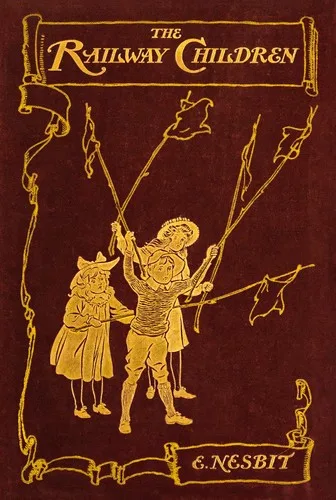





More Free Occult Philosophy Books
View all →