Tao te Ching

 71
71

Tao te Ching
The Tao Te Ching’s enduring power lies in its radical simplicity, often presented through paradoxes that resist easy categorization. Its initial publication date of 1842, while a later translation, points to its persistent reinterpretation across centuries. A key strength is its consistent advocacy for *wu wei*, a concept that challenges conventional notions of achievement and control. The limitation, however, lies in its profound ambiguity; understanding requires repeated engagement and often reliance on commentary, as the original text offers few concessions to the uninitiated. For instance, Chapter 64’s assertion that "A journey of a thousand miles begins with a single step" is less a platitude and more a call to appreciate the fundamental nature of beginnings, even mundane ones. It’s a text that asks more questions than it answers, demanding introspection.
📝 Description
71
Lao Tzu's Tao Te Ching, likely written around the 6th century BCE, guides readers toward harmony with the Tao.
Attributed to the sage Lao Tzu, the Tao Te Ching is a central text for Taoism. Its aphoristic verses offer instruction on living in accord with the Tao, the ineffable principle that underlies all existence. The text advocates for simplicity, spontaneity, and the practice of wu wei, or non-action.
This work appeals to those interested in ancient philosophies, comparative ethics, and alternative spiritualities. It is especially pertinent for individuals drawn to Eastern thought, ecological consciousness, and mindful living. Students of metaphysics will find its paradoxical statements a rich area for reflection. The Tao Te Ching emerged during China's Spring and Autumn period, an era of intellectual ferment alongside Confucianism and Mohism. Its emphasis on yielding and the natural order contrasted with more structured social ethics.
The Tao Te Ching is a foundational scripture within Taoism, a tradition that emphasizes living in alignment with the natural order of the universe, known as the Tao. Its teachings on effortless action (wu wei) and the subtle power of yielding offer an alternative to more active, interventionist approaches often found in other philosophical and spiritual systems. The text's paradoxical language and focus on the ineffable nature of ultimate reality connect it to broader esoteric currents seeking direct experience of the divine or the fundamental principles of existence.
💡 Why Read This Book?
• Understand *Wu Wei*: Learn the principle of effortless action, recognizing that true efficacy often comes from aligning with natural forces rather than imposing will, as exemplified in Chapter 3 of the Tao Te Ching. • Cultivate Inner Peace: Discover how embracing simplicity and yielding, as advocated throughout the text, can reduce internal conflict and foster a more harmonious existence, a core teaching of Lao Tzu. • Grasp the Tao: Gain an appreciation for the ineffable principle of the Tao, the unnamable origin and sustainer of all things, which the book describes as the ultimate guide to natural living.
⭐ Reader Reviews
Honest opinions from readers who have explored this book.
❓ Frequently Asked Questions
When was the Tao Te Ching originally written?
The exact date is debated, but scholars generally place its composition between the 6th and 4th centuries BCE, during China's Spring and Autumn period. The 1842 date refers to a specific published edition, not its origin.
Who is Lao Tzu, the author of the Tao Te Ching?
Lao Tzu (meaning 'Old Master') is traditionally regarded as the author. Historical records are scarce, and some scholars question if he was a single historical figure or a compilation of wisdom attributed to a school of thought.
What is the core philosophy of the Tao Te Ching?
Its core philosophy centers on living in accordance with the Tao, the natural order of the universe. It emphasizes simplicity, humility, spontaneity, and *wu wei* (effortless action).
How does the Tao Te Ching relate to Taoism?
The Tao Te Ching is considered the foundational scripture of Taoism. It outlines the principles and worldview that define this major Chinese philosophical and religious tradition.
Is the Tao Te Ching a religious text or a philosophical one?
It functions as both. Philosophically, it offers a profound ethical and metaphysical system. Religiously, it is revered as a primary text by Taoists worldwide, guiding spiritual practice.
What does 'wu wei' mean in the context of the Tao Te Ching?
'Wu wei' translates to non-action or effortless action. It signifies acting in alignment with the natural flow of the Tao, without force or excessive effort, achieving results with minimal strain.
🔮 Key Themes & Symbolism
The Nature of the Tao
The Tao Te Ching posits the Tao as the unnamable, ineffable source and underlying principle of all reality. It is the origin of existence, yet it cannot be fully grasped or defined by language. The text frequently uses paradox to describe it, such as 'The Tao that can be told is not the eternal Tao.' This concept is central to understanding the book's worldview, emphasizing a reality that transcends human conceptualization and logic. Its influence extends to understanding the interconnectedness of all things and the flow of the cosmos.
Wu Wei: Effortless Action
This key concept, often translated as non-action or effortless action, is a central to Taoist practice. It does not advocate for passivity but rather for acting in harmony with the natural flow of the Tao, without force or resistance. The text suggests that by yielding and acting spontaneously, one can achieve more effectively and with greater ease. This principle is applied to governance, personal conduct, and understanding the subtle workings of the universe, challenging notions of control and ambition prevalent in other philosophies.
Simplicity and Humility
The Tao Te Ching consistently advocates for a return to simplicity and the shedding of artificial desires and societal ambitions. It praises humility, emptiness, and the uncarved block (Pu) as states of purity and potential. By embracing these qualities, individuals can reconnect with their natural state and live more authentically. This theme serves as a critique of societal complexities and the pursuit of external validation, encouraging a focus on inner contentment and natural virtue (*De*).
The Balance of Opposites
The text frequently illustrates its points through the interplay of apparent opposites, such as strength and weakness, light and dark, sound and silence. It suggests that these are not truly separate but are complementary aspects of a unified whole, governed by the Tao. Understanding this dynamic balance is crucial for working through the world effectively and recognizing the limitations of rigid dualistic thinking. This concept is fundamental to comprehending the Tao's holistic perspective on existence.
💬 Memorable Quotes
Direct passages from the work, attributed to the author.
“The Tao that can be spoken is not the eternal Tao.”
— This opening statement immediately establishes the ineffable nature of the Tao. It asserts that any attempt to define or describe the ultimate reality using language will inevitably fall short, as true understanding transcends conceptualization.
“To know does not require speaking; to speak does not know.”
— This highlights the limitations of verbal expression in grasping profound truths. True wisdom or understanding is often silent and intuitive, while articulate speech may indicate a lack of deeper comprehension.
“The best is like water. Water benefits all things and does not contend.”
— This analogy illustrates the principle of *wu wei*. Water's yielding nature allows it to flow everywhere and nourish life without struggle, embodying the ideal of effortless efficacy and adaptability.
“Nature does not hurry, yet everything is accomplished.”
— This observation points to the inherent rhythm and efficiency of the natural world. It suggests that patience and alignment with natural processes, rather than haste, are the keys to genuine accomplishment.
“He who knows others is intelligent; he who knows himself is enlightened.”
— This emphasizes the paramount importance of self-awareness. While understanding the external world is valuable, true enlightenment comes from profound introspection and self-knowledge.
🌙 Esoteric Significance
Tradition
While not fitting neatly into Western esoteric lineages like Hermeticism or Kabbalah, the Tao Te Ching is the central text of philosophical and religious Taoism, a tradition with deep roots in ancient Chinese cosmology and shamanism. Its focus on the ineffable Tao, the cultivation of inner power (*De*), and the manipulation of subtle energies aligns it with practices found in various mystical paths worldwide. It offers a distinct perspective on the 'Way' of existence, emphasizing natural harmony over divine decree or structured magical systems.
Symbolism
Key symbols include water, representing flexibility, yielding power, and the ability to adapt and nourish without force. The 'uncarved block' (Pu) symbolizes primordial simplicity and potentiality, the state before artificial desires or societal conditioning corrupt one's natural essence. The concept of 'emptiness' or 'stillness' signifies a state of receptivity and clarity, essential for perceiving and aligning with the Tao, akin to the meditative void found in other traditions.
Modern Relevance
Contemporary thinkers and practitioners in fields ranging from mindfulness and conflict resolution to ecological philosophy and quantum physics draw inspiration from the Tao Te Ching. Its principles of *wu wei* are explored in business and leadership studies, while its emphasis on natural balance informs environmental activism. The text's profound wisdom continues to guide those seeking inner peace, ethical living, and a deeper connection to the underlying order of existence in a rapidly changing world.
👥 Who Should Read This Book
• Seekers of Eastern Philosophy: Individuals interested in understanding the foundational principles of Taoism and its unique worldview, moving beyond superficial interpretations. • Contemplative Practitioners: Those engaged in meditation, mindfulness, or other introspective practices looking for ancient texts that support the cultivation of inner stillness and awareness. • Students of Comparative Ethics: Scholars and enthusiasts examining diverse ethical frameworks will find the Tao Te Ching's emphasis on natural morality and non-coercive action a valuable point of comparison.
📜 Historical Context
The Tao Te Ching emerged during China's tumultuous Spring and Autumn period (771-476 BCE), a time marked by political fragmentation and intellectual flourishing. It offered a philosophical counterpoint to the burgeoning social and ethical systems, most notably Confucianism, which emphasized hierarchical order and ritual propriety. While Lao Tzu is traditionally placed as a contemporary of Confucius (c. 551–479 BCE), some scholars argue for a later dating, placing its compilation during the Warring States period (475–221 BCE). The text's emphasis on naturalness, spontaneity, and the power of yielding resonated with those disillusioned by the era's pervasive conflict and rigid social structures. Its ideas provided a foundation for Taoism and influenced Chinese art, medicine, and statecraft for millennia, though its reception was often nuanced, sometimes viewed as esoteric or even subversive by orthodox scholars.
📔 Journal Prompts
The concept of *wu wei* and its application to daily tasks.
Reflecting on the 'uncarved block' (Pu) and its relation to personal authenticity.
The Tao's role as an unnamable yet all-encompassing principle.
Identifying instances where yielding leads to greater strength.
Embracing simplicity: what societal expectations can be relinquished?
🗂️ Glossary
Tao (Dao)
The fundamental, ineffable principle of the universe; the Way. It is the source and sustainer of all existence, yet it cannot be fully defined or grasped by human language or intellect.
De (Te)
Often translated as virtue, power, or integrity. It refers to the inherent quality or manifestation of the Tao within individual beings and things; one's own natural power or character.
Wu Wei
Effortless action, non-action, or spontaneous action. It means acting in accordance with the natural flow of the Tao, without force, striving, or artificiality.
Pu
The 'uncarved block' or 'plain wood.' It represents primordial simplicity, naturalness, and potentiality—the state of being before desires and societal conditioning obscure one's true nature.
Yin and Yang
Complementary, interconnected, and interdependent forces or principles that shape the natural world. They represent duality within unity, such as dark/light, passive/active, female/male.
Sage
An enlightened individual who lives in harmony with the Tao, embodying wisdom, humility, and *wu wei*. The sage understands the workings of the universe and acts with natural virtue.
Spring and Autumn period
A period in Chinese history (771–476 BCE) known for political fragmentation and intellectual dynamism, during which major philosophical schools like Confucianism and Taoism began to form.
🔮 Readers Also Liked
Browse all →







More by 老子
All books →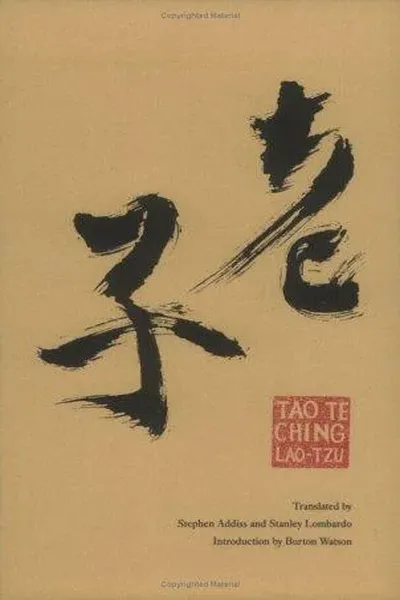





More Free Occult Philosophy Books
View all →