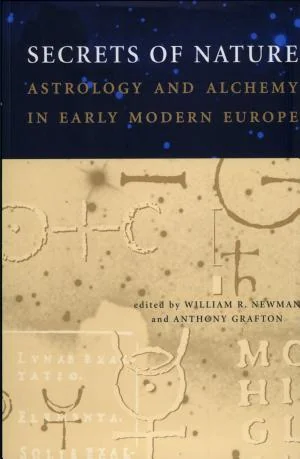
Secrets of Nature
 71
71

Secrets of Nature
William R. Newman and Anthony Grafton’s "Secrets of Nature" provides a much-needed corrective to the often-linear narratives of scientific progress. By focusing on the vibrant, if sometimes esoteric, intellectual currents of the Renaissance, they illuminate how astrology and alchemy were not fringe activities but central to the era's understanding of the cosmos and humanity's place within it. Their meticulous research shines through, particularly in the sections detailing the practical execution of alchemical processes and the integration of astrological timing into daily life. A significant strength lies in their refusal to impose modern categories onto historical thought, allowing the Renaissance mind to speak for itself. If there's a limitation, it's that the sheer density of scholarly detail might prove challenging for readers entirely new to the period. However, the passage discussing the concept of "natural magic" as a bridge between philosophy and practice is particularly revelatory, showcasing how practitioners saw themselves as actively engaging with divine order through material means. This is essential reading for anyone seeking a nuanced view of early modern intellectual history.
📝 Description
71
### What It Is Secrets of Nature, by William R. Newman and Anthony Grafton, offers a scholarly examination of the interconnectedness between natural philosophy, alchemy, and astrology during the Renaissance. Published initially in 2001, this work revisits how these often-marginalized disciplines shaped intellectual discourse and daily practices among scholars and artisans alike. It moves beyond simplistic categorizations to demonstrate the sophisticated methodologies and theoretical frameworks that underpinned alchemical and astrological investigations of the natural world.
### Who It's For This book is designed for academics, graduate students, and serious enthusiasts of early modern intellectual history, the history of science, and the history of magic. Readers interested in understanding the material culture and experimental approaches of Renaissance practitioners, particularly those involved with alchemy and astrology, will find significant value. It is also suitable for those exploring the broader philosophical underpinnings of early scientific inquiry.
### Historical Context The Renaissance, spanning roughly the 14th to the 17th centuries, was a period of intense intellectual curiosity and a revival of classical learning. While often associated with the birth of modern science, it was also a time when astrology and alchemy were integral to understanding the cosmos and human health. Thinkers like Paracelsus, active in the 16th century, exemplify the era's fusion of medical, alchemical, and philosophical pursuits. Newman and Grafton's work situates itself within this complex landscape, challenging later anachronistic divisions between "science" and "occultism" that emerged more forcefully in the Enlightenment, a period that saw figures like Isaac Newton, though a practitioner of alchemy himself, still grappling with these ideas.
### Key Concepts The book explores the concept of "natural magic," a philosophical framework that posited the existence of hidden sympathies and forces within nature, accessible through diligent observation and experimentation. It examines the practical application of alchemical recipes and astrological charts, not as mere superstition, but as sophisticated tools for investigation and prediction. The work also highlights the role of artisanal knowledge, demonstrating how craftspeople and natural philosophers often shared common ground in their pursuit of understanding and manipulating the natural world.
💡 Why Read This Book?
• Gain a nuanced understanding of Renaissance intellectual life, learning how concepts like "natural magic" integrated philosophical inquiry with practical experimentation, a perspective often lost in modern scientific narratives. • Discover the sophisticated methodologies of alchemy and astrology as presented in the 16th century, moving beyond simplistic notions of superstition to appreciate their role as investigative tools. • Appreciate the historical context of figures like Paracelsus, understanding his work as a product of an era that did not rigidly separate medicine, philosophy, and alchemical pursuits.
⭐ Reader Reviews
Honest opinions from readers who have explored this book.
❓ Frequently Asked Questions
What is "natural magic" as discussed in Secrets of Nature?
"Natural magic" in the Renaissance, as explored in the book, refers to a philosophical and practical pursuit that sought to understand and manipulate the hidden sympathies and forces within nature, often through observation, experimentation, and the use of astrological influences.
How did astrology and alchemy differ from their modern perceptions in the Renaissance?
During the Renaissance, astrology and alchemy were often viewed as legitimate branches of natural philosophy, integral to understanding the cosmos, health, and even the divine. They were not necessarily separated from other forms of inquiry as they are today, with practitioners seeing them as tools for investigation.
Who were some key figures whose work is examined in the book?
While the book focuses on broader intellectual currents, it examines the practices and philosophies connected to prominent Renaissance thinkers and practitioners who engaged with alchemy and astrology, reflecting the era's intellectual landscape.
What does Secrets of Nature reveal about the relationship between scholars and artisans?
The book highlights the significant overlap and shared knowledge between academic natural philosophers and skilled artisans. Both groups engaged in hands-on experimentation and the application of principles derived from astrology and alchemy to understand and shape the material world.
What was the intellectual climate of the Renaissance regarding these subjects?
The Renaissance was a period of revived interest in ancient texts and a burgeoning exploration of the natural world. Astrology and alchemy were considered serious disciplines, embedded within a worldview that sought to understand divine order through the study of nature's hidden connections.
What is the significance of the publication date of 2001 for this work?
The 2001 publication date signifies that the work engages with late 20th and early 21st-century scholarship, offering a modern academic perspective on Renaissance thought that challenges earlier, perhaps more anachronistic, interpretations of scientific development.
🔮 Key Themes & Symbolism
Natural Magic as Inquiry
The work emphasizes "natural magic" not as mere sorcery, but as a legitimate philosophical framework for understanding the universe during the Renaissance. It posits that practitioners believed in inherent sympathies and forces within nature that could be accessed and manipulated through diligent study and experimentation. This concept served as a bridge between theoretical philosophy and practical application, allowing scholars and artisans to investigate the world through a unified lens, often incorporating astrological influences and alchemical processes.
Alchemy and Astrology's Role
Secrets of Nature re-evaluates the standing of alchemy and astrology in Renaissance society. Far from being solely fringe pursuits, they were interwoven with medical theory, cosmology, and the very understanding of matter and spirit. The book details how alchemical recipes were experimental procedures and astrological charts were sophisticated tools for prediction and understanding cosmic influences on earthly events, reflecting a worldview where celestial mechanics and material transformation were intrinsically linked.
Artisanal Knowledge and Practice
A crucial aspect highlighted is the shared intellectual ground between formal scholars and skilled craftspeople. The book demonstrates how the practical knowledge of artisans in areas like metallurgy, chemistry, and pharmacy intersected with the theoretical pursuits of natural philosophers. This shared emphasis on hands-on work and material manipulation underscores the experimental ethos of the period, where understanding nature involved both contemplation and direct engagement with its substances and processes.
Challenging Modern Divides
The scholarship presented actively challenges the anachronistic separation of "science" from "occult" or "esoteric" disciplines. By examining the Renaissance period, the work illustrates a time when these categories were not clearly defined, and practitioners often moved fluidly between what we now consider distinct fields. This perspective encourages a re-evaluation of early modern intellectual history, fostering a more accurate appreciation of its integrated worldview.
💬 Memorable Quotes
“The work explores the integration of astrological timing into practical endeavors.”
— This highlights how Renaissance practitioners didn't just consult astrological charts for abstract knowledge but actively applied celestial timings to optimize alchemical processes, medical treatments, or even agricultural activities, seeing a direct link between cosmic cycles and earthly outcomes.
“Renaissance natural philosophy often involved the careful manipulation of substances.”
— This points to the experimental and material focus of the era's thinkers. It suggests that understanding the natural world wasn't solely theoretical but involved hands-on work with chemicals, minerals, and other materials, often with the goal of transformation or extraction.
“The book examines the concept of "natural magic" as a coherent intellectual system.”
— This signifies that "natural magic" was not simply random superstition but a structured philosophical approach. It involved understanding hidden natural forces and sympathies, believing these could be harnessed through specific practices and knowledge, bridging the gap between the visible and invisible worlds.
“The period saw significant overlap between scholarly and artisanal approaches to nature.”
— This suggests that the division between learned intellectuals and skilled craftspeople was less rigid than often assumed. Both groups contributed to the understanding and manipulation of the natural world, sharing knowledge and methods related to alchemy, medicine, and other practical sciences.
“Alchemy was often pursued as a method of investigating the fundamental principles of matter.”
— This frames alchemy not just as a quest for gold, but as an early form of chemical inquiry. Practitioners sought to understand the underlying constitution of materials and their potential for transformation, driven by philosophical questions about the nature of reality.
🌙 Esoteric Significance
Tradition
This work fits within the broader tradition of Western Esotericism, particularly its Hermetic and alchemical currents that flourished during the Renaissance. It departs from purely theoretical or mystical interpretations by focusing on the practical, experimental, and philosophical underpinnings of these practices. By examining how alchemy and astrology were integrated into natural philosophy, it bridges the gap between scholarly study and the lived experience of esoteric practitioners of the era, contributing to a more nuanced understanding of these lineages.
Symbolism
Key symbols explored include the retort and alembic, representing the transformative processes of alchemy and the distillation of hidden knowledge. The celestial spheres, central to astrological symbolism, represent the cosmic order and its influence on earthly affairs, understood as interconnected forces rather than separate domains. The concept of the prima materia, the fundamental substance from which all things are derived in alchemical theory, symbolizes the underlying unity and potentiality of the natural world that these practitioners sought to grasp.
Modern Relevance
Contemporary scholarship in the history of science and the history of magic frequently draws upon the nuanced understanding of Renaissance thought presented in this book. Thinkers and practitioners interested in the philosophical roots of modern chemistry, psychology (particularly Jungian archetypes related to alchemy), and comparative spirituality find valuable context here. It informs modern discussions about the relationship between belief, practice, and scientific inquiry, particularly for those exploring syncretic spiritual paths or the historical development of consciousness studies.
👥 Who Should Read This Book
• Students of Renaissance intellectual history: Gain a deeper appreciation for the period's complex worldview, understanding how astrology and alchemy were integral to natural philosophy, not separate from it. • Researchers in the history of science and magic: Access detailed scholarship that challenges anachronistic divisions, providing crucial context for the development of early modern scientific thought. • Practitioners and scholars of Hermeticism and alchemy: Understand the historical roots and philosophical frameworks that informed traditional practices, moving beyond modern interpretations to engage with source-level historical context.
📜 Historical Context
The Renaissance, a period marked by intellectual ferment and a renewed interest in classical antiquity, provided fertile ground for the exploration of astrology and alchemy. These disciplines were not relegated to the margins but were often integrated into the broader framework of natural philosophy. Thinkers like Paracelsus, a 16th-century physician and alchemist, embodied this synthesis, seeking to understand disease and remedies through a combination of observation, chemical experimentation, and astrological principles. Newman and Grafton's work situates itself against this backdrop, challenging the later Enlightenment's impulse to draw sharp distinctions between "science" and "occultism." While figures like Giordano Bruno faced persecution for their philosophical views, the everyday practice of astrology and alchemy by many scholars and physicians continued, reflecting a complex intellectual landscape where empirical observation and esoteric traditions coexisted. The reception of such works often involved scholarly debate rather than outright condemnation, particularly within academic circles seeking to understand the natural world.
📔 Journal Prompts
The concept of "natural magic" as a framework for understanding nature.
Alchemical symbolism and its connection to material transformation.
The role of astrological timing in Renaissance practices.
How artisanal knowledge intersected with scholarly pursuits.
The Renaissance worldview's integration of celestial and terrestrial realms.
🗂️ Glossary
Natural Magic
A Renaissance philosophical concept positing that hidden sympathies and forces exist within nature, which can be understood and manipulated through observation, experimentation, and the application of specific knowledge, often incorporating astrological principles.
Prima Materia
In alchemy, the fundamental, undifferentiated substance from which all matter is believed to originate. It represents the potential for transformation and the underlying unity of the cosmos.
Alembic
A piece of alchemical apparatus used for distillation, consisting of a retort and a head, designed to separate volatile substances from less volatile ones. Symbolically represents purification and the extraction of essence.
Sympathy
In Renaissance philosophy, the doctrine that objects and forces in nature are interconnected through hidden influences and correspondences, allowing one thing to affect another at a distance.
Natural Philosophy
The historical term for the study of nature and the physical universe, encompassing what we would now call science, but also including metaphysical and theological considerations.
Artisanal Knowledge
The practical knowledge and skills possessed by craftspeople and tradespeople, often gained through direct experience and handed down through apprenticeship, which contributed significantly to the understanding of material processes.
Celestial Mechanics
The study of the motion of celestial bodies, including planets, stars, and moons, as governed by physical laws. In the Renaissance, this was closely tied to astrology and cosmology.