Sayings of Paramhansa Yogananda

 77
77

Sayings of Paramhansa Yogananda
The "Sayings of Paramhansa Yogananda" offers a stark, unadorned glimpse into the mind of a spiritual luminary. Unlike more expansive texts, this collection functions as a spiritual toolkit, each aphorism a sharp instrument for introspection. One particularly potent concept concerns the "law of causation," urging readers to recognize their role in manifesting their reality through thought and action, a principle Yogananda reiterates throughout the work. While the brevity is its strength, allowing for quick reflection, it can also be a limitation; some concepts cry out for deeper exposition, leaving the reader to fill significant gaps. Nevertheless, for those familiar with Yogananda's broader teachings, this book serves as a potent reminder and a source of immediate spiritual focus.
📝 Description
77
### What It Is Sayings of Paramhansa Yogananda presents a collection of concise, profound statements attributed to the influential yogi and spiritual teacher. These aphorisms offer distilled wisdom on topics ranging from meditation and divine realization to the nature of the soul and the path to self-mastery. Organized thematically, the book serves as a portable guide to the core tenets of Yogananda's teachings as disseminated through Self-Realization Fellowship.
### Who It's For This volume is intended for practitioners of Kriya Yoga, followers of Paramhansa Yogananda's lineage, and individuals seeking direct, unadorned spiritual guidance. It appeals to those who appreciate aphoristic wisdom and wish to integrate yogic principles into their daily lives. Students of comparative spirituality or those curious about modern yogic traditions will also find value.
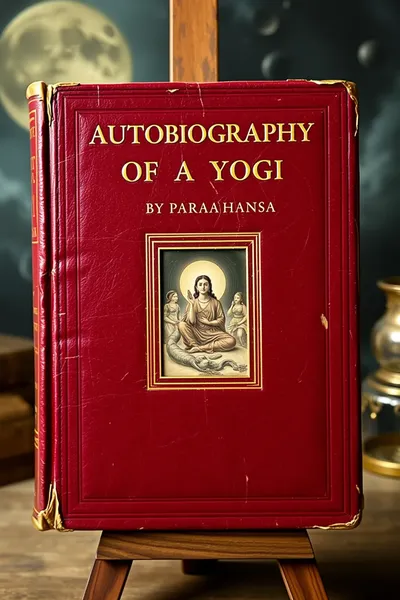
### Historical Context Paramhansa Yogananda (1893-1952) was a pivotal figure in introducing yoga and meditation to the West, particularly through his establishment of Self-Realization Fellowship in 1920. His lectures and writings, including the seminal "Autobiography of a Yogi" (1946), profoundly shaped the spiritual landscape of the 20th century. The "Sayings" reflect the period when Eastern philosophies gained significant traction among Western seekers, often in dialogue with burgeoning psychological and philosophical movements.
### Key Concepts The "Sayings" encapsulate Yogananda's philosophy, emphasizing the omnipresence of God, the potential for human spiritual evolution, and the practical techniques for achieving union with the Divine. Core concepts include the power of affirmation, the science of Kriya Yoga, the illusion of material reality, and the inherent divinity within every individual. These short pronouncements aim to provide immediate spiritual uplift and practical direction.
💡 Why Read This Book?
• Gain direct access to the distilled essence of Paramhansa Yogananda's teachings on spiritual realization, offering concise guidance that can be contemplated daily. • Understand the foundational principles of Kriya Yoga as presented by its foremost Western proponent, providing a unique perspective on yogic science. • Internalize the concept of "self-mastery" through Yogananda's direct admonitions, learning practical approaches to controlling the mind and emotions.
⭐ Reader Reviews
Honest opinions from readers who have explored this book.
❓ Frequently Asked Questions
What is the primary focus of the "Sayings of Paramhansa Yogananda"?
The book's primary focus is to present concise, impactful statements from Paramhansa Yogananda on spiritual life, meditation, and the attainment of divine consciousness, serving as a guide for seekers.
Is "Sayings of Paramhansa Yogananda" suitable for beginners in yoga?
Yes, while it benefits from familiarity with Yogananda's philosophy, the aphoristic style makes core concepts accessible to beginners interested in yogic principles.
When was Paramhansa Yogananda active in the West?
Paramhansa Yogananda began his public speaking tour in the United States in 1920, establishing Self-Realization Fellowship that same year.
Does this book explain the practice of Kriya Yoga in detail?
The "Sayings" touch upon Kriya Yoga principles but do not offer detailed instructional content; it focuses more on the philosophical and motivational aspects.
How does this book differ from "Autobiography of a Yogi"?
While the "Autobiography" provides a narrative of Yogananda's life and teachings, the "Sayings" offer direct, aphoristic wisdom intended for quick contemplation and application.
Are these quotes original to this publication?
The "Sayings" are compilations of statements made by Paramhansa Yogananda throughout his life and ministry, gathered and presented in this format.
🔮 Key Themes & Symbolism
Divine Omnipresence
A recurring theme is the inherent divinity within all beings and the universe itself. Yogananda stresses that God is not a distant entity but an ever-present reality, accessible through inner realization. The "Sayings" guide the practitioner to perceive this omnipresence, moving beyond the illusion of separation. This perspective challenges materialistic viewpoints by asserting a spiritual foundation for all existence, encouraging a constant awareness of the Divine in every atom and action.
The Science of Kriya Yoga
While not a manual, the aphorisms frequently allude to the efficacy of Kriya Yoga as a spiritual technology. This ancient technique, systematized by Yogananda for the modern age, is presented as a means to accelerate spiritual evolution and achieve direct communion with God. The "Sayings" emphasize its role in harmonizing life force and consciousness, offering glimpses into the power of breath control and mantra for inner transformation.
Self-Mastery and Willpower
Yogananda's collected sayings place significant emphasis on the individual's capacity for self-mastery. This involves disciplined control over the mind, emotions, and physical senses. The work highlights the power of focused intention and unwavering will in overcoming limitations and achieving spiritual goals. These pronouncements serve as directives for cultivating inner strength, asserting that true freedom lies in mastering one's internal landscape rather than external circumstances.
The Law of Causation
A fundamental concept woven through the "Sayings" is the immutable law of cause and effect. Yogananda asserts that individuals are the architects of their own destiny, responsible for the thoughts, words, and actions that shape their experiences. This principle underscores the importance of conscious living and ethical conduct, encouraging practitioners to align their intentions with divine principles to create positive outcomes and spiritual progress.
💬 Memorable Quotes
“Understand that the highest and lowest are but the same point in infinity.”
— This statement points to the non-dualistic nature of reality, suggesting that perceived opposites are merely different manifestations of a single, infinite source, accessible through spiritual insight.
“Be a creator, not a destroyer.”
— An exhortation to focus energy on constructive pursuits, positive creation, and spiritual growth, rather than succumbing to destructive impulses or negative thought patterns.
“The power of attention is the greatest power on earth.”
— This highlights the crucial role of focus and concentration in spiritual practice and in shaping one's reality, emphasizing that directing one's awareness is key to transformation.
“Joy is the infallible sign of the presence of God.”
— This suggests that true, unalloyed happiness is not a fleeting emotion but an indicator of spiritual connection and inner peace, a signpost on the path to divine realization.
“Desire only that which is eternal.”
— An invitation to transcend attachment to transient worldly pleasures and possessions, redirecting aspiration towards lasting spiritual truths and the Divine.
🌙 Esoteric Significance
Tradition
Yogananda's work is deeply rooted in the Sanatana Dharma (Hinduism), specifically within the Vaishnavite tradition and the lineage of Lahiri Mahasaya, revitalizing the ancient science of Kriya Yoga. It blends devotional aspects with practical yogic techniques, aiming for direct experience of the Divine rather than mere intellectual understanding. This approach positions his teachings within the broader spectrum of Indian contemplative traditions, adapted for Western accessibility.
Symbolism
The concept of "light" is a significant motif, representing divine consciousness and inner illumination achieved through meditation. "Breath" symbolizes prana, the vital life force that connects the physical and spiritual realms, and its control is central to yogic practice. The "Divine Mother" is invoked as the creative aspect of God, representing both the nurturing and transcendent qualities of the Absolute.
Modern Relevance
Contemporary spiritual teachers and yoga practitioners continue to draw inspiration from Yogananda's emphasis on meditation, divine love, and the potential for immediate spiritual realization. His teachings are particularly relevant to modern mindfulness practices and the ongoing integration of Eastern contemplative techniques into Western wellness and psychological frameworks.
👥 Who Should Read This Book
• Students of Kriya Yoga seeking concise reminders and affirmations of its core principles and benefits. • Individuals exploring comparative spirituality interested in the yogic path as presented by a key 20th-century exponent. • Seekers of direct spiritual guidance looking for aphoristic wisdom to contemplate and apply to daily life.
📜 Historical Context
Paramhansa Yogananda's teachings emerged during a period of significant Western interest in Eastern spirituality, particularly following World War I and leading up to the mid-20th century. His establishment of Self-Realization Fellowship in 1920 in Boston, later moving to Los Angeles, marked a crucial moment in the dissemination of yogic philosophy. Yogananda's work ran parallel to, and sometimes in dialogue with, the Theosophical Society's influence and the growing popularity of Vedanta, though his emphasis on Kriya Yoga offered a distinct practical methodology. His "Autobiography of a Yogi" (1946) became a foundational text for many, bridging Eastern esoteric traditions with Western audiences. While his approach was largely welcomed, it also existed within a cultural landscape where Eastern religions were often viewed with curiosity or skepticism, and Yogananda navigated this by presenting yoga as a scientific path to self-realization.
📔 Journal Prompts
Reflect on the "power of attention" as a tool for spiritual progress.
Consider the "law of causation" in relation to your personal experiences.
Analyze the concept of "self-mastery" presented in the sayings.
Explore the "joy" described as a sign of divine presence.
Contemplate the aspiration for that which is "eternal."
🗂️ Glossary
Kriya Yoga
An ancient yogic science, systematized by Paramhansa Yogananda, designed to accelerate spiritual evolution through specific techniques of pranayama (breath control) and meditation.
Prana
The vital life force or energy that pervades the universe, particularly in its connection to breath and consciousness in yogic philosophy.
Self-Realization
The ultimate goal of yoga; the direct, experiential knowledge of one's true nature as divine and one with God.
Divine Mother
In Hindu philosophy, the creative aspect of the Absolute, often personified as God's feminine, nurturing, and transcendent power.
Law of Causation
The principle that every effect has a cause, implying that individual actions, thoughts, and intentions are the causes of their life experiences.
Aphorism
A concise, pithy statement expressing a general truth or principle; a maxim.
Omnipresence
The quality of being present everywhere at the same time; ubiquity.