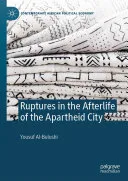
Ruptures in the Afterlife of the Apartheid City
 71
71

Ruptures in the Afterlife of the Apartheid City
Yousuf Al-Bulushi’s *Ruptures in the Afterlife of the Apartheid City* offers a sharp, unvarnished look at the persistent spatial inequalities in post-apartheid South Africa. The book’s strength lies in its grounded approach, directly connecting the lived experiences of shack dwellers with the machinations of municipal governance. Al-Bulushi avoids easy answers, instead presenting the complex interplay of historical legacies and present-day struggles for housing and basic survival. A particularly impactful section details the bureaucratic hurdles faced by informal settlement residents, illustrating how state apparatuses, even post-apartheid, can perpetuate marginalization. While the scope is ambitious, occasionally the dense theoretical framework, particularly concerning racial capitalism, might obscure the human element for readers less familiar with the discourse. Nevertheless, the work provides a vital, critical examination of ongoing resistance against systemic oppression.
This is a crucial, if challenging, dissection of urban inequality.
📝 Description
71
Yousuf Al-Bulushi's 2024 book analyzes the afterlife of apartheid's spatial segregation.
This book examines the ongoing struggle against spatial segregation and anti-Blackness inherited from apartheid South Africa. It focuses on how marginalized communities, particularly shack dwellers, engage with municipal governments to confront these legacies. The work connects local realities of survival and housing demands with broader national and global discussions on racial capitalism. It provides a lens to understand persistent inequalities and resistance in the post-apartheid era, emphasizing the material conditions of life for the poor.
Scholars and activists interested in post-colonial studies, urban planning, and critical geography will find this a useful resource. It is relevant for those studying social movements, housing rights, and the impact of historical injustices on contemporary urban environments. Readers concerned with racial capitalism and global struggles for liberation will benefit from its South African case study. The book addresses those seeking to understand the practical manifestations of systemic oppression and the strategies employed in its confrontation.
Published in 2024, the book emerges from a history of spatial planning designed to enforce racial segregation in South Africa. The legacy of these policies, particularly the creation of informal settlements, continues to shape urban landscapes and the lives of the poor. The work engages with contemporary scholarship on racial capitalism, influenced by thinkers like Cedric Robinson, and addresses the persistent challenges faced by Black South Africans in accessing basic services and secure housing.
While not explicitly a spiritualist text, the book engages with the concept of an 'afterlife' not in a supernatural sense, but as the enduring, persistent presence of apartheid's structures and ideologies in contemporary South African society. It examines how the ghosts of past policies continue to haunt the present, shaping material realities and social relations. The focus on how marginalized communities confront these lingering effects can be seen as a form of spiritual or existential resistance against forces that deny their full humanity and right to the city, echoing traditions that seek liberation from oppressive systems.
💡 Why Read This Book?
• Understand the specific ways apartheid's spatial segregation continues to manifest in South African cities, offering concrete examples of ongoing resistance and survival strategies, as explored in the discussions on shack dwellers. • Gain insight into the concept of racial capitalism by examining its practical impact on housing and municipal governance in a post-apartheid context, moving beyond theoretical discourse. • Learn from the South African experience how global movements against racial oppression can draw lessons from localized struggles for basic survival and urban justice.
⭐ Reader Reviews
Honest opinions from readers who have explored this book.
❓ Frequently Asked Questions
What is the primary focus of 'Ruptures in the Afterlife of the Apartheid City'?
The book examines how poor South Africans confront the enduring legacy of apartheid's spatial segregation and anti-Blackness, specifically focusing on the relationship between shack dwellers and municipal government.
When was 'Ruptures in the Afterlife of the Apartheid City' first published?
The book was first published on March 29, 2024.
Who is the author of 'Ruptures in the Afterlife of the Apartheid City'?
The author is Yousuf Al-Bulushi.
What broader theoretical frameworks does the book engage with?
It engages with discussions on racial capitalism, post-colonial studies, and critical geography, using the South African context to analyze global struggles against systemic oppression.
What specific aspect of South African life does the book analyze?
It analyzes the struggle for housing and basic survival among marginalized communities, particularly shack dwellers, and their interactions with municipal governments.
What can global movements learn from this book?
Global movements engaged in struggles against racial capitalism can learn from the South African experience concerning resistance strategies, the persistence of spatial segregation, and confronting systemic inequalities.
🔮 Key Themes & Symbolism
Persistent Spatial Segregation
The work meticulously details how the spatial divisions enforced during apartheid continue to structure urban life in South Africa, even after the formal end of the regime. It highlights the creation and maintenance of informal settlements and townships as direct descendants of this segregationist policy. The analysis connects these physical divisions to ongoing struggles for access to basic services, land, and dignity, demonstrating that the 'afterlife' of apartheid is deeply embedded in the city's physical and social geography.
Racial Capitalism and Resistance
Al-Bulushi situates the South African context within the broader framework of racial capitalism, arguing that the exploitation of Black labor and the dispossession of land are integral to the capitalist system. The book explores how marginalized communities resist these forces through collective action and negotiation with state authorities. It examines the complex dynamics of these struggles, showing how resistance is shaped by material conditions and the persistent legacy of racialized economic exploitation.
Municipal Governance and Shack Dwellers
A central theme is the fraught relationship between shack dwellers and municipal governments. The book investigates how local governance structures either perpetuate or potentially alleviate the challenges faced by informal settlement residents. It scrutinizes policies and practices related to housing, service delivery, and urban planning, revealing the power imbalances and the everyday struggles for recognition and basic rights within the formal administrative systems.
Global Solidarity and Local Struggles
The book posits that the South African experience offers valuable insights for global movements confronting racial capitalism and systemic inequality. By examining the specific tactics, challenges, and resilience of shack dwellers and their allies, Al-Bulushi provides a case study for understanding how localized struggles for survival and justice can inform broader international efforts. It underscores the interconnectedness of anti-colonial and anti-racist struggles worldwide.
💬 Memorable Quotes
Direct passages from the work, attributed to the author.
“The persistence of spatial segregation in post-apartheid cities.”
— This highlights the enduring physical and social divisions created by apartheid that continue to shape urban environments and the lives of marginalized populations, despite political changes.
“Confronting the legacies of anti-Blackness through housing struggles.”
— This emphasizes how the fight for basic necessities like housing becomes a direct confrontation with systemic anti-Black racism and its historical roots.
“Shack dwellers' engagement with municipal government.”
— This points to the complex and often contentious interactions between informal settlement residents and official state bodies regarding land, services, and urban policy.
“Lessons for global movements against racial capitalism.”
— This suggests that the specific strategies and challenges faced in South Africa offer applicable insights for broader international struggles against economic and racial exploitation.
“The materiality of survival in the apartheid city's afterlife.”
— This underscores the focus on concrete, lived experiences and the fundamental need for survival within urban spaces still shaped by the oppressive structures of the past.
🌙 Esoteric Significance
Tradition
While not explicitly tied to a single esoteric lineage, the work appeals to traditions that analyze power structures and societal transformation through a critical, often materialist lens. It shares common ground with certain strands of Gnosticism that critique oppressive worldly systems and seek liberation from imposed structures. The focus on uncovering hidden truths about power, inequality, and the subjective experience of oppression aligns with the investigative spirit found in many esoteric traditions that seek to deconstruct dominant narratives and reveal underlying spiritual or societal malaise.
Symbolism
The 'Apartheid City' itself functions as a potent symbol of systemic division, alienation, and imposed order, representing a physical manifestation of spiritual or societal fragmentation. 'Ruptures' symbolize moments of breakthrough, resistance, and the potential for transformation within these oppressive structures. Shack dwellers can be interpreted as symbols of resilience and the fundamental human drive for shelter and community, often existing in liminal spaces outside the formal, imposed order of the city, representing a raw, unmediated connection to survival.
Modern Relevance
Contemporary thinkers engaged with critical urban studies, decolonial theory, and radical geography draw on the analytical frameworks presented in this work. Scholars examining housing crises, gentrification, and the intersection of race and class in global cities find Al-Bulushi's approach particularly relevant. The book’s methodology, which grounds theoretical analysis in the lived experiences of marginalized communities, informs contemporary activist research and community-organizing efforts focused on social justice and equitable urban development worldwide.
👥 Who Should Read This Book
• Scholars of post-colonial studies and critical geography: Gain a nuanced understanding of how historical segregation continues to shape contemporary urban environments and resistance movements. • Activists and organizers in housing and social justice movements: Learn from the specific strategies and challenges faced by shack dwellers in South Africa and their engagement with municipal power structures. • Students and researchers of racial capitalism: Examine a concrete case study illustrating the intersection of race, class, and economic exploitation in an urban setting, moving beyond abstract theory.
📜 Historical Context
Yousuf Al-Bulushi’s *Ruptures in the Afterlife of the Apartheid City*, published in 2024, arrives in an era intensely focused on the enduring impacts of colonial and apartheid-era policies. The intellectual currents it engages with include critical geography, post-colonial theory, and scholarship on racial capitalism, building upon the foundational work of thinkers like Cedric Robinson, who published his seminal *Black Marxism* in 1983. The book addresses the persistent spatial segregation that characterized apartheid South Africa, a system designed to maintain white minority rule through the physical separation of races. Despite the democratic transition in 1994, the book highlights how these spatial divisions continue to shape urban landscapes, particularly affecting Black South Africans through the proliferation of informal settlements. The work implicitly engages with contemporary debates surrounding land reform and equitable urban development, positioning itself against neoliberal urban planning models that often exacerbate inequality. Its significance lies in connecting localized struggles for housing and survival to broader theoretical discussions on systemic oppression.
📔 Journal Prompts
The materiality of survival in the apartheid city's afterlife.
Ruptures in the spatial segregation of post-apartheid urban landscapes.
Shack dwellers' negotiations with municipal government structures.
The persistent legacies of anti-Blackness in urban planning.
Connecting local struggles for housing to global movements against racial capitalism.
🗂️ Glossary
Apartheid City
Refers to the urban environments in South Africa shaped by the apartheid regime's policies of racial segregation, spatial control, and dispossession, and their continuing influence post-1994.
Shack Dwellers
Inhabitants of informal housing settlements, often characterized by precarious living conditions and a lack of access to basic municipal services, who are central to the book's analysis of urban struggle.
Racial Capitalism
A theoretical framework that posits racism is not separate from capitalism but is integral to its historical development and functioning, particularly concerning exploitation and accumulation.
Spatial Segregation
The enforced or de facto separation of different racial or social groups into distinct residential areas, a key feature of apartheid urban planning with lasting effects.
Municipal Government
The local administrative bodies responsible for managing city services, planning, and governance, often acting as a site of conflict and negotiation for marginalized communities.
Anti-Blackness
Systemic prejudice, discrimination, and antagonism directed against Black people, rooted in historical power structures and manifested in social, economic, and political spheres.
Afterlife of Apartheid
The continued existence and influence of apartheid's social, economic, and spatial structures and ideologies in contemporary South Africa.