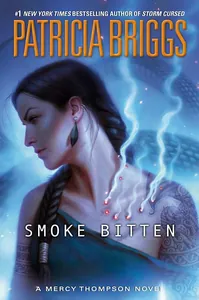
River Marked

 80
80

River Marked
Patricia Briggs' "River Marked" offers a compelling, if familiar, entry into the urban fantasy landscape. The novel excels in its depiction of Mercy Thompson, a protagonist who feels both grounded and extraordinary. Her pragmatic approach to running a garage and her internal struggles with her coyote nature provide a refreshing contrast to the high-stakes supernatural drama unfolding around her. A particular strength lies in the nuanced portrayal of werewolf pack politics, which feels intricate and earned. However, the romantic entanglements, while central to the plot, occasionally overshadow the more intriguing world-building elements. The introduction of the "fae" in this installment, while adding a new layer of threat, feels somewhat underdeveloped, serving more as a plot device than fully realized characters. Despite these minor criticisms, Briggs delivers a solid installment that expands the series' mythology and character relationships, culminating in a satisfying, albeit predictable, resolution to the central conflict. It's a well-executed example of its genre.
📝 Description
80
### What It Is
Patricia Briggs' "River Marked," first published in 2011, is a paranormal romance novel that delves into the life of Mercedes "Mercy" Thompson. Mercy is a shapeshifter, specifically a coyote, living in the Tri-Cities area of Washington state. The novel is part of a larger series, following Mercy as she navigates a world populated by werewolves, vampires, and other supernatural beings, all while maintaining her independent garage business.
### Who It's For
This book is tailored for readers who enjoy urban fantasy with a strong romantic subplot. Fans of character-driven narratives, complex supernatural politics, and a protagonist who is both tough and vulnerable will find "River Marked" engaging. It appeals to those interested in exploring themes of identity, loyalty, and the challenges of balancing personal desires with the demands of a dangerous, hidden world.
### Historical Context
Published in 2011, "River Marked" emerged during a period of significant popularity for urban fantasy and paranormal romance. This genre saw a surge following successes like Laurell K. Hamilton's Anita Blake series and Charlaine Harris's Sookie Stackhouse novels. Briggs' work positioned itself within this landscape by offering a distinct protagonist and a focus on coyote shapeshifting, a less common trope than vampires or werewolves at the time.
### Key Concepts
The narrative explores the concept of "pack" dynamics among werewolves, highlighting the intricate social hierarchies and territorial disputes. It also examines the nature of "fae" or faerie, introducing them as ancient, powerful, and often capricious entities with their own rules and agendas. Mercy's own coyote nature and her struggle for independence against these established supernatural powers form a central thematic element.
💡 Why Read This Book?
• You will gain insight into the complex social structures and territorial disputes of werewolf packs, as depicted in the "pack" dynamics explored in "River Marked." • You will experience the unique challenges faced by a coyote shapeshifter navigating a world of ancient fae and established supernatural politics, a central theme in Mercy's struggle for autonomy. • You will understand the blending of mundane life with supernatural intrigue, exemplified by Mercy's dual existence as a garage owner and a supernatural being in the Tri-Cities.
⭐ Reader Reviews
Honest opinions from readers who have explored this book.
❓ Frequently Asked Questions
What is the main supernatural species in "River Marked"?
"River Marked" primarily features coyotes (the protagonist, Mercy Thompson), werewolves, and vampires, with a significant introduction to the fae as well.
Where is "River Marked" set?
The novel is set in the Tri-Cities area of Washington state, a region that includes Kennewick, Pasco, and Richland.
Is "River Marked" part of a series?
Yes, "River Marked" is the sixth novel in Patricia Briggs' Mercy Thompson series, first published in 2011.
What is Mercy Thompson's unique ability?
Mercy Thompson is a coyote shapeshifter, capable of transforming into her coyote form and possessing enhanced senses and agility.
Who are the main supernatural factions in the book?
The main supernatural factions include werewolves, vampires, and the fae, each with their own distinct territories and political structures.
What is the significance of the "fae" in "River Marked"?
The fae are presented as ancient, powerful, and often dangerous beings who play a crucial role in the novel's central conflict, introducing a new layer of supernatural threat.
🔮 Key Themes & Symbolism
Pack Dynamics and Loyalty
The novel meticulously details the intricate social hierarchies and loyalties within werewolf packs. Briggs explores how these structures influence individual behavior, territorial disputes, and alliances. Mercy, as an outsider and a coyote, often finds herself caught in the middle of these complex relationships, forcing her to question where her own loyalties lie and the true meaning of belonging. The concept of 'pack' extends beyond just werewolves, touching on the found families and chosen allegiances within the supernatural community.
Identity and Belonging
Mercy Thompson's identity as a coyote shapeshifter is central to the narrative. She grapples with her dual nature, balancing her human life as a mechanic with her supernatural instincts and heritage. The book examines the challenges of fitting into a world dominated by older, more established supernatural beings like vampires and fae. Her struggle for independence and self-definition against external pressures highlights themes of self-acceptance and the search for a place to belong, even when that place is unconventional.
Supernatural Politics and Territory
"River Marked" delves into the often-unseen political landscape of the supernatural world. Territories are fiercely guarded, treaties are fragile, and power struggles are constant. The introduction of the fae adds a new dimension to these conflicts, revealing ancient rivalries and a different form of power. Mercy's garage serves as a neutral ground, yet she is inevitably drawn into these dangerous games, highlighting the precarious balance between the human and supernatural realms and the constant threat of exposure or conflict.
The Nature of Fae
This installment significantly expands on the presence and nature of the fae. Briggs portrays them not as benevolent sprites but as ancient, powerful, and often capricious beings with their own inscrutable motivations and laws. Their involvement introduces an element of unpredictable danger, distinct from the more established werewolf and vampire politics. The fae represent a force that operates on a different level, challenging Mercy's understanding of the supernatural world and its inhabitants.
💬 Memorable Quotes
“Mercy's internal monologue about her coyote instincts.”
— This reflects Mercy's constant negotiation between her human self and her animalistic nature, a core aspect of her character development throughout the series.
“A werewolf leader discussing territorial boundaries.”
— This highlights the pervasive theme of territory and power struggles among supernatural factions, crucial to the ongoing conflicts in the Mercy Thompson universe.
“A fae character speaking in riddles or ancient terms.”
— This illustrates the alien and often incomprehensible nature of the fae, emphasizing their ancient power and detachment from mortal concerns.
“Mercy's pragmatic assessment of a dangerous supernatural situation.”
— This showcases Mercy's resilience and her ability to approach even life-threatening scenarios with a grounded, problem-solving mindset, characteristic of her personality.
“Discussion of the 'pack' as a family unit.”
— This emphasizes the strong themes of loyalty, belonging, and chosen family that run through the series, extending beyond biological ties.
🌙 Esoteric Significance
Tradition
While "River Marked" is primarily categorized as urban fantasy and paranormal romance, its exploration of shapeshifting, pack mentality, and ancient beings like the fae touches upon themes found in various esoteric traditions. The concept of the fae, in particular, echoes folkloric and occult beliefs regarding nature spirits and elemental beings. The series engages with archetypal energies and the idea of a hidden world coexisting with our own, aligning loosely with certain Hermetic principles of correspondence and the existence of multiple planes of reality.
Symbolism
The coyote, as Mercy's primary form, symbolizes adaptability, cunning, and survival – traits often associated with trickster figures in mythology and esoteric lore. Werewolf packs represent primal instincts, community bonds, and territoriality, reflecting aspects of the primal self and the shadow. The fae, in their capricious and powerful nature, can be seen as embodying ancient, untamed natural forces or even psychic energies that operate beyond human comprehension or control, reminiscent of elemental spirits.
Modern Relevance
Contemporary practitioners of modern witchcraft, shamanism, and animism may find resonance in the series' portrayal of animal spirits and the inherent power within the natural world. The focus on shapeshifting and connecting with animal totems aligns with certain neopagan and eclectic spiritual paths. Furthermore, the exploration of supernatural politics and hidden societies mirrors societal anxieties and fascination with secret knowledge and power structures, making the themes accessible to readers interested in comparative mythology and contemporary spiritual exploration.
👥 Who Should Read This Book
• Readers interested in shapeshifter lore: Those fascinated by the mythos and practicalities of transforming into animal forms, particularly coyotes, will find Mercy's journey compelling. • Fans of werewolf and vampire fiction: Individuals who enjoy complex pack dynamics, vampire hierarchies, and inter-species conflict will appreciate the established supernatural world. • Urban fantasy enthusiasts seeking character depth: Readers who value strong protagonist development, witty dialogue, and a blend of mundane and magical elements will find "River Marked" satisfying.
📜 Historical Context
Published in 2011, "River Marked" arrived during a peak period for urban fantasy, a genre that had solidified its place in popular literature following the success of authors like Laurell K. Hamilton and Charlaine Harris. Briggs' Mercy Thompson series, initiated in 2006, distinguished itself by focusing on a coyote shapeshifter protagonist and incorporating complex werewolf lore. The early 2010s saw a proliferation of paranormal romance and urban fantasy, with publishers actively seeking new voices. While the genre faced criticism for formulaic elements, authors like Briggs managed to carve out distinct niches. "River Marked" specifically introduced a more prominent role for the fae, adding a layer of ancient, often capricious power dynamics that contrasted with the more established vampire and werewolf narratives of the time. Its reception was largely positive among fans of the series, reinforcing its position within the contemporary urban fantasy landscape without significant controversy or censorship.
📔 Journal Prompts
Mercy's dual existence as coyote and mechanic.
The rules and consequences of fae interactions.
The concept of 'pack' loyalty versus individual desire.
Challenges of maintaining autonomy in a supernatural world.
Symbolism of the coyote in relation to Mercy's choices.
🗂️ Glossary
Shapeshifter
An individual possessing the ability to transform between human and animal forms, or sometimes into multiple animal forms. In "River Marked," the protagonist Mercy is a coyote shapeshifter.
Coyote
A specific type of shapeshifter in this series, known for their adaptability, independence, and keen senses. Mercy Thompson's primary animal form is a coyote.
Werewolf
A supernatural being capable of transforming into a wolf, often associated with lunar cycles and pack structures. The series features complex werewolf communities.
Vampire
An undead creature traditionally believed to sustain itself by feeding on the life essence (typically blood) of the living. They are depicted with distinct social structures in the series.
Fae
Short for faerie, these are ancient, powerful, and often capricious supernatural beings with their own realms and rules, distinct from werewolves and vampires.
Pack
In the context of "River Marked," this refers to the social and political unit of werewolves, characterized by hierarchy, loyalty, and territorial claims.
Tri-Cities
The geographical setting for the novel, referring to the conjoined cities of Kennewick, Pasco, and Richland in Washington state.