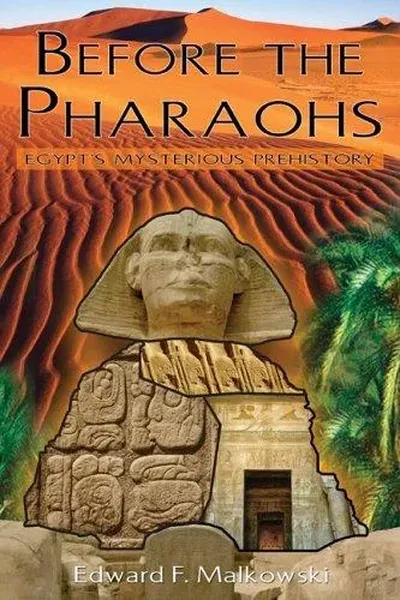
Pyramid Builders

 71
71

Pyramid Builders
Carter Smith's "Pyramid Builders" is an ambitious attempt to reframe our understanding of ancient Egyptian monumental architecture. The book’s strength lies in its persistent questioning of orthodox Egyptology, daring to suggest a more profound, esoteric purpose behind the pyramids. Smith excels at connecting the physical dimensions of these structures to symbolic interpretations, particularly the concept of the 'Cosmic Blueprint.' However, the work occasionally falters by presenting speculative theories with an assertive tone, sometimes lacking the rigorous evidential support one might expect from a critical historical analysis. A passage discussing the precise alignment of the Great Pyramid with the Orion correlation, while intriguing, could benefit from a more nuanced presentation of the supporting astronomical data. Despite these limitations, "Pyramid Builders" offers a compelling alternative perspective for those disillusioned with conventional narratives.
📝 Description
71
Carter Smith's 2001 book, Pyramid Builders, argues ancient pyramids embody esoteric principles, not just engineering.
Published in 2001, Carter Smith's "Pyramid Builders" examines the construction of ancient Egyptian pyramids. Smith proposes these structures are not solely engineering achievements but rather manifestations of esoteric principles. The precise alignment, geometry, and scale of the pyramids, he argues, reflect a sophisticated understanding of cosmic order and spiritual aims. The book moves past conventional Egyptology, suggesting the builders held knowledge now lost to modern scholarship. Smith focuses on the symbolic language integrated into the architecture, questioning mainstream interpretations of these historical sites. It appeals to those seeking alternative perspectives on the motivations and capabilities of ancient civilizations, seeing more than just stone and mortar in the Giza plateau.
Emerging in the early 21st century, "Pyramid Builders" fits within a tradition of interpreting ancient Egyptian structures through a mystical lens. It follows earlier works that sought to uncover hidden meanings in Egyptian culture. Smith's book engages with the growing interest in alternative theories about ancient civilizations and builds upon discussions around archaeoastronomy. It attempts to synthesize esoteric philosophy with archaeological findings, positing a lost, advanced knowledge base for the pyramid builders.
💡 Why Read This Book?
• Gain insight into the 'Cosmic Blueprint' theory, understanding how celestial patterns might have informed pyramid construction dates and alignments, offering a unique perspective beyond mere astronomical observation. • Explore the 'Sacred Geometry' as detailed by Smith, learning how specific ratios and dimensional relationships within the pyramids are interpreted as reflections of universal laws and esoteric principles. • Understand the 'Initiatory Function' proposed for the pyramids, grasping the idea that these structures may have served as physical conduits for spiritual transformation, a concept distinct from purely funerary interpretations.
⭐ Reader Reviews
Honest opinions from readers who have explored this book.
❓ Frequently Asked Questions
What esoteric principles does Carter Smith explore in "Pyramid Builders"?
Smith's work focuses on concepts like the 'Cosmic Blueprint,' suggesting pyramids mirror celestial order, and 'Sacred Geometry,' where proportions hold symbolic meaning. He also examines the potential 'Initiatory Function' of pyramids as sites for spiritual development.
When was "Pyramid Builders" first published?
The book "Pyramid Builders" by Carter Smith was first published in 2001.
Does "Pyramid Builders" offer a conventional Egyptological viewpoint?
No, "Pyramid Builders" deliberately moves beyond conventional Egyptology. It proposes that the pyramids were built not just for pharaohs but also as manifestations of esoteric knowledge and spiritual purposes.
What is the 'Cosmic Blueprint' concept in the book?
The 'Cosmic Blueprint' refers to the idea that the design and placement of the pyramids were intended to reflect and harmonize with cosmic order and celestial arrangements, acting as terrestrial representations of divine patterns.
Who would find "Pyramid Builders" most interesting?
Readers interested in esoteric studies, Hermeticism, archaeoastronomy, comparative mythology, and alternative historical interpretations of ancient Egypt will find this book particularly engaging.
What distinguishes this book from standard historical accounts of pyramid construction?
Unlike standard accounts focusing solely on engineering and labor, "Pyramid Builders" emphasizes the symbolic, spiritual, and potentially initiatory roles of the pyramids, linking them to lost esoteric wisdom.
🔮 Key Themes & Symbolism
The Cosmic Blueprint
This theme posits that the construction of Egyptian pyramids was guided by an understanding of universal cosmic order. Smith argues that the precise placement, orientation, and timing of these structures were not arbitrary but deliberately aligned with celestial phenomena. The pyramids, in this view, function as terrestrial anchors or mirrors of heavenly patterns, intended to channel or embody cosmic energies. This concept suggests a sophisticated, perhaps divinely inspired, blueprint that guided the builders, moving beyond purely practical or religious motivations to a cosmic integration of earth and sky.
Sacred Geometry in Architecture
The book explores the idea that the dimensions, proportions, and geometric relationships within the pyramids are not accidental but imbued with profound symbolic meaning. Smith suggests that specific ratios and forms were employed because they were believed to resonate with fundamental laws of the universe. This sacred geometry served as a visual language, communicating esoteric truths and facilitating a connection between the material and spiritual realms. The application of these geometric principles aimed to imbue the structures with specific energetic qualities and divine resonance.
Initiatory Function and Lost Knowledge
A central theme is the interpretation of pyramids as sites for spiritual initiation and the transmission of esoteric knowledge. Smith proposes that these structures were designed not only as tombs but as complex psycho-spiritual apparatuses. They may have served as centers for mystery schools, where initiates underwent transformative experiences. This perspective implies that the builders possessed advanced knowledge, including psychospiritual techniques and understanding of consciousness, which has largely been lost to modern civilization.
Beyond Funerary Interpretations
This theme challenges the conventional view of pyramids solely as tombs for pharaohs. Smith argues that while funerary aspects may exist, they are secondary to a more significant, esoteric purpose. The grandeur and precision of pyramid construction point towards motivations far beyond mere commemoration of a ruler. The book encourages readers to consider these monuments as active spiritual tools or cosmic engines, designed for purposes related to consciousness, energy, and universal alignment, rather than passive resting places.
💬 Memorable Quotes
“The stones remember the stars.”
— This evocative phrase suggests that the very material of the pyramids holds a latent memory or connection to the celestial bodies they were aligned with, implying a profound cosmic imprint on their construction.
“Alignment is not coincidence, but intention.”
— This highlights Smith's central argument that the precise orientation of the pyramids with astronomical phenomena was a deliberate act, reflecting a conscious esoteric design rather than accidental observation.
“Geometry is the language of creation.”
— This interpretation emphasizes the belief that mathematical and geometric principles are fundamental to the structure of reality itself, and that the builders used this language to embed divine order into their constructions.
“The pyramid is a key, not a lock.”
— This suggests that the pyramid's purpose was to unlock understanding or access to higher realms, rather than being a closed tomb or a final resting place. It implies an active, functional role in spiritual or cosmic processes.
“We build what we understand of the heavens.”
— This paraphrase points to the idea that the builders' terrestrial creations directly reflected their comprehension of the cosmos, acting as physical manifestations of their astronomical and spiritual knowledge.
🌙 Esoteric Significance
Tradition
The work aligns primarily with Hermetic and esoteric philosophical traditions that seek universal principles underlying creation. It echoes Neoplatonic ideas of a divine order reflected in the material world and Gnostic concepts of hidden knowledge. "Pyramid Builders" departs from purely historical or archaeological frameworks by positing that ancient monumental architecture served purposes related to consciousness, cosmic resonance, and spiritual evolution, a characteristic hallmark of esoteric inquiry.
Symbolism
Key symbols explored include the pyramid itself, representing the ascent from the material to the spiritual and the convergence of terrestrial and celestial energies. Celestial bodies, particularly stars like Orion and Sirius, are presented as critical reference points, indicating a profound connection between the pyramids and cosmic cycles. The concept of sacred geometry, through specific ratios and alignments, symbolizes the underlying mathematical harmony of the universe, acting as a divine signature embedded in stone.
Modern Relevance
Contemporary practitioners of Western Esotericism, particularly those interested in Hermeticism, sacred geometry, and archaeoastronomy, continue to draw inspiration from Smith's interpretations. His work informs discussions within groups focused on consciousness studies and alternative perspectives on ancient civilizations. The book's ideas resonate with modern movements seeking to reconnect with ancient wisdom traditions and explore the potential energetic and spiritual functions of historical sites, influencing contemporary spiritual and philosophical exploration.
👥 Who Should Read This Book
• Students of Hermeticism and ancient mystery traditions looking for an alternative interpretation of monumental architecture as a vehicle for esoteric knowledge. • Archaeology enthusiasts and researchers interested in archaeoastronomy and unconventional theories regarding the capabilities and knowledge of ancient builders. • Individuals seeking to understand the symbolic and spiritual dimensions of ancient sites, moving beyond purely historical or funerary explanations towards a more cosmic perspective.
📜 Historical Context
Published in 2001, Carter Smith's "Pyramid Builders" emerged during a period of renewed popular interest in ancient mysteries and alternative history. This era saw the proliferation of theories concerning advanced ancient civilizations, often fueled by internet forums and accessible media. Smith's work engaged with the intellectual currents that questioned orthodox archaeology, following in the footsteps of earlier thinkers like Helena Blavatsky and Graham Hancock, who explored non-traditional interpretations of ancient sites. While mainstream Egyptology focused on established chronologies and archaeological evidence, "Pyramid Builders" tapped into a burgeoning audience seeking esoteric explanations. The book contributed to a broader discourse that included archaeoastronomy, which began to be more widely considered, albeit cautiously, by some academics, and the ongoing fascination with Hermetic philosophy's influence on ancient thought.
📔 Journal Prompts
The Pyramid Builders' adherence to the 'Cosmic Blueprint': explore its implications for intentional design.
Reflect on the concept of 'Sacred Geometry' and its potential role in shaping consciousness.
Consider the 'Initiatory Function' proposed for pyramids; what might such an initiation entail?
Analyze the departure from purely funerary interpretations; what alternative purposes are suggested?
The stones remembering the stars: contemplate the symbolic meaning of this phrase in relation to ancient alignment.
🗂️ Glossary
Cosmic Blueprint
The idea that the design and construction of the pyramids were based on an understanding of universal cosmic order and celestial patterns, serving as a terrestrial manifestation of divine principles.
Sacred Geometry
The belief that specific geometric shapes, ratios, and proportions possess symbolic and energetic significance, reflecting fundamental laws of the universe and used to imbue structures with spiritual power.
Initiatory Function
The theory that pyramids served as sites for spiritual initiation, akin to mystery schools, where individuals could undergo transformative experiences and receive hidden knowledge.
Archaeoastronomy
The interdisciplinary study of how people in the past understood astronomical phenomena and how these understandings influenced their cultures, often applied to the alignment of ancient structures.
Hermeticism
A philosophical and religious tradition based on writings attributed to Hermes Trismegistus, emphasizing divine wisdom, the interconnectedness of all things, and the potential for human spiritual ascent.
Esoteric
Relating to or accessible only by a select group of initiated people; concerning or relating to the occult or mystical.
Alignment
The precise positioning of a structure in relation to celestial bodies or cardinal directions, often interpreted as having symbolic or energetic significance in esoteric contexts.