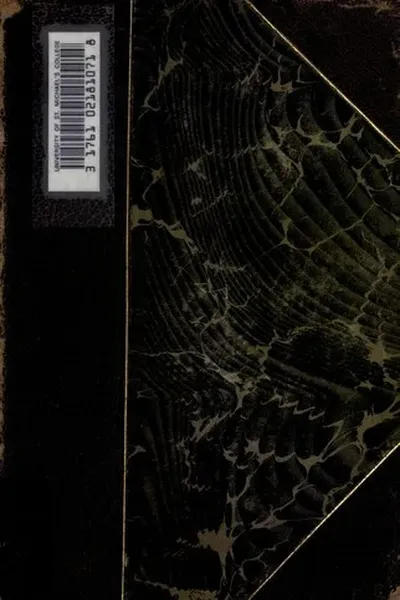
Phantastes

 77
77

Phantastes
George MacDonald's Phantastes is less a novel and more a waking dream, a peculiar landscape of the soul rendered in prose. The book's most striking quality is its relentless, almost disorienting, allegorical logic. Anodos's passage through Fairy, where shadows whisper and furniture has opinions, is a masterclass in symbolic narrative. The depiction of the spectral Lady of the White Forest, for instance, is a potent symbol of idealized beauty and the dangers of misplaced devotion. However, the very dreamlike quality that gives the book its power also presents a significant hurdle. The narrative can feel meandering, and the philosophical points, while profound, are sometimes obscured by the sheer density of symbolism. MacDonald’s prose, while often beautiful, can also become dense, requiring considerable readerly effort to unpack. A passage where Anodos encounters the murmuring trees, each expressing their silent, ancient grief, exemplifies this potent yet challenging blend. Phantastes is a singular achievement, a work that demands patience but rewards it with a unique vision of the spiritual journey.
📝 Description
77
George MacDonald published Phantastes in 1858, a tale of Anodos's dreamlike passage through Fairy.
Phantastes recounts Anodos's journey into the land of Fairy, a place that mirrors his inner life. This is not a simple adventure but a symbolic landscape where abstract ideas and moral choices take physical form. MacDonald structures the narrative with the fluid, unpredictable logic of dreams, shifting scenes and characters in ways that challenge linear understanding. The story grapples with themes of self-knowledge, the nature of reality, and the conflict between spiritual desires and worldly enticements. MacDonald uses allegorical elements to question perception and the soul's development.
Readers will find Phantastes engages the imagination while prompting reflection on consciousness and spiritual growth. It appeals to those who appreciate fantasy that carries philosophical weight, particularly stories with a Christian mystical perspective. Those seeking narratives that explore symbolic dimensions rather than direct action will connect with Anodos's experiences. The book's literary lineage is evident in its influence on later writers of fantasy.
Published during a period of significant spiritual and intellectual exploration in Victorian Britain, Phantastes reflects MacDonald's unique blend of Christian mysticism and Romantic idealism. While movements like Spiritualism and Theosophy gained attention, MacDonald's work offers a more personal, allegorical approach to spiritual truths. It draws on a tradition of visionary literature that uses fantasy to explore the inner life and the relationship between the material and spiritual worlds, often emphasizing the soul's journey toward greater understanding and divine connection.
💡 Why Read This Book?
• Understand the concept of the 'Pilgrim Soul' through Anodos's trials, learning how spiritual growth is depicted as a journey through allegorical landscapes, a core idea in many esoteric traditions. • Experience the symbolic representation of abstract virtues and vices as characters and events, such as the perilous nature of idealized beauty represented by the Lady of the White Forest. • Grasp MacDonald's unique fusion of Christian theology and Platonic idealism by witnessing how the material world in Fairy reflects a deeper spiritual reality, a concept explored in his 1920 publication.
⭐ Reader Reviews
Honest opinions from readers who have explored this book.
❓ Frequently Asked Questions
What is the primary allegorical meaning of Anodos's journey in Phantastes?
Anodos's journey represents the soul's pilgrimage towards spiritual maturity. He encounters various trials and illusions in the land of Fairy, symbolizing the challenges and temptations faced in the pursuit of higher understanding and self-realization.
Who was George MacDonald and what was his significance in literature?
George MacDonald (1824-1905) was a Scottish novelist, poet, and minister. He is considered a pioneer of modern fantasy literature, influencing writers like C.S. Lewis and J.R.R. Tolkien with his imaginative depth and theological allegories.
What is the role of symbolism in Phantastes?
Symbolism is central to Phantastes, with characters, objects, and landscapes representing spiritual concepts, moral states, and psychological truths. The book invites readers to interpret these symbols to uncover deeper layers of meaning.
Is Phantastes considered an esoteric text?
Yes, Phantastes is often regarded as esoteric due to its deep allegorical nature, symbolic language, and exploration of spiritual and psychological themes that go beyond literal interpretation, resonating with mystical traditions.
When was Phantastes first published?
Phantastes was first published in 1858. The edition referenced here is from 1920, indicating a later printing or edition of this influential work.
What is the 'land of Fairy' in the context of Phantastes?
The 'land of Fairy' in Phantastes is not a literal place but a symbolic realm representing the inner world, the subconscious, or a spiritual dimension where one's true nature and inner conflicts are revealed and confronted.
🔮 Key Themes & Symbolism
The Soul's Pilgrimage
Anodos's journey through the land of Fairy serves as a profound metaphor for the spiritual journey of the soul. Each encounter and challenge represents a stage of inner development, from grappling with illusions and temptations to achieving a more authentic self. The work maps the internal landscape where virtue is tested and true understanding is forged, mirroring concepts found in Gnostic and Neoplatonic thought regarding the soul's descent and ascent.
Illusion vs. Reality
Phantastes constantly blurs the lines between what is real and what is illusory, reflecting a core esoteric concern with the nature of perception. The dreamlike logic of Fairy suggests that the material world as commonly perceived is merely a shadow of a deeper, spiritual reality. Anodos must learn to discern true essence from deceptive appearances, a process vital for spiritual awakening and understanding the divine order.
The Nature of Love and Beauty
The narrative explores the complexities of love and beauty, particularly through figures like the spectral Lady of the White Forest. MacDonald presents idealized beauty as potentially dangerous if pursued for selfish reasons, contrasting it with a more profound, self-sacrificing love. This theme looks at the esoteric understanding of divine love as the ultimate reality and the transformative power it holds.
The Inner World
The land of Fairy functions as a symbolic representation of the human psyche and the inner spiritual realm. MacDonald suggests that the external world is a projection of our internal state, and that true transformation occurs through inner work. This aligns with Hermetic principles that emphasize 'As Above, So Below,' where the microcosm of the individual reflects the macrocosm of the universe.
💬 Memorable Quotes
Direct passages from the work, attributed to the author.
“The world is full of magical things, patiently waiting for our wits to grow sharper.”
— This highlights MacDonald's view of an enchanted universe, teeming with spiritual significance that is often obscured by mundane perception. It suggests that spiritual awareness is a matter of developing inner perception, not external discovery.
“For love is the true reason of the existence of the universe.”
— This statement captures a core tenet of MacDonald's philosophy, aligning with mystical traditions that posit divine love as the fundamental creative force and ultimate reality underlying all existence.
“We must not judge of our own worth by the number of our followers, but by the quality of our discipleship.”
— This speaks to the esoteric principle of inner authenticity over external validation. True spiritual progress is measured by one's commitment and internal transformation, not by superficial recognition or popularity.
“The shadows of the trees fell upon the grass, and the shadows of the leaves fell upon the shadows of the trees.”
— This evocative imagery suggests layers of reality and illusion. It implies that what we perceive as 'real' may itself be a shadow of something more fundamental, a concept explored in Platonic philosophy and various mystical doctrines.
💡 Key Ideas
Editorial paraphrase of the work's core concepts — not direct quotes.
He was in a great hall, and at the end of it was a door, and over the door was written: "This is the way to the kingdom of the blessed."
This passage signifies the often-hidden and seemingly simple path to spiritual enlightenment. The 'door' represents an opportunity for transcendence, accessible to those who recognize it and possess the will to pass through.
🌙 Esoteric Significance
Tradition
Phantastes draws heavily from Christian Platonism and Neoplatonism, traditions that seek to reconcile Christian theology with Platonic philosophy. It explores the concept of a spiritual reality underlying the material world, the soul's journey towards divine union, and the symbolic nature of existence. MacDonald's work can be seen as a literary manifestation of these esoteric currents, offering a narrative path to understanding spiritual truths through allegory and myth.
Symbolism
Key symbols include the land of Fairy itself, representing the inner spiritual landscape or the field of imagination and spiritual law. The spectral Lady of the White Forest symbolizes idealized beauty and the potential for its misuse in the pursuit of egoistic desire. Anodos's transformation throughout his journey signifies the soul's purification and growth, moving from self-centeredness towards selfless love and true understanding.
Modern Relevance
Contemporary thinkers and writers exploring archetypal psychology, Jungian analysis, and modern fantasy literature often revisit MacDonald's work. His sophisticated use of allegory and exploration of the subconscious mind continue to inform discussions on mythology, spirituality, and the human condition. Modern practitioners of contemplative spirituality may find resonance in his depiction of inner landscapes and the transformative power of love.
👥 Who Should Read This Book
• Students of comparative mythology and comparative religion seeking to understand the integration of Christian mysticism with fairy tale traditions. • Aspiring writers and readers of fantasy who wish to explore the roots of modern allegorical fantasy, particularly those influenced by C.S. Lewis and J.R.R. Tolkien. • Individuals interested in philosophical fiction and the exploration of spiritual themes through symbolic narrative, offering a unique perspective on the soul's journey.
📜 Historical Context
George MacDonald's Phantastes, first published in 1858 and later editions like the 1920 printing, emerged during a fertile period for imaginative and spiritual literature. The Victorian era saw a fascination with fairy tales, medievalism, and the burgeoning interest in the supernatural, influenced by movements such as Romanticism and later Theosophy. MacDonald, however, infused his fantasy with a distinct Christian Platonic idealism, setting him apart from contemporaries who might lean towards more overt spiritualism or purely aesthetic fantasy. While writers like Lewis Carroll were exploring logic and nonsense in Alice’s Adventures in Wonderland (1865), MacDonald was crafting allegories of the soul's journey. His work was known and admired by many intellectuals and writers, including G.K. Chesterton and later C.S. Lewis, who cited MacDonald as a major influence on his own Narnia series. The book engaged with a spiritual climate that included diverse beliefs, offering a unique synthesis of theological depth and imaginative narrative that resonated with those seeking profound meaning beyond conventional religious dogma.
📔 Journal Prompts
Anodos's encounter with the spectral Lady of the White Forest and its consequences.
The symbolic meaning of shadows and light in the land of Fairy.
The challenges presented by the various allegorical figures Anodos meets.
Reflecting on the moments when Anodos mistakes illusion for reality.
The portrayal of true love versus possessive desire within the narrative.
🗂️ Glossary
Anodos
The protagonist of Phantastes, whose name means 'ascent' in Greek. His journey through the land of Fairy represents the soul's spiritual pilgrimage and development.
Land of Fairy
A symbolic realm in Phantastes that represents the inner world, the subconscious, or a spiritual dimension where moral and psychological truths are manifested.
Spectral Lady
A character in Phantastes representing idealized, ethereal beauty that can be dangerously alluring, symbolizing the potential pitfalls of pursuing beauty without true spiritual understanding or selfless love.
Allegory
A literary device where characters, events, and settings represent abstract ideas or moral qualities. Phantastes is a rich allegory of the soul's journey and spiritual growth.
Christian Platonism
A philosophical and theological tradition that synthesizes Christian doctrine with Platonic philosophy, emphasizing the reality of the spiritual world and the soul's connection to the divine.
Selfhood
In Phantastes, the concept of selfhood is explored through Anodos's development, suggesting that true identity is found not in egoistic pursuits but in selfless love and spiritual alignment.
Spiritual Law
The underlying principles governing the symbolic land of Fairy, suggesting that this realm operates according to a higher order of morality and truth than the mundane world.
🔮 Readers Also Liked
Browse all →





More by George MacDonald
All books →




More Free Occult Philosophy Books
View all →