On Writing
 82
82

On Writing
Stephen King's "On Writing" presents a disarmingly honest and practical approach to the writing life. The memoir sections, detailing his early struggles and eventual success, offer a compelling narrative that underscores the book's core lessons on persistence. King's assertion that "The scariest moment is always just before you start" rings true, capturing the writer's inherent vulnerability. While the advice is largely sound—emphasizing reading and consistent practice—the book occasionally veers into a somewhat didactic tone, particularly in its later sections. His passionate defense of the passive voice, for instance, feels like an oversimplification for some narrative contexts. Despite this minor quibble, the work remains a valuable, if opinionated, guide for anyone contemplating a literary path.
📝 Description
82
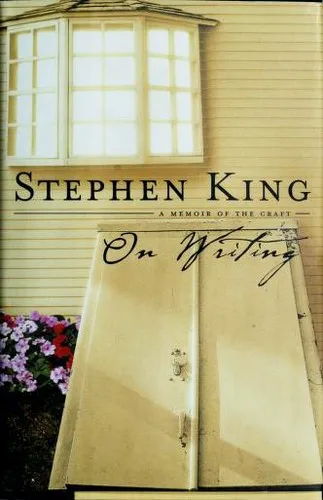
Stephen King's 2000 book, On Writing, blends memoir with practical fiction advice.
Published in 2000, Stephen King's On Writing is part autobiography, part guide to writing fiction. The first section recounts his youth and path to becoming a writer, detailing experiences that shaped his voice. The second section moves into direct advice for those who wish to write, focusing on core principles. King stresses the necessity of consistent reading and writing, presenting them as fundamental practices for anyone serious about the craft. He advocates for a clear, direct prose style, often referencing his own methods and preferences.
This book is primarily for aspiring fiction writers, especially those drawn to horror, fantasy, and suspense, the genres King is known for. It also appeals to King's fans interested in his personal history and creative methods. Experienced writers may find it a useful review of basic tenets or a source of renewed motivation. The book's appearance in 2000 coincided with significant shifts in publishing due to the internet. King's approach offered a personal, grounded perspective in contrast to more abstract or technology-driven discussions of writing. His public struggles with addiction and subsequent recovery in the late 1990s lent his advice on discipline and overcoming obstacles a particular weight, underscoring his message of creative persistence.
While not a traditional esoteric text, On Writing engages with the idea of a writer's personal "daemon" or creative muse, albeit through a secular lens. King discusses the almost involuntary nature of story ideas and the discipline required to wrestle them into coherent form. His emphasis on consistent, disciplined work, almost as a ritual, echoes certain traditions that view creative practice as a form of devotion or a path to mastery. The book frames writing not just as a skill but as a way of life, requiring dedication and a deep engagement with one's own experiences and the world of stories.
💡 Why Read This Book?
• Learn the essential discipline of consistent writing and reading habits, directly mirroring King's own practices since the 1970s, to build your creative stamina. • Understand the importance of the "first draft" as a vital stage of creative exploration, a concept King details in the second half of the book. • Gain practical strategies for vocabulary enhancement through the "dictionary habit," a method King advocates for improving prose clarity and depth.
⭐ Reader Reviews
Honest opinions from readers who have explored this book.
❓ Frequently Asked Questions
When was Stephen King's "On Writing" first published?
Stephen King's "On Writing" was first published in the year 2000, making it a significant work from the turn of the millennium.
What is the "-30-" concept Stephen King discusses?
The "-30-" concept, as explained by King, is a journalistic term for the end of a story. He applies it to writing as a marker for completing drafts and stories decisively.
Does "On Writing" include specific writing exercises?
While not a book of structured exercises, "On Writing" strongly emphasizes practical application through consistent reading and writing, urging readers to engage with the craft daily.
What is Stephen King's view on the passive voice?
King expresses a strong aversion to the passive voice, advising writers to favor the active voice to make their prose more direct and energetic, a point he makes with conviction.
How does "On Writing" relate to Stephen King's personal life?
The book intricately weaves King's personal history, including his early life, struggles with addiction, and recovery, into his advice, offering a memoir alongside writing instruction.
Is "On Writing" suitable for beginners?
Yes, "On Writing" is highly recommended for beginners due to its accessible language and foundational advice on developing writing habits and discipline.
🔮 Key Themes & Symbolism
The Discipline of Craft
King posits that writing is not merely inspiration but a rigorous discipline, akin to a trade. He emphasizes the necessity of daily practice, comparing the writer's work to that of a plumber or electrician who must show up and perform. This theme is explored through his own life narrative, illustrating how consistent effort, even during difficult periods, is the bedrock of a successful writing career. The "-30-" concept further reinforces this idea of diligent completion and commitment to the work, a secular ritual for the dedicated scribe.
The Power of Reading
Central to King's philosophy is the idea that a writer must first be an avid reader. He argues that extensive reading serves as the primary education for any aspiring author, providing exposure to different styles, narrative structures, and vocabulary. This "reading habit," as he calls it, is presented not as a passive pastime but as an active engagement with the art form, essential for developing an understanding of what makes stories work. He champions reading widely across genres to build a comprehensive writer's toolkit.
Memoir as Pedagogy
King uniquely employs his personal life story as a teaching tool. The first half of "On Writing" functions as a memoir, detailing his childhood, his early attempts at writing, his struggles with alcoholism, and his eventual recovery. This narrative isn't just anecdotal; it's strategically used to illustrate the principles of perseverance, the impact of personal demons on creative output, and the redemptive power of focusing on one's craft. The raw honesty serves to clarify the writing process and show that success is often forged through overcoming adversity.
Language and Clarity
The book dedicates significant attention to the fundamental elements of language: vocabulary, grammar, and sentence construction. King advocates for clarity and directness, urging writers to use vivid verbs and precise nouns. His "dictionary habit" is a concrete manifestation of this theme, encouraging writers to continuously expand their linguistic resources. He also provides specific advice on avoiding common pitfalls like excessive adverbs and the passive voice, aiming to equip writers with the tools for sharp, effective prose.
💬 Memorable Quotes
Direct passages from the work, attributed to the author.
“The scariest moment is always just before you start.”
— This observation captures the inherent anxiety and vulnerability that accompanies the act of creation. It speaks to the psychological hurdle of beginning a new project, whether it's a novel, a chapter, or even a single sentence.
“If you want to be a writer, you have to do two things above all others: read a lot and write a lot.”
— This is King's foundational principle for aspiring authors. It distills the complex path to becoming a writer into two essential, actionable habits: consistent reading to learn and consistent writing to practice.
“Writing is not a high-class art form, it's a lower-class art form.”
— This provocative statement challenges perceptions of writing as an elite pursuit. King suggests that its accessible nature and connection to everyday language and storytelling place it in a more common, perhaps even humble, artistic category.
“The toolbox is the writer's own mind, and the craft is the skill with which he uses the tools.”
— This metaphor highlights the dual nature of writing: the internal resources (ideas, experiences, imagination) and the learned techniques (grammar, structure, style) required to shape them into narrative.
💡 Key Ideas
Editorial paraphrase of the work's core concepts — not direct quotes.
You can, you should, and if you're brave enough to start, you will.
This quote serves as a powerful encouragement, particularly aimed at overcoming the initial fear of writing. It emphasizes agency, possibility, and the courage required to start the creative journey.
🌙 Esoteric Significance
Tradition
While not explicitly part of a formal esoteric tradition, "On Writing" shares thematic resonances with certain Hermetic principles concerning the mastery of craft and the diligent application of will. The emphasis on disciplined practice and the internal cultivation of skill aligns with the idea of 'As Above, So Below' applied to creative work—that internal states and efforts manifest externally. King's journey through addiction and recovery, and his subsequent dedication to writing, can be seen as a modern Gnostic struggle against limiting material conditions or personal 'demons' through dedicated labor and self-awareness.
Symbolism
The recurring motif of the "toolbox" symbolizes the writer's accumulated knowledge, skills, and inspirations—the internal resources necessary for creation. The "dictionary" acts as a symbol of accessible wisdom and precision, a tangible tool for expanding one's linguistic universe. The "-30-" mark, borrowed from journalism, functions as a symbol of finality, completion, and the disciplined bringing-to-earth of creative impulses, representing the controlled manifestation of the writer's will.
Modern Relevance
Contemporary writers and content creators frequently cite "On Writing" as a foundational text for understanding the practicalities of a creative career. Its emphasis on consistent output and resilience resonates strongly in the digital age, where self-publishing and independent content creation are prevalent. Thinkers in fields as diverse as productivity and self-help often draw parallels to King's advice on habit formation and overcoming procrastination, demonstrating its enduring applicability beyond traditional literary circles.
👥 Who Should Read This Book
• Aspiring fiction writers, particularly those interested in horror, fantasy, or suspense, seeking practical guidance grounded in the experience of a bestselling author. • Devoted fans of Stephen King who wish to understand the personal journey and creative philosophy behind his prolific career. • Individuals seeking motivational insights into discipline, perseverance, and overcoming personal challenges through focused creative work.
📜 Historical Context
Published in 2000, Stephen King's "On Writing" arrived at a moment when the digital age was beginning to reshape literary landscapes and authorship. King's work offered a deeply personal and practical counter-narrative to purely theoretical or technologically driven discussions about writing. It emerged after King's own public battle with addiction, lending significant weight to his discussions of discipline and overcoming personal obstacles. The book's reception was largely positive, seen as a candid and valuable guide, particularly by aspiring writers. While King's genre (horror) was sometimes critically dismissed, "On Writing" transcended genre boundaries, earning respect for its earnest advice. Contemporary authors like Anne Lamott, who also wrote about the writing process with memoiristic elements in "Bird by Bird" (1994), offered a similar, albeit differently toned, approach to reading through the writing life.
📔 Journal Prompts
The "dictionary habit" as a path to linguistic expansion.
The "first draft" as an act of fearless exploration.
The writer's toolbox and the craft of its deployment.
The "-30-" concept and the art of completion.
The role of reading in shaping the writer's consciousness.
🗂️ Glossary
-30-
A traditional journalistic notation signifying the end of a story or article. King adopts it as a metaphor for completing drafts and achieving finality in one's writing.
Dictionary Habit
King's recommendation for writers to regularly look up unfamiliar words encountered during reading, thereby expanding their vocabulary and improving their prose.
First Draft
The initial version of a written work, created rapidly and often imperfectly, serving as a foundation for subsequent revision and refinement.
Writer's Toolbox
The collection of skills, knowledge, experiences, and linguistic resources that a writer utilizes in the process of crafting a narrative.
Passive Voice
A grammatical construction where the subject of a sentence receives the action, rather than performing it. King generally advises against its overuse.
Adverbs
Words that modify verbs, adjectives, or other adverbs. King suggests using them sparingly, preferring stronger verbs.
Show, Don't Tell
A fundamental writing principle encouraging authors to convey information and emotions through actions, dialogue, and sensory details rather than direct exposition.
🔮 Readers Also Liked
Browse all →








More by Stephen King
All books →

More Free Occult Philosophy Books
View all →