Nostradamus: The Lost Manuscript
 76
76

Nostradamus: The Lost Manuscript
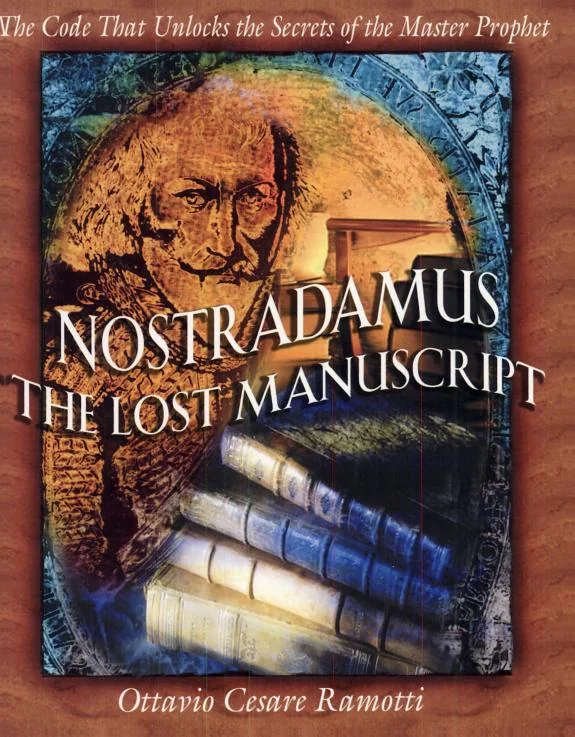
Ottavio Cesare Ramotti’s *Nostradamus: The Lost Manuscript* attempts a scholarly dissection of the 16th-century seer’s cryptic verses, moving beyond the typical sensationalism that surrounds Nostradamus. Ramotti introduces the idea of "astrological resonance" as a method for interpreting the quatrains, a concept that, while intriguing, occasionally feels strained in its application. The strength of the work lies in its detailed analysis of specific quatrains and its attempt to locate them within a broader, possibly coded, framework, rather than treating them as isolated predictions. However, the book suffers from a lack of definitive proof for its more speculative theories regarding hidden codes, sometimes leaving the reader with more questions than answers. A particularly compelling section examines the quatrain concerning the "great king of terror" and its potential link to specific astronomical events, though the definitive connection remains elusive. Ramotti offers a cerebral approach to a notoriously nebulous subject, rewarding careful readers but demanding significant interpretive latitude.
This manuscript offers a complex, if not always conclusive, re-evaluation of Nostradamus's prophetic legacy.
📝 Description
76
Ottavio Cesare Ramotti's 2002 book re-examines Nostradamus's prophecies, seeking hidden structural intent.
Published in 2002, Ottavio Cesare Ramotti's Nostradamus: The Lost Manuscript offers a new look at the prophecies of Michel de Nostredame. Ramotti moves past simply listing the quatrains. He argues for a deeper, perhaps hidden, system within Nostradamus's collected works. The book suggests these are not random predictions but part of a complex, structured approach to prophecy.
This work is intended for serious students of prophecy, occult history, and Renaissance studies. It will attract those already familiar with Nostradamus's prophecies but who desire a more analytical viewpoint. Readers interested in cryptography, coded messages, and the connection between astrology and history will find it particularly valuable. It is not an introduction for casual readers; it demands engagement with complex interpretive ideas.
Michel de Nostredame published his *Centuries* in 1555, a time of significant religious and political unrest in Europe. His cryptic verse prophecies quickly drew attention. The French Renaissance, a period of intellectual and artistic growth, fostered such works but also invited scrutiny from authorities. Ramotti's book, appearing centuries later, engages with this historical and prophetic tradition. It attempts to uncover meanings obscured by time and subsequent interpretations, placing it within the ongoing study of prophetic literature and esoteric thought.
💡 Why Read This Book?
• Gain an understanding of "astrological resonance" as a method for interpreting prophetic texts, as detailed in Ramotti's analysis of specific quatrains from the *Centuries*. • Discover potential coded structures within Nostradamus's prophecies, exploring how the arrangement of verses, rather than just their content, might offer hidden meanings. • Explore the historical milieu of the French Renaissance and its influence on prophetic writing, examining how figures like Michel de Nostredame operated within specific political and religious contexts.
⭐ Reader Reviews
Honest opinions from readers who have explored this book.
❓ Frequently Asked Questions
What is "astrological resonance" in the context of Nostradamus: The Lost Manuscript?
Ramotti uses "astrological resonance" to describe the theory that celestial alignments present during the time Nostradamus composed specific quatrains imbue those verses with a particular interpretive key, influencing their meaning.
Does this book offer new prophecies or interpretations of Nostradamus?
The book does not present new prophecies but rather offers a new interpretive framework for existing ones, suggesting hidden codes and structural significance beyond literal predictions.
Who was Michel de Nostredame?
Michel de Nostredame, known as Nostradamus, was a 16th-century French astrologer, physician, and reputed seer, famous for his book 'Les Propheties' published in 1555.
When was Nostradamus: The Lost Manuscript first published?
Ottavio Cesare Ramotti's work was first published in 2002, presenting a modern analysis of Nostradamus's historical prophecies.
What makes this book different from other Nostradamus analyses?
Unlike many popular interpretations, Ramotti's book focuses on analytical methods like "astrological resonance" and potential coded structures, aiming for a more academic approach to the seer's writings.
What historical period does the book discuss concerning Nostradamus?
The book primarily discusses the historical period of the French Renaissance, specifically the 16th century when Michel de Nostredame lived and wrote his prophecies.
🔮 Key Themes & Symbolism
The Structure of Prophecy
Ramotti posits that Nostradamus's prophecies are not random but possess an underlying structure. This theme explores how the arrangement of quatrains, the use of specific numerology, and potential hidden alphabets within the text contribute to a deeper meaning. The work suggests that understanding this structure is key to unlocking the true intent behind the predictions, moving beyond simple chronological interpretation or isolated analysis of individual verses.
Astrological Resonance
A central concept introduced by Ramotti is 'astrological resonance.' This theory suggests that the celestial configurations present at the precise moment Nostradamus composed certain prophecies act as a kind of interpretive key. The book analyzes how specific planetary alignments might correlate with the themes or events described in particular quatrains, offering a method for deciphering their intended significance and temporal relevance.
Coded Language and Symbolism
The manuscript delves into the possibility of Nostradamus employing coded language and symbolic motifs within his prophecies. Ramotti investigates potential ciphers, anagrams, and symbolic references that may have been intended for a select few or have become obscured over centuries. This theme examines how these coded elements might have served to protect the seer's work or to imbue it with layers of meaning accessible only to those with the correct interpretive tools.
Historical Contextualization
Understanding Nostradamus requires situating his work within the turbulent 16th-century French Renaissance. This theme explores the intellectual, religious, and political climate of the era, examining how these factors may have shaped Nostradamus's worldview and the content of his prophecies. It also considers the reception of his work during his lifetime and its subsequent influence on later prophetic traditions.
💬 Memorable Quotes
“The quatrains are not merely predictions, but components of a larger, deliberately constructed architecture.”
— This paraphrased concept highlights Ramotti's central thesis: that Nostradamus's work should be viewed as an interconnected system rather than a collection of disparate prophecies, suggesting an intentional design.
“Celestial alignments at the moment of composition offer a resonance that guides interpretation.”
— This interpretation points to the core idea of 'astrological resonance,' suggesting that the astrological conditions under which a prophecy was written are crucial for understanding its meaning.
“Beneath the surface of common language lies a potential for coded communication.”
— This paraphrased concept underscores the book's exploration of cryptography and hidden messages within Nostradamus's text, implying that a deeper layer of meaning is deliberately concealed.
“The arrangement of verses may hold as much significance as their individual content.”
— This interpretation emphasizes Ramotti's focus on the structural aspect of Nostradamus's work, suggesting that the order and placement of prophecies are intentional and contribute to the overall message.
“To understand the seer, one must understand the era's intellectual currents.”
— This paraphrased concept stresses the importance of historical context, indicating that Nostradamus's prophecies are deeply rooted in the intellectual and cultural milieu of the 16th-century French Renaissance.
🌙 Esoteric Significance
Tradition
This work fits within the Western Esoteric tradition, specifically concerning Renaissance occultism and the study of prophecy. While Nostradamus himself drew upon astrological and possibly Kabbalistic influences, Ramotti's modern analysis seeks to systematize these elements. It departs from purely devotional or divinatory approaches by applying critical methodologies, exploring potential symbolic and coded layers akin to hermetic interpretations, albeit focused on predictive texts rather than philosophical treatises.
Symbolism
Key symbols explored in the manuscript include the 'great king of terror,' often interpreted through specific astrological conjunctions, and the recurring motif of celestial events as harbingers. Ramotti suggests these are not merely descriptive but symbolic anchors, potentially linked to specific numerical values or astronomical patterns that Nostradamus intentionally embedded within his quatrains to signify critical junctures in time.
Modern Relevance
Contemporary thinkers in fields ranging from comparative religious studies to niche areas of historical cryptography might find value in Ramotti's analytical framework. His exploration of coded language and structured prophecy resonates with modern interests in pattern recognition and hidden information systems. Furthermore, the concept of 'astrological resonance' offers a unique lens for modern practitioners and scholars seeking to understand the link between celestial phenomena and human events beyond traditional astrological readings.
👥 Who Should Read This Book
• Students of Renaissance history and occultism seeking to understand the context and potential deeper meanings of Nostradamus's prophecies beyond popular sensationalism. • Practitioners of esoteric studies interested in analytical approaches to prophecy, particularly those exploring methods like "astrological resonance" and coded text interpretation. • Researchers in comparative literature or historical cryptography who are investigating the use of symbolic language and hidden structures in historical texts.
📜 Historical Context
Ottavio Cesare Ramotti's *Nostradamus: The Lost Manuscript*, published in 2002, engages with the legacy of Michel de Nostredame, whose *Centuries* first appeared in 1555. This era, the height of the French Renaissance, was a crucible of intellectual ferment and religious strife. Europe grappled with the Reformation, and figures like Nostradamus operated in a climate where prophecy held significant cultural weight, yet also attracted suspicion from both religious and secular authorities. Ramotti's work emerges centuries after Nostradamus's death, attempting to reinterpret the seer's prophecies through analytical lenses like "astrological resonance" and the search for coded structures. This approach positions Ramotti's study within a long tradition of Nostradamus scholarship, which has often included attempts to decipher hidden meanings, a practice that often diverged from purely astrological or historical analysis. The book implicitly engages with the ongoing debate about the nature of prophecy and its interpretation, a discussion that has persisted since the 16th century.
📔 Journal Prompts
The concept of 'astrological resonance' as applied to Nostradamus's quatrains.
Structural elements within the prophecies that suggest intentional design.
The use of coded language or symbolism in prophetic texts.
The influence of the 16th-century French Renaissance on prophetic writing.
Interpreting a specific quatrain using Ramotti's proposed analytical methods.
🗂️ Glossary
Quatrain
A stanza or verse consisting of four lines, commonly used by Nostradamus in his prophetic writings.
Astrological Resonance
A theoretical concept proposed by Ramotti, suggesting that celestial alignments at the time of a prophecy's composition influence its interpretive meaning.
French Renaissance
The cultural and artistic period in France, spanning roughly from the late 15th century to the early 17th century, marked by significant intellectual and artistic development.
Cryptography
The practice and study of techniques for secure communication in the presence of adversaries; in this context, applied to potential hidden codes in Nostradamus's text.
Michel de Nostredame
The 16th-century French astrologer, physician, and reputed seer best known for his book 'Les Propheties'.
The Great King of Terror
A phrase appearing in one of Nostradamus's quatrains, often interpreted as referring to a significant future event or figure, subject to extensive debate.
Esoteric
Intended for or likely to be understood by only a small number of people with a specialized knowledge or interest.
















![Protected landscapes and cultural amb [i.e. and] spiritual values](/img/thumb/protected-landscapes-and-cultural-amb-ie-and-spiritual-values-josep-maria-mallarach-i-carrera-064609.webp)