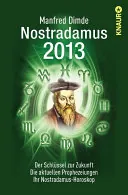
Nostradamus

 71
71

Nostradamus
Manfred Dimde's "Nostradamus" offers a welcome corrective to the more sensationalist accounts of the prophet. Dimde approaches his subject with a historian's eye, meticulously detailing Nostradamus's life and the context of his prophecies. The strength of the work lies in its sober analysis of the quatrains, moving beyond facile connections to modern events to explore the linguistic and astrological underpinnings of the text. However, the book occasionally leans too heavily on academic detachment, at times making the mystical allure of Nostradamus feel somewhat muted for the casual reader. A particularly illuminating section discusses the astrological charts Nostradamus employed in his practice, providing concrete evidence of his professional grounding. Ultimately, Dimde provides a valuable, if sometimes dry, scholarly assessment of a figure often shrouded in myth.
📝 Description
71
Manfred Dimde's "Nostradamus" examines the 16th-century prophecies and life of Michel de Nostredame.
Manfred Dimde's "Nostradamus" offers a scholarly look at the life and predictions of Michel de Nostredame, the 16th-century French apothecary known for his quatrains. The book moves past popular sensationalism to analyze the historical context and potential meanings of Nostredame's cryptic verses. It scrutinizes the methods and reasons behind his predictions, separating careful textual study from later speculative additions. The work details the structure of his prophecies, usually four-line stanzas, and the linguistic and astrological systems he used.
This book suits students of esoteric history and prophecy who are interested in Nostredame himself, separating his factual biography from legend. Readers wanting a critical view of prophetic literature, especially in the Western esoteric tradition, will find it useful. It also suits scholars of Renaissance France who want to grasp the cultural and intellectual environment that produced such a figure. Those who approach prophecy with a scholarly, rather than credulous, mindset are the main audience.
The book places Nostredame within the complex intellectual and religious climate of 16th-century Europe. It notes the common interest in astrology, alchemy, and divination during the Renaissance, a time of significant political change and scientific questioning. Dimde likely examines influences on Nostredame, such as Kabbalistic ideas and classical prophetic traditions. The work implicitly touches on the lasting interest in prophecy through later centuries, from Enlightenment skepticism to 20th-century occult interests, positioning Dimde's study within a long interpretive history.
Manfred Dimde's study situates Nostradamus within the Renaissance's intense engagement with astrology, alchemy, and divination. It acknowledges the period's intellectual ferment, marked by both political upheaval and burgeoning scientific inquiry. By examining Nostradamus's methods and influences, possibly including Kabbalistic thought and older prophetic traditions, the book connects to a long lineage of esoteric practices. It addresses the enduring human interest in predicting the future, a thread that runs through Western thought from the Renaissance to more recent occult revivals.
💡 Why Read This Book?
• Understand the astrological methods Nostradamus used, as detailed in Dimde's analysis of his professional practices, offering insight into Renaissance esotericism. • Gain critical distance from popular interpretations by examining the linguistic construction of the quatrains, as explored in the book's textual analysis sections. • Appreciate the historical milieu of 16th-century France, learning how figures like Nostradamus fit into the intellectual currents of their time, as presented in the historical context sections.
⭐ Reader Reviews
Honest opinions from readers who have explored this book.
❓ Frequently Asked Questions
When was Michel de Nostredame born and when did he publish his major prophecies?
Michel de Nostredame was born in 1503. His most famous work, 'Les Propheties', first appeared in 1555, containing quatrains that have been interpreted for centuries.
What is a quatrain in the context of Nostradamus's prophecies?
A quatrain is a four-line stanza, which is the primary poetic form Nostradamus used for his prophecies. Each quatrain is typically cryptic and open to multiple interpretations.
Did Nostradamus claim to be a psychic or just an astrologer?
Nostradamus identified primarily as an astrologer and physician. While his prophecies suggest a form of prescience, he framed his work within the established astrological and medical practices of the 16th century.
How did 16th-century Europe view prophecy and astrology?
In 16th-century Europe, astrology and various forms of divination were widely practiced and accepted, even among educated elites. Prophecy held significant cultural weight during a period of religious and political flux.
What is the 'linguistic framework' mentioned in relation to Nostradamus's work?
The linguistic framework refers to Nostradamus's use of various languages (French, Latin, Greek, Provençal), anagrams, and coded phrasing within his quatrains to obscure meanings and allow for varied interpretations over time.
Does Dimde's book offer definitive interpretations of Nostradamus's prophecies?
No, Dimde's "Nostradamus" focuses on historical context, linguistic analysis, and astrological underpinnings rather than providing definitive interpretations. It aims to equip readers with tools for critical assessment.
🔮 Key Themes & Symbolism
Quatrain Structure and Language
The book thoroughly dissects the four-line stanzas, or quatrains, that form the core of Nostradamus's prophetic output. It examines the deliberate ambiguity in their construction, often employing a mix of archaic French, Latin, Greek, and Provençal. Dimde likely explores how this linguistic complexity served to protect the author and allow for flexible interpretations across centuries. The thematic recurrence within these quatrains, often touching on war, plague, and political change, is also a focus, highlighting Nostradamus's engagement with the anxieties of his era.
Astrology and Renaissance Esotericism
Dimde places Nostradamus firmly within the practice of Renaissance astrology. The work likely details how astrological charts and celestial observations informed his prophetic outlook, moving beyond simplistic notions of divine revelation. This section connects Nostradamus to a broader European tradition of esoteric thought, where astrology, alchemy, and medicine were often intertwined. It underscores that his work was not an isolated phenomenon but a product of an intellectual climate where the stars were seen as significant indicators of earthly events.
Historical Reception and Interpretation
A significant theme is how Nostradamus's prophecies have been received and interpreted from his time to the present. The book likely traces the evolution of Nostradamus studies, from early printings of 'Les Propheties' to later attempts to link his verses to specific historical events like the French Revolution or World War II. Dimde probably critiques the tendency to retroactively apply prophecies, emphasizing the need for contextual understanding rather than speculative futurism, and highlighting the role of editors and commentators in shaping the legend.
The Prophet as Physician and Scholar
The work explores the dual identity of Michel de Nostredame as both a practicing physician and a prophetic writer. Dimde likely examines how his medical background, including knowledge of plague and anatomy, might have influenced his writing and his worldview. This perspective grounds Nostradamus in the practical realities of 16th-century life, suggesting his prophecies arose from observation and a learned, albeit unconventional, understanding of human affairs and cosmic influences, rather than pure mysticism.
💬 Memorable Quotes
“Nostradamus employed a deliberate linguistic obfuscation in his quatrains.”
— This suggests that the prophet's verses were not straightforward predictions but were intentionally crafted with multiple layers of meaning, using complex language and allusions to ensure their relevance across different eras and interpretations.
“The astrological charts were integral to Nostradamus's prophetic methodology.”
— This highlights that Nostradamus's predictions were not random utterances but were rooted in the systematic practice of astrology, which was a respected intellectual discipline in the 16th century.
“Early editions of 'Les Propheties' reveal significant editorial interventions.”
— This points to the complex history of Nostradamus's text, indicating that what readers encountered over centuries was often shaped by publishers and editors, not solely by the original author's intent.
“The quatrains often address themes of war, famine, and societal upheaval.”
— This interpretation suggests that Nostradamus's focus was on the major crises that afflicted humanity, reflecting the anxieties and realities of his tumultuous 16th-century environment.
“Dimde analyzes Nostradamus's work within the framework of Renaissance esotericism.”
— This indicates that the book situates Nostradamus not as an isolated mystic, but as part of a broader intellectual and spiritual movement prevalent in Europe during his lifetime, connecting him to traditions like Hermeticism or Kabbalah.
🌙 Esoteric Significance
Tradition
Nostradamus's work is often situated within the Western Esoteric Tradition, drawing from Hermeticism, Kabbalistic numerology, and astrological lore prevalent in Renaissance Europe. While not overtly initiating a new school, his quatrains became a foundational text for later prophetic traditions and occult studies. His blend of medical knowledge, astrology, and cryptic verse reflects the syncretic nature of esoteric thought during his era, where distinct disciplines were often unified in the pursuit of hidden knowledge.
Symbolism
Key symbols in Nostradamus's work include celestial bodies (Sun, Moon, planets) representing astrological influences and cosmic order, and animals (e.g., lions, eagles) often symbolizing nations, rulers, or powerful forces. Fire is another recurring motif, signifying destruction, purification, or divine revelation. These symbols, drawn from classical, biblical, and alchemical traditions, imbue his prophecies with a sense of universal archetypes that resonate across different historical interpretations.
Modern Relevance
Contemporary thinkers and practitioners in fields such as historical forecasting, comparative esotericism, and even certain branches of conspiracy theory continue to engage with Nostradamus's prophecies. His work serves as a case study for understanding how texts gain enduring cultural traction through ambiguity and retrospective application. Modern occultists may still consult his quatrains for symbolic inspiration or as a lens through which to view current events, demonstrating the persistent allure of prophecy.
👥 Who Should Read This Book
• Students of Renaissance history and culture seeking to understand the intellectual landscape that produced figures like Nostradamus. • Esoteric researchers interested in the history of prophecy and divination within the Western tradition, particularly the analysis of cryptic texts. • Skeptical readers and critical thinkers who wish to examine the phenomenon of Nostradamus from a scholarly perspective, moving beyond sensationalism.
📜 Historical Context
Manfred Dimde's "Nostradamus" emerges from a scholarly tradition that emerged in the late 20th century, seeking to contextualize esoteric figures within their historical periods. The 16th century, when Michel de Nostredame lived, was a crucible of change: the Reformation fractured religious unity, while the Renaissance fostered a renewed interest in classical learning and a burgeoning scientific inquiry. Astrology, alchemy, and divination were not fringe activities but integral parts of intellectual life, practiced by scholars and royalty alike. Dimde's work likely engages with contemporary figures and movements, such as the Hermeticism championed by Marsilio Ficino or the alchemical pursuits of Paracelsus. The reception of Nostradamus's 'Les Propheties' (first published 1555) was immediate, with many seeking to understand its cryptic verses. However, unlike figures who received direct patronage or condemnation, Nostradamus operated within a sphere where his medical profession provided a degree of legitimacy, though his prophetic writings always carried an element of risk.
📔 Journal Prompts
The linguistic obfuscation employed in the quatrains.
Nostradamus's integration of astrological charts into his prophetic method.
The historical reception of 'Les Propheties' across different centuries.
The recurring themes of war and societal upheaval in the quatrains.
The balance between physician and prophet in Michel de Nostredame's life.
🗂️ Glossary
Quatrain
A four-line stanza, the primary poetic form used by Nostradamus for his prophecies. Each quatrain typically contains a cryptic prediction or observation.
Prescience
The purported ability to know or foresee future events. Nostradamus's prophecies are often interpreted as evidence of his prescience.
Astrology
The study of the movements and relative positions of celestial bodies interpreted as having an influence on human affairs and the natural world.
Hermeticism
A philosophical and religious tradition based primarily upon writings attributed to Hermes Trismegistus, emphasizing spiritual and mystical knowledge.
Renaissance Esotericism
The diverse range of mystical, occult, and philosophical traditions that flourished in Europe during the Renaissance (c. 14th-17th centuries).
Les Propheties
The primary work of Michel de Nostredame, first published in 1555, containing over 900 quatrains that have been interpreted as prophecies.
Linguistic Obfuscation
The deliberate use of complex, ambiguous, or coded language to make a text difficult to understand or interpret clearly.