Nostradamus
 78
78

Nostradamus
David Ovason's exploration of Nostradamus bypasses sensationalism, opting instead for a scholarly dissection of the 16th-century seer's quatrains. The strength lies in its meticulous analysis of the poetic structure and potential influences, situating Nostradamus within the intellectual currents of the Renaissance. Ovason’s argument that the quatrains are not merely random pronouncements but carefully constructed, perhaps even coded, messages is compelling. However, the book occasionally suffers from a dense prose style that can obscure its more intriguing points for the casual reader. A passage detailing the astrological charts purportedly used by Nostradamus provides a concrete example of the book's analytical depth, though it demands significant prior knowledge. Ovason's work offers a valuable, if demanding, perspective on a figure perpetually shrouded in myth.
📝 Description
78
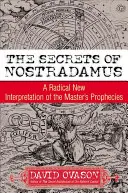
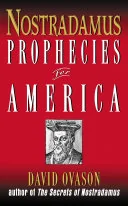
### What It Is Nostradamus, by David Ovason, published in 2001, offers a focused examination of the prophetic writings attributed to Michel de Nostredame. The work dissects the quatrains, the poetic prophecies that have captivated and confounded readers for centuries. Ovason moves beyond simple prediction to explore the underlying methodologies and potential influences on Nostradamus's unique predictive art. The book presents Nostradamus not just as a seer, but as a figure operating within specific historical and intellectual frameworks.
### Who It's For This text is intended for individuals with a serious interest in the historical figure of Nostradamus and the analysis of his prophecies. It will appeal to those who engage with esoteric studies, historical divination, and the study of prophecy as a literary and historical phenomenon. Readers seeking straightforward astrological interpretations or simple "future predictions" may find the analytical approach less direct than anticipated.
### Historical Context Michel de Nostredame, a physician and astrologer, published his major prophetic work, *Les Propheties*, starting in 1555. This period in 16th-century France was one of significant religious upheaval, political intrigue, and a widespread fascination with astrology and occult sciences. The Protestant Reformation was challenging established religious orders, and royal successions were often fraught with uncertainty. Ovason's work places Nostradamus within this milieu, acknowledging the influence of Renaissance Neoplatonism and Hermetic thought, which were experiencing a revival.
### Key Concepts The book delves into the structure of Nostradamus's quatrains, exploring their allegorical language and symbolic density. It examines theories regarding the sources of his visions, including astrological calculations, historical precedents, and possible esoteric knowledge. The work also addresses the challenges of interpreting prophecies that have been subject to centuries of varied readings and political appropriation. Ovason considers the role of the interpreter and the inherent ambiguities within the prophetic text itself.
💡 Why Read This Book?
• Gain an understanding of the specific astrological and philosophical frameworks that may have informed Nostradamus's quatrains, offering insight into Renaissance esoteric thought. • Learn about the structural analysis of prophetic verse, moving beyond simple prediction to appreciate the literary and symbolic craft involved in *Les Propheties*. • Explore the historical reception and interpretation of Nostradamus's work, particularly how figures in the 16th century might have engaged with prophetic texts.
⭐ Reader Reviews
Honest opinions from readers who have explored this book.
❓ Frequently Asked Questions
What specific historical period does David Ovason focus on regarding Nostradamus?
David Ovason's work primarily examines Nostradamus within the context of the 16th century, specifically the period when Michel de Nostredame published *Les Propheties* starting in 1555.
Does the book offer straightforward predictions from Nostradamus?
No, the book focuses on analyzing the structure, symbolism, and potential influences behind Nostradamus's quatrains rather than providing direct predictions.
What intellectual movements are discussed in relation to Nostradamus's work?
The book discusses Renaissance Neoplatonism and Hermetic thought as potential influences on Nostradamus's methods and writings.
Who was Michel de Nostredame?
Michel de Nostredame, known as Nostradamus, was a French physician and astrologer renowned for his book of prophecies, *Les Propheties*, first published in 1555.
What is the primary text analyzed in Ovason's book?
The primary text analyzed is *Les Propheties*, the collection of poetic prophecies written by Nostradamus.
What distinguishes Ovason's approach to Nostradamus from sensationalist accounts?
Ovason's approach is analytical and scholarly, focusing on historical context, literary structure, and esoteric influences rather than unsubstantiated predictions.
🔮 Key Themes & Symbolism
The Art of the Quatrain
Ovason dissects the poetic and structural elements of Nostradamus's prophecies, known as quatrains. The work explores how these four-line verses were crafted, considering their meter, rhyme scheme, and the deliberate ambiguity employed by Nostradamus. This theme investigates the quatrain not merely as a vehicle for prediction but as a sophisticated literary and symbolic form, potentially influenced by contemporary poetic traditions and esoteric practices of the 16th century.
Astrological Underpinnings
A significant focus is placed on the astrological knowledge attributed to Nostradamus. The book examines how celestial observations and calculations might have formed the basis for his prophetic pronouncements. Ovason discusses the complex interplay between astronomy and astrology prevalent in the Renaissance, suggesting that Nostradamus's understanding of planetary alignments and cosmic cycles was integral to his predictive system.
Renaissance Esotericism
The work situates Nostradamus within the broader intellectual landscape of Renaissance esotericism. This includes exploring the influence of Hermeticism, Neoplatonism, and Kabbalistic ideas, which were experiencing a resurgence. Ovason considers how these mystical and philosophical traditions, often intertwined with religious and scientific inquiry of the era, may have shaped Nostradamus's worldview and the content of his prophecies.
Interpretation and Ambiguity
This theme addresses the persistent challenge of interpreting Nostradamus's prophecies. Ovason highlights the inherent ambiguity in the language, the use of anagrams, and the historical layering of meanings. The book contemplates the role of the interpreter, the impact of historical events on readings, and how intentional obscurity might have served to protect Nostradamus or enhance the mystique of his predictions.
💬 Memorable Quotes
“The quatrains are not mere random pronouncements but carefully constructed, perhaps even coded, messages.”
— This interpretation suggests that Nostradamus's prophecies possess an underlying structure and intentionality, hinting at a deliberate system of communication beyond simple fortune-telling.
“Nostradamus operated within the intellectual currents of the Renaissance, drawing on astrology and Hermetic thought.”
— This highlights the book's central argument: that understanding Nostradamus requires appreciating the specific historical and philosophical context of 16th-century Europe, rather than viewing him in isolation.
“The ambiguity in the prophecies invites multiple layers of interpretation.”
— This acknowledges the challenge and fascination surrounding Nostradamus's work, emphasizing that its meaning is not fixed but evolves with each reading and historical perspective.
“Astrological calculations were integral to Nostradamus's predictive system.”
— This points to the foundational role of astronomy and astrology in Nostradamus's methods, suggesting a scientific (for the era) basis for his prophetic insights.
“The quatrains reflect a blend of literary craft and esoteric knowledge.”
— This interpretation emphasizes the dual nature of Nostradamus's prophecies, combining artistic expression with a hidden layer of symbolic meaning derived from esoteric traditions.
🌙 Esoteric Significance
Tradition
Ovason's work engages with the Western Esoteric Tradition, particularly its Renaissance manifestations. It situates Nostradamus within the Hermetic and Neoplatonic currents that experienced a revival during that era. The analysis leans towards understanding prophecy as a form of knowledge derived from celestial observation and symbolic interpretation, aligning with traditions that seek hidden correspondences between the macrocosm and microcosm.
Symbolism
Key symbols explored include astrological imagery (planets, constellations) and alchemical motifs that may be subtly embedded within the quatrains. The very structure of the quatrain itself can be seen as symbolic, representing a contained unit of prophetic insight. Ovason likely examines the use of allegorical language and historical references as symbolic keys to unlock deeper meanings within Nostradamus's cryptic verses.
Modern Relevance
Contemporary interest in Nostradamus persists, often fueled by global events that readers retrospectively link to his predictions. Modern esoteric practitioners and historical researchers continue to study his quatrains, seeking patterns and interpretations. Ovason's analytical approach offers a framework for understanding prophecy that appeals to those interested in historical divination techniques and the psychology of belief, bridging the gap between historical inquiry and modern esoteric interests.
👥 Who Should Read This Book
• Students of Renaissance history and intellectual currents seeking to understand the appeal of prophecy and occult sciences in 16th-century Europe. • Practitioners and scholars of esoteric traditions interested in the historical context and potential methodologies behind figures like Nostradamus. • Readers fascinated by the analysis of symbolic language and literary cryptography, who wish to explore the craft behind prophetic texts beyond simple prediction.
📜 Historical Context
Published in 2001, David Ovason's *Nostradamus* arrives long after the initial furor surrounding Michel de Nostredame's *Les Propheties*, which first appeared in 1555. The 16th century in France was a volatile period, marked by the Wars of Religion, succession anxieties, and a widespread embrace of astrology and occult sciences. Contemporaries like Paracelsus were also exploring hidden knowledge and natural philosophy. While Nostradamus was a practicing physician, his prophecies tapped into a public fascination with divine foresight, often fueled by astrological interpretations and Neoplatonic ideas circulating within Renaissance intellectual circles. Unlike purely theological critiques, Ovason's work engages with the intellectual lineage of prophecy, examining it as a discipline within its time, rather than a supernatural anomaly. The reception of Nostradamus himself was mixed, with some viewing him as a prophet and others as a charlatan or even heretic, depending on their own philosophical and religious leanings.
📔 Journal Prompts
Analyze the deliberate ambiguity within Nostradamus's quatrains.
Reflect on the role of astrological calculations in Renaissance prophecy.
Consider the potential influence of Hermeticism on prophetic texts.
Examine how historical context shapes the interpretation of *Les Propheties*.
Evaluate the literary structure of Nostradamus's quatrains.
🗂️ Glossary
Quatrain
A four-line stanza of poetry, typically with a specific rhyme scheme and meter. In the context of Nostradamus, these are the primary format of his prophecies.
Les Propheties
The principal work of Nostradamus, a collection of his prophecies published in verse form, first appearing in 1555.
Hermeticism
A philosophical and religious tradition based on writings attributed to Hermes Trismegistus, emphasizing esoteric knowledge, correspondences between the spiritual and material realms, and divine wisdom.
Neoplatonism
A philosophical system originating in the Roman Empire, based on the teachings of Plato, particularly emphasizing a spiritual reality and the descent of the soul from a divine source.
Astrology
The study of the movements and relative positions of celestial bodies interpreted as having an influence on human affairs and the natural world.
Renaissance
The period in European history, roughly from the 14th to the 17th century, marked by a revival of classical art, architecture, and literature, and a flourishing of intellectual and scientific inquiry.
Esotericism
Belief systems, philosophical or religious, which are characterized by their hidden or secret knowledge and practices, often accessible only to initiated individuals.