Miracle of the Ages
 83
83

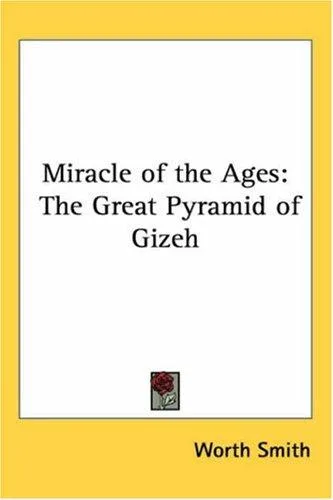
Miracle of the Ages
Worth Smith’s "Miracle of the Ages" offers a robust, if somewhat austere, framework for spiritual advancement that feels refreshingly direct for a 1937 publication. Its strength lies in its systematic presentation of complex metaphysical ideas, particularly its articulation of 'The Law of Mental Cause and Effect' as a foundational principle. However, the prose can occasionally become dense, requiring a dedicated reader to parse its intricate arguments. A particularly striking passage discusses the 'Unfolding of Consciousness,' likening it to a seed’s slow but inevitable growth, a potent metaphor for inner potential. While it may lack the poetic flourish of some contemporaries, its intellectual rigor is undeniable. "Miracle of the Ages" provides a solid, logical architecture for understanding spiritual progression.
📝 Description
83
### What It Is Miracle of the Ages presents a unique perspective on spiritual development and the nature of reality, drawing from a confluence of esoteric traditions. Published originally in 1937, the work offers a structured approach to understanding the self and its place within the cosmos. It moves beyond mere philosophical discourse, aiming to provide practical guidance for inner transformation.
### Who It's For This book is suited for individuals seeking a deeper, more systematic exploration of spiritual principles than is typically found in popular self-help literature. It appeals to those interested in comparative mysticism, historical esoteric movements, and the practical application of ancient wisdom in contemporary life. Readers who appreciate rigorous thought and a non-dogmatic approach to spiritual inquiry will find value here.
### Historical Context Emerging in 1937, "Miracle of the Ages" was situated within a vibrant period of occult and metaphysical exploration. Theosophy, founded by Helena Blavatsky, had already established a significant following, and figures like Aleister Crowley were actively shaping modern occultism. Smith’s work offers a distinct voice, less focused on ceremonial magic and more on the internal alchemy and psychological underpinnings of spiritual awakening, distinguishing it from the more sensationalist or purely academic treatments of the era.
### Key Concepts The book systematically outlines a path toward spiritual realization, emphasizing the interconnectedness of the individual and the universal. It delves into concepts such as the nature of consciousness, the law of cause and effect (karma), and the potential for humanity to achieve higher states of being. Smith posits that true miracles are not external interventions but internal shifts in perception and being, accessible through disciplined understanding and practice.
💡 Why Read This Book?
• Gain a structured understanding of spiritual laws, as presented through Smith's "Law of Mental Cause and Effect," offering a logical framework for personal development. • Explore the concept of "Inner Alchemy" as detailed in the text, learning how internal transformations are posited as the source of true spiritual power. • Grasp the symbolic meaning of "The Seven Rays" as explained by Smith, providing a unique lens through which to view individual and cosmic energies.
⭐ Reader Reviews
Honest opinions from readers who have explored this book.
❓ Frequently Asked Questions
What specific esoteric traditions influenced "Miracle of the Ages"?
The work draws from a blend of Hermetic philosophy, Neoplatonism, and early 20th-century Theosophical concepts, focusing on universal laws of consciousness and spiritual evolution.
Is "Miracle of the Ages" considered a practical guide or purely theoretical?
While theoretical in its underpinnings, the book is intended as a practical guide, offering principles and exercises for inner development and spiritual understanding.
When was "Miracle of the Ages" first published and by whom?
The book was first published in 1937 by Worth Smith, reflecting the spiritual and philosophical currents of the era.
Does the book discuss specific meditation techniques or practices?
While not detailing explicit step-by-step meditation guides, it emphasizes mental discipline and focused contemplation as key practices for spiritual growth.
What does "Miracle of the Ages" say about the nature of miracles?
Smith interprets miracles not as external supernatural events, but as the natural result of aligning one's consciousness with higher universal principles.
Is this book related to any specific occult orders or societies?
While sharing common ground with movements like Theosophy, "Miracle of the Ages" presents a distinct system, not directly tied to a singular external organization.
🔮 Key Themes & Symbolism
The Law of Mental Cause and Effect
Central to Smith's philosophy is the principle that thoughts and intentions are potent forces shaping reality. This isn't mere positive thinking, but a structured understanding of how consciousness acts as the primary creative agent. The work explores how individuals, through disciplined mental focus and ethical alignment, can consciously direct the unfolding of their lives, moving from reactive existence to proactive co-creation within universal laws.
Inner Alchemy and Transformation
The book posits that genuine spiritual advancement is an internal process, akin to alchemy, where the base elements of the personality are refined into higher spiritual qualities. This transformation is achieved not through external rituals but through a systematic purification of desire, intellect, and will. The "miracle" is the profound shift in perception and being that results from this inner work.
The Unfolding of Consciousness
Smith presents consciousness not as a static entity but as a dynamic force that evolves through distinct stages. The work details the process of this unfolding, from rudimentary awareness to higher states of cosmic perception. It suggests that understanding these stages provides a roadmap for spiritual progress, enabling individuals to consciously participate in their own evolutionary journey.
The Seven Rays
Referencing a concept found in various esoteric systems, Smith elaborates on the Seven Rays as fundamental energetic frequencies that influence all aspects of existence, from the cosmic to the individual. Understanding these rays, according to the book, offers insight into personality types, life paths, and the underlying forces that govern manifestation and evolution.
💬 Memorable Quotes
“The outer is a reflection of the inner.”
— This concise statement encapsulates the core Hermetic principle of correspondence, suggesting that the material world and personal circumstances are direct manifestations of one's internal state of consciousness and being.
“True understanding arises from disciplined contemplation, not passive acceptance.”
— This emphasizes the active role of the individual in spiritual growth. It critiques mere belief or dogma, advocating for a rigorous, self-directed inquiry into metaphysical truths through focused mental effort.
“Every thought is a seed planted in the soil of the mind.”
— This metaphor highlights the creative power of thought, framing the mind as a garden where intentionality and focus cultivate future realities. It underscores the responsibility inherent in our mental processes.
“The universe operates by immutable laws, and spiritual progress is one of them.”
— This asserts a scientific, orderly approach to spirituality, suggesting that divine principles are as consistent and discoverable as those of physics, and that aligning with them leads to predictable spiritual advancement.
“The greatest miracle is the transformation of the self.”
— Smith redefines 'miracle' away from external intervention towards internal metamorphosis. The profound shift in one's being, consciousness, and relationship to reality is presented as the ultimate, achievable wonder.
🌙 Esoteric Significance
Tradition
The work aligns primarily with the Hermetic and Neoplatonic streams of Western esotericism, emphasizing universal laws, the sovereignty of consciousness, and the potential for human spiritual evolution. It shares conceptual space with Theosophy in its focus on cosmic principles and the unfolding of consciousness but offers a more psychologically oriented framework, detailing specific mental disciplines and the 'Law of Mental Cause and Effect.'
Symbolism
Key symbols include 'The Seven Rays,' representing fundamental energetic influences shaping existence, and the concept of 'Inner Alchemy,' symbolizing the transformative process of refining the personality. The 'seed' is also a potent motif, illustrating the potential inherent in consciousness and the power of thought to initiate growth and manifestation within the mind.
Modern Relevance
Contemporary spiritual psychology, mindfulness movements, and manifestation teachings often echo Smith's core ideas about the power of thought and the internal nature of reality. Thinkers exploring consciousness studies and transpersonal psychology find value in his systematic approach to inner transformation and the exploration of higher states of being.
👥 Who Should Read This Book
• Students of Hermeticism and Neoplatonism seeking a systematic framework for understanding universal laws and consciousness. • Individuals interested in the history of 20th-century esoteric thought who wish to explore alternatives to more widely known movements like Theosophy. • Seekers focused on practical self-development and psychological transformation, looking for a logical, principle-based approach to spiritual growth.
📜 Historical Context
Published in 1937, "Miracle of the Ages" emerged during a period of intense spiritual and intellectual ferment. Theosophy, championed by Helena Blavatsky, had deeply influenced Western esotericism, promoting concepts of universal brotherhood, karma, and reincarnation. Simultaneously, figures like Aldous Huxley were exploring altered states and Eastern philosophies. Worth Smith’s work positioned itself within this milieu, offering a more structured, psychological interpretation of spiritual laws, distinct from the more ceremonial or theologically focused approaches prevalent at the time. Unlike more flamboyant occultists, Smith focused on the 'inner alchemy' and mental discipline, providing a grounded counterpoint to the era's diverse spiritual explorations.
📔 Journal Prompts
The Law of Mental Cause and Effect as applied to a recent personal challenge.
Reflecting on the stages of the 'Unfolding of Consciousness' in your own life.
Interpreting the symbolism of 'Inner Alchemy' within your current experiences.
How the concept of 'The Seven Rays' might illuminate personality dynamics.
Identifying 'seeds' of thought you are intentionally planting for future manifestation.
🗂️ Glossary
Inner Alchemy
The process of refining one's consciousness, personality, and spiritual nature through focused mental and ethical discipline, transforming lower qualities into higher spiritual attributes.
Law of Mental Cause and Effect
The principle asserting that thoughts, intentions, and mental states are the primary causes that generate corresponding effects in one's life and environment.
The Seven Rays
Fundamental energetic frequencies or archetypal forces that influence all levels of existence, from the cosmic to the individual, shaping personality and destiny.
Unfolding of Consciousness
The gradual process of expanding one's awareness and perception through different stages of spiritual and psychological development.
Cosmic Mind
The universal intelligence or consciousness that underlies and permeates all of existence, from which individual minds derive their nature.
Spiritual Evolution
The inherent drive and process of development towards higher states of being, awareness, and spiritual realization.
Will
The faculty of directed intention and choice, considered a primary tool for spiritual discipline and manifestation.