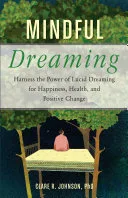
Mindful Dreaming
 82
82

Mindful Dreaming
Clare R. Johnson's Mindful Dreaming offers a refreshingly grounded approach to a topic often shrouded in New Age vagueness. The integration of mindfulness techniques with lucid dreaming is not merely a theoretical exercise; Johnson provides practical exercises that feel achievable, even for those skeptical of altered states. Her explanation of "dream language" as a learnable syntax, rather than mystical pronouncements, is particularly effective. A notable strength is the emphasis on applying dream insights to waking life, moving beyond mere entertainment or passive observation. However, the book's early chapters, while necessary for foundational understanding, might feel slightly slow for readers already familiar with basic mindfulness or dream theory. The true power emerges as Johnson guides readers through the process of actively engaging with and shaping their dreamscapes. Mindful Dreaming succeeds in bridging the gap between introspective practice and tangible personal development.
📝 Description
82
### What It Is Mindful Dreaming by Clare R. Johnson, PhD, offers a distinct approach to understanding and engaging with dreams. Published in 2018, it moves beyond simple dream interpretation or the mechanics of lucid dreaming. The core innovation lies in integrating mindfulness principles with dreamwork. This creates a framework for not just remembering dreams, but for actively participating in them and using that dream experience to foster personal growth and improve waking life.
### Who It's For This book is suited for individuals seeking a deeper connection with their subconscious through their dreams. It will appeal to those who have explored dream interpretation or lucid dreaming techniques but found them lacking, or who are already engaged in mindfulness practices. It's for anyone interested in using their sleep state as a tool for self-discovery, enhanced creativity, and practical problem-solving in their daily existence. The step-by-step guidance makes it accessible to beginners while offering depth for the more experienced.
### Historical Context Published in 2018, Mindful Dreaming emerged during a period of renewed interest in consciousness studies and contemplative practices. While lucid dreaming research gained traction in the late 20th century, notably with figures like Stephen LaBerge, Johnson's work distinguishes itself by explicitly merging it with established mindfulness traditions, which have roots stretching back to ancient Buddhist practices. This integration reflects a broader cultural shift towards holistic wellness and psychological exploration, moving away from purely analytical or narrowly defined spiritual paths. The book taps into the growing desire for accessible, evidence-informed methods for inner exploration.
### Key Concepts The book introduces the concept of "dream language," suggesting that dreams communicate in a unique symbolic syntax that can be learned. It emphasizes "waking up in dreams," a central tenet of lucid dreaming, but frames it through the lens of mindful awareness. A significant principle is the "transformation of dreams" – not just observing them, but actively shaping the dream narrative to enact desired changes or gain insights that can then be applied to waking life. The work also touches upon improving sleep quality as a foundational element for richer dream recall and lucidity.
💡 Why Read This Book?
• Learn a unique "dream language" that moves beyond generic symbolism, enabling you to decipher personal dream narratives and apply their specific messages to your waking challenges, as detailed in Johnson's explanation of dream syntax. • Develop the ability to "wake up in dreams" through integrated mindfulness techniques, allowing for conscious exploration and interaction within your dreamscape, a core practice introduced in the book's early sections. • Transform your dream experiences into catalysts for real-world change by learning to shape dream scenarios and bring back actionable insights, a practical application emphasized throughout the work's step-by-step guidance.
⭐ Reader Reviews
Honest opinions from readers who have explored this book.
❓ Frequently Asked Questions
What is the primary difference between Mindful Dreaming and other lucid dreaming books?
Mindful Dreaming distinguishes itself by integrating established mindfulness principles with lucid dreaming techniques. This fusion aims to enhance awareness not only within the dream state but also in waking life, fostering a more connected and intentional approach to dream exploration.
Can this book help improve general sleep quality?
Yes, the book addresses foundational aspects of sleep hygiene and mindful presence before sleep. By cultivating a calmer, more aware state, readers are guided toward improving sleep quality and waking up feeling more refreshed.
Is this book suitable for beginners in dream work?
Absolutely. Clare R. Johnson provides a step-by-step guide that makes the concepts accessible. The book starts with fundamental principles and gradually introduces more advanced techniques for understanding and interacting with dreams.
What does 'waking up in our dreams' mean in the context of this book?
It refers to achieving lucidity within a dream – becoming aware that you are dreaming while the dream is still in progress. This awareness, enhanced by mindfulness, allows for conscious observation and interaction within the dream environment.
How does mindfulness enhance dream interpretation?
Mindfulness cultivates present-moment awareness and non-judgmental observation. When applied to dreams, it helps in recognizing dream elements more clearly and understanding their personal significance without imposing preconceived interpretations.
What is the significance of 'transforming dreams' as discussed by Clare R. Johnson?
Transforming dreams involves actively influencing the dream narrative or engaging with its content in a way that yields insights or resolutions. This active participation aims to bring about positive changes and learning that can be integrated into waking life.
🔮 Key Themes & Symbolism
Mindfulness and Dream Awareness
This theme explores the core integration of mindfulness practices into the realm of dreamwork. Johnson posits that cultivating present-moment awareness, a hallmark of mindfulness, is crucial for both recalling dreams with greater clarity and achieving lucidity. By applying techniques like mindful breathing and body scans before sleep and upon waking, readers can develop a heightened sensitivity to the subtle shifts in consciousness that signal a dream state. This heightened awareness allows for a more objective and less reactive engagement with dream content, paving the way for deeper understanding and conscious interaction within the dreamscape.
Decoding Dream Language
Johnson presents dreams not as random occurrences but as a form of communication, a unique "dream language." This theme focuses on learning to interpret the symbolic syntax and personal resonance of dream imagery and narratives. Instead of relying on universal dream dictionaries, the approach emphasizes understanding how specific symbols or events function within the dreamer's unique psychological and experiential context. The book offers methods for tracking recurring motifs, personal associations, and emotional undercurrents within dreams to unlock their specific messages.
Lucidity and Dream Transformation
Central to the book is the concept of "waking up in dreams" – achieving a state of lucidity where the dreamer recognizes they are dreaming. This theme delves into practical techniques, informed by mindfulness, to induce and maintain lucidity. More importantly, it explores how lucidity can be used not just for passive observation but for active "transformation." This involves consciously engaging with dream characters, environments, or challenges to explore possibilities, resolve inner conflicts, or rehearse desired behaviors, thereby translating dream insights into tangible improvements in waking life.
Sleep Quality and Dream Recall
This theme underscores the foundational importance of healthy sleep for effective dreamwork. Johnson links improved sleep quality directly to enhanced dream recall and the potential for lucidity. The book offers guidance on establishing beneficial sleep hygiene and cultivating a peaceful pre-sleep routine through mindful practices. By optimizing the physical and mental conditions for sleep, readers are better equipped to access their dream states fully, remember their experiences vividly, and engage more deeply with the material presented by their subconscious.
💬 Memorable Quotes
“The end result is a step-by-step guide for understanding dream language, waking up in our dreams, and transforming them to improve our waking lives.”
— This summarizes the book's core promise: a practical, actionable methodology. It highlights the three key stages – comprehension, lucidity, and application – moving from passive reception to active engagement and integration.
“What dreams are and why they are so important”
— This framing suggests the book begins with establishing the fundamental value and nature of dreams. It implies a foundational exploration before delving into specific techniques or interpretations.
“How to improve sleep quality and wake up refreshed”
— This indicates a practical focus on the physiological and psychological aspects of sleep. It connects restorative sleep directly to the potential for richer dream experiences and overall well-being.
“How to have lu[cid dreams]”
— This points to the book's direct instruction on achieving lucidity. It suggests that specific, learnable techniques are provided to enable dreamers to gain awareness within their dreams.
“Clare R. Johnson, PhD combines the principles of mindfulness with a fresh approach to lucid dreaming.”
— This highlights the unique methodological contribution of the author. It emphasizes the innovative synthesis of two distinct, yet complementary, fields of practice.
🌙 Esoteric Significance
Tradition
While not explicitly aligned with a single rigid esoteric lineage, Mindful Dreaming draws implicitly from contemplative traditions that emphasize direct experience and awareness, akin to certain Buddhist meditative practices. It also echoes Gnostic principles of awakening and self-knowledge through inner exploration. The emphasis on transforming inner landscapes to affect outer reality aligns with Hermetic philosophies of 'As Above, So Below.' Johnson's work can be seen as a modern, secularized interpretation and application of these age-old principles of consciousness cultivation.
Symbolism
The core symbolism revolves around the dreamscape itself as a symbolic representation of the inner self. 'Waking up in dreams' acts as a potent symbol for achieving gnosis or true self-awareness, breaking free from illusion. The act of 'transforming dreams' symbolizes the alchemical process of inner transmutation, where the raw material of the subconscious is consciously reshaped into something more refined or understood. The dream itself becomes a symbolic mirror reflecting the dreamer's current state and potential.
Modern Relevance
This work is highly relevant to contemporary fields like transpersonal psychology, consciousness studies, and integrated therapeutic approaches. Thinkers and practitioners exploring the intersection of psychology, neuroscience, and contemplative practice find value in Johnson's structured methodology. It resonates with modern wellness movements seeking practical tools for stress reduction, creativity enhancement, and self-discovery, bridging ancient wisdom with contemporary scientific and psychological inquiry.
👥 Who Should Read This Book
['• Individuals interested in Jungian psychology and dream analysis seeking practical, experiential techniques to complement theoretical understanding.', '• Practitioners of mindfulness and meditation looking to deepen their awareness by extending it into their sleep states and dream lives.', '• Aspiring lucid dreamers who desire a structured, step-by-step guide that incorporates mindful presence to enhance control and recall within dreams.']
📜 Historical Context
Clare R. Johnson's Mindful Dreaming, published in 2018, emerged within a landscape increasingly receptive to consciousness exploration and integrated wellness practices. The late 20th and early 21st centuries saw a resurgence of interest in altered states and subjective experience, building on the work of pioneers like Stephen LaBerge in lucid dreaming and established traditions of mindfulness meditation. Johnson's contribution lies in the explicit synthesis of these two domains, offering a structured approach that moves beyond anecdotal accounts or purely theoretical discussions. While figures like Carl Jung had previously explored dream interpretation through psychoanalytic lenses, and various esoteric traditions offered dreamwork, Johnson’s method is notable for its direct integration with secularized mindfulness, making it accessible to a broader audience. The book arrived at a time when online communities and accessible research were popularizing practices like meditation and yoga, positioning mindful dreaming as a natural extension of this trend toward self-awareness and personal development.
📔 Journal Prompts
Your personal dream language: Identify one recurring symbol from your dreams and its specific meaning for you.
The moment of lucidity: Describe the feeling and sensory details of the first time you consciously "woke up in a dream."
Applying dream insights: Reflect on a recent dream and how its message could be applied to a waking situation.
Sleep quality and dreams: Note any correlations you observe between your sleep hygiene and the vividness or recall of your dreams.
Mindful pre-sleep: Detail your experience with a mindful practice before sleep and any immediate impact on your dream recall.
🗂️ Glossary
Dream Language
The unique symbolic and narrative system through which dreams communicate personal meaning to the dreamer. It's considered learnable and context-dependent, rather than relying on universal interpretations.
Lucid Dreaming
The state of being aware that one is dreaming while the dream is occurring. This awareness allows for potential conscious interaction with and influence over the dream's content and progression.
Mindfulness
A mental state achieved by focusing one's awareness on the present moment, while calmly acknowledging and accepting one's feelings, thoughts, and bodily sensations without judgment.
Waking Up in Dreams
Synonymous with achieving lucidity; the process of realizing one is dreaming during the dream state itself.
Dream Transformation
The active process of consciously engaging with and potentially altering the narrative, characters, or environment within a lucid dream to explore possibilities or enact change.
Dream Recall
The ability to remember dreams upon waking. The book suggests techniques, often linked to mindfulness, to improve this capacity.
Symbolic Syntax
Refers to the underlying structure and grammar of dream language, suggesting that dream symbols and events follow a discernible, albeit personal, pattern.