Messianic Mystics
 78
78

Messianic Mystics
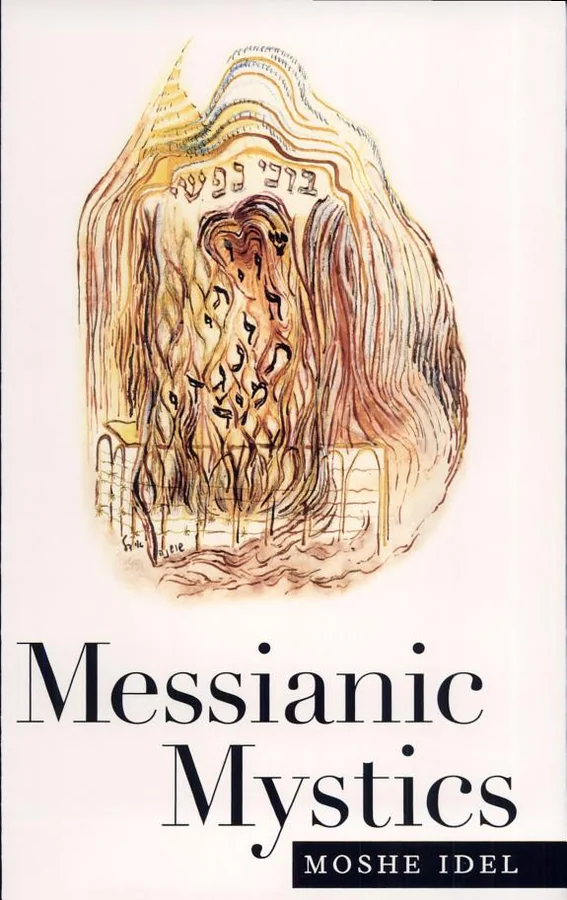
Moshe Idel’s *Messianic Mystics* offers a rigorous, if sometimes dense, exploration of how the profound yearning for messianic redemption became inextricably linked with the inner lives of mystics. Idel meticulously traces the evolution of this concept, demonstrating how individual spiritual quests often mirrored or even anticipated collective salvation. A particular strength lies in his analysis of figures who experienced a personal messianic awakening, such as Abraham Abulafia, showcasing the internalization of messianic themes. However, the sheer density of scholarly apparatus and the intricate textual analysis may prove challenging for readers without a specialized background in Kabbalistic studies. The section discussing the influence of Christian messianic concepts on Jewish thought, while insightful, occasionally feels like a slight detour from the core focus on Jewish mystical experience. Ultimately, *Messianic Mystics* stands as a significant contribution for scholars seeking to understand the psychological and theological underpinnings of Jewish messianism.
📝 Description
78
Moshe Idel's 2000 book examines messianism and mysticism in Jewish thought.
Moshe Idel's *Messianic Mystics* analyzes the connection between messianic ideas and mystical practice in Jewish traditions. Published in 2000, the book looks at how ecstatic experiences and visions were often understood in the context of messianic hopes. Idel focuses on individuals and groups who merged personal spiritual quests with collective desires for redemption.
This scholarly work is for those already familiar with Kabbalah and Jewish mysticism. It requires a solid background in Jewish history and theology. The book is especially useful for readers interested in the experiential aspects of religion and how individual spiritual change relates to salvation on a larger scale. It is not a starting point for newcomers but a detailed study for those with existing knowledge.
This book engages with the long history of Jewish mysticism, particularly the Kabbalah. Idel's scholarship builds on figures like Gershom Scholem, who studied the historical development of these traditions. By comparing medieval and early modern texts, Idel highlights continuities and shifts in messianic thought across various mystical communities. The work addresses ongoing academic discussions about the evolution of these concepts.
💡 Why Read This Book?
• Gain insight into the concept of the 'mystic messiah' as detailed in Idel's analysis of figures like Abraham Abulafia, understanding how individual spiritual fulfillment was intertwined with collective redemption. • Explore the transformation of messianic expectation from communal to personal quests, as discussed in the book's examination of medieval and early modern Kabbalistic circles. • Understand the complex scholarly dialogue Idel engages with, particularly his approach to analyzing Jewish mysticism in contrast to earlier works by scholars like Gershom Scholem, providing context for the field's development.
⭐ Reader Reviews
Honest opinions from readers who have explored this book.
❓ Frequently Asked Questions
What is the central thesis of Moshe Idel's *Messianic Mystics*?
The central thesis is that messianic aspirations in Jewish thought were not solely communal but also deeply personal, manifesting in the ecstatic experiences and visionary journeys of individual mystics who often perceived themselves as embodying or hastening the messianic era.
Which historical periods does *Messianic Mystics* primarily cover?
The book predominantly covers the medieval and early modern periods of Jewish history, focusing on Kabbalistic movements and figures from the 13th century onwards, including the era of Abraham Abulafia.
How does Idel's work relate to Gershom Scholem's scholarship?
Idel builds upon and often revises Gershom Scholem's foundational work on Jewish mysticism and messianism. While Scholem established the historical landscape, Idel offers more nuanced interpretations of individual mystical experiences and their messianic dimensions.
What role do ecstatic practices play in the book?
Ecstatic practices, such as meditative techniques and visionary states, are presented as crucial pathways through which mystics experienced messianic consciousness, often seeking direct communion with the divine or prophetic insight.
Is *Messianic Mystics* accessible to a general audience interested in spirituality?
While the subject matter is fascinating, the book is written for an academic audience. It requires a strong background in religious studies and Jewish mysticism to fully appreciate its scholarly depth and complex arguments.
What does the book suggest about the internalization of messianic ideas?
It suggests a significant internalization where the grand narrative of messianic redemption became a framework for understanding profound personal spiritual crises, breakthroughs, and the attainment of a unique messianic consciousness by the mystic.
🔮 Key Themes & Symbolism
The Mystic Messiah
Idel meticulously examines the concept of the 'mystic messiah,' individuals who experienced messianic consciousness not just as a belief but as a lived reality. This theme explores how figures like Abraham Abulafia, through intense ecstatic practices and visionary experiences, perceived their own spiritual state as intrinsically linked to the broader messianic redemption of Israel. The book highlights the internalization of messianic aspirations, transforming them from purely communal hopes into profound personal encounters with the divine, often involving esoteric knowledge and practices.
Ecstasy and Visionary States
A central focus is the role of ecstatic practices and visionary states in shaping messianic mysticism. Idel details how various techniques—ranging from contemplative exercises to the use of divine names—were employed by mystics to achieve altered states of consciousness. These states were often interpreted as direct communications with God or prophetic insights, serving as the experiential bedrock for their messianic claims and their understanding of the unfolding of redemption. The book demonstrates how these inner journeys were seen as crucial for both personal salvation and the hastening of the final redemption.
Internalization of Redemption
This theme addresses the profound shift from understanding messianism solely as a future historical event to experiencing it as an ongoing, internal reality. *Messianic Mystics* illustrates how mystics, through their rigorous spiritual disciplines, sought to embody the redemptive process within themselves. This involved not only personal transformation but also the belief that their heightened spiritual state could influence or prefigure the ultimate redemption of the world, blurring the lines between individual spiritual ascent and collective salvation.
Kabbalistic Frameworks
The book is deeply rooted in Kabbalistic thought, analyzing how its complex symbolic systems and theological doctrines provided the conceptual language for messianic mysticism. Idel discusses how concepts like the Sefirot, divine emanations, and the restoration of cosmic order were reinterpreted by mystics to articulate their personal experiences of divine union and their role in the messianic drama. The work showcases the intellectual dynamism within Kabbalah, where ancient traditions were constantly adapted to express novel forms of spiritual yearning and redemptive hope.
💬 Memorable Quotes
“The messianic idea was not merely a future hope but an experiential reality for certain mystics.”
— This interpretation highlights Idel's core argument that messianism in Jewish mysticism was not confined to eschatological speculation but was actively lived and experienced by individuals through their intense spiritual practices and visionary encounters.
“Ecstatic states served as a conduit for experiencing divine presence and prophetic inspiration.”
— This points to the critical role of altered states of consciousness in Jewish mysticism, suggesting that these experiences were seen as direct interfaces with the divine, enabling mystics to access knowledge and a sense of participation in the messianic process.
“The personal quest for union with God often mirrored the collective desire for redemption.”
— This paraphrase captures the idea that the intensely personal spiritual journeys of mystics were frequently understood through the macrocosmic lens of national redemption, linking individual salvation to the fate of the community and the world.
“Abraham Abulafia's prophetic experiences are central to understanding the internalization of messianic consciousness.”
— This focuses on a key figure in Idel's analysis, emphasizing how Abulafia's claims of prophecy and his specific ecstatic methods provide a concrete example of how individual mystics could embody or claim to instigate messianic transformations.
“Kabbalistic doctrines provided the symbolic and theological architecture for messianic mysticism.”
— This interpretation underscores the foundational importance of Kabbalah, explaining that its intricate system of symbols and beliefs offered the essential framework through which mystics articulated and understood their deeply personal messianic experiences.
🌙 Esoteric Significance
Tradition
This work is firmly situated within the tradition of Jewish Kabbalah, specifically exploring its messianic and ecstatic dimensions. Idel delves into how Kabbalistic cosmology, theosophy, and meditative practices were adapted and intensified by mystics seeking to realize or hasten messianic redemption. He moves beyond a purely historical account to illuminate the experiential core of these traditions, showcasing how Kabbalistic concepts were not just abstract doctrines but living principles guiding profound spiritual quests for divine union and redemption.
Symbolism
Key symbols explored include the 'Divine Name' (Shem HaMephorash) and its use in ecstatic practices, believed by mystics like Abraham Abulafia to unlock prophetic consciousness and bring about messianic revelation. Another motif is the concept of the 'Shekhinah' (Divine Presence), which mystics often sought to unite with, perceiving this union as a microcosm of the larger cosmic redemption. The very act of 'imitatio Christi,' adapted into a Jewish context, becomes symbolic of the mystic's role in embodying or initiating the redemptive process.
Modern Relevance
Contemporary scholars of Jewish mysticism continue to engage with Idel's nuanced analyses of individual experience and the internalization of messianic hope. Thinkers interested in the psychology of religion and altered states of consciousness find Idel’s work particularly relevant. Furthermore, modern Kabbalistic practitioners and spiritual seekers often draw upon his interpretations to understand the personal dimensions of spiritual practice and the perennial quest for redemption, both inner and outer.
👥 Who Should Read This Book
• Scholars of Jewish mysticism and Kabbalah seeking a deeper understanding of the intersection between individual spiritual experience and messianic aspirations, building on foundational works. • Advanced students of comparative religion interested in how messianic themes manifest across different spiritual traditions, particularly within ecstatic and visionary contexts. • Researchers into altered states of consciousness and the psychology of religion, who can find detailed case studies of intense spiritual experiences linked to profound theological concepts.
📜 Historical Context
Moshe Idel’s *Messianic Mystics*, published in 2000, arrived at a time when the academic study of Jewish mysticism, particularly Kabbalah, was well-established, largely thanks to the pioneering work of scholars like Gershom Scholem. Idel’s book engages directly with Scholem's interpretations, often offering alternative readings and expanding the scope of inquiry. While Scholem focused heavily on the historical development and communal aspects of messianic movements, Idel emphasizes the individual, experiential, and psychological dimensions of messianic consciousness within mysticism. The era saw a rise in comparative religious studies, allowing Idel to draw parallels and contrasts with other mystical traditions, although his primary focus remained on the Jewish milieu. The reception within academia acknowledged Idel’s detailed textual analysis and his contribution to understanding the subjective experience of messianism, further fueling scholarly debate on the nature and evolution of Jewish esoteric thought.
📔 Journal Prompts
The personal experience of messianic consciousness as described by mystics.
Abraham Abulafia's ecstatic techniques and their connection to prophecy.
The transformation of communal messianic hopes into individual spiritual quests.
The role of visionary states in accessing divine presence.
Kabbalistic symbolism as a language for expressing personal redemption.
🗂️ Glossary
Messianism
A belief system centered on the expectation of a redeemer figure or a transformative era of salvation, often involving divine intervention and the restoration of justice and peace.
Kabbalah
A system of Jewish mysticism that explores the nature of God, the creation of the universe, and the relationship between the divine and the human, often through symbolic interpretation of the Torah.
Ecstasy
A state of intense emotion or spiritual fervor, often characterized by a trance-like condition, a sense of divine presence, or a temporary loss of self-awareness.
Visionary Experience
A subjective experience involving vivid mental imagery or perceptions that are interpreted as divine revelations, prophetic insights, or encounters with spiritual realities.
Shekhinah
In Jewish mysticism, the feminine aspect of the divine presence, often depicted as dwelling among humans or in exile, whose restoration signifies cosmic healing and redemption.
Divine Name (Shem HaMephorash)
A specific, often highly sacred, name or set of names of God, believed by some mystics to possess immense power for spiritual attainment, contemplation, and prophetic vision.
Imitatio Christi
A Christian concept meaning 'imitation of Christ,' which Idel discusses in relation to Jewish mystics who sought to emulate divine attributes or messianic figures within their own spiritual paths.