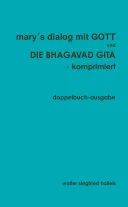
mary´s dialog mit GOTT und DIE BHAGAVAD GITA - komprimiert
 82
82

mary´s dialog mit GOTT und DIE BHAGAVAD GITA - komprimiert
Walter Siegfried Holleis’s "mary´s dialog mit GOTT und DIE BHAGAVAD GITA - komprimiert" is an ambitious, albeit brief, attempt to harmonize Marian discourse with Vedic philosophy. The strength lies in its audacious premise: finding common threads between the Ave Maria and the battlefield dialogues of Krishna and Arjuna. Holleis’s condensation of these vast traditions into a compact format is commendable for accessibility. However, the compression inevitably leads to a certain superficiality; the profound depth of either tradition feels somewhat truncated. A particularly striking point is the juxtaposition of Mary’s quiet acceptance of divine will with Arjuna’s existential crisis and subsequent spiritual awakening, offering a unique angle on devotion. The work's limitation is its brevity, which leaves the reader wanting more elaboration on the intricate philosophical connections.
This text serves as a concise, provocative introduction to inter-spiritual dialogue.
📝 Description
82
Walter Siegfried Holleis's "mary´s dialog mit GOTT und DIE BHAGAVAD GITA - komprimiert" contrasts the figure of Mary with the Bhagavad Gita.
This work by Walter Siegfried Holleis presents a condensed comparison between Christian and Hindu spiritual texts. It specifically juxtaposes the narrative of Mary's divine dialogue with the teachings found in the Bhagavad Gita. The book aims to identify connections and common ground between these seemingly different spiritual paths.
It is designed for individuals engaged in a serious study of comparative religion and esoteric philosophy. Readers who seek to understand the underlying unity in diverse belief systems will find this text particularly relevant. Those interested in mystical interpretations within both Christianity and Eastern traditions will discover valuable insights.
The text examines divine communication through two distinct frameworks. It considers the personal, dialogical relationship with the divine, potentially seen in Mary's experience, alongside the duty oriented, philosophical path described in the Bhagavad Gita. Concepts such as surrender, divine will, and the nature of spiritual accomplishment are analyzed within these differing perspectives.
Walter Siegfried Holleis's work likely emerged in the early to mid-20th century, a period marked by significant interest in syncretic spiritual thought. Movements like Theosophy actively sought to identify a universal religion underlying various traditions. Holleis's approach, which synthesizes elements from Christian and Hindu esotericism, fits within this intellectual milieu. This era saw many thinkers attempting to bridge Eastern and Western mystical traditions, creating a rich environment for comparative spiritual studies.
💡 Why Read This Book?
• Gain a unique perspective on divine discourse by comparing Mary's dialogue with God to Krishna's teachings in the Bhagavad Gita, understanding how different traditions approach spiritual communication. • Explore the concept of surrender and divine will through Holleis’s juxtaposition of Christian and Hindu frameworks, learning how acceptance of fate is portrayed across cultures. • Discover potential commonalities between Western esoteric interpretations of Mary and Eastern Vedantic philosophies, offering a fresh lens on universal spiritual truths.
⭐ Reader Reviews
Honest opinions from readers who have explored this book.
❓ Frequently Asked Questions
What is the primary aim of Walter Siegfried Holleis's "mary´s dialog mit GOTT und DIE BHAGAVAD GITA - komprimiert"?
The book aims to bridge Christian and Hindu spiritual traditions by comparing the concept of divine dialogue, as potentially experienced by Mary, with the philosophical teachings found in the Bhagavad Gita.
How does the book approach the Bhagavad Gita?
It presents a compressed version of the Bhagavad Gita's core teachings, focusing on its philosophical dialogues, particularly the discussions between Krishna and Arjuna concerning duty and spiritual realization.
What role does Mary play in this dialogue?
Mary serves as a focal point for Christian mystical experience and her dialogue with God represents a personal, devotional approach to the divine, contrasted with the more philosophical discourse of the Gita.
Is this book suitable for beginners in comparative religion?
Yes, its compressed nature makes it an accessible introduction for those new to comparative religion or esoteric studies, offering a simplified comparison of two major spiritual texts.
What is the intended audience for this work?
The book is aimed at readers interested in esoteric philosophy, comparative religion, and those seeking to find common ground between Western Christian mysticism and Eastern Vedic traditions.
Does the book offer new theological interpretations?
While not presenting entirely novel interpretations, the book offers a unique synthesis by placing these two traditions side-by-side, inviting readers to draw their own conclusions about their shared themes.
🔮 Key Themes & Symbolism
Divine Dialogue and Revelation
The work scrutinizes the nature of divine communication across different spiritual paradigms. It contrasts the intimate, personal dialogue attributed to Mary with God, characterized by faith and acceptance, against the more didactic, philosophical discourse presented by Krishna to Arjuna in the Bhagavad Gita. This exploration seeks to identify universal modes through which the divine reveals itself, whether through personal mystical experience or through structured philosophical teachings, suggesting that direct divine engagement transcends specific religious doctrines.
Surrender and Duty
A central theme is the concept of surrender to a higher will, examined through both Christian and Hindu perspectives. For Mary, this is often framed as obedient surrender to God's plan. In the Bhagavad Gita, it manifests as the performance of one's dharma (duty) without attachment to the results, a form of selfless action offered to the divine. Holleis connects these ideas, suggesting that true spiritual progress involves relinquishing ego-driven desires and aligning oneself with cosmic or divine order, regardless of the specific theological framework.
Syncretism of Spiritual Paths
The core of the book lies in its syncretic approach, attempting to find underlying unity between disparate religious and philosophical traditions. By juxtaposing the figure of Mary with the teachings of the Bhagavad Gita, Holleis implies that core spiritual truths are not exclusive to one tradition. This comparative method aims to foster a broader understanding of mysticism and spirituality, moving beyond sectarian boundaries to perceive a universal wisdom tradition.
💬 Memorable Quotes
Direct passages from the work, attributed to the author.
“Mary's quiet acceptance versus Arjuna's crisis.”
— This highlights a central comparative point: the different emotional and intellectual responses to divine encounter, one characterized by serene compliance, the other by profound existential questioning leading to spiritual insight.
“The Bhagavad Gita’s emphasis on selfless action.”
— This refers to the concept of Karma Yoga, where actions are performed as a duty and offered to the divine, detached from personal gain or loss, a philosophical approach to spiritual discipline.
“Mary’s dialog as a model of personal divine relationship.”
— This suggests that the Christian narrative of Mary’s interaction with the divine serves as an archetype for an intimate, personal connection with God, emphasizing faith and inner communion.
“Condensed spiritual wisdom.”
— This reflects the book's primary method of presenting complex theological and philosophical ideas from two major traditions in a significantly shortened, accessible format.
“Bridging Christian and Hindu thought.”
— This captures the book's overarching goal: to find commonalities and create a dialogue between the spiritual insights derived from the figure of Mary and the core tenets of the Bhagavad Gita.
🌙 Esoteric Significance
Tradition
This work fits within the broader stream of Western esoteric thought that seeks to find universal truths across diverse religious traditions, often termed syncretism. It draws implicitly from Hermetic principles of "as above, so below" by connecting celestial/divine narratives with earthly understanding. While not strictly Gnostic or Kabbalistic, it shares their interest in hidden meanings and the potential for direct divine knowledge, bridging the personal devotional aspect of Christianity with the philosophical path of Hinduism.
Symbolism
The figure of Mary herself functions as a potent symbol of receptivity, divine grace, and the embodiment of sacred will. The Bhagavad Gita, particularly its setting on the battlefield of Kurukshetra, symbolizes the inner conflict and the cosmic struggle between dharma and adharma, where spiritual realization is achieved through righteous action. Krishna, as the divine charioteer and teacher, symbolizes divine wisdom and guidance available to the seeker.
Modern Relevance
In an era increasingly focused on interfaith dialogue and personalized spirituality, Holleis's work offers a historical precedent for synthesizing diverse religious narratives. Contemporary spiritual seekers who explore mindfulness, comparative mysticism, or non-dual philosophies might find resonance in its attempt to unify seemingly disparate paths toward divine understanding and inner peace.
👥 Who Should Read This Book
• Students of comparative religion seeking to understand early 20th-century syncretic thought and its methodologies for bridging Eastern and Western spiritual traditions. • Devotees of Christian mysticism interested in exploring parallels between Marian apparitions/dialogues and Eastern yogic philosophies, particularly the Bhagavad Gita. • Esoteric practitioners looking for condensed philosophical insights that connect concepts of divine will, duty, and surrender across different cultural and religious contexts.
📜 Historical Context
Walter Siegfried Holleis's "mary´s dialog mit GOTT und DIE BHAGAVAD GITA - komprimiert" emerged from a period, likely the mid-20th century, marked by intense interest in comparative religion and esoteric synthesis. Theosophy, spearheaded by Helena Blavatsky in the late 19th century, had already popularized the notion of a 'Secret Doctrine' underlying all faiths. This intellectual climate fostered works that sought to draw parallels between Eastern and Western spiritual traditions. While thinkers like Aldous Huxley were exploring similar syncretic themes in works like "The Perennial Philosophy" (1945), Holleis’s approach is notable for its specific focus on the Marian figure against the backdrop of the Bhagavad Gita. This was a time when traditional religious boundaries were being questioned, and new forms of spiritual inquiry were taking root, often influenced by the influx of Eastern philosophies into the West.
📔 Journal Prompts
The nature of Mary's dialogue with God.
Arjuna's crisis and Krishna's response.
The concept of selfless action (Karma Yoga).
Receptivity as a spiritual quality.
Finding unity in disparate divine narratives.
🗂️ Glossary
Bhagavad Gita
A significant Hindu scripture forming part of the epic Mahabharata, containing philosophical dialogues between Prince Arjuna and Lord Krishna on duty, devotion, and liberation.
Dharma
In Hinduism, a fundamental concept referring to one's duty, righteousness, ethical conduct, and the natural order of the universe.
Karma Yoga
A path of spiritual discipline in Hinduism emphasizing selfless action performed without attachment to the results, offered as a devotion to the divine.
Syncretism
The merging or attempted merging of different religions, cultures, or schools of thought, often seeking to find common underlying principles.
Marian Dialogue
Refers to the theological and mystical interpretations of the conversations between the Virgin Mary and divine figures, particularly God or angels, within Christian tradition.
Esotericism
Belief systems or spiritual practices focused on hidden knowledge, inner transformation, and often drawing from mystical or occult traditions outside mainstream religion.
Vedantic
Pertaining to the Vedanta school of Hindu philosophy, which focuses on the Upanishads and explores concepts of Brahman (ultimate reality) and Atman (self).