Marc Chagall
 81
81

Marc Chagall
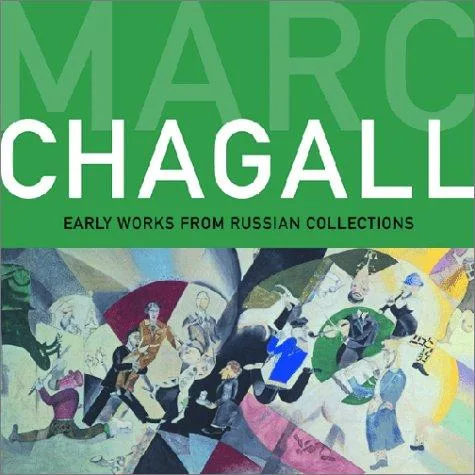
The strength of this volume lies in its focused examination of Chagall's formative years and the conceptual frameworks that informed his art. Petrova and Shatskikh offer a scholarly lens on how Chagall synthesized his Eastern European Jewish upbringing with the radical artistic currents of early 20th-century Paris. The analysis of his 1948 period, particularly concerning his engagement with religious themes and personal iconography, is particularly illuminating. However, the book occasionally leans towards dense art-historical discourse, which might prove challenging for readers less familiar with the specific movements and critical theories of the time. A passage discussing the "Green Violinist" serves as a potent example of how Chagall imbues seemingly whimsical imagery with deep spiritual and cultural resonance. It’s a rigorous study for those willing to engage deeply with its subject.
📝 Description
81
### What It Is This volume presents a significant exploration of Marc Chagall's artistic evolution, focusing on his early to mid-career output. It meticulously examines his unique visual language, which merges personal memory with universal archetypes. The text navigates the complex interplay of his Jewish heritage, his engagement with modernist movements, and his deeply spiritual outlook.
### Who It's For This book is essential for art historians specializing in 20th-century European art, particularly those interested in the avant-garde and its spiritual dimensions. It also serves scholars of comparative mythology and religious iconography, offering visual interpretations of biblical narratives and folk traditions. Collectors and admirers of Chagall's distinctive style will find it an invaluable resource for understanding the underpinnings of his creative process.
### Historical Context Published initially in 1948, this work emerges from a period of intense artistic and societal upheaval following World War II. Chagall, having fled Europe for the United States, was grappling with themes of displacement, memory, and spiritual continuity. The book’s analysis situates Chagall within the broader context of Parisian modernism and its engagement with Symbolism, while also acknowledging his distinct trajectory, separate from the more doctrinaire abstract movements of the era.
### Key Concepts The core of the book revolves around Chagall's distinctive approach to color, form, and subject matter. It highlights his use of floating figures, dreamlike landscapes, and recurring motifs such as the violinists, lovers, and animals. The analysis underscores how these elements function not merely as decorative devices but as carriers of profound symbolic meaning, drawing from Hasidic tales, Kabbalistic concepts, and personal visionary experiences.
💡 Why Read This Book?
• Gain insight into Chagall's unique synthesis of Hasidic folklore and early 20th-century Parisian avant-garde, understanding how motifs like the "floating couple" expressed spiritual union. • Explore the symbolic language of Chagall's art, particularly how recurring images such as the violin and the rooster conveyed themes of tradition, celebration, and resilience. • Understand the artistic and personal context of Chagall's work around 1948, a period marked by displacement and a renewed focus on biblical narratives and personal memory.
⭐ Reader Reviews
Honest opinions from readers who have explored this book.
❓ Frequently Asked Questions
What is the significance of the violin motif in Marc Chagall's art as discussed in this book?
The book highlights the violin as a recurring symbol, often associated with Jewish musicians and the spiritual resonance of music in Hasidic tradition. It represents both celebration and a connection to heritage, particularly evident in works from Chagall's early period.
How does Marc Chagall's Jewish heritage influence his art according to Petrova and Shatskikh?
The text details how Chagall's upbringing in Vitebsk, Belarus, and his immersion in Hasidic culture provided a rich source of imagery, including biblical narratives, folk tales, and symbolic animals. This heritage is central to his unique visual vocabulary.
When was Marc Chagall's early work first critically analyzed in this publication?
This specific analysis of Marc Chagall's work, focusing on its foundational elements, was first published in 1948, capturing a pivotal moment in the artist's career and reception.
What connection does the book draw between Chagall's art and the modernist movements of his time?
The book explores Chagall's relationship with Parisian modernism, noting his engagement with Symbolism and Fauvism while emphasizing his distinct path. It contrasts his deeply personal, spiritual approach with more formalist abstract tendencies.
Does the book discuss Chagall's time in Paris?
Yes, the volume extensively covers Chagall's formative years and artistic development in Paris during the early 20th century, examining his interactions with the avant-garde and how he absorbed and transmuted its influences.
What role do dreamlike landscapes play in Chagall's art as presented in this book?
The book interprets Chagall's dreamlike landscapes, often populated with symbolic figures and animals, as visual manifestations of memory, spiritual vision, and emotional states. They serve as a stage for exploring his unique cosmology.
🔮 Key Themes & Symbolism
Spiritual Symbolism in Visual Form
The work delves into Chagall's profound ability to translate spiritual concepts and religious narratives into a unique visual lexicon. It highlights how familiar motifs like the angel, the bride, and the rooster are imbued with layers of meaning drawn from Jewish mysticism and personal visionary experiences. The book emphasizes that these are not mere decorations but essential carriers of the sacred, providing a bridge between the earthly and the divine for the viewer.
Memory and Identity in Exile
A significant theme is Chagall's exploration of memory, particularly his childhood in Vitebsk, Belarus, and his experiences as an émigré. The book examines how his art became a repository for a lost world, reconfigured through the lens of displacement and longing. Recurring images of his home, family, and community serve as anchors to his identity, demonstrating art's power to preserve and transmute personal history across geographical and temporal divides.
The Synthesis of Folk and Avant-Garde
This volume investigates Chagall's masterful fusion of Eastern European folk art traditions with the radical aesthetics of early 20th-century European modernism. It contrasts his approach with more purely abstract movements, showing how he retained narrative and symbolic content while employing innovative techniques. The book illustrates how elements from Hasidic tales and rural life were reinterpreted through Cubist and Surrealist sensibilities, creating a style that was both deeply rooted and strikingly original.
Biblical Narratives Reimagined
Central to Chagall's oeuvre is his reinterpretation of biblical stories. The book details how he approached these sacred texts not as historical accounts but as sources of universal human drama and spiritual truth. His visual renditions often emphasize the emotional and mystical dimensions, using color and form to convey the transcendence and awe inherent in these foundational myths, making them accessible to a modern consciousness.
💬 Memorable Quotes
“Chagall's palette often echoes the vibrant hues of stained glass and the luminous quality of icons.”
— This interpretation suggests that Chagall's use of color was not arbitrary but intentionally sought to evoke the spiritual intensity and sacred resonance found in religious art forms, particularly those associated with Byzantine and medieval traditions.
“The artist's "floating" figures represent a liberation from earthly constraints, a visual metaphor for spiritual transcendence.”
— This highlights a key symbolic element in Chagall's work. The depiction of figures unbound by gravity is presented as a deliberate artistic choice to convey themes of spiritual ascent, dream states, or an existence beyond the material world.
“Vitebsk, his Belarusian birthplace, serves as a recurring landscape of memory and spiritual origin.”
— This points to the deep connection Chagall maintained with his place of origin, framing it not just as a geographical location but as a psychic and spiritual wellspring that consistently fueled his artistic imagination throughout his life.
“The violin player is a recurring archetype, embodying both the joy of music and the continuity of Jewish tradition.”
— This interpretation emphasizes the multifaceted symbolism of the violin player motif. It connects the image to both the celebratory power of music and the enduring cultural and religious heritage of the Jewish people, which Chagall sought to honor.
“Chagall’s work often appears as a personal midrash, a visual commentary on sacred texts and life experiences.”
— This suggests that Chagall's art functions similarly to rabbinical commentary (midrash), offering a personal, interpretive, and often imaginative exploration of religious themes, folklore, and his own life journey, rendered through his distinctive artistic vision.
🌙 Esoteric Significance
Tradition
This work engages with a distinctly Jewish esoteric tradition, particularly drawing from Hasidic spirituality and Kabbalistic concepts, though interpreted through a modernist lens. Unlike the more structured mystical systems found in Western Hermeticism or Theosophy, Chagall's approach is intensely personal and visionary. The book illustrates how he translates these influences not into codified doctrine but into a fluid, symbolic language that speaks to universal spiritual themes of creation, redemption, and the divine immanence in everyday life.
Symbolism
Key symbols explored include the floating figures, representing spiritual liberation and transcendence beyond the physical realm. The recurring motif of the violin player connects to musical spirituality within Hasidism and the continuity of Jewish cultural memory. Animals, such as the rooster and the donkey, often carry multi-layered meanings, signifying vitality, domesticity, or even prophetic utterance, all rendered within Chagall's unique dreamlike aesthetic.
Modern Relevance
Contemporary artists and thinkers interested in the intersection of spirituality, identity, and visual art find resonance in Chagall's work. His ability to fuse personal narrative with archetypal imagery continues to inspire creators exploring themes of memory, cultural heritage, and the sacred. Practices focused on 'visionary art' or 'spiritual realism' often cite Chagall as a precursor, appreciating his capacity to render the unseen world with emotional authenticity and unique symbolic power.
👥 Who Should Read This Book
• Art historians specializing in 20th-century European art and modernism, seeking a deeper understanding of Chagall's place within artistic movements and his unique spiritual vocabulary. • Students of comparative religion and mythology, interested in visual interpretations of Jewish folklore, biblical narratives, and their symbolic representation in modern art. • Individuals drawn to art that explores themes of memory, identity, exile, and spiritual longing, who appreciate a deeply personal yet universally resonant artistic vision.
📜 Historical Context
First published in 1948, this volume emerged during a period of profound global reevaluation and artistic introspection following World War II. Marc Chagall, having recently returned to France after years in the United States, was solidifying his unique artistic voice, which stood apart from the dominant abstract expressionist trends gaining traction in New York and the resurgence of geometric abstraction in Europe. While artists like Jackson Pollock were exploring primal energies through action painting, and figures such as Piet Mondrian had established rigorous geometric systems, Chagall continued to draw deeply from his Jewish heritage, folklore, and personal visionary experiences. The book’s analysis situates Chagall’s work within the legacy of Symbolism and its engagement with the subconscious, offering a counterpoint to purely formalist concerns. Its reception acknowledged Chagall's distinct contribution, recognizing him as an artist who successfully navigated the spiritual and emotional landscape of a fractured world.
📔 Journal Prompts
Chagall's 'Green Violinist' and its symbolic weight.
The recurring motif of the floating couple: what personal or spiritual liberation does it represent?
Reflections on the landscape of Vitebsk as a spiritual anchor in Chagall's oeuvre.
Analyze the symbolic role of animals in Chagall's visual storytelling.
How does Chagall's use of color in his religious works convey spiritual transcendence?
🗂️ Glossary
Vitebsk
The Belarusian city where Marc Chagall was born and spent his formative years. It serves as a recurring symbol of home, memory, and his deep connection to Jewish cultural traditions in his artwork.
Hasidism
A Jewish religious movement founded in 18th-century Eastern Europe, emphasizing spiritual devotion, mysticism, and joy in serving God. Chagall's art is deeply influenced by its folklore and spiritual practices.
Kabbalah
A system of Jewish mysticism that explores the nature of God and the universe through esoteric interpretations of scripture. While Chagall's engagement was intuitive, Kabbalistic concepts inform the symbolic depth of his work.
Midrash
A method of biblical interpretation in Judaism that seeks to find deeper meaning, ethical lessons, or narrative elaboration within the sacred texts. Chagall's art is often seen as a visual midrash.
Avant-garde
Art movements that are experimental, radical, or unorthodox with respect to art, culture, and society. Chagall engaged with Parisian avant-garde circles but maintained a distinct personal style.
Symbolism
An artistic and literary movement of the late 19th century that emphasized ideas, emotions, and subjective experiences over objective reality. Chagall drew upon its focus on suggestion and inner meaning.
Fauvism
An early 20th-century art movement characterized by strong colors and bold brushwork, prioritizing emotional expression over representational accuracy. Chagall's use of vibrant color shows some affinity.