Magical Capitalism
 72
72

Magical Capitalism
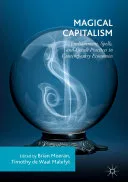
Brian Moeran and Timothy de Waal Malefyt’s *Magical Capitalism* offers a compelling, if sometimes uneven, examination of how enchantments, sorcery, and occult thinking permeate modern economic structures. The work’s strength lies in its refusal to cordon off 'magic' to a distant past or exotic locale, instead demonstrating its active role in contract law, finance, and advertising. One particularly striking essay explores how scientific discourse itself can employ ritualistic elements to legitimize its findings, echoing earlier anthropological observations on belief systems. However, the collection occasionally falters in maintaining a consistent critical distance, sometimes appearing to accept the efficacy of these 'magical' elements too readily without sufficiently dissecting the underlying social and psychological mechanisms. Despite this, the book provides a valuable lens for understanding the often-unacknowledged irrationalities and belief systems underpinning contemporary capitalism. It is a necessary corrective to purely rationalist accounts of market behavior.
📝 Description
72
### What It Is Magical Capitalism, a 2018 collection of essays edited by Brian Moeran and Timothy de Waal Malefyt, investigates the pervasive presence of magical thinking and practices within contemporary capitalist economies. It challenges the notion that magic is confined to pre-modern or non-Western societies, arguing instead that it thrives in the heart of global finance, law, science, and marketing.
### Who It's For This volume is intended for scholars and students of anthropology, sociology, cultural studies, and religious studies, as well as anyone interested in the hidden currents of belief and ritual that shape modern economic and social life. It appeals to those who question the purely rational veneer of capitalism and seek to understand its deeper, often occult, underpinnings.
### Historical Context The book emerged from a post-2008 financial crisis intellectual climate, where skepticism towards established economic paradigms was high. It builds upon earlier anthropological work on magic and ritual, such as that by Bronisław Malinowski, but re-applies these frameworks to the seemingly mundane institutions of advanced capitalism. The collection implicitly engages with debates surrounding the secularization thesis, questioning its applicability in the face of persistent enchantment.
### Key Concepts Central to Magical Capitalism is the idea that elements traditionally studied as 'magic'—like spells, divination, or occult influences—operate within modern systems. This includes examining how contract law functions as a form of binding ritual, how marketing employs enchantment to create desire, and how financial markets can exhibit quasi-religious faith and speculative rituals.
💡 Why Read This Book?
• Gain a new perspective on seemingly mundane economic activities by understanding how ritual and enchantment, concepts previously associated with shamanism, are actively employed in finance and marketing. • Comprehend the function of contract law not just as legal agreement but as a form of binding ritual, a concept explored in the book's analysis. • Recognize how modern science and advertising utilize occult-like persuasive techniques and belief structures, challenging the notion that magic is absent from 'developed' societies.
⭐ Reader Reviews
Honest opinions from readers who have explored this book.
❓ Frequently Asked Questions
What is the core argument of Magical Capitalism?
The core argument is that practices akin to magic—such as sorcery, enchantment, and occult thinking—are not remnants of pre-modern societies but are actively present and flourishing within contemporary capitalist systems, influencing everything from law to finance.
Which areas of capitalism does the book examine?
The book examines a wide array of capitalist aspects, including contract law, science, finance, business, marketing, advertising, cultural production, and the political economy in general.
Who are the editors of Magical Capitalism?
The editors are Brian Moeran and Timothy de Waal Malefyt. The book was first published in July 2018.
How does the book redefine 'magic'?
It redefines magic by demonstrating that phenomena studied by anthropologists in less developed societies—like shamanism and occult practices—have modern analogues and are integral to how capitalist societies function and maintain belief.
What is the significance of contract law in the book's analysis?
Contract law is presented as a form of ritualistic practice that binds parties through formalized language and enforced agreements, functioning analogously to spells or incantations in binding outcomes.
Does the book suggest capitalism is inherently magical?
The book suggests that elements of magical thinking and practice are deeply embedded within and essential to the functioning of capitalism, rather than capitalism being inherently magical itself.
🔮 Key Themes & Symbolism
The Enchantment of Finance
This theme explores how financial markets operate with a quasi-religious fervor, driven by belief, speculation, and ritualistic practices akin to divination. Essays analyze how complex financial instruments and market behaviors can be understood through the lens of occult systems, where faith in unseen forces and the power of symbolic language play crucial roles in generating perceived value and managing risk, mirroring ancient magical attempts to control destiny.
Ritual in Contract Law
The book posits that contract law, far from being purely rational, functions as a powerful form of ritual. The formalized language, the solemnity of agreement, and the enforced consequences act as a binding spell, ensuring adherence and shaping social reality. This perspective draws parallels to anthropological studies of sorcery and covenant-making, highlighting how structured pronouncements and symbolic commitments create social order and predictability within economic exchanges.
Marketing as Modern Sorcery
Marketing and advertising are dissected as contemporary forms of sorcery, employing enchantment to create desire and manipulate perception. Through carefully crafted narratives, symbols, and appeals to subconscious needs, brands cast spells on consumers, transforming commodities into objects of veneration. This section illuminates how the persuasive techniques used in modern commerce echo ancient magical practices aimed at influencing minds and outcomes.
Science and Occult Logic
Contrary to the image of pure rationality, the book argues that scientific discourse and practice often incorporate elements of occult logic and ritual. The legitimization of knowledge, the creation of specialized jargon, and the establishment of authoritative narratives can be seen as performative acts that imbue scientific findings with a form of enchantment, ensuring belief and acceptance within society.
💬 Memorable Quotes
“The kind of magic studied by anthropologists... is not only alive and well, but flourishing in the midst of so-called ‘modern’ societies.”
— This statement encapsulates the central thesis: magic isn't a relic of the past but a vibrant, active force within contemporary capitalism, challenging our assumptions about rationality and progress.
“Contract law functions as a form of binding ritual.”
— This highlights how seemingly mundane legal frameworks are reframed as performative acts with quasi-magical properties, creating and enforcing social realities through formalized agreements.
“Financial markets exhibit speculative rituals and quasi-religious faith.”
— This interpretation points to the belief systems and ritualistic behaviors that underpin economic speculation, suggesting that emotional and faith-based elements are as crucial as logical analysis.
“Marketing employs enchantment to create desire.”
— This suggests that the persuasive power of advertising operates through techniques of enchantment, aiming to captivate and influence consumers on a level beyond rational consideration.
“Occult thinking is present in the political economy.”
— This broadens the scope, indicating that subtle, non-rational influences and belief structures associated with the occult are woven into the very fabric of how economies are structured and managed.
🌙 Esoteric Significance
Tradition
While not strictly adhering to a single esoteric lineage like Hermeticism or Gnosticism, *Magical Capitalism* draws heavily on the anthropological study of shamanism, sorcery, and occult practices. It reinterprets these concepts within a secularized, modern context, acting as a bridge between traditional esoteric studies and contemporary social science, revealing how ancient modes of understanding and influencing reality persist.
Symbolism
The book implicitly deals with symbols of binding and manifestation, such as the formal language of contracts acting as a binding sigil, or the logos of corporations functioning as totemic symbols designed to invoke desire and loyalty. The abstract nature of finance is also discussed as a realm where numerical symbols gain potent, almost magical, power through collective belief.
Modern Relevance
Contemporary thinkers in critical theory, cultural studies, and even some branches of modern spirituality find value in this work. It informs discussions on the psychology of belief, the power of narrative in shaping economic behavior, and the ways in which ritualistic elements continue to structure social interactions, influencing fields from behavioral economics to the study of consumer culture.
👥 Who Should Read This Book
• Scholars of anthropology and sociology seeking to understand the persistence of ritual and belief in modern economic structures. • Students of cultural studies interested in the intersection of capitalism, magic, and belief systems. • Anyone questioning the purely rational facade of contemporary markets and seeking alternative explanations for economic phenomena.
📜 Historical Context
Published in July 2018, *Magical Capitalism* emerged during a period of intense scrutiny of global financial systems following the 2008 crisis. The intellectual climate was ripe for questioning the supposed rationality of markets, making the book's arguments particularly resonant. It engages with a long tradition of anthropological inquiry into magic and ritual, implicitly debating with secularization theorists who predicted the decline of supernatural beliefs. While not directly engaging in public debates, the work’s arguments align with critical perspectives found in thinkers like David Graeber, who also explored the social and symbolic dimensions of economic systems. The collection implicitly challenges the dominance of neoclassical economics, which tends to prioritize purely rational actor models, by demonstrating the pervasive influence of non-rational, belief-based phenomena.
📔 Journal Prompts
The ritualistic function of contract law, as analyzed in the book, suggests a parallel to ancient binding spells.
Marketing's use of enchantment to create desire echoes shamanic practices of influence.
Speculative finance's reliance on faith and ritualistic behavior invites comparison to divination.
The occult logic present in the political economy warrants deeper personal reflection.
How does the concept of 'flourishing magic' in modern society alter your perception of everyday economic interactions?
🗂️ Glossary
Enchantment
In this context, refers to the process by which objects, services, or ideas are imbued with a special quality or allure, often through marketing or cultural narratives, making them desirable beyond their practical utility.
Sorcery
Used metaphorically to describe manipulative or persuasive practices within capitalism, particularly in marketing and advertising, aimed at influencing behavior and perception through subtle or indirect means.
Occult
Refers to hidden, secret, or non-rational knowledge and practices that influence understanding and action, applied here to the underlying belief systems and hidden dynamics within economic structures.
Ritual
A set of actions performed regularly, often with symbolic meaning, used in the book to describe formalized economic and legal practices like contract signing or market trading.
Contract Law
Presented not just as a legal framework but as a performative ritual that binds parties through formalized language and enforced agreements, creating social reality.
Speculative Faith
The belief and trust placed in future market outcomes, often irrational or unquantifiable, which drives investment and trading behavior in financial systems.
Political Economy
The study of how economic systems interact with political and social structures, examined here for its embeddedness with occult thinking and magical practices.