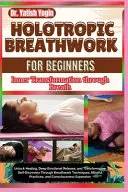
Holotropic Breathwork for Beginners
 79
79

Holotropic Breathwork for Beginners
Dr. Yatish Yogin's "Holotropic Breathwork for Beginners" offers a lucid entry point into a potent, often misunderstood, therapeutic modality. The text effectively demystifies the core mechanics of Holotropic Breathwork, moving beyond sensationalism to present a grounded, practical overview. Its strength lies in the clear articulation of Stanislav Grof's theoretical framework, particularly the integration of perinatal matrices into the breathwork experience. The section detailing the facilitator's role is particularly well-handled, emphasizing safety and containment. However, the book occasionally feels overly didactic, perhaps sacrificing some of the experiential nuance that characterizes the practice itself. The explanation of BPM III, while informative, could benefit from more illustrative examples of the archetypal encounters often reported during this intense phase. Ultimately, this is a valuable primer for the uninitiated, providing essential knowledge without overwhelming the novice.
📝 Description
79
Dr. Yatish Yogin's Holotropic Breathwork for Beginners explains Stanislav Grof's psychotherapeutic method.
This book introduces Holotropic Breathwork, a technique developed by Stanislav Grof in the 1970s. It combines accelerated breathing, music, and bodywork to help individuals reach non-ordinary states of consciousness. Unlike traditional talk therapy, this method aims to bypass the ego's usual filters. This allows for direct access to deeper psychological layers, which can include memories, archetypal imagery, and perinatal experiences.
The text covers both the theory behind Holotropic Breathwork and its practical application. It is written for those interested in personal growth, healing, and spiritual exploration who want to understand the practice before trying it with a certified facilitator. Aspiring breathwork practitioners will also find guidance on safety and ethical considerations. Readers interested in consciousness studies, transpersonal psychology, and alternative healing methods will find the material relevant.
Holotropic Breathwork arose from the late 1960s and early 1970s counterculture, a time of exploration in consciousness. Stanislav Grof developed this non-pharmacological method after restrictions on LSD therapy. His work built on earlier studies of altered states by figures like Carl Jung and the emerging field of transpersonal psychology. The practice gained ground in alternative therapy circles as a way to access inner healing and explore consciousness beyond ordinary awareness.
💡 Why Read This Book?
• Learn the foundational principles of Holotropic Breathwork, including the concept of 'holotropic states,' and understand how they differ from conventional therapeutic methods, allowing for deeper psychological integration. • Grasp the significance of Stanislav Grof's 'Basic Perinatal Matrices' (BPMs) as a framework for understanding birth trauma and its lasting psychological impact, providing a unique lens for self-reflection. • Acquire knowledge about the practical aspects of a breathwork session, such as the roles of music, breathing techniques, and facilitator support, enabling informed decision-making about participation.
⭐ Reader Reviews
Honest opinions from readers who have explored this book.
❓ Frequently Asked Questions
What is Holotropic Breathwork and how does it differ from regular breathing exercises?
Holotropic Breathwork involves combining faster, deeper breathing with evocative music and focused attention to access non-ordinary states of consciousness for psychological healing. It differs from regular breathing exercises by aiming to release repressed emotions and unconscious material, rather than just promoting relaxation or physical health.
Who developed Holotropic Breathwork and when?
Holotropic Breathwork was developed by psychiatrist Stanislav Grof in the 1970s. He created this method as a non-pharmacological alternative to LSD-assisted psychotherapy, which was becoming increasingly restricted.
What are the 'Basic Perinatal Matrices' (BPMs) in Holotropic Breathwork?
The BPMs are a model proposed by Stanislav Grof describing four stages of the human birth process and their associated psychological experiences. They range from the initial contractions (BPM I) to the trauma of birth canal passage (BPM III) and the final expulsion (BPM IV).
Is Holotropic Breathwork safe for beginners?
When conducted by certified and experienced facilitators in a safe setting, Holotropic Breathwork is generally considered safe for beginners. The book emphasizes the importance of proper preparation and the facilitator's role in ensuring containment and support.
What kind of music is used in Holotropic Breathwork sessions?
The music used is specifically curated to support the breathwork process. It typically includes instrumental pieces that are evocative and can help guide the breather through various stages of consciousness, often shifting in intensity and mood.
Can Holotropic Breathwork help with trauma?
Yes, Holotropic Breathwork is often used to address trauma. By accessing non-ordinary states, individuals can revisit and process traumatic memories and emotions in a contained environment, potentially leading to resolution and healing.
🔮 Key Themes & Symbolism
Non-Ordinary States of Consciousness
The book posits that accessing non-ordinary states of consciousness is key to unlocking the psyche's inherent healing potential. These states, distinct from everyday waking consciousness, allow for the bypassing of the ego's usual defenses. This facilitates direct engagement with repressed memories, archetypal patterns, and profound emotional releases. The work details how techniques like accelerated breathing and evocative music act as catalysts, guiding the individual into these altered states safely and effectively, paving the way for deep personal transformation.
The Role of the Breath
Central to Holotropic Breathwork is the deliberate alteration of breathing patterns. The book explains how a sustained, accelerated rhythm of breathing can induce physiological and psychological changes, leading to the release of pent-up emotional and physical tension. This is not mere hyperventilation but a controlled process designed to shift neurochemistry and access deeper layers of awareness. The breath acts as an anchor and a vehicle, facilitating the journey into the unconscious and supporting the emergence of repressed material for integration.
Perinatal and Transpersonal Experiences
Dr. Yogin's text thoroughly explores Stanislav Grof's model of Basic Perinatal Matrices (BPMs), which links the stages of the birth process to distinct psychological and emotional experiences. The book guides readers to recognize these patterns within their own breathwork sessions, from the intensity of BPM III (anal-vaginal struggle) to the catharsis of BPM IV (birth and liberation). Beyond perinatal, the work also touches upon transpersonal realms, where individuals may encounter archetypal figures, past-life themes, or collective unconscious material.
Facilitator's Role and Containment
A crucial element discussed is the indispensable role of the facilitator in Holotropic Breathwork. The book emphasizes that the facilitator's primary function is to provide a secure and supportive environment, or 'containment,' for the breather's intense experiences. This involves maintaining a non-judgmental presence, offering appropriate bodywork when needed, and guiding the process without imposing personal interpretations. This careful attention to the facilitator's ethical responsibilities ensures the safety and efficacy of the breathwork journey.
💬 Memorable Quotes
Direct passages from the work, attributed to the author.
“The breath is the bridge between the conscious and the unconscious.”
— This statement highlights the fundamental role of breathing in Holotropic Breathwork. It suggests that by consciously altering our breath, we can intentionally access and explore the less-obvious layers of our psyche, bridging the gap between what we know and what lies beneath.
“Non-ordinary states reveal truths the ego cannot grasp.”
— This interpretation emphasizes that altered states of consciousness, accessed through methods like Holotropic Breathwork, offer perspectives and insights that are typically inaccessible to our everyday rational mind or ego defenses.
“Music guides the journey when words fail.”
— This interpretation points to the power of the curated music in Holotropic Breathwork. It suggests that the auditory landscape can evoke emotions, memories, and states of consciousness that are difficult or impossible to articulate verbally, serving as a crucial element in the therapeutic process.
💡 Key Ideas
Editorial paraphrase of the work's core concepts — not direct quotes.
BPM III is often characterized by intense struggle and release.
This paraphrase refers to one of Stanislav Grof's Basic Perinatal Matrices, specifically the stage of labor involving passage through the birth canal. It suggests that experiences related to this phase can manifest as powerful, often difficult, but ultimately cathartic emotional and physical sensations during a breathwork session.
A skilled facilitator holds space for the emergence.
This conceptual paraphrase underscores the importance of the practitioner's role. It means the facilitator creates a safe, non-interfering environment that allows the breather's own inner healing intelligence to guide the experience and bring forth whatever needs to be processed.
🌙 Esoteric Significance
Tradition
Holotropic Breathwork can be seen as an extension of Western Esotericism's long-standing interest in altered states of consciousness for spiritual and psychological development. It shares common ground with shamanic practices and certain Gnostic traditions that emphasize direct, unmediated experience of the divine or the deeper self. While Grof's work is presented within a psychological framework, its emphasis on accessing archetypal realms and profound inner healing aligns with esoteric quests for self-knowledge and spiritual liberation.
Symbolism
The practice often involves the emergence of potent symbols. The 'Mandala' is frequently cited as a symbol of wholeness and integration, representing the centered self. The 'Serpent' can symbolize transformation, healing, and the awakening of Kundalini energy, a concept found in Eastern esoteric traditions. 'Light' and 'Darkness' often appear, representing the confrontation with both the shadow self and the experience of clear insights or spiritual illumination.
Modern Relevance
Today, Holotropic Breathwork continues to influence contemporary therapeutic practices, particularly in areas of trauma recovery and consciousness exploration. Therapists and bodyworkers inspired by Grof's work integrate elements of breathwork into their sessions. Furthermore, the growing interest in mindfulness, somatic experiencing, and psychedelic-assisted therapy demonstrates a broader cultural embrace of experiential methods for psychological and spiritual growth, areas where Holotropic Breathwork remains a significant precursor and contemporary practice.
👥 Who Should Read This Book
• Individuals seeking profound self-discovery and psychological healing: Those who feel conventional therapy has reached its limits and are open to exploring altered states of consciousness for deeper integration and release. • Aspiring or current practitioners of holistic healing: Professionals in fields like psychotherapy, coaching, or bodywork who wish to understand a powerful modality for facilitating transformative experiences in clients. • Students of consciousness and transpersonal psychology: Researchers and enthusiasts interested in the scientific and experiential study of non-ordinary states, archetypal psychology, and the potential for inner transformation.
📜 Historical Context
Holotropic Breathwork emerged in the fertile ground of the late 1960s and early 1970s, a period ripe with exploration into human consciousness. Stanislav Grof, initially a pioneer in LSD-assisted psychotherapy at the Psychiatric Research Institute in Prague, shifted his focus to breathwork following increased global restrictions on psychedelic research. This era also saw the rise of humanistic psychology and the burgeoning field of transpersonal psychology, which sought to integrate spiritual and mystical experiences into Western psychology. Grof's work offered a powerful, non-pharmacological avenue for exploring the depths of the psyche, diverging from the more analytical approaches prevalent in academic circles. Contemporaries like Carl Rogers and Abraham Maslow were expanding the human potential movement, but Grof's focus on non-ordinary states and perinatal experiences was distinct. While not subject to widespread censorship itself, the broader field of consciousness exploration faced skepticism from mainstream psychiatry, and Grof's research, initially conducted in Czechoslovakia and later in the US, often challenged established norms.
📔 Journal Prompts
Reflect on the concept of 'containment' as described by Dr. Yogin.
Consider the potential connection between your own birth experience and the BPMs.
How might the 'holotropic state' offer insights beyond your current understanding?
Explore the symbolic language that emerged during your breathwork practice.
What is the role of music in facilitating inner journeys?
🗂️ Glossary
Holotropic State
A non-ordinary state of consciousness accessed through specific techniques like Holotropic Breathwork, characterized by intensified emotions, vivid imagery, and potential access to unconscious material.
Basic Perinatal Matrices (BPMs)
Stanislav Grof's model describing four stages of the birth process and their associated psychological experiences, used as a framework for understanding trauma and transformation.
BPM I
The first stage of the Basic Perinatal Matrix, corresponding to the initial phase of labor, often associated with a relatively calm, introverted state, or mild discomfort.
BPM II
The second stage of the Basic Perinatal Matrix, representing the onset of more intense contractions and the cervix beginning to dilate, often linked to feelings of entrapment or hopelessness.
BPM III
The third stage of the Basic Perinatal Matrix, involving the intense struggle of passing through the birth canal, frequently associated with powerful physical and emotional experiences of aggression, sexuality, and catharsis.
BPM IV
The fourth stage of the Basic Perinatal Matrix, representing the moment of birth and expulsion, often linked to feelings of liberation, relief, and spiritual rebirth.
Set and Setting
Crucial factors for any altered state experience: 'Set' refers to the individual's internal mindset and expectations, while 'Setting' refers to the external environment and the presence of facilitators.