Lunyu

 79
79

Lunyu
The enduring relevance of Lunyu lies not in its prescriptive doctrines but in its nuanced exploration of character and social harmony. Confucius’s aphorisms, such as the famous injunction to "do not impose on others what you do not wish for yourself," offer a pragmatic ethical compass. However, the text’s fragmented nature, a result of its compilation, can present a challenge. Certain passages, like the discussions on the proper mourning periods or specific ritualistic details, require significant historical and cultural context to be fully appreciated by a modern reader. The work’s strength is its persistent focus on the cultivation of the self as the basis for societal order. Ultimately, Lunyu remains a vital, if occasionally dense, study in the art of ethical living and governance.
📝 Description
79
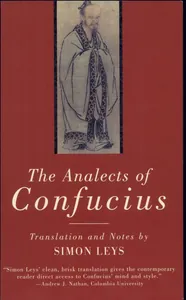
### What It Is Lunyu, commonly known as The Analects, is a foundational text compiling the sayings and ideas attributed to the Chinese philosopher Confucius (Kong Fuzi) and his contemporaries. Compiled by his disciples, the work offers a window into the moral, ethical, and social philosophy that shaped East Asian civilization for millennia. It is not a systematic treatise but rather a collection of discrete episodes, dialogues, and aphorisms, presenting Confucius's views on governance, personal conduct, education, and ritual.
### Who It's For This text is essential for scholars of Eastern philosophy, students of comparative ethics, and individuals seeking to understand the roots of Confucianism. It appeals to those interested in ancient wisdom traditions, the development of moral thought, and the historical forces that have influenced vast populations. Readers who appreciate aphoristic wisdom and ethical instruction will find substantial material for contemplation.
### Historical Context Lunyu emerged from the tumultuous Spring and Autumn period of Chinese history (771-476 BCE), a time of significant political fragmentation and intellectual ferment. Confucius (551-479 BCE) sought to restore social order and ethical governance through the revival of ancient traditions and the cultivation of *ren* (benevolence) and *li* (ritual propriety). His teachings were a response to the widespread moral decay and political instability of his era. The compilation of the Analects by his disciples, likely over several decades following his death, ensured the preservation and dissemination of his philosophical legacy, influencing figures like Mencius and Xunzi.
### Key Concepts The Analects introduces core Confucian concepts such as *ren* (仁), often translated as benevolence, humaneness, or goodness; *li* (禮), encompassing ritual, propriety, and proper conduct; *xiao* (孝), filial piety; and *junzi* (君子), the ideal noble person or gentleman. The text emphasizes self-cultivation, ethical leadership, and the importance of education in achieving a harmonious society. It presents Confucius's vision of a well-ordered state governed by virtuous rulers who lead by moral example rather than coercion.
💡 Why Read This Book?
• Learn the core principles of *ren* (benevolence) and *li* (ritual propriety) as articulated by Confucius, understanding their role in shaping personal conduct and societal structure. • Grasp the concept of the *junzi* (noble person) and the path of self-cultivation advocated by Confucius, offering a framework for ethical development. • Examine the emphasis on *xiao* (filial piety) and its critical function within Confucian social ethics, providing insight into historical family structures and duties.
⭐ Reader Reviews
Honest opinions from readers who have explored this book.
❓ Frequently Asked Questions
When was Lunyu first compiled?
The exact compilation date of Lunyu is debated among scholars, but it is generally believed to have been compiled by Confucius's disciples over several decades following his death in 479 BCE.
What is the central philosophy of Confucius presented in Lunyu?
The central philosophy revolves around ethical conduct, social harmony, and good governance, emphasizing virtues like benevolence (*ren*), ritual propriety (*li*), filial piety (*xiao*), and righteousness (*yi*).
What does the term 'junzi' mean in Lunyu?
'Junzi' refers to the ideal noble person or gentleman, someone who embodies moral virtue, wisdom, and cultivates themselves ethically to serve as a model for society.
How does Lunyu address the concept of governance?
Lunyu posits that effective governance stems from the moral example of rulers, emphasizing virtue, education, and ritual over coercion or harsh laws.
Is Lunyu a religious text?
While Lunyu discusses rituals and respects Heaven, it is primarily a philosophical and ethical text focused on human conduct and societal order rather than religious dogma.
What is the significance of 'li' in Confucian thought as presented in Lunyu?
'Li' signifies ritual propriety, etiquette, and proper conduct. It is crucial for maintaining social order, expressing respect, and cultivating moral character.
🔮 Key Themes & Symbolism
The Cultivation of Ren
The concept of *ren* (仁), often translated as benevolence or humaneness, is central to Lunyu. Confucius presents it as the highest moral virtue, attainable through continuous self-reflection and ethical practice. It involves empathy, concern for others, and acting with kindness in all situations. The text illustrates how *ren* is practiced in daily interactions, familial duties, and governance, suggesting it is the foundation for a virtuous life and a harmonious society.
The Role of Li
*Li* (禮) encompasses ritual, propriety, etiquette, and proper conduct. Lunyu emphasizes that *li* is not merely outward ceremony but an expression of inner sincerity and respect. It provides the structure for social interactions, governance, and religious observance, helping to cultivate moral character and maintain social order. Confucius stresses the importance of performing *li* correctly and with understanding, connecting personal refinement to collective well-being.
The Ideal of the Junzi
The *junzi* (君子), or noble person, is Confucius's ideal. This individual is characterized by moral integrity, wisdom, and a commitment to self-improvement. Unlike the petty person (*xiaoren*), the *junzi* prioritizes righteousness (*yi*) over personal gain and acts with consideration for others. The Analects frequently depicts Confucius instructing his disciples on the qualities and practices required to move towards becoming a *junzi*, making it a central aspiration within the text.
Ethical Governance
Lunyu offers a vision of governance based on moral leadership and virtue rather than force or law. Confucius argues that a ruler should lead by example, cultivating their own character and fostering an environment of righteousness. This ethical approach aims to inspire the populace and maintain order organically. The text critiques rulers who prioritize power or wealth over the well-being of their people, advocating for a benevolent and principled administration.
💬 Memorable Quotes
“Do not impose on others what you do not wish for yourself.”
— This is often referred to as the Golden Rule in Confucianism. It highlights the principle of reciprocity and empathy as fundamental to ethical interaction and building harmonious relationships.
“The superior person is modest in their speech, but exceeds in their actions.”
— This saying emphasizes the importance of deeds over mere words. True virtue is demonstrated through consistent, effective action rather than boastful pronouncements.
“Learning without thought is labor lost; thought without learning is perilous.”
— Confucius advocates for a balanced approach to knowledge acquisition, integrating study with critical thinking to avoid superficial understanding or misguided action.
“At home, a young person should practice filial piety; when outside, they should respect their elders and show care for the people.”
— This highlights the core Confucian virtues of *xiao* (filial piety) and *ti* (fraternal respect), extending these principles to broader social responsibilities and community engagement.
“To know what you know and what you do not know, that is true knowledge.”
— This aphorism points to intellectual humility and self-awareness as crucial components of genuine wisdom. Recognizing the limits of one's understanding is the first step towards deeper learning.
🌙 Esoteric Significance
Tradition
While not strictly an 'esoteric' text in the Western sense, Lunyu functions as a foundational scripture for the philosophical and ethical tradition of Confucianism, which has been deeply interwoven with East Asian spiritual and cosmological views. Its emphasis on self-cultivation, moral order, and the harmonizing of human action with the cosmic Way (Dao) shares common ground with certain mystical traditions seeking alignment between the microcosm (individual) and the macrocosm (universe).
Symbolism
Key symbols include the *junzi* (君子), representing the cultivated individual aspiring to moral perfection, a concept echoed in alchemical ideals of transmutation. The concept of *li* (禮), ritual propriety, symbolizes the structured expression of cosmic order in human affairs, akin to sacred geometry or ritualistic forms in other traditions. The recurring motif of learning and self-reflection can be seen as an internal alchemy, transforming the base metal of ordinary human nature into the gold of virtue.
Modern Relevance
Contemporary thinkers and practitioners in fields like ethical leadership, positive psychology, and comparative philosophy continue to draw from Lunyu. Neo-Confucian scholars in East Asia and global ethicists engage with its principles for understanding virtue ethics and social harmony. Its practical wisdom on character development and interpersonal relations finds resonance in modern self-help and leadership discourse, albeit often stripped of its original ritualistic and cosmological context.
👥 Who Should Read This Book
• Students of comparative philosophy and ethics seeking to understand the foundational texts of East Asian thought, particularly Confucianism. • Individuals interested in ancient governance models and ethical leadership principles derived from a non-Western perspective. • Readers focused on self-cultivation and moral development who appreciate aphoristic wisdom and practical ethical guidance.
📜 Historical Context
Lunyu originated during China's Spring and Autumn period (771-476 BCE), a time characterized by feudal fragmentation and warfare. Confucius (551-479 BCE) sought to restore social order and ethical governance, drawing inspiration from the early Zhou Dynasty. His teachings emphasized personal virtue, ritual propriety (*li*), and benevolent rule. The compilation of the Analects by his disciples, likely over decades after his death, preserved his philosophy against competing schools of thought such as Legalism, which favored strict laws and punishments. While Confucius respected Heaven and ancient rituals, his focus was pragmatic, centered on human relationships and ethical conduct in this world. His ideas profoundly influenced subsequent Chinese thinkers, including Mencius and Xunzi, and became a cornerstone of East Asian civilization, though the formal canonization of his works took centuries.
📔 Journal Prompts
The practice of *ren* in everyday interactions.
Reflecting on the ideal of the *junzi* versus personal habits.
How *li* can be integrated into modern social and professional conduct.
The application of *xiao* (filial piety) in contemporary family dynamics.
Interpreting Confucius's advice on learning and self-reflection for personal growth.
🗂️ Glossary
Ren (仁)
The core Confucian virtue, often translated as benevolence, humaneness, goodness, or perfect virtue. It signifies profound empathy and concern for others.
Li (禮)
Ritual, propriety, etiquette, ceremony, and proper conduct. It governs social interactions, governance, and religious observance, essential for maintaining social harmony.
Xiao (孝)
Filial piety; respect, obedience, and care for one's parents and elders. It is considered a fundamental virtue in Confucian ethics.
Junzi (君子)
The superior person, noble person, or gentleman. The ideal individual who embodies moral virtue, wisdom, and cultivated character.
Yi (義)
Righteousness, justice, or appropriateness. Acting according to what is morally right, often contrasted with personal gain.
De (德)
Virtue, moral power, or integrity. The inherent quality or characteristic that enables a person or thing to fulfill its purpose.
Dao (道)
The Way or Path. In Confucianism, it refers to the natural order of the universe and the moral order that should guide human conduct.