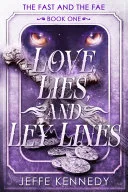
Love, Lies, and Ley Lines
 77
77

Love, Lies, and Ley Lines
Jeffe Kennedy’s 2026 work, Love, Lies, and Ley Lines, attempts to craft a narrative around the fae’s control of pixie dust, a potent symbol of magical dependency. The premise is intriguing: human civilization hinges on a resource hoarded by an enigmatic fae authority. Kennedy establishes a clear stakes scenario where without pixie dust, humanity faces a grim regression. The author’s strength lies in detailing this dependency, painting a vivid picture of a society teetering on the edge of pre-industrial squalor. However, the narrative’s exploration of the "infamous smuggling team of Bandit and Goldilocks" feels somewhat underdeveloped within the provided blurb, lacking the specific character interactions or plot turns that would elevate it beyond a high-concept setup. The core concept of magical resource scarcity is compelling, but the blurb doesn't yet reveal how deeply Kennedy interrogates the political or ethical dimensions of this fae-imposed order. The work promises an examination of power, but its true depth remains to be seen. It is a premise with significant potential for exploring societal control through magical means.
📝 Description
77
Published January 20, 2026, Jeffe Kennedy's Love, Lies, and Ley Lines examines human dependence on fae-controlled magic.
This novel centers on the precarious state of human civilization, which relies on pixie dust for even basic spellcasting. Without this substance, humans face a regression to a pre-modern existence marked by disease and high mortality. The fae maintain a strict monopoly over pixie dust, effectively controlling human magical capabilities and, by extension, their societal progress. The narrative highlights the consequences of this dependency, illustrating how the scarcity of magical resources directly impacts human quality of life and technological development.
The story engages with themes of political maneuvering and socioeconomic commentary, framed by the conflict surrounding the smuggling of rare magical commodities. It presents a world where magic is not a freely available force but a commodity deliberately controlled by non-human entities. This control shapes societal structures and fosters a deep human reliance on the fae, creating a dynamic where human advancement is dictated by external magical powers.
The novel taps into folkloric traditions where fae beings are not benevolent spirits but powerful entities who hoard and control magical resources. This aligns with certain occult interpretations that view magical power as a limited, often jealously guarded commodity, rather than an abundant universal force. The implied history of human struggle against disease and mortality before fae-controlled magic echoes themes found in some magical philosophy concerning the necessity of specific esoteric knowledge or power sources for civilization's survival.
💡 Why Read This Book?
• Understand the mechanics of magical resource control as exemplified by the fae's monopoly on pixie dust, crucial for human spellcasting and societal advancement since 2026. • Explore the consequences of societal dependence on external magical sources, as humans risk a return to "dark ages" without the fae's controlled supply. • Engage with a narrative centered on the high-stakes smuggling of vital magical commodities, as depicted by the team Bandit and Goldilocks, challenging fae authority.
⭐ Reader Reviews
Honest opinions from readers who have explored this book.
❓ Frequently Asked Questions
What is the primary conflict in Love, Lies, and Ley Lines?
The primary conflict revolves around the fae's monopoly on magical pixie dust, a substance essential for human spellcasting and societal progress. Humans depend on this resource, and its control by the fae creates significant power imbalances and scarcity.
Who are the main factions involved in the story?
The main factions are the human principalities, who rely heavily on fae-controlled magic, and the enigmatic fae authorities who maintain a tight grip on the supply of magical pixie dust.
When was Love, Lies, and Ley Lines first published?
Love, Lies, and Ley Lines was first published on January 20, 2026.
What is the significance of pixie dust in the book's world?
Pixie dust is depicted as indispensable for human spellcasting. Without it, humans cannot perform even simple spells, risking a decline into conditions akin to the 'dark ages,' characterized by disease and high mortality.
What kind of story is Love, Lies, and Ley Lines?
It is an esoteric fantasy narrative that explores themes of power, control, societal dependence, and the consequences of magical resource scarcity, potentially involving elements of smuggling and rebellion.
What is the role of the smuggling team 'Bandit and Goldilocks'?
Bandit and Goldilocks are presented as a team who have previously defied fae authorities by smuggling the valuable pixie dust, highlighting a history of resistance to the fae's monopoly.
🔮 Key Themes & Symbolism
Magical Resource Control
The narrative foregrounds the concept of a magical resource—pixie dust—being strictly controlled by a dominant power, the fae. This control dictates the technological and societal trajectory of humans, who cannot advance or even maintain their current state without it. The fae's monopoly ensures human subservience, preventing any independent magical development and reinforcing a hierarchical structure where magic is a commodity dispensed, not an innate human right. This theme questions the ethics of hoarding vital resources for political leverage.
Societal Dependence and Regression
Love, Lies, and Ley Lines examines the precarious position of a society utterly dependent on an external source for its magical capabilities. The threat of regression to a pre-modern state—marked by "disease and fast mortality"—underscores the fragility of human civilization when its foundations rest on resources controlled by others. This dependency is portrayed as a vulnerability that the fae exploit, keeping humans reliant and subservient, thus preventing societal evolution beyond the limits set by their fae overlords.
Power Dynamics and Resistance
The story implicitly explores the power dynamics between the fae and humans, with the former holding absolute authority through their control of pixie dust. This absolute power is challenged by figures like the "infamous smuggling team of Bandit and Goldilocks," who have previously defied the fae. Their actions suggest a subcurrent of resistance against the fae's oppressive monopoly, hinting at a narrative that might explore rebellion, underground economies, and the struggle for autonomy in a magically dictated world.
The Nature of Magic
Central to the book is the commodification and restricted access to magic, specifically pixie dust. The narrative frames magic not as a universal force but as a controlled substance, essential for everything from simple spells to preventing societal collapse. This perspective raises questions about the inherent nature of magic: is it a natural resource, a tool for oppression, or a potential catalyst for liberation? The fae's hoarding suggests magic is a tool of power, not a shared cosmic inheritance.
💬 Memorable Quotes
“Humans will find themselves back in the dark ages of disease and fast mortality.”
— This statement highlights the critical role of fae magic, specifically pixie dust, in sustaining human civilization. It presents a stark dichotomy: continued progress under fae influence or regression to a primitive state without it, framing magic as a necessary component for survival.
“The enigmatic fae keep a tight grip on their monopoly.”
— This emphasizes the deliberate and controlling nature of the fae's power. Their 'tight grip' signifies a conscious effort to restrict access to pixie dust, ensuring their continued dominance and the dependency of human principalities on their decree.
“The priceless magical pixie dust desired by everyone from hedge witches to the storied magic academies.”
— This phrase illustrates the universal demand for pixie dust across all strata of human society, from grassroots practitioners to elite institutions. It underscores its value and indispensability, making the fae's monopoly a pervasive issue affecting all aspects of human life.
“It’s been years since the infamous smuggling team of Bandit and Goldilocks thumbed their noses at the fae authorities.”
— This suggests a history of defiance and a precedent for challenging fae control. The mention of "Bandit and Goldilocks" points to past acts of rebellion and smuggling, hinting at ongoing conflict and the potential for future resistance against the established magical order.
“No one in the human principalities controlled by the fae can work even the simplest spells without the stuff.”
— This statement defines the extent of human magical impotence without pixie dust. It clarifies that the dependency is absolute, affecting even the most basic magical practices and rendering humans incapable of independent magical action, thereby solidifying fae control.
🌙 Esoteric Significance
Tradition
This work appears to draw from contemporary fantasy traditions that engage with folkloric elements of fae lore, particularly the concept of fae as powerful, often capricious, beings who interact with and influence the human world. While not strictly adhering to a specific historical esoteric lineage like Hermeticism or Kabbalah, it taps into a broader archetype of hidden realms and beings holding dominion over natural or supernatural forces that humans require. It reinterprets the 'fae' as a controlling entity akin to a gatekeeper of cosmic energies or vital magical essences.
Symbolism
The central symbol is the 'pixie dust,' representing not just magical power but also civilization, progress, and survival itself. Its scarcity and fae control symbolize the commodification of essential life forces or knowledge, turning them into tools of oppression. The 'human principalities' symbolize societies rendered dependent and vulnerable by external control, while the "dark ages" represent the primal state humanity risks reverting to. The 'smuggling team' embodies resistance and the illicit reclaiming of power.
Modern Relevance
Contemporary practitioners and scholars interested in the socio-political implications of magic will find resonance here. The book's exploration of magical resource control speaks to modern discussions on intellectual property, technological access, and the ethical distribution of vital resources. Thinkers examining power structures within speculative fiction, particularly concerning non-human intelligences and their impact on human development, will find this work a relevant case study for how magic can be weaponized as a tool of governance and dependency.
👥 Who Should Read This Book
• Readers interested in speculative fiction that critically examines power dynamics and resource control, particularly concerning magic as a societal lever. • Enthusiasts of fantasy narratives featuring fae, smuggling operations, and worlds where magical access is heavily regulated and politically charged. • Individuals curious about allegorical explorations of societal dependence, technological advancement, and the potential consequences of external control over essential resources.
📜 Historical Context
Jeffe Kennedy's Love, Lies, and Ley Lines, published in 2026, arrives in a speculative fiction landscape that continues to grapple with themes of resource scarcity and societal control, echoing concerns present since the late 20th century's ecological and economic shifts. The narrative's focus on a magical commodity mirrors real-world anxieties about essential resource monopolies, reminiscent of debates surrounding oil cartels or critical mineral access. The fae’s deliberate suppression of human magical advancement can be seen as a fictional parallel to historical instances of colonial powers restricting technological transfer to subjugated populations. In the context of esoteric literature, the book engages with tropes of fae hierarchies and power, a lineage traceable through figures like Arthur Machen and the broader Neo-Victorian fantasy revival. While specific reception details for a 2026 publication are unavailable, works exploring similar themes of magical governance and dependency have often been reviewed for their allegorical potential regarding contemporary power structures and class disparities.
📔 Journal Prompts
The fae's monopoly on pixie dust and its impact on human advancement.
Analyze the concept of 'dark ages of disease and fast mortality' in relation to magical scarcity.
Reflect on the motivations behind the fae's 'tight grip' on their pixie dust supply.
Consider the risks undertaken by the smuggling team Bandit and Goldilocks.
Explore the ethical implications of controlling magic as a vital resource.
🗂️ Glossary
Pixie Dust
A vital magical substance, indispensable for human spellcasting. Its scarcity and control by the fae are central to the plot, dictating human societal progress and survival.
Fae Authorities
The enigmatic rulers who maintain a monopoly over pixie dust, wielding significant power over human principalities through their control of magic.
Human Principalities
Societies of humans living under the control of the fae, dependent on their magical resources for basic spellcasting and societal maintenance.
Dark Ages
A state of regression described in the blurb, characterized by disease and high mortality, which humans risk if they lose access to fae-controlled magic.
Bandit and Goldilocks
An infamous smuggling team known for defying fae authorities by trafficking in magical pixie dust, representing a form of resistance.
Hedge Witches
Practitioners of magic, likely at a grassroots or less formal level, who desire pixie dust, illustrating its broad appeal across different magical communities.
Magic Academies
Institutions of learning for magic users, also dependent on pixie dust, highlighting its importance even in formal and established magical education.