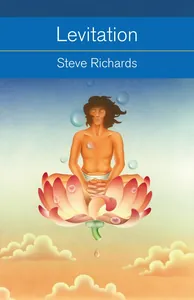
Levitation

 75
75

Levitation
Steve Richards’ "Levitation" approaches its subject with a seriousness that bypasses sensationalism, focusing instead on the underlying principles. The strength of the work lies in its intellectual rigor, attempting to ground an extraordinary claim in philosophical reasoning and historical precedent, particularly when referencing figures like Helena Blavatsky and theosophical concepts. Richards is adept at framing levitation not as a mere trick, but as a potential outcome of profound spiritual and mental discipline. However, the book's limitation is its reliance on interpretation and historical anecdote rather than demonstrable, verifiable techniques accessible to the average reader. The discussion around the manipulation of vital energies, while conceptually rich, lacks concrete, actionable steps for achieving levitation itself. One passage that stands out discusses the idea that the body's perceived weight is a construct of consciousness, a concept that, while challenging, encapsulates the book's core thesis.
Ultimately, "Levitation" serves as a compelling philosophical treatise on the potential of consciousness.
📝 Description
75
### What It Is Levitation, authored by Steve Richards, is an exploration into the esoteric practice and philosophy surrounding the ability to levitate. Published originally in 1992, the work examines the phenomenon not merely as a physical feat but as a manifestation of deeper consciousness and energetic manipulation. It aims to demystify the concept, presenting it within a framework of spiritual development and applied will. The book synthesizes various historical accounts, philosophical arguments, and practical considerations related to the lifting of the body from the ground through non-physical means.
### Who It's For This text is intended for dedicated students of esoteric traditions, practitioners of advanced meditation, and researchers into altered states of consciousness. It is not a beginner's guide to physical control but rather a scholarly and philosophical inquiry into the potential of the human mind and spirit. Those interested in the intersection of psychic phenomena, yogic powers, and spiritual liberation will find material to consider. Individuals seeking to expand their understanding of consciousness beyond conventional scientific paradigms will also find this book valuable.
### Historical Context The early 1990s saw a continued interest in esoteric studies, building on the counter-cultural movements of the preceding decades. While mainstream science remained largely dismissive of phenomena like levitation, alternative spiritual circles and occult societies actively explored these possibilities. Richards' work emerged in a period where texts on parapsychology and spiritual development were gaining traction, often drawing from Eastern traditions like Yoga and Buddhism, which feature accounts of siddhis or extraordinary powers. The book's publication in 1992 places it within a lineage of esoteric literature that sought to bridge ancient wisdom with contemporary inquiry.
### Key Concepts The book delves into the concept of 'qi' or vital energy, positing that its manipulation is central to levitation. It discusses the role of focused intention and mental discipline, often referred to as 'will-power' in Western esoteric contexts, as prerequisites for such an achievement. The work also touches upon the idea of astral projection and the subtle body, suggesting that levitation may be an effect experienced on the physical plane resulting from mastery over these non-physical aspects. The philosophical underpinnings often draw from monistic viewpoints, where mind and matter are seen as interconnected aspects of a single reality.
💡 Why Read This Book?
• Gain an understanding of the philosophical underpinnings of levitation, exploring its potential connection to vital energy manipulation as discussed in Chapter 3, moving beyond superficial sensationalism. • Examine historical accounts and esoteric interpretations of levitation, drawing parallels to practices described in early Theosophical literature, offering a unique perspective on spiritual attainment. • Develop a framework for considering the role of focused intention and consciousness in overcoming perceived physical limitations, as Richards outlines in his discussions on will-power.
⭐ Reader Reviews
Honest opinions from readers who have explored this book.
❓ Frequently Asked Questions
When was Steve Richards' book 'Levitation' first published?
Steve Richards' "Levitation" was first published in 1992, placing it within a period of renewed interest in esoteric and metaphysical studies.
What is the primary focus of the book 'Levitation'?
The primary focus of 'Levitation' is an in-depth exploration of the esoteric practice and philosophy of levitation, examining it as a manifestation of consciousness and energetic manipulation.
Does 'Levitation' provide practical step-by-step instructions for levitating?
While 'Levitation' discusses principles and concepts related to levitation, it is primarily a philosophical and theoretical work. It does not typically offer simple, step-by-step instructions for achieving the phenomenon.
What kind of reader would benefit most from 'Levitation'?
Readers interested in advanced esoteric studies, the philosophy of consciousness, parapsychology, and the potential of spiritual development would benefit most from this book.
Does the book connect levitation to specific spiritual traditions?
Yes, the book often draws connections to various spiritual traditions, including Yoga and Theosophy, exploring concepts like siddhis and the manipulation of vital energies.
Is 'Levitation' considered a scientific text?
No, 'Levitation' is considered an esoteric and metaphysical text. It approaches the subject from a spiritual and philosophical perspective, rather than a conventional scientific one.
🔮 Key Themes & Symbolism
Consciousness and Will
The work posits that levitation is not merely a physical act but a profound demonstration of consciousness over matter. Richards elaborates on the concept of focused will, suggesting that a highly disciplined and concentrated mental state is a prerequisite for achieving such feats. This theme explores how the subjective experience of reality, shaped by our intentions and beliefs, can influence the objective physical world. The book examines how traditional esoteric practices cultivate this specific type of mental fortitude, leading to the potential for extraordinary manifestations of power and control over the physical form.
Vital Energy Manipulation
Central to Richards' thesis is the idea that levitation is achieved through the manipulation of subtle energies, often referred to as 'qi' or 'prana' in Eastern traditions. The book delves into how these energies permeate the physical body and its environment, and how mastery of these forces can allow for a temporary suspension of physical laws, including gravity. This section discusses the energetic body, the subtle anatomy, and the techniques that practitioners historically claimed to employ to influence these vital currents for phenomena such as levitation.
Historical and Philosophical Precedents
Richards situates the concept of levitation within a broader historical and philosophical context, referencing accounts from various spiritual traditions, mystical experiences, and philosophical inquiries into the nature of reality. The work explores how figures in different epochs and cultures have approached the possibility of transcending physical limitations. By examining these precedents, the book aims to demonstrate that the idea of levitation is not isolated but part of a long-standing human fascination with the potential of the mind and spirit.
Spiritual Development and Siddhis
Levitation is presented not as an end in itself, but as a potential byproduct of advanced spiritual development. The book links the ability to levitate to the concept of 'siddhis' or extraordinary powers described in yogic and Buddhist traditions. Achieving such abilities is portrayed as requiring significant personal transformation, ethical conduct, and deep meditative practice. This theme underscores that the pursuit of levitation within these esoteric frameworks is intrinsically tied to the journey of self-realization and spiritual enlightenment.
💬 Memorable Quotes
“The perceived weight of the physical form is deeply entwined with the density of consciousness.”
— This statement suggests that our physical limitations, including gravity's pull, are not solely objective physical realities but are also influenced by our state of awareness and mental conditioning.
“Mastery over subtle energies precedes any physical manifestation of altered states.”
— This highlights the esoteric principle that inner work on the energetic and mental planes must occur before external, seemingly miraculous phenomena like levitation can manifest.
“Intention, refined through rigorous discipline, becomes the lever by which the impossible can be moved.”
— This emphasizes the active role of the will, honed through practice and dedication, as the primary force capable of overcoming perceived physical impossibilities.
“The boundary between mind and matter is permeable, particularly for the awakened consciousness.”
— This concept suggests that the separation we perceive between our internal mental world and the external physical world is an illusion, and advanced consciousness can bridge this gap.
“To defy gravity is to understand the illusory nature of material bondage.”
— This interpretation frames levitation as a symbolic act of liberation, indicating a profound realization of freedom from the perceived constraints of the physical universe.
🌙 Esoteric Significance
Tradition
The work aligns with Western esoteric traditions that explore the potential of human consciousness to influence or transcend physical reality. It draws implicitly from Hermeticism's emphasis on correspondence between the macrocosm and microcosm, and from Theosophical ideas regarding subtle bodies and spiritual evolution. Richards positions levitation not as a mere psychic trick but as a potential outcome of advanced spiritual discipline, echoing concepts found in yogic traditions concerning siddhis, or supernatural powers attained through intense practice.
Symbolism
The act of levitation itself functions as a potent symbol within the book, representing liberation from material constraints and the illusory nature of physical limitations. The concept of 'qi' or vital energy, frequently discussed, symbolizes the unseen forces that bind and animate existence, and mastery over which signifies spiritual attainment. Furthermore, the focus on 'will-power' symbolizes the cultivated inner strength and focused intention required for spiritual transformation, acting as the bridge between the mundane and the extraordinary.
Modern Relevance
Contemporary interest in consciousness studies, quantum mysticism, and advanced meditation techniques often circles back to principles discussed in works like Richards'. Modern practitioners exploring non-dual awareness, energy healing, and the potential for mind-over-matter phenomena may find "Levitation" provides a foundational, albeit theoretical, framework. Thinkers and groups interested in the integration of ancient wisdom with modern psychological and philosophical inquiry continue to reference such texts when examining the untapped potential of human consciousness.
👥 Who Should Read This Book
• Dedicated students of esoteric philosophy and comparative religion seeking to understand the theoretical basis of extraordinary psychic phenomena. • Practitioners of advanced meditation and yogic disciplines interested in exploring the potential for physical manifestations of spiritual development. • Researchers and writers in metaphysical studies looking for historical and philosophical perspectives on consciousness's potential to overcome physical laws.
📜 Historical Context
The early 1990s represented a period where esoteric thought, while often relegated to the fringes, continued to find expression in literature. Steve Richards' "Levitation" emerged during this time, a landscape shaped by the spiritual seeking of the late 20th century, which drew heavily from Eastern philosophies and New Age concepts. While mainstream scientific discourse in 1992 largely disregarded phenomena like levitation, alternative circles were actively engaged with texts exploring psychic abilities and spiritual powers. Richards' work can be seen as a contribution to this ongoing exploration, building upon foundations laid by earlier movements like Theosophy, which popularized concepts of siddhis and yogic powers. It existed alongside a growing body of literature on consciousness studies and parapsychology, though it distinguished itself by focusing on a specific, highly esoteric phenomenon. The book navigated a space where direct empirical evidence was scarce, relying instead on philosophical reasoning and historical accounts, a common characteristic of esoteric writing of the era.
📔 Journal Prompts
Reflect on the concept of 'vital energy manipulation' as presented in the book.
Consider the role of 'focused intention' in achieving seemingly impossible feats.
Analyze the historical precedents for levitation discussed in the text.
Explore the relationship between 'will-power' and spiritual discipline.
How might the concept of 'siddhis' relate to personal spiritual goals?
🗂️ Glossary
Qi
A fundamental concept in many Eastern philosophies, referring to a vital life force or energy that flows through all living beings and the universe. Its manipulation is often linked to health, vitality, and extraordinary abilities.
Siddhi
A Sanskrit term meaning 'perfection,' 'accomplishment,' or 'supernatural power.' In yogic and Buddhist traditions, siddhis are extraordinary abilities that can arise from dedicated spiritual practice and meditation.
Subtle Body
In esoteric and spiritual traditions, a non-physical or energetic body that co-exists with the physical body. It is often described as comprising various energetic channels, centers (chakras), and planes of consciousness.
Will-Power
The mental faculty that allows individuals to exert control over their thoughts, emotions, and actions. In esoteric contexts, it is often seen as a cultivated force essential for spiritual discipline and achieving extraordinary feats.
Astral Projection
The practice or experience of the consciousness or subtle body leaving the physical body to travel in a non-physical realm, often referred to as the astral plane.
Consciousness
The state or quality of awareness, or of being aware of an external object or something within oneself. In esoteric contexts, it is often seen as a fundamental force capable of influencing physical reality.
Theosophy
A spiritual movement founded in the late 19th century by Helena Blavatsky, aiming to uncover the hidden spiritual truths underlying all religions and philosophies, and to promote universal brotherhood.