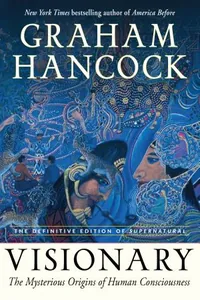
L'empreinte des dieux

 83
83

L'empreinte des dieux
Graham Hancock’s L'empreinte des dieux (The Message of the Sphinx) presents a compelling, if controversial, argument for a lost global civilization predating recorded history. Hancock excels at synthesizing disparate archaeological findings and ancient myths into a cohesive, albeit speculative, narrative. His examination of the Giza plateau, particularly the geological evidence for earlier water erosion on the Sphinx, remains a potent focal point. However, the book's strength—its ambitious scope—also becomes a limitation. Hancock sometimes relies on suggestive correlations rather than definitive proof, leaving significant gaps for critics to exploit. The proposed timeline, while intriguing, requires a radical reinterpretation of established geological and archaeological timelines. Despite these criticisms, the work undeniably sparks curiosity about the origins of human culture and the possibility of forgotten chapters in our past. It is a challenging read that demands critical engagement with established paradigms.
📝 Description
83
### What It Is L'empreinte des dieux, first published in 1997 by Graham Hancock, is a significant work in the field of alternative history and esoteric studies. It challenges conventional timelines of human civilization, proposing that a highly advanced global culture existed at the end of the last Ice Age, only to be destroyed by a cataclysmic event. The book examines archaeological anomalies and ancient myths across continents, suggesting they are echoes of this lost epoch.
### Who It's For This book is aimed at readers who question established historical narratives and are open to exploring fringe theories about ancient civilizations. It will appeal to those interested in archaeology, mythology, cosmology, and the possibility of pre-diluvian societies. Individuals seeking to understand persistent global myths through an archaeological lens will find it particularly engaging.
### Historical Context Hancock's work emerged in the late 1990s, a period marked by growing interest in ancient mysteries and a challenge to academic consensus. It coincided with the rise of the internet, which facilitated the dissemination of alternative theories. While mainstream archaeology largely dismissed his findings, figures like John Anthony West, who popularized the theories of R.A. Schwaller de Lubicz regarding the Sphinx's age, provided intellectual kinship. Hancock's approach contrasted sharply with prevailing Egyptological and archaeological paradigms of the time.
### Key Concepts The central thesis posits a sophisticated global civilization predating known history, possibly around 12,000 BCE. This 'civilization' is presented not as a single empire, but a shared consciousness or network of advanced peoples. Evidence is drawn from megalithic sites, astronomical alignments in ancient structures, and recurring flood myths worldwide. The book also explores the impact of cosmic events, such as comet impacts, as potential agents of civilization's end and the subsequent 'Great Year' cycles influencing human development.
💡 Why Read This Book?
• Gain a new perspective on ancient history by examining Graham Hancock's theory of a sophisticated global civilization existing around 12,000 BCE, challenging conventional archaeological timelines. • Explore the symbolic connections between global flood myths and the proposed cataclysm that ended this advanced culture, as detailed in the book's comparative mythology sections. • Understand the geological arguments Hancock presents for the extreme age of the Sphinx, suggesting it predates the Dynastic Egyptians by millennia, prompting a re-evaluation of ancient Egyptian history.
⭐ Reader Reviews
Honest opinions from readers who have explored this book.
❓ Frequently Asked Questions
What is the primary theory presented in L'empreinte des dieux?
The book proposes a highly advanced global civilization existed at the end of the last Ice Age, around 12,000 BCE, which was destroyed by a cataclysm, leaving behind scattered remnants and myths.
What evidence does Graham Hancock use to support his claims?
Hancock draws on archaeological anomalies, ancient myths from various cultures, astronomical alignments in megalithic structures, and geological interpretations, such as the age of the Sphinx.
When was L'empreinte des dieux originally published?
The book was first published in 1997.
How does L'empreinte des dieux relate to other works by Graham Hancock?
It is a foundational text that explores themes Hancock revisits and expands upon in later books, such as Fingerprints of the Gods, often focusing on ancient mysteries and lost civilizations.
What is the significance of the Sphinx in the book?
Hancock uses the Sphinx as a key piece of evidence, arguing that its erosion patterns suggest an age far greater than conventionally accepted, pointing to a much older civilization.
Was L'empreinte des dieux accepted by mainstream archaeologists?
No, the book's theories were largely rejected by the mainstream archaeological and scientific communities, which found its evidence insufficient and its interpretations speculative.
🔮 Key Themes & Symbolism
Lost Ice Age Civilization
The central thesis revolves around the existence of a sophisticated global civilization that flourished around 12,000 BCE, prior to the end of the last glacial period. Hancock suggests this civilization possessed advanced knowledge, possibly including astronomical and architectural skills, evidenced by megalithic sites and recurring myths. This concept directly challenges the standard timeline of human progress, positing a 'civilization zero' that predates Sumer and Egypt.
Cosmic Cataclysm and Global Floods
Hancock posits that this lost civilization was destroyed by a catastrophic event, likely a comet impact or series of impacts, around 12,000 BCE. This event triggered widespread geological upheaval and massive floods, contributing to the 'Great Year' cycles of human development and amnesia. The book interprets numerous ancient flood myths across cultures as collective memories of this world-altering disaster.
Megalithic Sites and Astronomical Alignments
The work examines numerous ancient sites, such as the Giza pyramids and Stonehenge, arguing they contain sophisticated astronomical alignments and architectural designs that point to a common, advanced origin. Hancock suggests these structures are not merely tombs or temples but sophisticated observatories or markers left by this pre-diluvian culture, designed to preserve knowledge across vast epochs.
The Sphinx's True Age
A significant portion of the book is dedicated to the Great Sphinx of Giza. Hancock, drawing on geological analysis by figures like Robert Schoch, argues that the water erosion patterns on the Sphinx enclosure indicate it was carved millennia before the accepted Dynastic Egyptian period, potentially during a wetter epoch associated with his proposed lost civilization.
💬 Memorable Quotes
“The Sphinx in Egypt may be 10,000 years old.”
— This statement encapsulates Hancock's radical re-dating of the Sphinx, suggesting it predates the pharaohs and aligns with his theory of a lost civilization from the end of the Ice Age.
“Ancient myths worldwide speak of a great flood.”
— Hancock interprets these widespread flood narratives not as mere folklore, but as collective memories of a real cataclysm that destroyed a sophisticated precursor civilization around 12,000 BCE.
“Earth's history is not a smooth progression but punctuated by catastrophes.”
— This reflects Hancock's view that major shifts in human civilization, including its potential rise and fall, are driven by cataclysmic events rather than gradual evolution.
“We are the inheritors of a forgotten epoch.”
— This phrase suggests that contemporary humanity is unknowingly descended from or influenced by a highly advanced culture that existed in deep antiquity, whose achievements have been largely erased from historical memory.
“The evidence for a lost civilization is hidden in plain sight.”
— Hancock argues that clues to a sophisticated ancient global culture are present in megalithic ruins and myths but have been overlooked or misinterpreted by conventional archaeology.
🌙 Esoteric Significance
Tradition
While not strictly adhering to a single esoteric lineage, Hancock's work draws heavily from Gnostic and Hermetic themes of cyclical time, lost wisdom, and cataclysmic destruction. It echoes the concept of 'ages' found in Hindu cosmology (Yugas) and Plato's Atlantis myth, suggesting a divine or highly advanced knowledge present in ancient times that has been obscured by later historical epochs. It departs from traditional esotericism by grounding its claims in physical, albeit controversial, archaeological and geological evidence.
Symbolism
The book frequently discusses the symbolism of the pyramid and the Sphinx, interpreting them as cosmic maps or markers of forgotten astronomical knowledge. The serpent or dragon motif, common in creation and destruction myths, is presented as a symbol of cyclical time and cosmic forces, potentially representing cometary bodies responsible for cataclysms. Water itself, particularly in flood narratives, symbolizes not just destruction but also purification and the potential for rebirth after a cyclical reset.
Modern Relevance
Hancock's ideas continue to influence contemporary discussions in fringe archaeology, ancient astronaut theories, and certain New Age spiritual movements. Thinkers and researchers exploring consciousness, cyclical cosmology, and the possibility of ancient global networks often cite his work as a catalyst. His theories are particularly relevant to modern esotericism's interest in uncovering hidden histories and challenging materialistic worldviews, prompting new investigations into archaeoastronomy and prehistory.
👥 Who Should Read This Book
• Armchair archaeologists and history enthusiasts seeking to explore theories that challenge conventional timelines and narratives of human civilization. • Readers interested in comparative mythology and the recurring themes of global floods and lost golden ages across different cultures. • Individuals curious about the geological and astronomical arguments surrounding ancient sites like the Giza plateau and the possibility of advanced prehistoric cultures.
📜 Historical Context
Published in 1997, L'empreinte des dieux arrived during a fertile period for alternative history, fueled by growing public interest in ancient mysteries and the nascent internet. Hancock's work tapped into a zeitgeist that questioned established narratives. It followed in the footsteps of earlier proponents of ancient advanced civilizations, such as Ignatius Donnelly's Atlantis theories in the late 19th century. Mainstream archaeology, however, largely remained resistant, often dismissing such ideas as pseudoscience. The book's reception was polarized; while popular with a wide audience, it faced significant criticism from academic circles who found its interpretations of data selective and its methodologies flawed. Hancock's engagement with geological evidence, particularly concerning the Sphinx's age, placed him in dialogue, albeit often adversarial, with established geological and archaeological consensus.
📔 Journal Prompts
The evidence for a lost civilization around 12,000 BCE.
Recurring flood myths across cultures.
The proposed age and symbolism of the Great Sphinx.
The concept of 'Great Year' cycles in human history.
Megalithic sites as evidence of advanced ancient knowledge.
🗂️ Glossary
Ice Age
A period of long-term reduction in the temperature of the Earth's climate, resulting in the presence or expansion of continental and polar ice sheets and alpine glaciers. The last glacial period ended approximately 11,700 years ago.
Megalithic
Relating to or constituting a prehistoric monument made of or containing large stones, such as Stonehenge or the pyramids of Giza.
Cataclysm
A violent natural event, such as a flood, earthquake, or volcanic eruption, that causes great damage or loss of life. Hancock proposes such events ended prehistoric civilizations.
Great Year
A concept referring to a long cycle of time, often associated with astronomical precession, during which celestial configurations repeat. Hancock links these cycles to epochs of civilization and catastrophe.
Pre-Diluvian
Existing or occurring before the biblical Great Flood. Hancock's proposed lost civilization is pre-diluvian.
Archaeoastronomy
The interdisciplinary study of how people in the past understood the astronomical phenomena and used them in their cultures. Hancock uses this to interpret ancient sites.
Younger Dryas
A period of rapid and severe cooling that occurred approximately 12,900 to 11,700 years ago, marking the end of the last glacial period. Hancock's proposed cataclysm is often linked to this period.