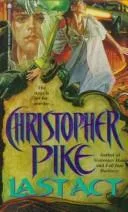
Last Act
 79
79

Last Act
Christopher Pike’s 1988 novel, 'Last Act,' presents a familiar premise within the reincarnation genre: a protagonist haunted by echoes of past lives. The strength of the book lies in its pacing and the author's ability to create an atmosphere of lingering mystery. Pike avoids overly didactic explanations, allowing the protagonist’s fragmented memories and evolving understanding to drive the narrative. However, the characters, while serving the plot, can sometimes feel underdeveloped, existing more as conduits for the metaphysical exploration than as fully realized individuals. A particularly effective element is the way Pike illustrates the disorienting nature of fragmented recall, making the protagonist’s confusion palpable. Ultimately, 'Last Act' offers a serviceable exploration of reincarnation, best suited for those seeking an accessible entry into the author's style and thematic concerns.
📝 Description
79
### What It Is 'Last Act' by Christopher Pike, first published in 1988, is a narrative exploring themes of reincarnation, past lives, and the persistent threads of consciousness that bind individuals across different existences. The novel centers on a protagonist who begins to recall fragmented memories and sensations from previous incarnations, leading to a quest to understand the nature of these echoes and their impact on present-day relationships and identity. The work operates within a framework where memories and emotional imprints are not confined to a single lifespan, suggesting a continuum of experience.
### Who It's For This book is intended for readers interested in speculative fiction that touches upon spiritual and psychological concepts. Those who enjoy narratives questioning the boundaries of identity, the nature of memory, and the possibility of karmic connections will find 'Last Act' compelling. It appeals to an audience seeking stories that blend mystery with metaphysical inquiry, particularly those drawn to exploring the idea that our current lives are influenced by unresolved issues or significant events from earlier existences.
### Historical Context Published in 1988, 'Last Act' emerged during a period of heightened interest in New Age philosophies and paranormal phenomena. The late 1980s saw a surge in popular literature and media exploring concepts like past-life regression, reincarnation, and channeling. Authors such as Shirley MacLaine were bringing these ideas into mainstream consciousness. Pike’s work fits within this cultural milieu, offering a fictional lens through which to examine these burgeoning spiritual and psychological explorations, distinct from more academic or purely philosophical treatments of the subject.
### Key Concepts The novel delves into the concept of soul memory, where the essence of a person carries residual experiences and emotional baggage from former lives. It examines the idea of karmic entanglement, suggesting that certain relationships or conflicts may span multiple lifetimes, requiring resolution. Another significant concept is the fragmented nature of recalled past-life experiences, presenting them not as clear narratives but as disorienting flashes and feelings that the protagonist must piece together to understand their present reality.
💡 Why Read This Book?
• Gain insight into the concept of soul memory as explored through fragmented recall, learning how Pike depicts the disorienting yet compelling nature of past-life echoes. • Understand the narrative's engagement with karmic entanglement, examining how Pike suggests unresolved issues from prior existences can manifest in current relationships. • Experience Pike's characteristic narrative pacing, which uses the mystery of past lives to propel the plot forward in a way that feels distinct from more philosophical treatises on reincarnation.
⭐ Reader Reviews
Honest opinions from readers who have explored this book.
❓ Frequently Asked Questions
What is the central theme of Christopher Pike's 'Last Act'?
The central theme of 'Last Act' revolves around reincarnation and the idea that consciousness and memories can persist across multiple lifetimes, influencing present-day experiences and relationships.
When was 'Last Act' by Christopher Pike originally published?
'Last Act' by Christopher Pike was first published in 1988, placing it within a period of significant popular interest in New Age and metaphysical concepts.
Does 'Last Act' involve actual past-life regression techniques?
While the book explores the protagonist's experiences of recalled past lives, it focuses on a narrative unfolding through these memories rather than depicting actual therapeutic regression techniques.
What kind of reader would enjoy 'Last Act'?
Readers interested in speculative fiction that blends mystery with metaphysical themes, particularly those drawn to stories about reincarnation, soul memory, and the interconnectedness of lives, would likely enjoy 'Last Act'.
Are there specific symbols or motifs that are important in 'Last Act'?
The novel's core motif is the fragmented memory itself, serving as a symbol of unresolved past experiences. Other symbols might emerge through the specific details of the recalled past lives the protagonist experiences.
How does 'Last Act' connect to other works by Christopher Pike?
'Last Act' shares thematic similarities with other Pike novels that often explore supernatural elements, young protagonists grappling with mysterious circumstances, and psychological underpinnings of extraordinary events.
🔮 Key Themes & Symbolism
Soul Memory and Past Lives
The narrative explores the profound concept of soul memory, where the essence of an individual is believed to carry imprints of experiences from previous incarnations. 'Last Act' portrays these memories not as clear historical accounts but as fragmented, often disorienting, flashes of sensation, emotion, and imagery. The protagonist's struggle to interpret these echoes forms the core of the plot, suggesting that these residual imprints can significantly shape present-day identity, fears, and relationships, hinting at a continuum of consciousness beyond a single biological lifespan.
Karmic Entanglement
Central to the book's metaphysical framework is the idea of karmic entanglement – the notion that certain relationships, unresolved conflicts, or significant events can span across multiple lifetimes. Pike suggests that individuals may be drawn together repeatedly to address lingering issues or complete unfinished business. This concept provides a framework for understanding the intense connections and recurring patterns that the protagonist encounters, positing that present circumstances are often echoes of past interactions requiring resolution for spiritual progression.
Identity and Consciousness
The novel probes the nature of identity when confronted with the possibility of multiple past existences. It questions whether a person's 'self' is solely defined by their current life or if it is a composite of all lived experiences. Pike uses the protagonist's evolving awareness of her past incarnations to explore the fluidity of consciousness. This raises questions about the enduring aspects of the soul versus the temporary nature of the physical form, and how fragmented memories challenge the perceived stability of personal identity.
The Unseen Influences
Pike masterfully illustrates how unseen forces and past events can exert a powerful influence on the present. The protagonist's current life is dictated by circumstances and feelings that appear inexplicable until the connection to her past lives is revealed. This theme highlights the esoteric idea that our reality is shaped by layers of experience and causality that extend beyond immediate perception. The book suggests a subtle interconnectedness, where forgotten histories continue to resonate and direct the course of individual lives.
💬 Memorable Quotes
“Fragments of a life I didn't live, but somehow knew.”
— This quote captures the protagonist's disorienting experience of recalling past-life memories. It highlights the paradox of experiencing vivid sensations and emotions that belong to a life she cannot consciously remember having lived, emphasizing the novel's exploration of soul memory.
“The same faces, the same fears, across lifetimes.”
— This paraphrased concept speaks to the theme of karmic entanglement. It suggests that certain souls or core emotional patterns repeat themselves across different incarnations, implying a cycle of learning and resolution that transcends individual lives.
“Each death was an ending, yet the story continued.”
— This interpretation reflects the novel's premise of reincarnation. It underscores the idea that physical death is not the cessation of the individual's journey but rather a transition point, with consciousness and experience carrying forward into subsequent lives.
“My present was a shadow cast by a forgotten sun.”
— This phrase illustrates the concept that current circumstances are deeply influenced by past events and lives that are not consciously remembered. It uses the metaphor of a shadow to show how the past, though unseen, profoundly shapes the present reality.
“When did I become this person, or was I always someone else?”
— This paraphrased reflection touches upon the theme of identity. It questions the stability of selfhood when confronted with the possibility that one's current personality is an accumulation of experiences from multiple past lives, blurring the lines of who 'I' truly am.
🌙 Esoteric Significance
Tradition
While not strictly adhering to a single esoteric lineage, 'Last Act' draws heavily from the principles of reincarnation and karma found prominently in Eastern spiritual traditions like Hinduism and Buddhism, and also within Western esoteric thought such as Theosophy. Theosophical ideas, popularized in the late 19th and early 20th centuries, posited a complex system of multiple lives, soul evolution, and karmic consequence, which Pike's narrative echoes. The work can be seen as a fictional exploration of these concepts, making them relatable through a character-driven mystery rather than a doctrinal exposition.
Symbolism
The primary symbol in 'Last Act' is the **fragmented memory** itself, representing the dislocated and incomplete nature of past-life recall. These fragments – flashes of images, intense emotions, inexplicable fears – symbolize the residual energy and unresolved issues carried across lifetimes. Another motif is the **recurring face or relationship**, symbolizing karmic connections and soul groups that repeatedly intersect across different incarnations, driven by the need for mutual learning or resolution.
Modern Relevance
Contemporary interest in concepts like past-life regression, ancestral healing, and the nature of consciousness continues to find resonance with 'Last Act.' Modern spiritual seekers and practitioners exploring consciousness studies, alternative healing modalities, and non-dual philosophies may find Pike's fictional exploration of enduring selfhood and interconnected lives a compelling entry point. The novel's themes align with ongoing discussions about the soul's journey and the persistent influence of past experiences on present well-being.
👥 Who Should Read This Book
• Readers interested in the concept of reincarnation and its potential impact on identity, seeking a fictional exploration of how past lives might influence present circumstances. • Fans of Christopher Pike's distinctive blend of mystery and supernatural elements, who appreciate narratives that unfold with suspense and a focus on psychological undertones. • Individuals exploring metaphysical themes and speculative fiction that questions the boundaries of consciousness, memory, and the nature of the self beyond a single lifespan.
📜 Historical Context
Christopher Pike's 'Last Act,' released in 1988, arrived during a cultural moment ripe with fascination for the paranormal and metaphysical. The late 1980s saw figures like Shirley MacLaine popularizing concepts like reincarnation and past-life regression through bestselling books such as 'Out on a Limb' (1983). This era was characterized by a growing public appetite for spiritual exploration outside traditional religious frameworks, often termed the 'New Age' movement. Pike's work tapped into this vein, offering a fictional narrative that made complex ideas about soul memory and karmic connections accessible to a wide audience. While academic discourse on reincarnation existed, Pike's contribution was primarily within popular fiction, distinct from the more philosophical or psychological treatments of the era. The book contributed to the broader cultural conversation, embedding these esoteric ideas within a suspenseful narrative structure.
📔 Journal Prompts
The nature of fragmented soul memory.
Recurring fears and their potential past-life origins.
The protagonist's evolving understanding of identity.
Karmic patterns in relationships.
The persistent influence of past events on present actions.
🗂️ Glossary
Soul Memory
The concept that the soul retains memories and emotional imprints from previous incarnations, which can surface in present lives as feelings, intuitions, or fragmented recollections.
Karmic Entanglement
The idea that relationships and unresolved issues can persist across multiple lifetimes, with individuals repeatedly encountering each other to learn lessons or resolve past conflicts.
Reincarnation
The philosophical or religious concept that the non-physical essence of a living being begins a new life in a different physical form or entity after biological death.
Past Life Echoes
Sensations, emotions, or fragmented images that seem to originate from a previous existence, often manifesting without conscious understanding in the present life.
Soul Group
A collection of souls believed to incarnate together across lifetimes, often to support each other's spiritual evolution or to work through shared karmic patterns.
Fragmented Recall
The incomplete and often confusing way that past-life memories are depicted as surfacing, characterized by disorienting flashes rather than coherent narratives.
Present Life Influence
How experiences, traumas, or unresolved issues from previous incarnations are suggested to directly shape the character, relationships, and circumstances of the current life.